
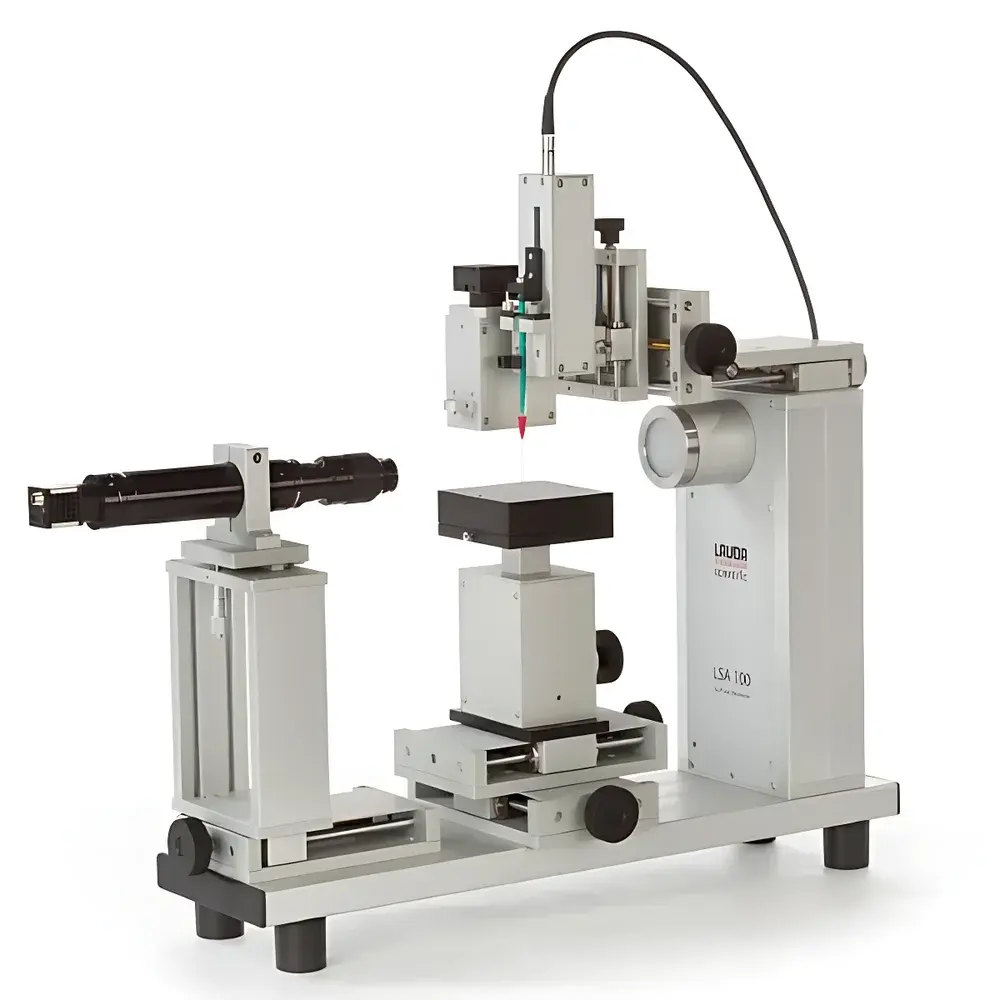
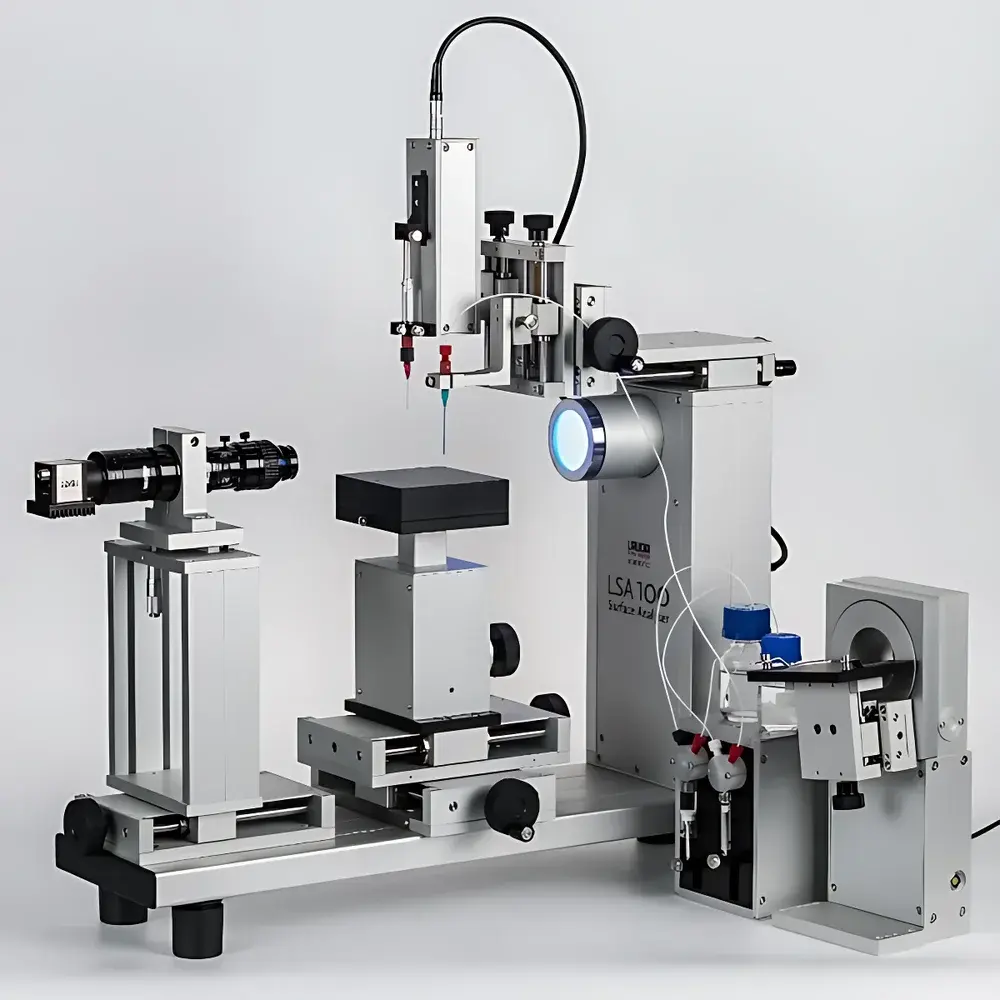
LAUDA Scientific LSA100 Video-Based Optical Contact Angle Analyzer
| Brand | LAUDA Scientific |
|---|---|
| Origin | Germany |
| Model | LSA 100 |
| Instrument Type | Benchtop Video Optical Contact Angle Analyzer |
| Contact Angle Measurement Range | 0–180° |
| Contact Angle Accuracy | ±0.1° |
| Contact Angle Resolution | 0.01° |
| Surface/Interfacial Tension Range | 0.01–2000 mN/m |
| Surface/Interfacial Tension Resolution | 0.01 mN/m |
| Sample Stage Dimensions | 100 × 100 mm |
| Maximum Sample Dimensions (L×W×H) | ∞ × 290 × 76 mm |
| Stage Load Capacity | 12 kg |
| Optical Zoom | 6.5× Motorized Telecentric Lens |
| Imaging System | USB 3.0 High-Speed Camera (752 × 480 px, up to 87 fps) |
| Illumination | Adjustable Uniform LED Cold Light Source |
Overview
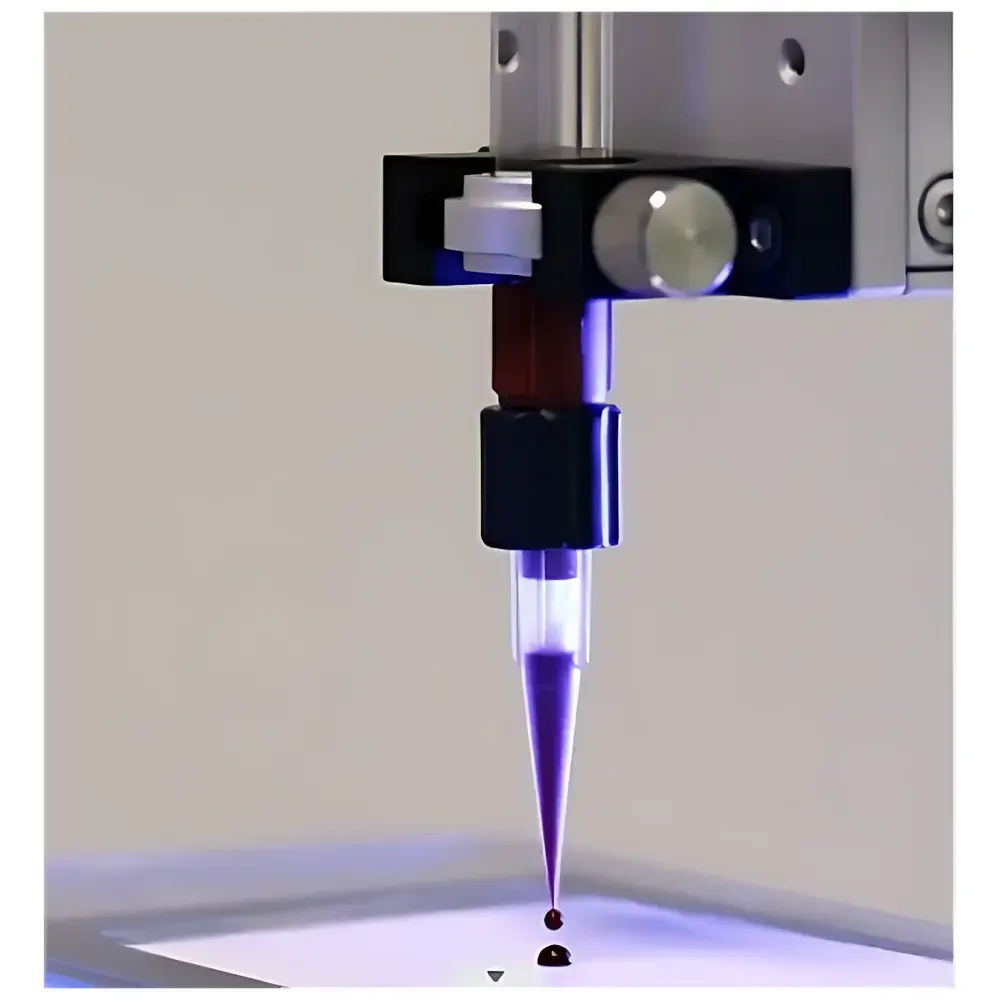
The LAUDA Scientific LSA100 Video-Based Optical Contact Angle Analyzer is a precision-engineered benchtop instrument designed for quantitative characterization of solid–liquid and liquid–liquid interfacial phenomena. Operating on the principle of sessile drop analysis via high-resolution optical imaging and automated contour fitting, the LSA100 delivers traceable, reproducible measurements of contact angle, surface free energy, interfacial tension, and dynamic wetting behavior. Its modular architecture supports both static and time-resolved measurements—including advancing/receding contact angles, roll-off angles, and real-time absorption kinetics—making it suitable for rigorous academic research and industrial quality control in compliance with ASTM D7334, ISO 19403-2, and ISO 1420 standards. The system integrates a telecentric 6.5× zoom lens, sub-pixel edge detection algorithms, and motorized stage control to ensure geometrically accurate measurements across heterogeneous or topographically complex surfaces.
Key Features
- Automated static and dynamic contact angle measurement with ±0.1° accuracy and 0.01° resolution, validated against NIST-traceable reference surfaces
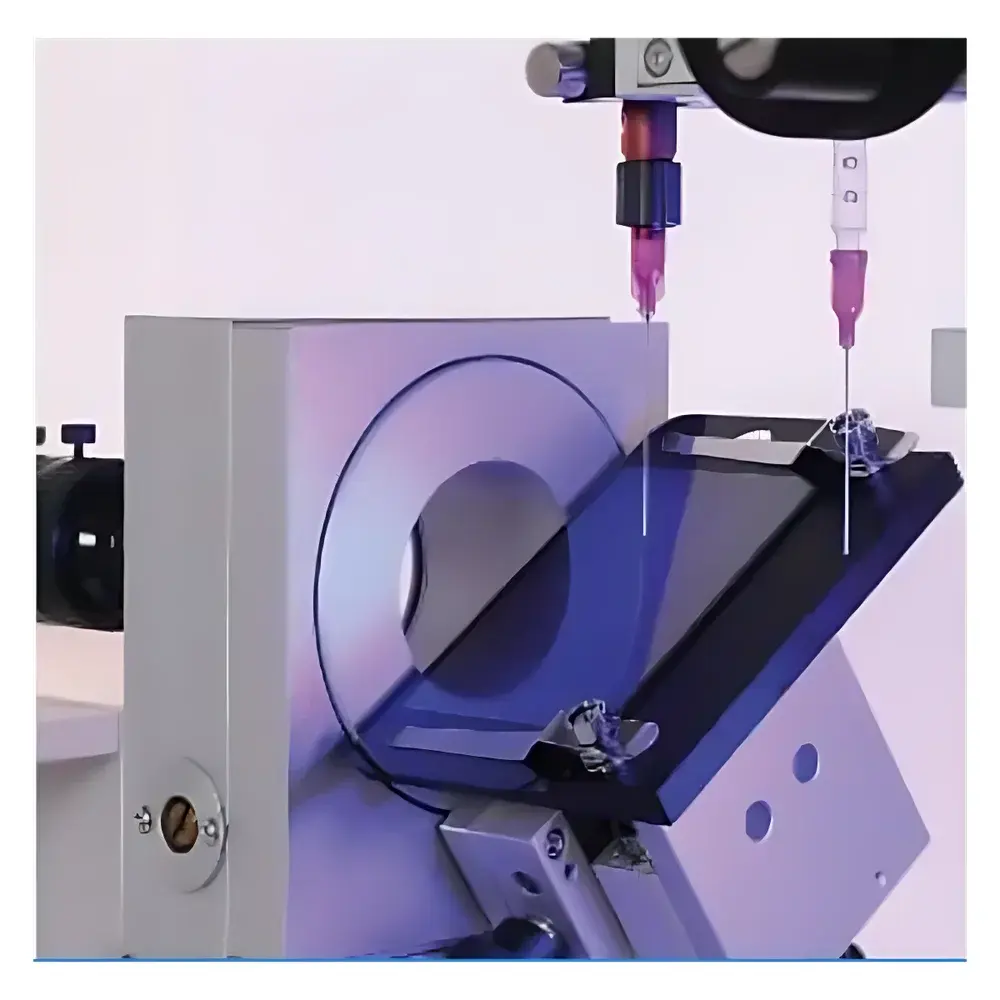
- Simultaneous contact angle and retention force measurement using optional rotating tilt stage and force-sensing add-on modules
- Dual-droplet injection capability for comparative wetting analysis and surface heterogeneity mapping
- Top-view (axisymmetric reflection) mode for measuring ultra-low contact angles (<5°) on superhydrophilic or patterned substrates
- Oscillating pendant drop module for interfacial dilatational rheology (E, ε′, ε″) at frequencies from 0.01 to 10 Hz
- Automated CMC determination via dynamic surface tension profiling using Wilhelmy plate or pendant drop methodology
- Washburn analysis integration for capillary rise quantification in powders and porous media, with automatic contact angle derivation from imbibition kinetics
- Full XYZ motorized sample stage (100 × 100 × 50 mm travel) with 12 kg load capacity and micrometer-level repeatability
- Software-controlled LED illumination with intensity ramping to minimize specular reflection artifacts on glossy or anisotropic samples
Sample Compatibility & Compliance
The LSA100 accommodates samples up to 290 mm wide and 76 mm tall—with no theoretical length limitation—enabling evaluation of large-area coatings, flexible films, textile swatches, and macro-porous scaffolds. Its open-stage design permits integration of environmental chambers (optional), humidity control units, and temperature-regulated stages (−20°C to 120°C). All measurement protocols adhere to GLP-aligned data integrity requirements: audit trails, electronic signatures, and version-controlled method templates are fully supported. Raw image sequences, fitted contours, and numerical outputs are stored in vendor-neutral formats (TIFF, CSV, XML), facilitating third-party validation and regulatory submissions under FDA 21 CFR Part 11 and EU Annex 11 guidelines.
Software & Data Management
The ADVANCE software platform provides intuitive workflow-driven operation—from droplet deposition and image acquisition to advanced modeling (Owens–Wendt, Fowkes, Wu, van Oss–Chaudhury–Good). Real-time video streaming, frame-by-frame playback, and batch processing enable high-throughput screening. Data export supports direct integration with MATLAB, Python (via API), and LIMS systems. All measurement parameters—including camera exposure, focus offset, threshold settings, and baseline correction—are logged with timestamps and user IDs. Software validation packages (IQ/OQ/PQ documentation) are available for GMP environments.
Applications
- Surface energy quantification of polymer films, biomaterials, and plasma-treated substrates for adhesion optimization
- Wetting kinetics analysis of inkjet inks, pesticide formulations, and nanofluidics on functionalized silicon wafers
- CMC profiling of surfactant solutions in pharmaceutical excipient development and detergent formulation
- Interfacial rheological characterization of protein-laden oil–water interfaces in food emulsions and biopharmaceutical delivery systems
- Quality assurance of hydrophobic coatings on medical devices, solar panels, and automotive glass
- Research into capillary-driven transport in soil science, battery separators, and wound dressings using Washburn-derived contact angles
FAQ
What standards does the LSA100 comply with for contact angle measurement?
ASTM D7334 (Standard Practice for Determining Surface Wettability by Contact Angle Measurement), ISO 19403-2 (Contact Angle Measurement – Sessile Drop Method), and ISO 1420 (Rubber – Determination of Resistance to Penetration by Liquids).
Can the LSA100 measure contact angles on fibers or single filaments?
Yes—using the optional Single-Fiber Module with micro-positioning stage and side-view imaging geometry, enabling contact angle assessment on individual fibers down to 5 µm diameter.
Is the system compatible with regulated environments requiring electronic records?
Yes—the ADVANCE software supports 21 CFR Part 11-compliant audit trails, role-based access control, and electronic signature workflows.
Does the LSA100 support temperature-controlled measurements?
Yes—via optional Peltier-based stage cooling/heating units (–20°C to 120°C) or external circulation thermostats integrated via digital I/O.
How is interfacial tension measured on the LSA100?
Using pendant drop analysis (Young–Laplace fitting) or Wilhelmy plate method (with optional force sensor module), covering 0.01–2000 mN/m with 0.01 mN/m resolution.



