
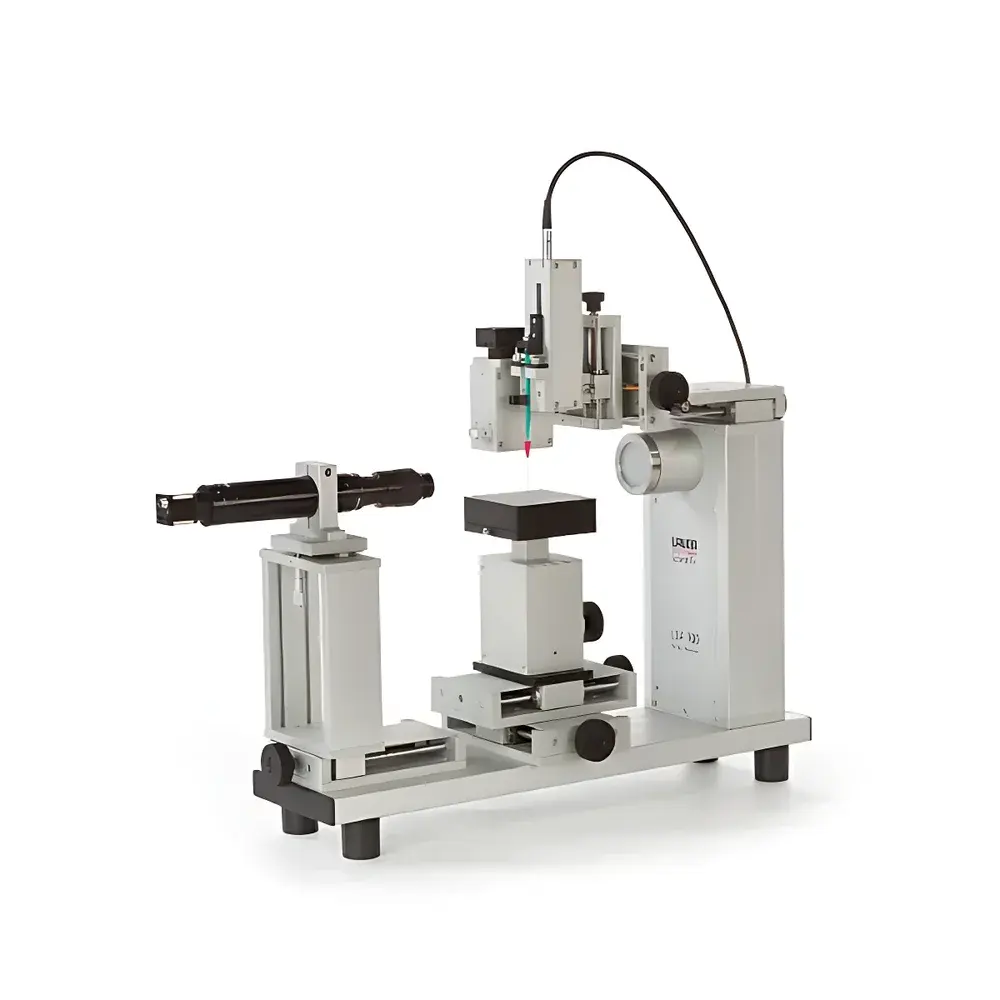
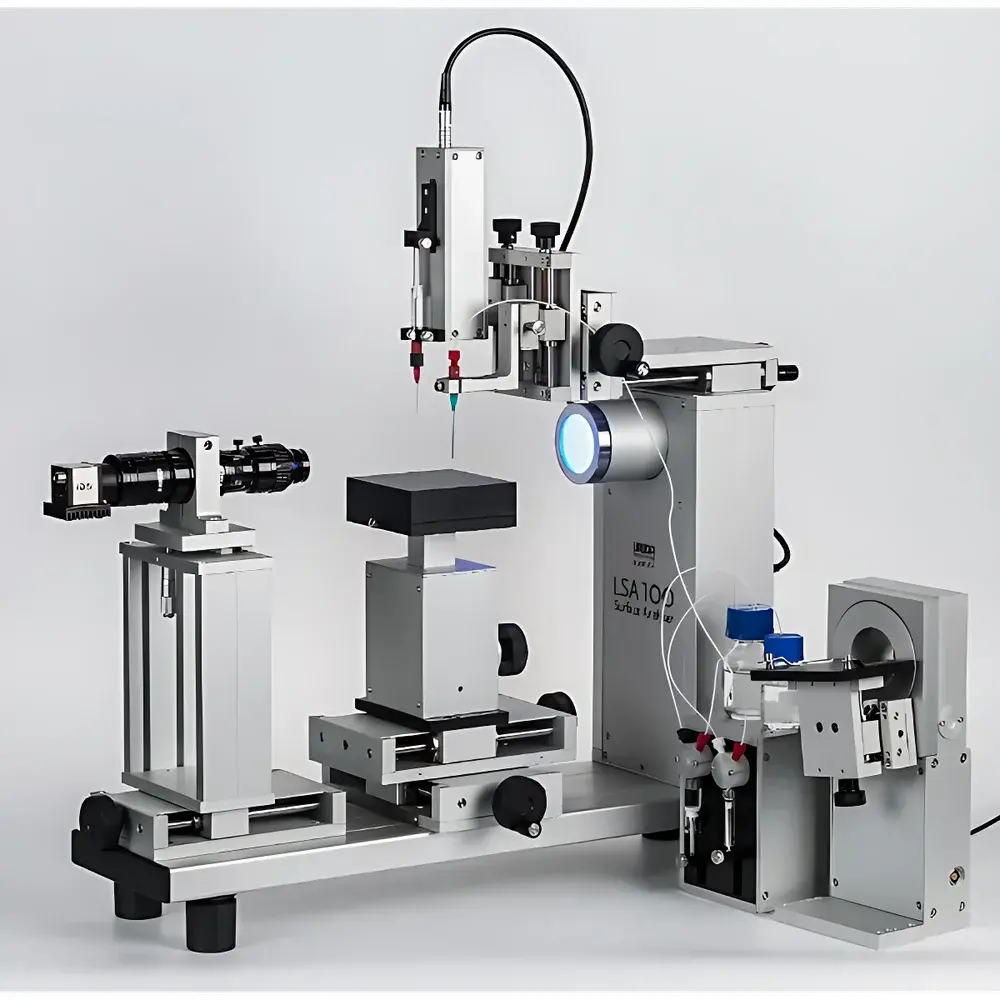
LAUDA Scientific LSA100B Video-Based Optical Contact Angle Analyzer
| Brand | LAUDA Scientific |
|---|---|
| Origin | Germany |
| Model | LSA100B |
| Instrument Type | Benchtop Video Optical Contact Angle Analyzer |
| Contact Angle Measurement Range | 0–180° |
| Contact Angle Accuracy | ±0.1° |
| Contact Angle Resolution | 0.01° |
| Surface/Interfacial Tension Range | 0.01–2000 mN/m |
| Surface/Interfacial Tension Resolution | 0.01 mN/m |
| Sample Stage Dimensions | 100 × 100 mm |
| Maximum Sample Size (L×W×H) | ∞ × 290 × 76 mm |
| Stage Load Capacity | 12 kg |
| Imaging System | 50 mm High-Resolution Low-Distortion Lens with USB3.0 High-Speed Camera (752 × 480 px, 87 fps) |
| Light Source | Adjustable High-Uniformity LED Cold Light |
Overview
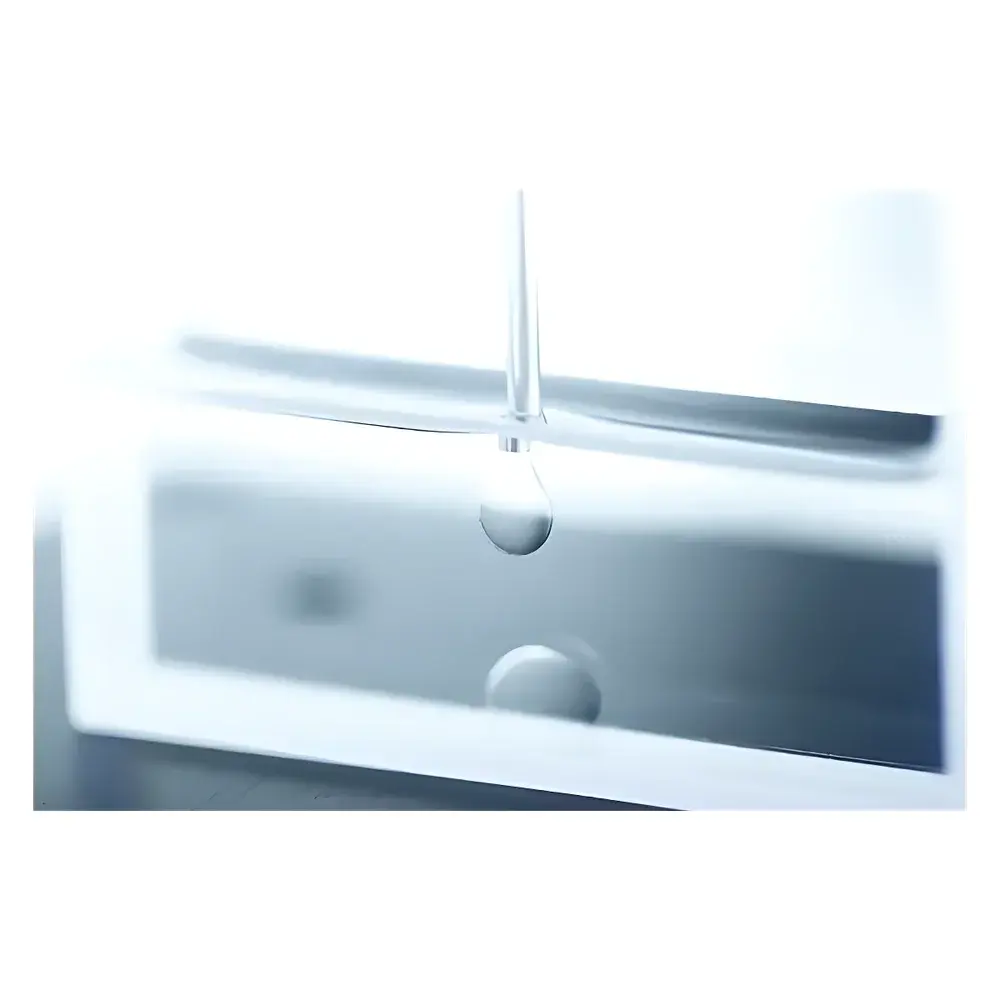
The LAUDA Scientific LSA100B is a benchtop video-based optical contact angle analyzer engineered for high-precision quantification of interfacial phenomena at solid–liquid and liquid–liquid interfaces. Based on the principle of silhouette image analysis using high-resolution backlight imaging and advanced edge-detection algorithms, the LSA100B captures dynamic droplet profiles in real time to compute contact angles, surface free energy, interfacial tension, and related thermodynamic parameters. Its modular architecture supports both static and dynamic measurement modes—including advancing/receding contact angles, roll-off angles, sessile and pendant drop configurations—and enables extension into specialized domains such as oscillating drop interfacial rheology, critical micelle concentration (CMC) determination, and single-fiber wettability analysis. Designed and manufactured in Germany, the system complies with core engineering standards for metrological traceability, mechanical stability, and optical fidelity—making it suitable for ISO/IEC 17025-accredited laboratories and GLP-compliant R&D environments.
Key Features
- High-accuracy contact angle measurement across full 0–180° range with ±0.1° accuracy and 0.01° resolution, validated against NIST-traceable reference surfaces
- Integrated triple-axis motorized sample stage (X/Y/Z, 100/100/50 mm travel) and independent X-axis focus stage for sub-micron positioning repeatability
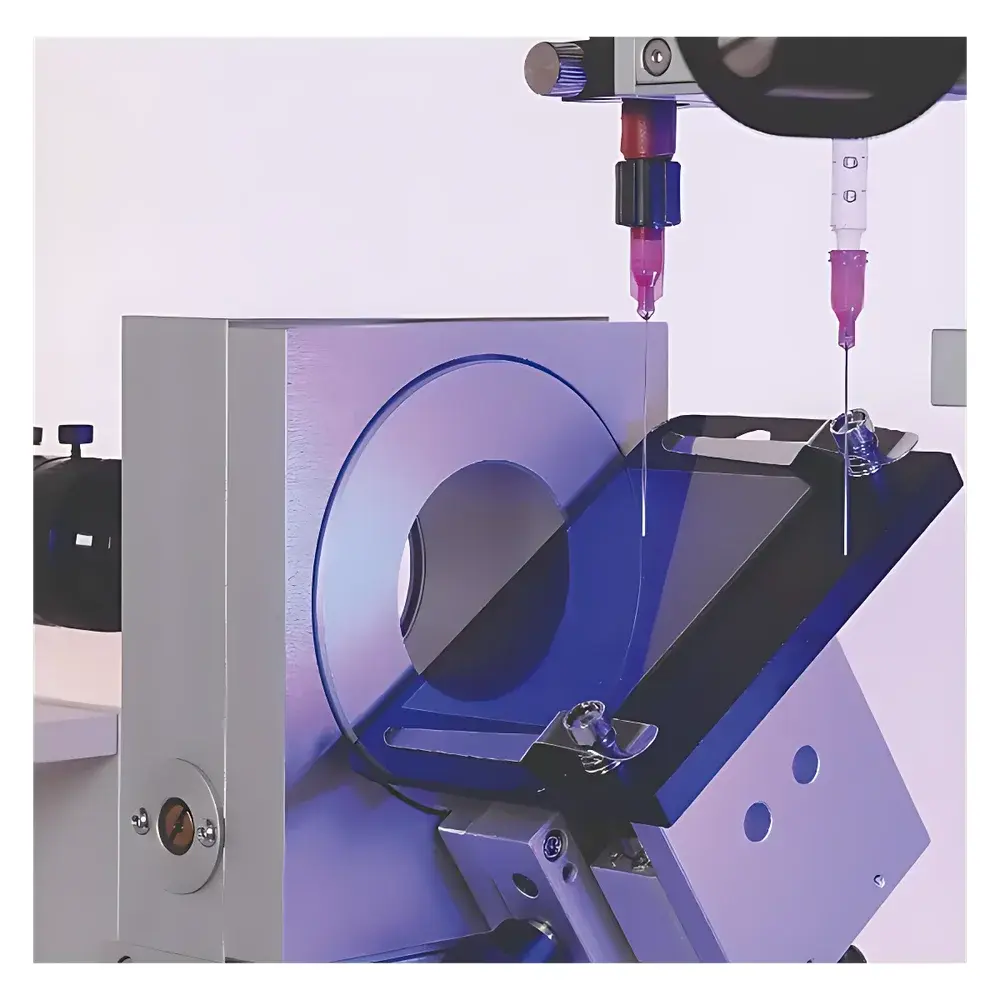
- Dual syringe pump module supporting contactless dispensing, synchronized tilt-stage rolling angle acquisition, and dual-drop differential analysis
- USB3.0 high-speed camera (752 × 480 px, up to 87 fps) paired with a low-distortion 50 mm telecentric lens for minimal parallax and pixel-level droplet contour fidelity
- Modular expansion capability: optional modules include temperature-controlled stage (−20 to 120 °C), oscillating drop interfacial rheology kit, CMC automation module, top-view contact angle adapter, and fiber-mounting fixture for single-filament analysis
- Adjustable uniform LED cold-light source with software-controllable intensity to minimize thermal drift and evaporation artifacts during long-duration measurements
Sample Compatibility & Compliance
The LSA100B accommodates a broad spectrum of sample geometries and material classes—from flat rigid substrates (e.g., silicon wafers, polymer films, metal foils) to irregular, porous, or fibrous specimens (e.g., nonwovens, filter membranes, electrospun mats, paper, textiles). Its open-format stage design (∞ × 290 × 76 mm usable volume) allows integration of external environmental chambers or electrochemical cells. The system meets mechanical and electrical safety requirements per IEC 61010-1 and electromagnetic compatibility standards per EN 61326-1. All measurement protocols—including surface energy calculation via Owens–Wendt, Wu, Fowkes, van Oss–Chaudhury–Good models—are documented in alignment with ASTM D7490, ISO 19403-2/-3, and USP guidelines for surface characterization in pharmaceutical development.
Software & Data Management
Controlled by SurfaceMeter™ v6.x—the proprietary software platform developed by LAUDA Scientific—the LSA100B provides fully automated workflows with audit-trail logging compliant with FDA 21 CFR Part 11 requirements. The software supports batch processing of time-lapse absorption sequences (e.g., Washburn kinetics for powders), real-time contact angle hysteresis mapping, interfacial tension curve fitting using the Young–Laplace equation, and export of raw image stacks, metadata-rich CSV reports, and publication-ready graphs. All user actions, parameter changes, and calibration events are timestamped and digitally signed. Data files adhere to HDF5 format for long-term archival integrity and interoperability with MATLAB, Python (via h5py), and third-party statistical analysis platforms.
Applications
- Surface modification evaluation: plasma treatment, corona discharge, chemical grafting, and UV/ozone cleaning efficacy assessment via contact angle hysteresis and surface energy component analysis
- Formulation science: surfactant screening, emulsion stability prediction, and CMC determination for detergents, cosmetics, and agrochemical adjuvants
- Coating and ink development: wetting behavior on low-energy substrates (e.g., PE, PP), spreading dynamics, and interfacial compatibility between binder/resin systems
- Biomedical materials: hydrophilicity/hydrophobicity profiling of implant surfaces, protein adsorption correlates, and cell-adhesion substrate optimization
- Porous media characterization: capillary rise kinetics in filters, wicking behavior in paper and textiles, and imbibition modeling for battery separators and fuel cell membranes
- Quality control in regulated industries: batch-to-batch consistency verification of functional coatings, release liners, and medical device packaging materials
FAQ
What standards does the LSA100B comply with for contact angle measurement?
The system implements measurement algorithms aligned with ASTM D7490 (standard test method for measuring contact angles of solid surfaces) and ISO 19403-2/-3 (determination of surface free energy components), with hardware calibrated per ISO/IEC 17025 requirements.
Can the LSA100B measure contact angles on curved or textured surfaces?
Yes—using its motorized XYZ stage and high-resolution imaging, the instrument supports localized measurements on microstructured, rough, or gently curved samples; optional top-view module extends capability to convex surfaces and fiber cross-sections.
Is the SurfaceMeter software validated for GxP environments?
SurfaceMeter v6.x includes 21 CFR Part 11-compliant features: electronic signatures, role-based access control, immutable audit trails, and data integrity validation reports—fully deployable in GMP/GLP-regulated labs.
How is interfacial tension determined without requiring density input?
The software applies the axisymmetric drop shape analysis (ADSA) method, solving the Young–Laplace equation numerically using only pixel coordinates and known syringe geometry—eliminating manual density entry and reducing operator-induced error.
What maintenance is required for long-term optical accuracy?
Annual recalibration of the imaging system (lens distortion, pixel size, illumination uniformity) is recommended; LAUDA Scientific provides certified service kits and remote calibration support through authorized service centers in EMEA, North America, and APAC.



