
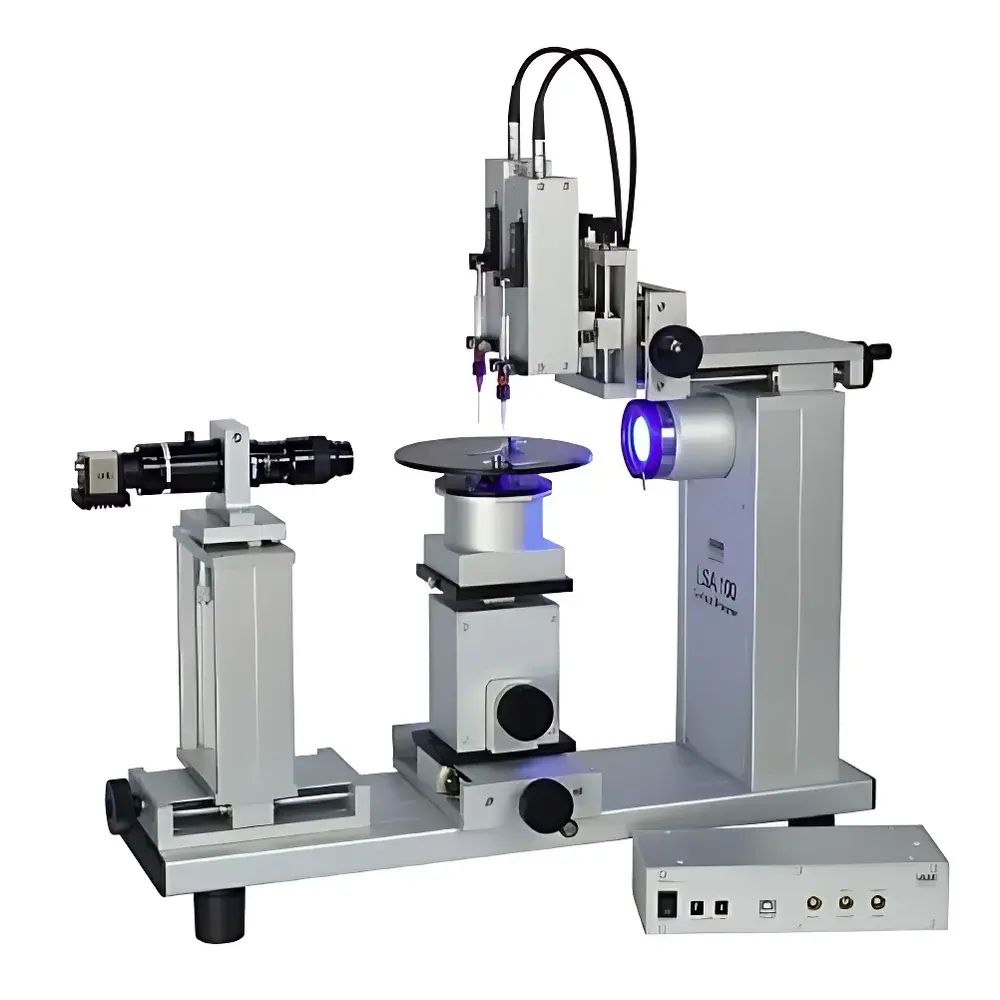
LAUDA Scientific LSA100DARF Video-Based Optical Contact Angle and Interfacial Force Analyzer
| Brand | LAUDA Scientific |
|---|---|
| Origin | Germany |
| Model | LSA100DARF |
| Instrument Type | Benchtop Video Optical Contact Angle Analyzer |
| Contact Angle Range | 0–180° |
| Contact Angle Accuracy | ±0.1° |
| Contact Angle Resolution | 0.01° |
| Surface/Interfacial Tension Range | 0.01–2000 mN/m |
| Surface/Interfacial Tension Accuracy | ±0.01 mN/m |
| Sample Stage Dimensions | 100 × 100 mm (fixed) |
| Maximum Sample Size | ∞ × 290 × 76 mm |
| Stage Load Capacity | 12 kg |
| Optical Magnification | 6.5× Zoom Lens |
| Vertical Adhesion Force Resolution | 0.01 µN |
| Vertical Stage Positioning Accuracy | 0.05 µm |
| Vertical Stage Speed Range | 0.04–500 mm/min |
| Horizontal Retention Force Measurement | Centrifugal Stage (0–750 rpm, max 40 g, acceleration 1–100 rpm/s, speed control accuracy ±2 rpm) |
Overview
The LAUDA Scientific LSA100DARF is a benchtop video-based optical contact angle and interfacial force analyzer engineered for quantitative, dual-axis measurement of solid–liquid interfacial interactions. Unlike conventional contact angle meters that rely solely on static or dynamic sessile/drop shape analysis, the LSA100DARF integrates high-precision motorized stage actuation with synchronized high-speed imaging to directly quantify both vertical adhesion forces and horizontal retention forces at the solid–liquid interface. Its core methodology combines pendant/sessile drop shape analysis (based on Young–Laplace equation fitting) with controlled mechanical detachment protocols—enabling rigorous thermodynamic and rheological interpretation of wetting behavior. The system operates on the principle that interfacial adhesion is not merely inferred from contact angle hysteresis but measured as a physical force (in µN) during controlled separation, while lateral retention is determined via calibrated centrifugal loading under real-time video tracking. This dual-force capability makes the LSA100DARF uniquely suited for advanced surface science applications where surface energy heterogeneity, nanoscale topography effects, or time-dependent interfacial relaxation must be decoupled from geometric artifacts.
Key Features
- Integrated dual-mode interfacial force quantification: simultaneous measurement of vertical adhesion force (via programmable Z-axis displacement) and horizontal retention force (via motorized centrifugal stage)
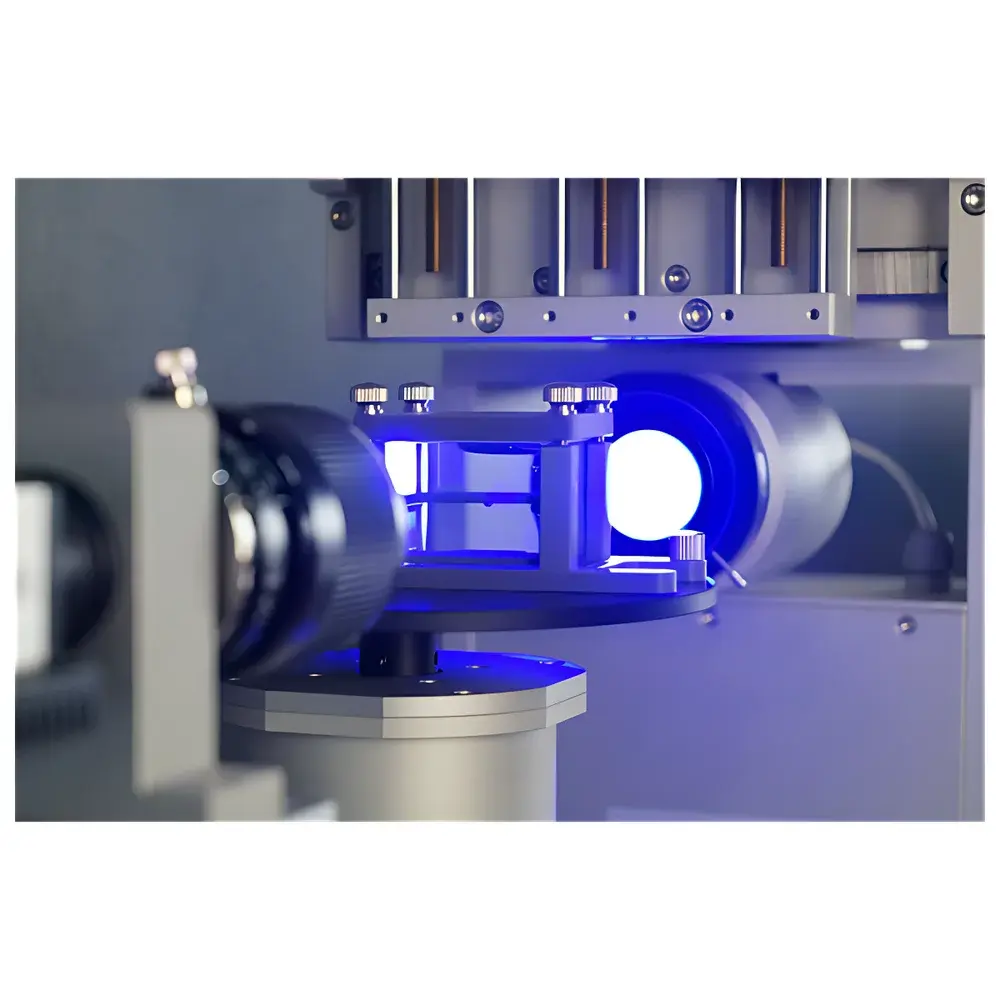
- High-resolution optical subsystem featuring a 6.5× zoom lens with adjustable working distance, optimized for sub-pixel droplet contour detection and distortion-free imaging across wide sample geometries
- Automated, closed-loop Z-stage with 0.05 µm positional repeatability and programmable speed range (0.04–500 mm/min), enabling precise control over detachment kinetics
- Centrifugal stage with full programmability: 0–750 rpm, acceleration ramping (1–100 rpm/s), ±2 rpm speed stability, and maximum radial acceleration up to 40 g
- Force resolution of 0.01 µN in both vertical and horizontal measurement modes, traceable to SI units via calibrated load-cell integration and image-based deformation modeling
- Benchtop modular architecture supporting optional accessories including temperature-controlled stages, environmental chambers, and high-speed cameras (up to 1000 fps)
Sample Compatibility & Compliance
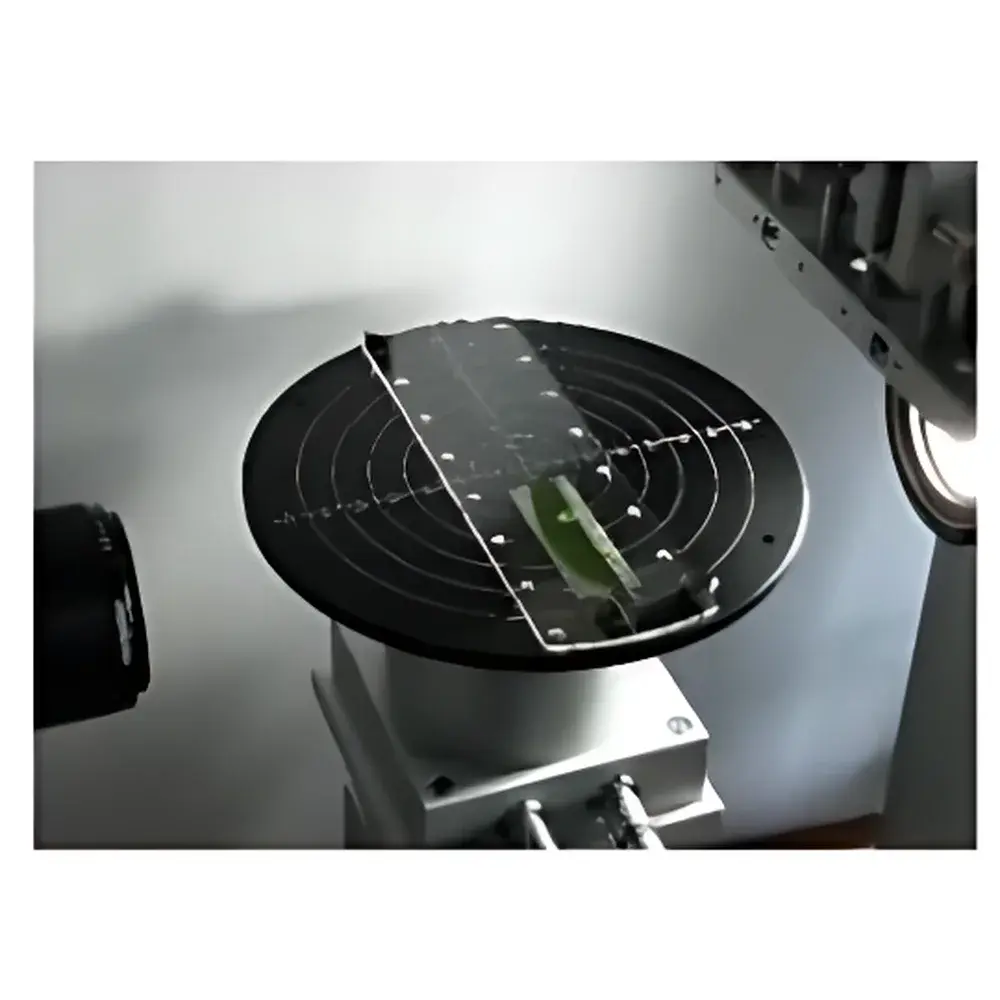
The LSA100DARF accommodates samples up to 290 mm in width and 76 mm in height, with unlimited length—making it compatible with large-area coatings, flexible substrates, rolled foils, and macro-textured industrial surfaces. The 100 × 100 mm fixed sample stage provides stable reference positioning for microscale feature mapping, while the 12 kg load capacity ensures mechanical integrity during high-acceleration centrifugation. All force measurements adhere to ASTM D7334 (Standard Practice for Surface Energy Analysis of Polymer Coatings), ISO 19403-2 (Contact angle measurement — Part 2: Static contact angle), and ISO 19403-4 (Dynamic contact angle), with software audit trails compliant with FDA 21 CFR Part 11 requirements for electronic records and signatures. Data acquisition and reporting support GLP/GMP workflows, including user access control, versioned method templates, and timestamped raw image archives.
Software & Data Management
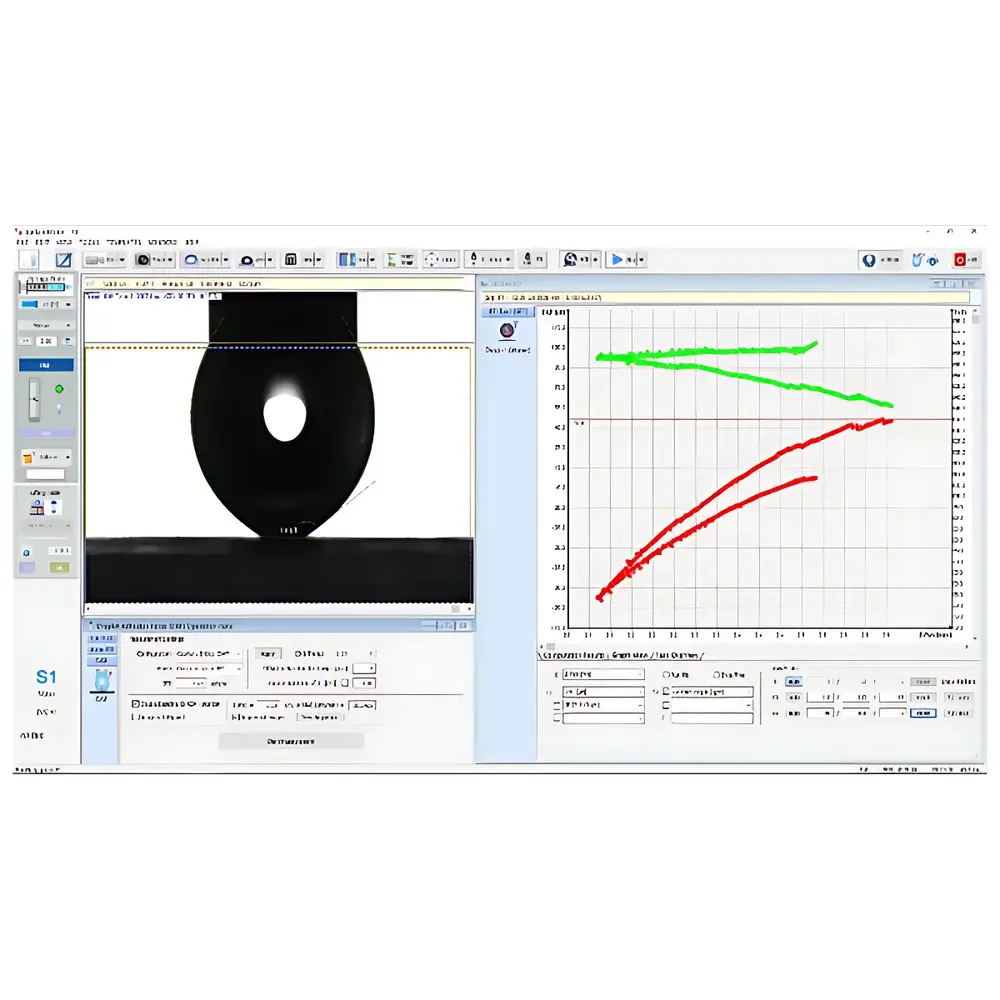
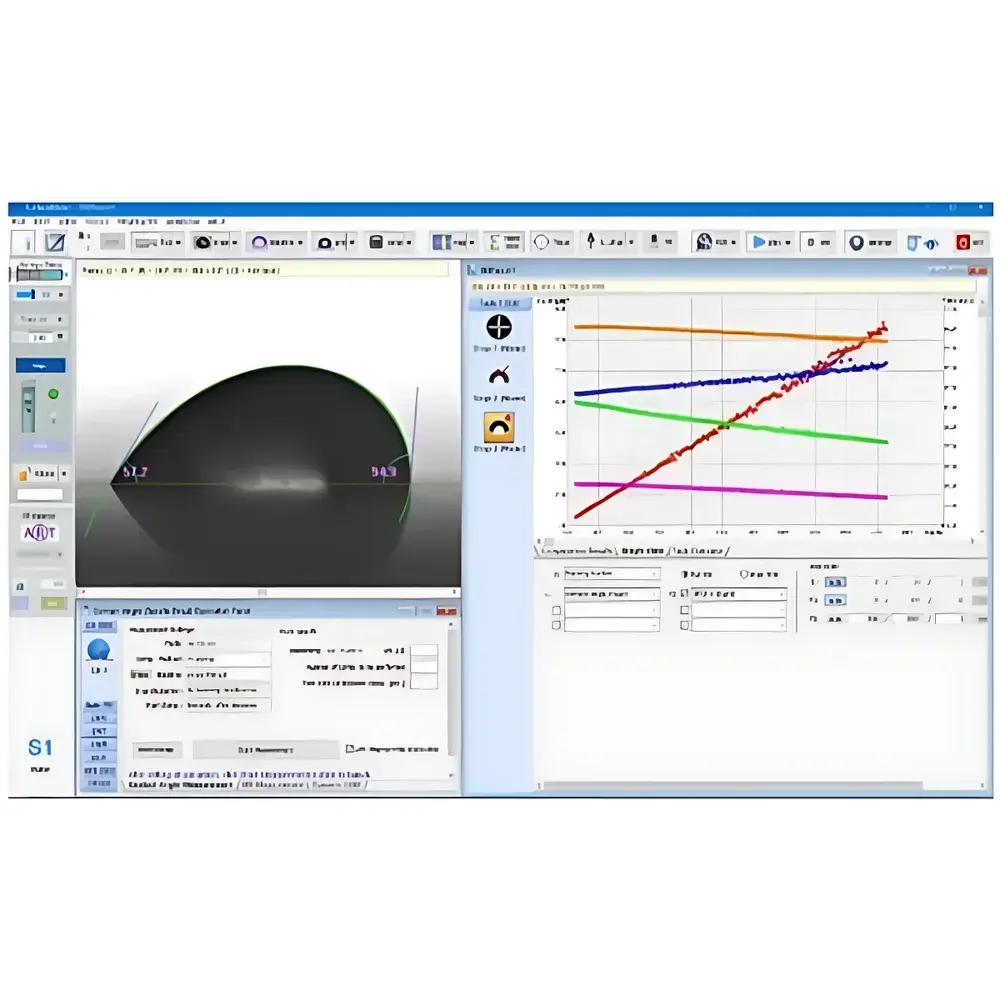
The instrument is operated via LAUDA’s SCA22 software platform—a Windows-based application built on a modular architecture supporting multi-user environments and network deployment. It provides real-time force–distance and force–rotation curves, automated baseline correction, and batch processing for statistical analysis of contact angle hysteresis, advancing/receding angles, and adhesion work integrals. All image sequences are stored with embedded metadata (exposure time, magnification, stage coordinates, environmental conditions). Export formats include CSV, XML, and HDF5 for third-party analysis in MATLAB, Python (SciPy/Pandas), or JMP. The software includes built-in uncertainty propagation models based on pixel error, lens distortion calibration, and stage encoder resolution—ensuring metrologically defensible results per ISO/IEC 17025 guidelines.
Applications
- Quantitative evaluation of superhydrophobic/superoleophobic surfaces, including Cassie–Baxter vs. Wenzel state transitions under mechanical stress
- Adhesion performance screening of functional coatings (anti-fouling, anti-icing, self-cleaning) under dynamic shear and normal loading conditions
- Surface energy mapping of heterogeneous polymer blends, patterned SAMs, and gradient surfaces using localized force profiling
- Quality control of printed electronics substrates, where ink–substrate interfacial strength dictates film uniformity and delamination resistance
- Fundamental studies of viscoelastic interfacial relaxation in complex fluids (e.g., protein solutions, polymer melts, nanoparticle suspensions) via time-resolved detachment protocols
- Regulatory documentation for medical device surface modifications, satisfying ISO 10993-6 biocompatibility assessment requirements through reproducible interfacial force metrics
FAQ
What distinguishes the LSA100DARF from standard contact angle analyzers?
It directly measures interfacial forces (adhesion and retention) as physical quantities in µN—not just geometric parameters—by combining high-precision motion control with real-time image analysis.
Can the system measure both advancing and receding contact angles automatically?
Yes, via programmable liquid dispensing and stage movement; the software calculates hysteresis loops and extracts dynamic angles without manual intervention.
Is environmental control (temperature/humidity) supported?
Yes—optional Peltier-cooled stages and sealed environmental chambers integrate seamlessly with the base system and are fully controllable via SCA22 software.
How is force calibration performed?
Calibration uses NIST-traceable reference weights and certified cantilevers; the software applies correction factors for optical lever sensitivity and stage compliance.
Does the system support GMP/GLP-compliant data handling?
Yes—SCA22 includes electronic signatures, audit trails, role-based permissions, and 21 CFR Part 11–compliant report generation with digital watermarking and hash-verified archives.



