
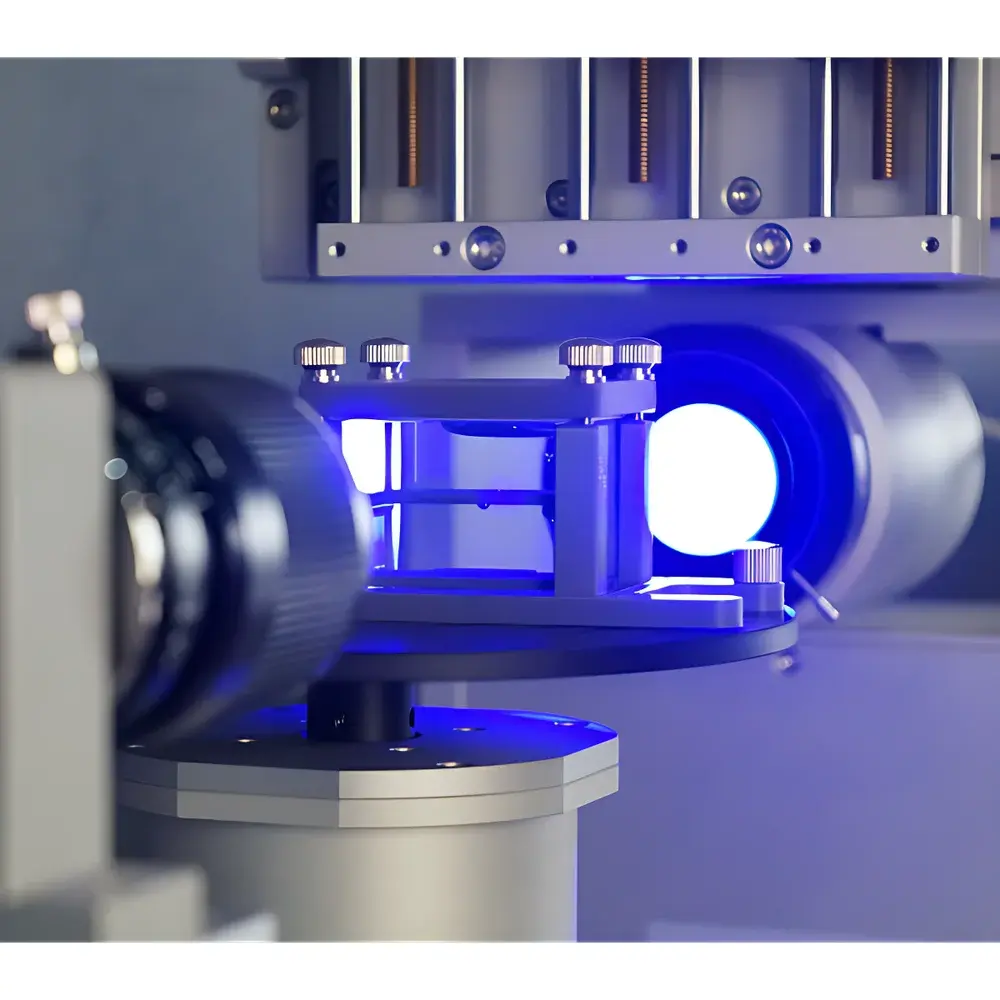
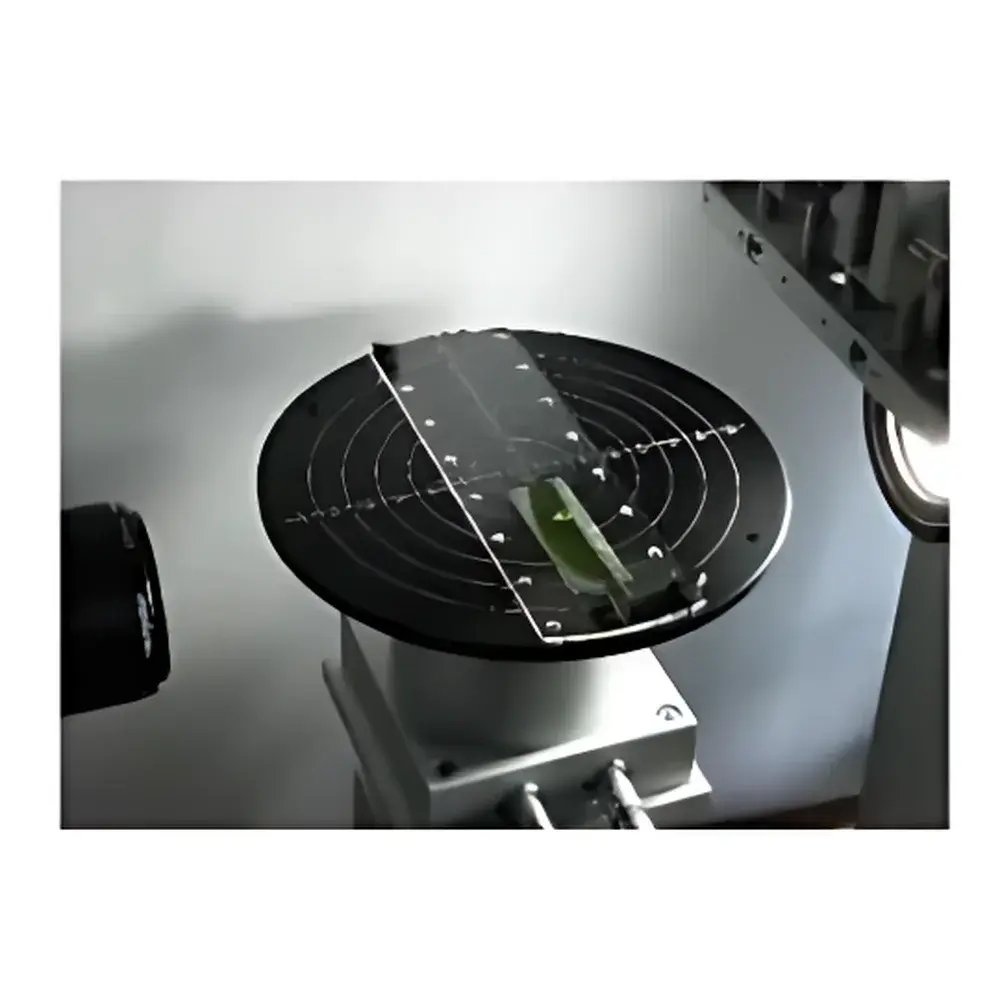
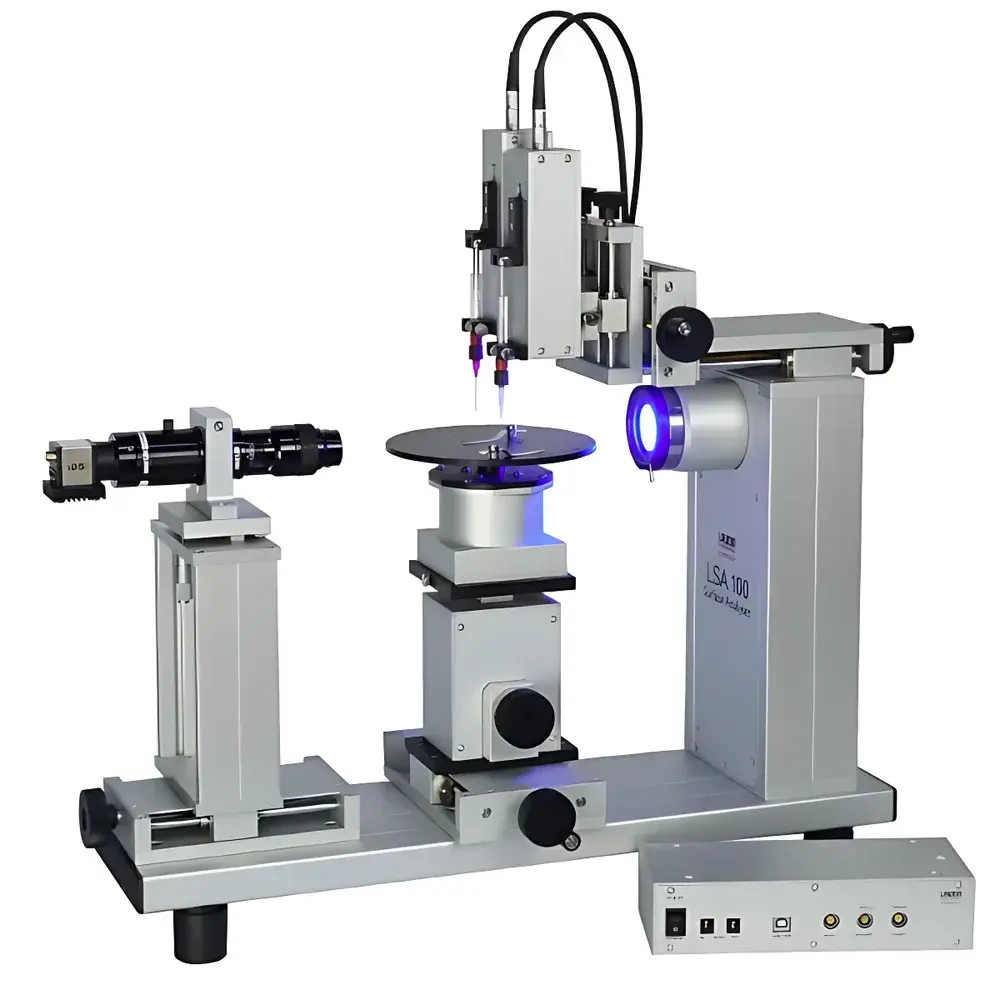
LAUDA Scientific LSA100RF Optical Retention Force Analyzer (Contact Angle Goniometer)
| Brand | LAUDA Scientific |
|---|---|
| Origin | Germany |
| Manufacturer Authorization | Authorized Distributor |
| Import Status | Imported |
| Model | LSA100RF |
| Instrument Type | Video-Based Optical Contact Angle & Retention Force Analyzer |
| Form Factor | Benchtop Laboratory System |
| Contact Angle Range | 0–180° |
| Contact Angle Accuracy | ±0.1° |
| Contact Angle Resolution | 0.01° |
| Surface Tension Range | 0.01–2000 mN/m |
| Surface Tension Accuracy | ±0.01 mN/m |
| Sample Stage Dimensions | 100 × 100 mm (fixed) |
| Max Sample Dimensions | ∞ × 290 × 76 mm |
| Stage Load Capacity | 12 kg |
| Optical Zoom | 6.5× Continuous Zoom Lens |
| Centrifuge Control | Programmable Automatic Rotation Stage |
| Max Centrifugal Acceleration | 40 g |
| Rotational Speed Range | 0–750 rpm |
| Speed Control Precision | ±2 rpm |
| Angular Acceleration Range | 1–100 rpm/s |
| Force Resolution | 0.01 µN |
Overview
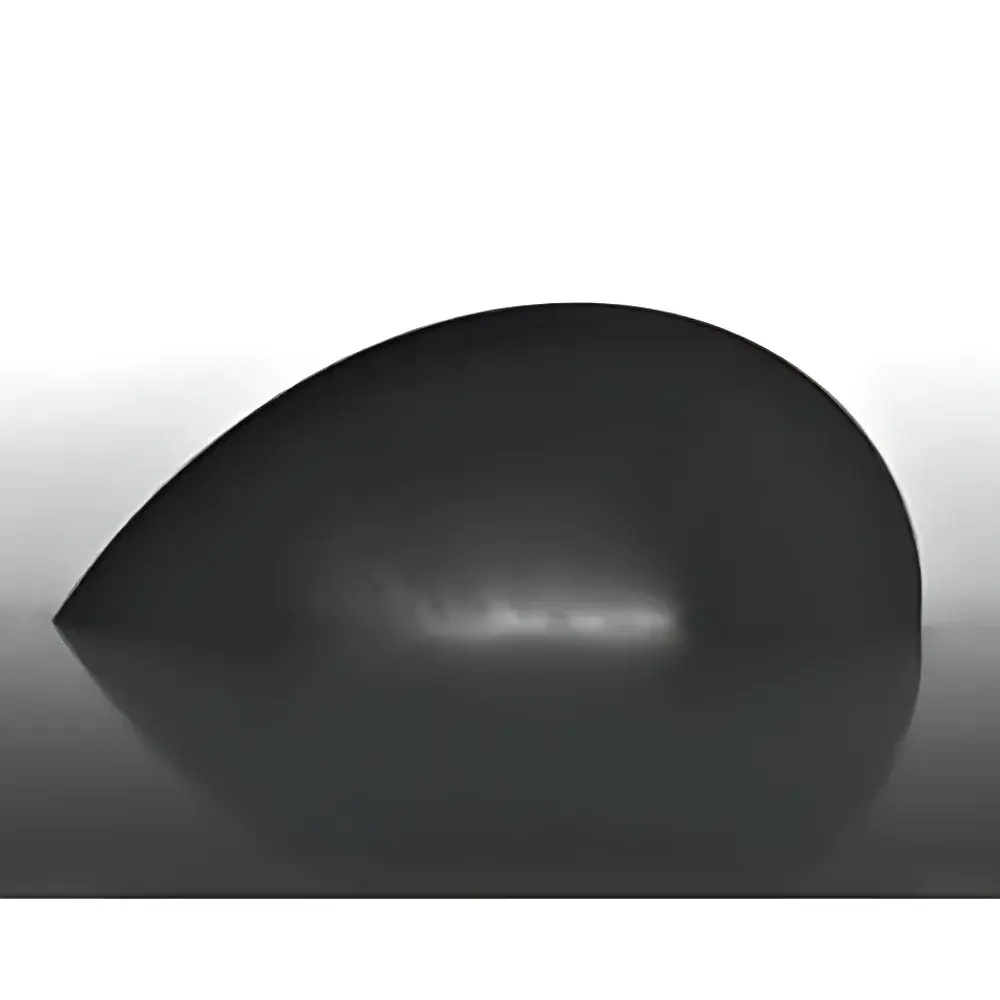
The LAUDA Scientific LSA100RF Optical Retention Force Analyzer is a dual-mode benchtop surface characterization instrument engineered for simultaneous, high-resolution measurement of static/dynamic contact angles and interfacial retention forces at solid–liquid interfaces. Unlike conventional optical goniometers that rely solely on geometric analysis of sessile or pendant droplets, the LSA100RF integrates a precision programmable centrifuge stage with synchronized high-speed video capture to quantify the lateral adhesive force—termed “retention force”—that must be overcome to initiate droplet sliding across a substrate. This capability is grounded in Couette-type shear dynamics under controlled rotational acceleration, where centrifugal force induces progressive deformation and eventual lateral displacement of a deposited droplet. The system records time-resolved droplet morphology, positional shift, and corresponding angular evolution (advancing/receding contact angles) with sub-pixel spatial fidelity and micro-newton-level force resolution. Its design conforms to fundamental principles of wetting thermodynamics and interfacial rheology, enabling direct correlation between macroscopic contact behavior and nanoscale interfacial adhesion energetics.
Key Features
- Integrated centrifugal stage with programmable acceleration profiles (1–100 rpm/s), enabling precise control over dynamic force ramping and reproducible slip-point detection.
- Synchronized high-speed imaging (≥100 fps) triggered in real time with rotational parameters, ensuring temporal alignment between mechanical stimulus and morphological response.
- 6.5× continuous zoom optical path with motorized focus and LED-illuminated backlit imaging, optimized for low-noise contrast across diverse surface chemistries and roughness scales.
- Dual-mode software algorithm: simultaneous fitting of Young–Laplace contour for contact angle and centroid-tracking-based force calculation from centrifugal equilibrium equations.
- Benchtop architecture with modular sample stage (100 × 100 mm fixed platform; extended support up to 290 × 76 mm depth) and 12 kg load capacity for large or multi-component samples.
- Force resolution of 0.01 µN and contact angle resolution of 0.01°, validated per ISO 19403-2 and ASTM D7334 protocols for interfacial property instrumentation.
Sample Compatibility & Compliance
The LSA100RF accommodates rigid and flexible substrates—including polymers, metals, ceramics, textiles, coated films, and functionalized membranes—without requiring conductive backing or vacuum environments. Its open-stage configuration supports in situ environmental control (optional humidity/temperature chambers) and integration with external stimuli such as UV irradiation or electrochemical cells. All measurement routines comply with GLP documentation standards, supporting audit-ready data export with full metadata (timestamp, rotation profile, image sequence ID, calibration logs). Software output meets FDA 21 CFR Part 11 requirements for electronic records and signatures when deployed with configured user access controls and audit trail activation. Instrument validation documentation aligns with ISO/IEC 17025:2017 for testing laboratories performing surface energy analysis.
Software & Data Management
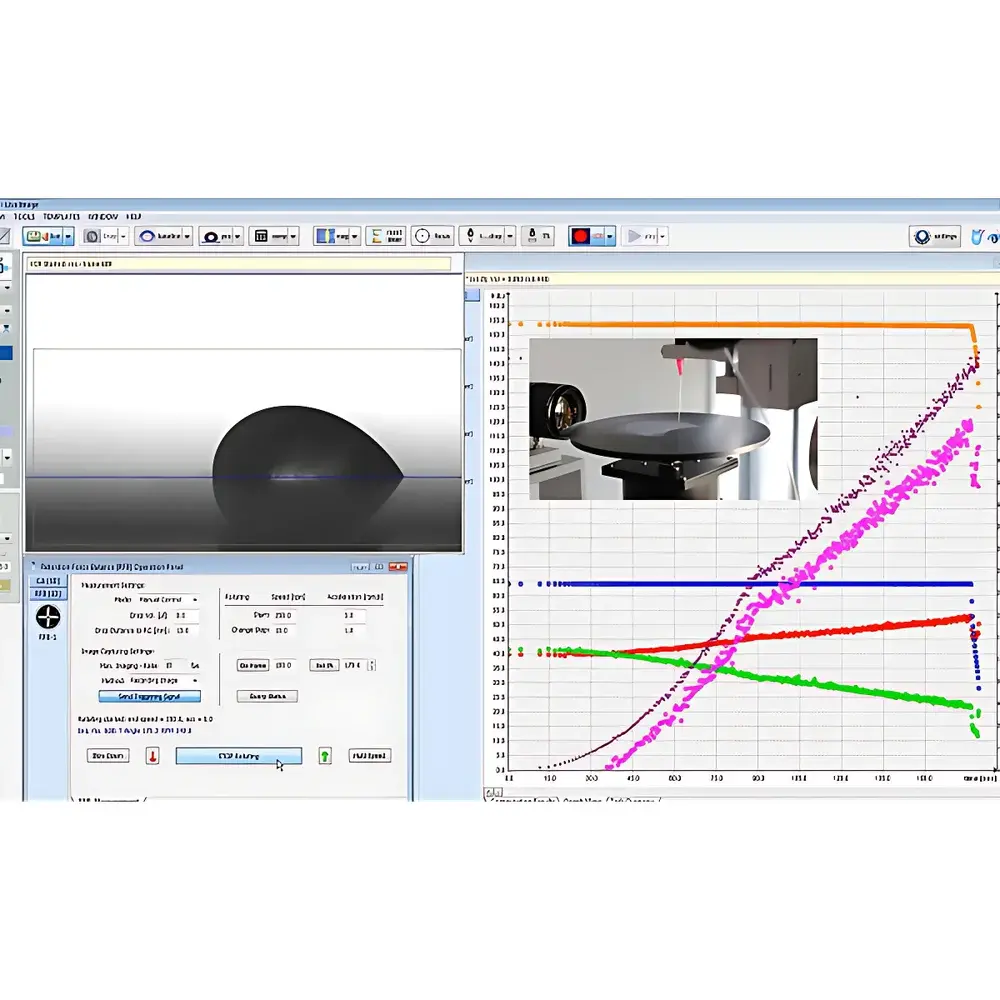
The proprietary ADVANCE software provides an integrated environment for experiment design, real-time visualization, automated curve fitting, and comparative statistical reporting. Each retention force test generates three synchronized data streams: (1) time-stamped contact angle progression (advancing, receding, hysteresis), (2) centrifugal acceleration vs. lateral displacement trajectory, and (3) derived retention force vs. contact angle correlation plots. Raw images and processed data are stored in vendor-neutral HDF5 format with embedded EXIF-style metadata. Batch processing supports multi-sample hysteresis mapping and surface energy component estimation via Owens–Wendt–Rabel–Kaelble (OWRK) and Wu harmonic mean methods. Export options include CSV, PDF reports with traceable calibration certificates, and API-accessible JSON for LIMS integration.
Applications
- Quantitative evaluation of anti-fouling and self-cleaning surface performance through retention force thresholds and sliding-angle hysteresis.
- Development and QC of hydrophobic/hydrophilic coatings in medical devices, filtration membranes, and microfluidic substrates.
- Fundamental studies of dynamic wetting on textured or anisotropic surfaces, including directional transport phenomena and capillary valve behavior.
- Correlation of interfacial adhesion metrics with tribological durability under cyclic wetting–drying conditions.
- Supporting regulatory submissions for topical pharmaceutical formulations where substrate wettability directly impacts drug release kinetics and film uniformity.
- Research into smart responsive materials (e.g., pH-, temperature-, or light-switchable surfaces) where retention force serves as a sensitive proxy for interfacial energy modulation.
FAQ
What physical principle underlies retention force measurement in the LSA100RF?
Retention force is derived from the balance between centrifugal force (m·r·ω²) and interfacial adhesion, where droplet sliding initiates when the tangential component of centrifugal force exceeds the maximum static friction governed by contact line pinning.
Can the LSA100RF measure advancing and receding contact angles independently of rotation?
Yes—the instrument operates in standard static/dynamic sessile drop mode without centrifugation, supporting automated dispensing, tilting, and vapor diffusion methods per ISO 19403-1.
Is calibration traceable to national metrology institutes?
All optical and rotational subsystems are factory-calibrated using NIST-traceable reference standards; user-accessible calibration verification tools include certified goniometric angle plates and calibrated torque sensors.
Does the system support third-party environmental chambers?
Yes—standardized mounting interfaces and analog/digital I/O ports enable seamless integration with commercial humidity, temperature, or gas-controlled enclosures.
How is data integrity ensured during long-duration dynamic tests?
The ADVANCE software implements cyclic memory buffering, automatic checksum validation per frame, and redundant local/network storage options compliant with ISO/IEC 27001 information security frameworks.



