
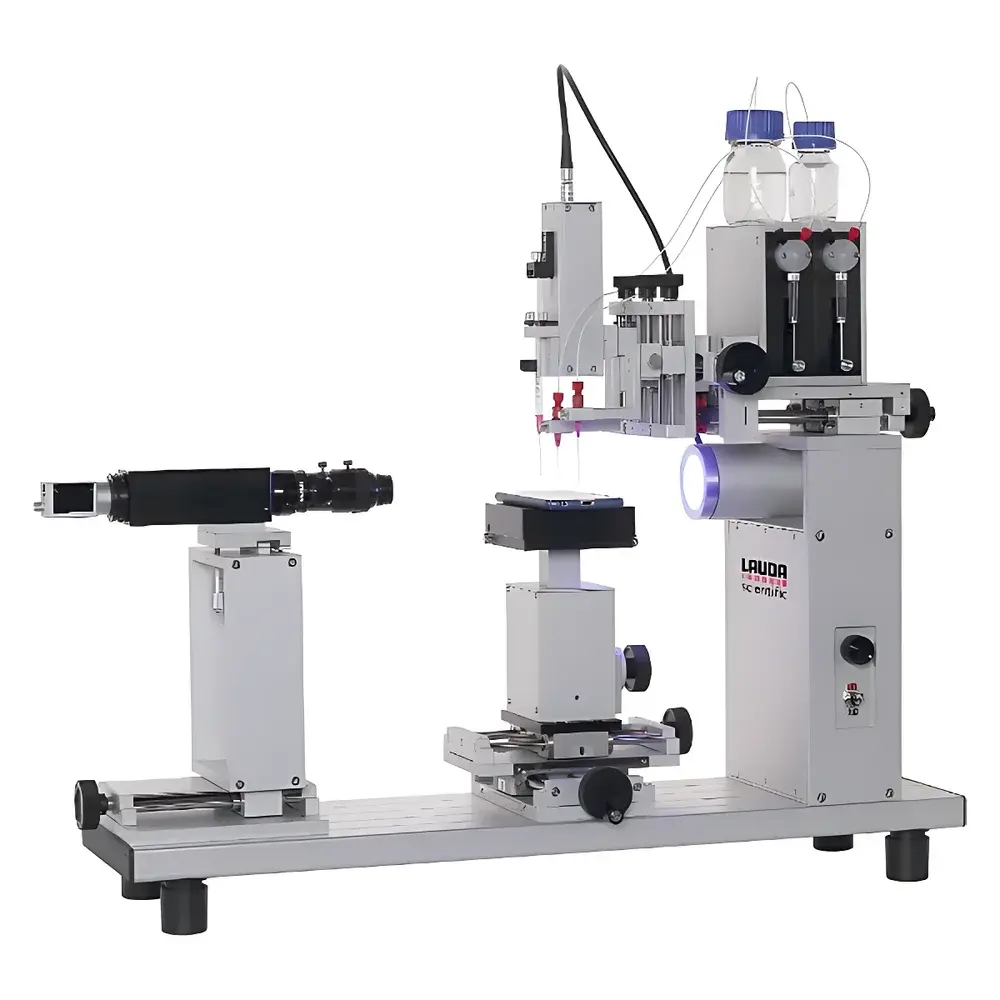
LAUDA Scientific LSA200-T Video-Based Optical Contact Angle Analyzer
| Brand | LAUDA Scientific |
|---|---|
| Origin | Germany |
| Model | LSA200-T |
| Instrument Type | Benchtop Video Optical Contact Angle Analyzer |
| Contact Angle Measurement Range | 0–180° |
| Contact Angle Accuracy | ±0.1° |
| Contact Angle Resolution | 0.01° |
| Surface/Interfacial Tension Range | 0.01–2000 mN/m |
| Surface/Interfacial Tension Resolution | 0.01 mN/m |
| Sample Stage Dimensions | 100 × 100 mm |
| Maximum Sample Dimensions (L × W × H) | ∞ × 310 × 76 mm |
| Stage Load Capacity | 12 kg |
| Optical Magnification | 6.5× |
| Camera | USB 3.0, 1920 × 1200 px, up to 3300 fps |
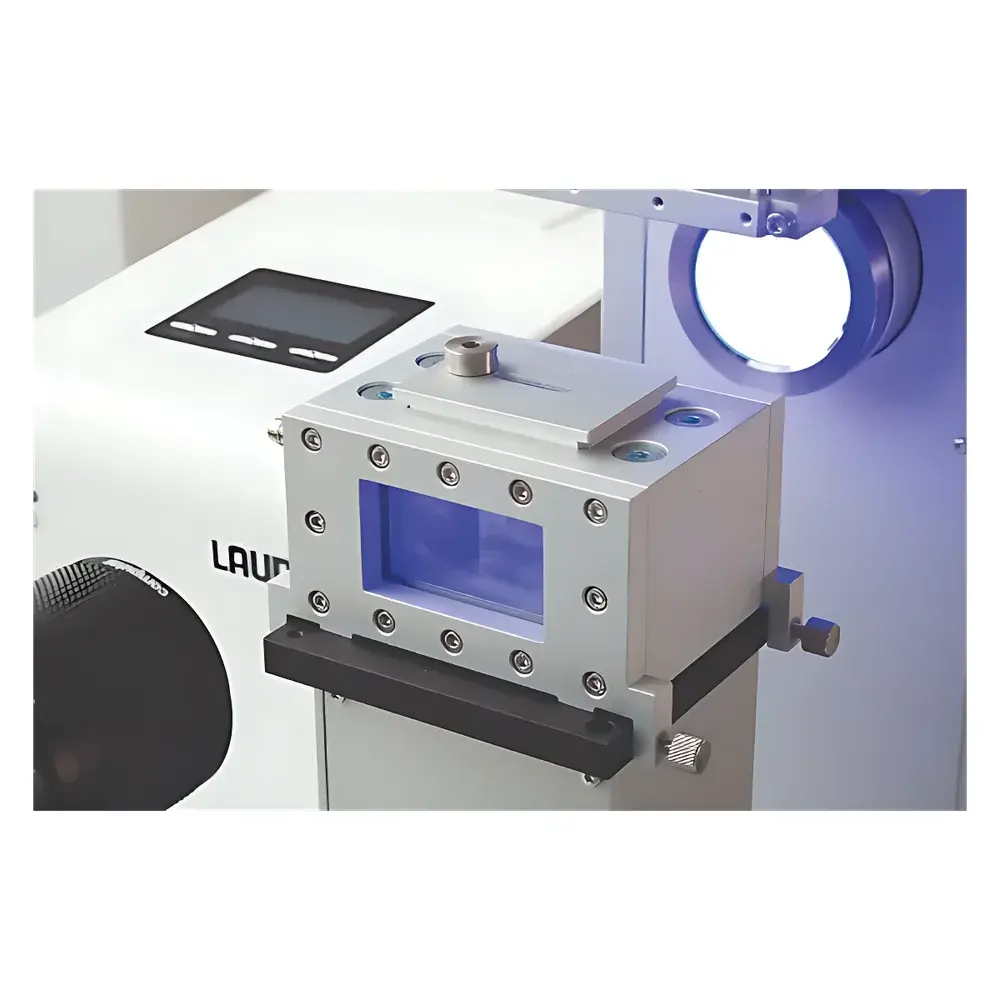
| Temperature Control Options | Circulating Fluid or Peltier |
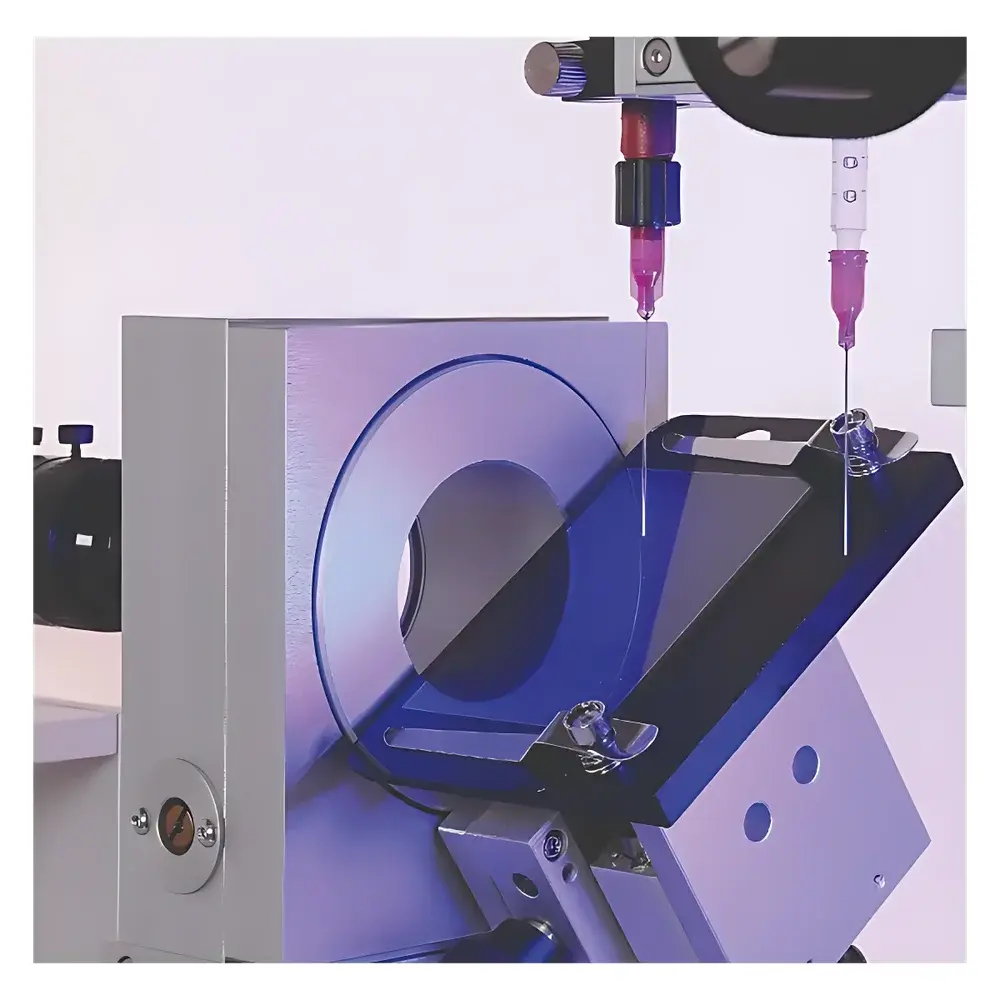
| Tilt Stage | Motorized 360° Continuous Rotation |
| Injection System | Non-contact Electric Dispensing Unit (up to 3 independent syringe modules) |
| Software Compliance | Supports ASTM D724, ISO 19403-2/-3, ISO 15989, USP <1059>, GLP/GMP audit trails (optional) |
Overview
The LAUDA Scientific LSA200-T is a high-precision, benchtop video-based optical contact angle analyzer engineered for rigorous surface and interfacial characterization in academic, pharmaceutical, materials science, and industrial R&D laboratories. It operates on the principle of sessile drop, pendant drop, tilting plate, and oscillating drop methodologies—capturing dynamic interfacial behavior through real-time image acquisition and pixel-level contour analysis. The system integrates dual-view (side + top) imaging optics, enabling simultaneous measurement of advancing/receding angles, roll-off behavior, and anisotropic wetting phenomena without geometric ambiguity. Its modular architecture supports quantitative determination of static and dynamic contact angles, surface free energy (via Owens-Wendt, Wu, Fowkes, van Oss-Chaudhury-Good models), interfacial tension, critical micelle concentration (CMC), interfacial dilatational rheology, and adsorption kinetics—all traceable to internationally recognized standards including ASTM D724 (surface wettability), ISO 19403-2/-3 (contact angle determination), and ISO 15989 (surface free energy calculation).
Key Features
- Dual-optical path configuration: Independent side-view and top-view cameras synchronized via hardware trigger for unambiguous contact line detection on heterogeneous or curved surfaces.
- Non-contact electric dispensing system with programmable volume control (0.1–100 µL per dispense) and up to three parallel syringe modules—eliminating needle-induced surface perturbation and enabling multi-liquid sequential testing.
- Motorized 360° continuous-rotation sample stage with sub-micron angular resolution, supporting precise roll-off angle quantification, contact angle hysteresis mapping, and gravity-independent droplet stability assessment.
- High-speed imaging platform: USB 3.0 camera (1920 × 1200 px) capable of 3300 frames per second at full resolution—essential for capturing rapid spreading, impact dynamics, and oscillating droplet deformation.
- Integrated thermal control options: Compatible with external circulating chillers or built-in Peltier elements (±0.1 °C stability) for temperature-dependent interfacial studies compliant with USP and ISO 14708-1.
- XYZ motorized precision stages for both sample positioning (100 × 100 mm travel) and dispensing unit alignment—ensuring repeatable droplet placement within ±1 µm positional tolerance.
Sample Compatibility & Compliance
The LSA200-T accommodates samples of unlimited length (up to 310 mm width and 76 mm height), with a maximum stage load capacity of 12 kg—supporting rigid substrates (metals, ceramics, silicon wafers), flexible films (polymer sheets, textiles), porous media (filters, membranes), and biological tissues. All measurements adhere to ISO/IEC 17025 calibration traceability protocols when operated with certified reference liquids (e.g., ultrapure water, diiodomethane, ethylene glycol). The system’s software architecture supports 21 CFR Part 11-compliant electronic signatures, audit trails, and user access controls—meeting GLP and GMP documentation requirements for regulated environments.
Software & Data Management
LAUDA’s ADVANCE software provides a unified interface for automated CMC titration, dynamic contact angle profiling, interfacial rheology modeling (based on harmonic analysis of oscillating droplets), and surface free energy decomposition. Raw image sequences are stored in lossless TIFF format with embedded metadata (timestamp, environmental conditions, instrument settings). Export formats include CSV, Excel, and PDF reports conforming to ISO 19403-4 for data interchange. Batch processing, script-driven automation (Python API available), and customizable report templates facilitate integration into LIMS and enterprise QA/QC workflows.
Applications
- Quantitative evaluation of hydrophobic/hydrophilic coatings on medical devices and implants per ISO 10993-16.
- CMC determination of surfactant formulations in drug delivery systems, aligned with USP and Ph. Eur. 2.9.37.
- Surface energy mapping of additive-manufactured polymer parts to predict adhesion performance in bonding processes.
- Time-resolved absorption analysis of nanocellulose aerogels and MOF-based sorbents under controlled humidity.
- Dilatational modulus and phase angle measurement at oil-water interfaces for enhanced oil recovery (EOR) formulation screening.
- Roll-off angle validation of self-cleaning surfaces per ASTM D7777 and ISO 21782.
FAQ
What standards does the LSA200-T support for contact angle measurement?
It complies with ASTM D724, ISO 19403-2/-3, ISO 15989, and ISO 21782 for static/dynamic contact angle and surface free energy determination.
Can the system measure interfacial rheology?
Yes—it includes oscillating drop module for interfacial dilatational rheology, reporting storage/loss moduli and relaxation times per ISO 16520-2.
Is temperature control integrated or external?
Both options are supported: internal Peltier-based stage cooling/heating or external fluid circulation via standardized ports.
How is data integrity ensured in regulated environments?
With optional 21 CFR Part 11 compliance package, including electronic signatures, immutable audit trails, role-based permissions, and password-protected method locking.
What is the minimum detectable surface tension change?
The system achieves 0.01 mN/m resolution across the full 0.01–2000 mN/m range, verified using NIST-traceable standard solutions.



