
LaVision FlameMaster Multi-Parameter Laser Flame Imaging System
| Brand | LaVision GmbH |
|---|---|
| Origin | Germany |
| Model | FlameMaster Multi-Parameter |
| Application Domain | In-situ, quantitative, multi-parameter laser diagnostics in reactive flows |
| Core Modalities | OH-LIF, CH-LIF, C₂-LIF, NO-LIF, PLIF (fuel), Mie scattering, Rayleigh scattering, thermographic phosphor imaging (TPI), particle image velocimetry (PIV), stereo-PIV, tomographic PIV (Tomo-PIV), dual-plane PIV, simultaneous multi-modal acquisition |
| Spatial Resolution | Sub-pixel (typically ≤ 10 µm/pixel with optimized optics) |
| Temporal Resolution | Up to 10 kHz (with high-speed CMOS cameras) |
| Laser Sources | Nd:YAG (266–1064 nm), OPO/OPA tunable systems (210–2000 nm), pulsed diode lasers |
| Detection | Intensified CCD (ICCD), scientific CMOS (sCMOS), EMCCD, stereo/tomographic camera configurations |
| Software Platform | DaVis 10.3+ with FlameMaster-specific modules (FlameAnalysis, ChemiLum, TempMap, VelocityEngine) |
| Compliance | Fully compatible with ISO/IEC 17025 laboratory accreditation workflows |
Overview
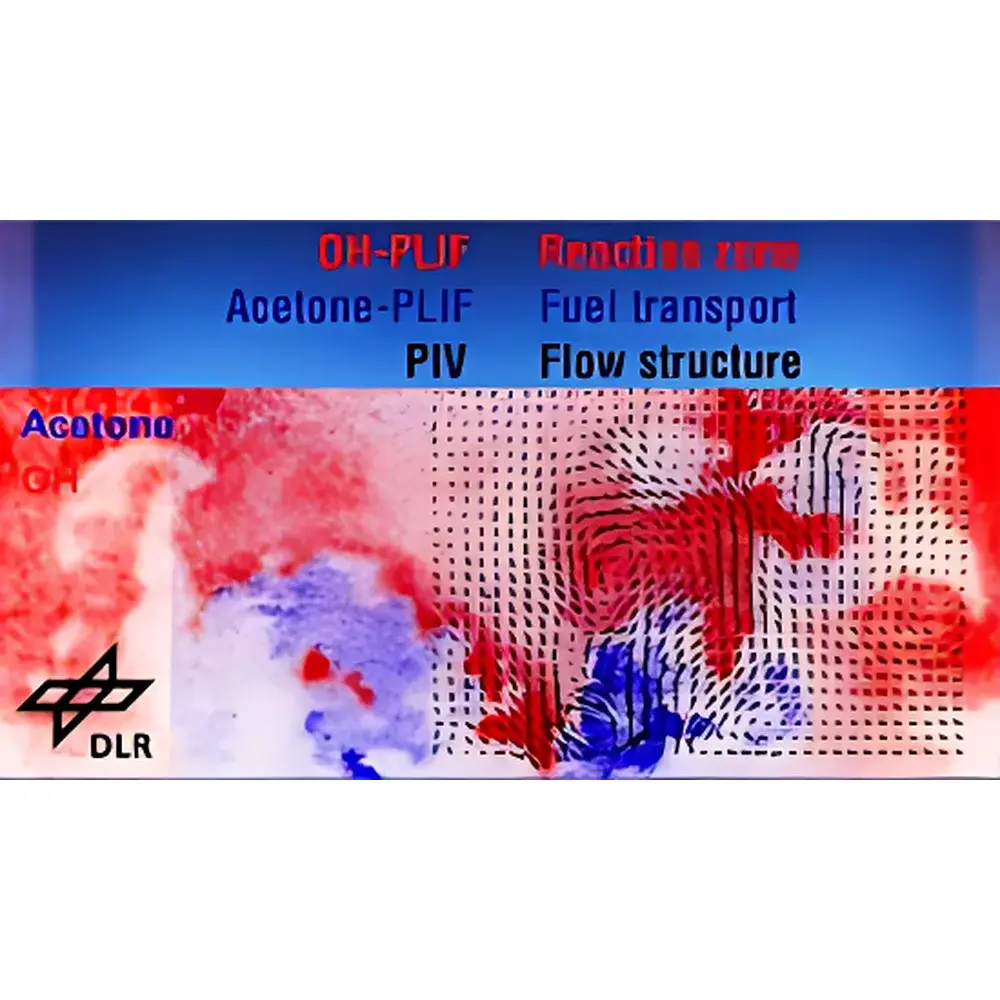
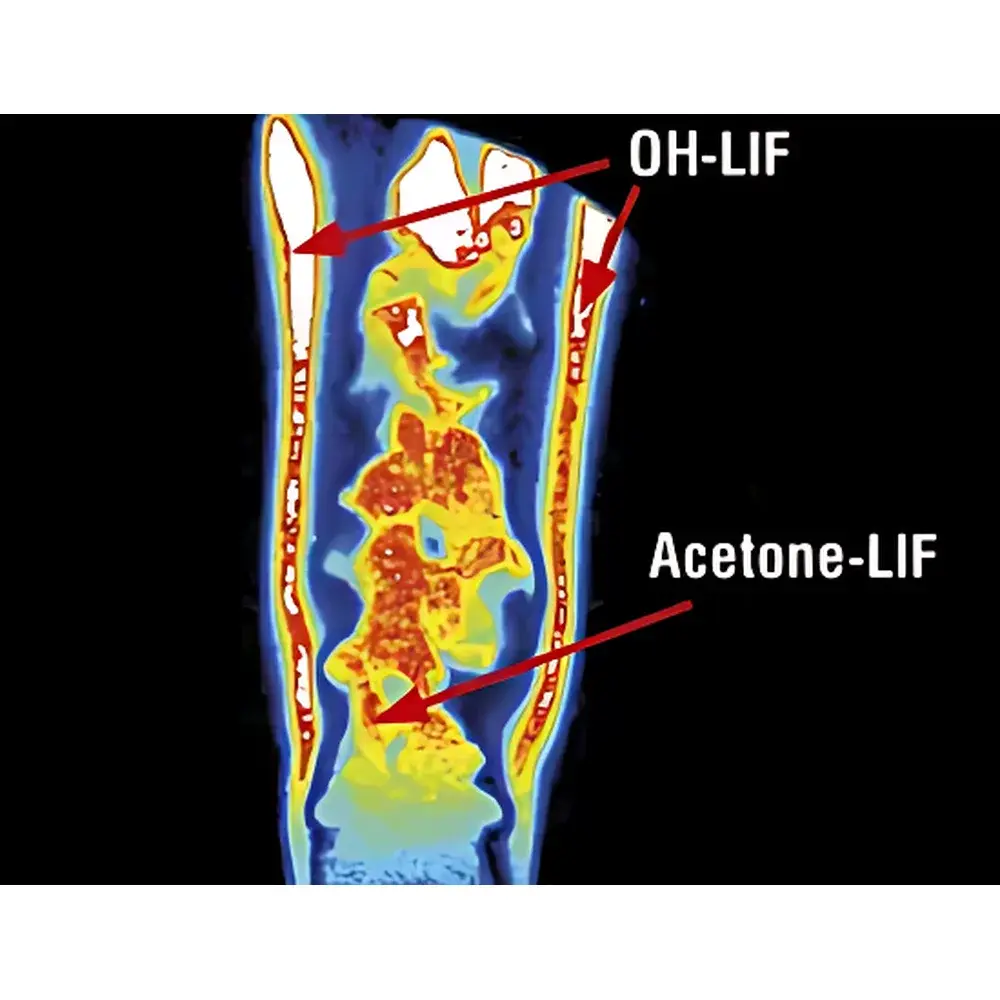
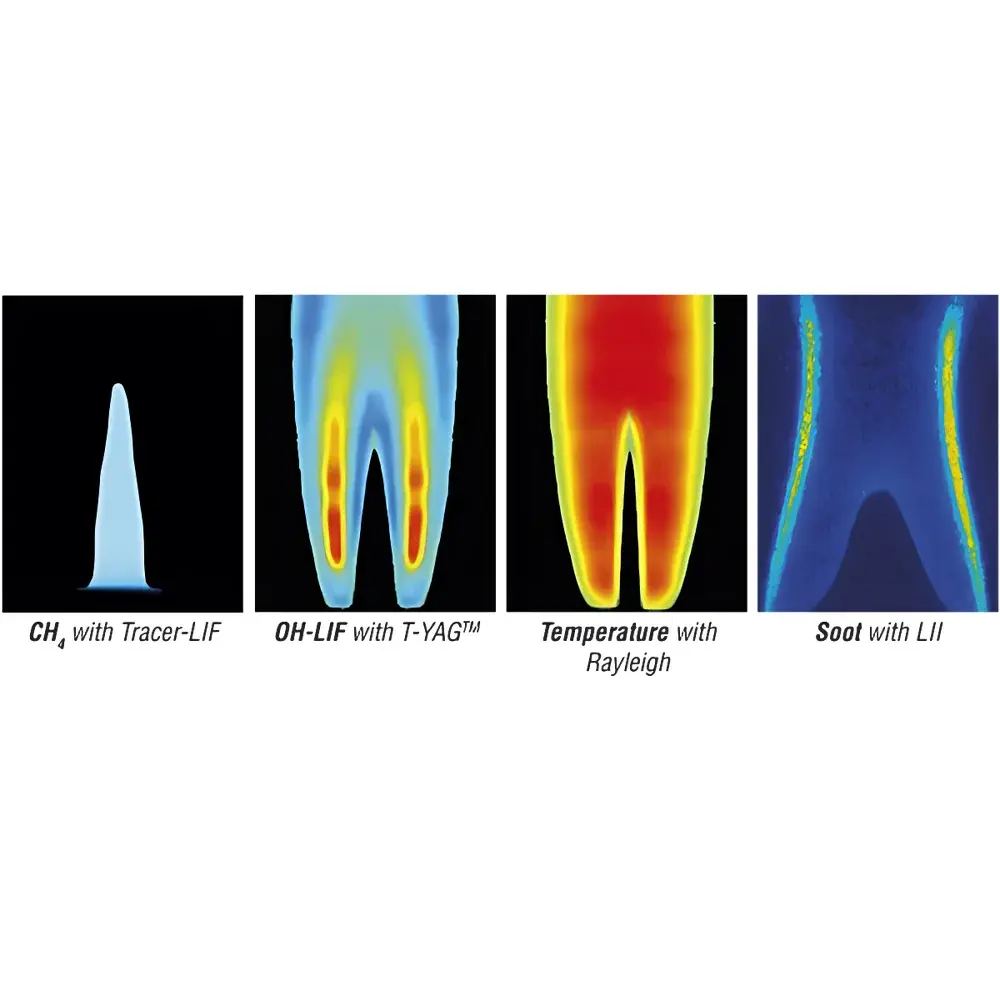
The LaVision FlameMaster Multi-Parameter Laser Flame Imaging System is an integrated, modular diagnostic platform engineered for quantitative, spatially and temporally resolved measurement of combustion phenomena in research-scale and applied test rigs. Built upon established laser-based optical diagnostics principles—including laser-induced fluorescence (LIF), planar Mie and Rayleigh scattering, phosphor thermometry, and particle image velocimetry—the system enables simultaneous, co-registered acquisition of multiple physical and chemical parameters within a single flame cross-section. Its core architecture supports non-intrusive, line-of-sight-free interrogation of turbulent premixed and diffusion flames, laminar counterflow configurations, spray combustion, and engine-relevant transient ignition events. Unlike single-modality systems, FlameMaster is designed from the ground up for synchronized multi-parameter acquisition—e.g., concurrent OH-LIF (reaction zone), fuel-PLIF (unburnt mixture distribution), Mie scattering (soot or droplet location), and stereo-PIV (3C velocity field)—all referenced to a common coordinate frame with sub-millisecond temporal registration.
Key Features
- Modular hardware architecture permitting incremental integration of laser sources (Nd:YAG, OPO/OPA, pulsed diode), optical heads (dual-sheet, stereo, tomographic), and detector arrays (ICCD, sCMOS, EMCCD) without mechanical realignment.
- Real-time synchronization engine supporting <10 ns jitter across up to eight independent laser and camera triggers—essential for phase-locked acquisition in cyclic combustion processes.
- DaVis 10.3+ software suite with FlameMaster-specific processing modules: FlameAnalysis (flame front tracking & curvature analysis), ChemiLum (species concentration calibration via LIF ratioing), TempMap (two-color thermography and Rayleigh thermometry), and VelocityEngine (multi-plane PIV, Tomo-PIV reconstruction, uncertainty quantification).
- Factory-calibrated spectral response profiles for all optical paths, enabling absolute radiometric calibration of LIF signals when combined with reference cell measurements.
- Robust environmental housing options (IP54-rated enclosures, vibration-damped optical tables, thermal stabilization units) for deployment in engine test cells, shock tubes, and high-pressure combustion chambers (up to 100 bar).
Sample Compatibility & Compliance
The FlameMaster system is validated for use with gaseous (CH₄, H₂, C₂H₄, C₃H₈), liquid (n-heptane, iso-octane, ethanol, Jet-A surrogates), and solid-fueled flames under atmospheric and elevated pressure conditions. It accommodates optically accessible combustors ranging from micro-burners (500 mm). All measurement protocols adhere to ASTM E1317 (laser diagnostics terminology), ISO 9276-6 (particle characterization), and ISO/IEC 17025 clause 7.7 (uncertainty evaluation in analytical measurement). When deployed with DaVis Secure Edition, the system provides full electronic record integrity—including user authentication, session logging, parameter change history, and immutable raw-data archiving—meeting documentation requirements for GLP-compliant combustion research and regulatory submission packages (e.g., EPA Tier 3, EASA CS-E certification support).
Software & Data Management
DaVis serves as the unified acquisition, processing, and visualization environment. Raw image sequences are stored in HDF5 format with embedded metadata (laser energy, delay time, gain settings, calibration coefficients). Batch processing pipelines support automated background subtraction, flat-field correction, LIF quenching compensation (via collisional partner modeling), and species concentration mapping using look-up tables derived from laminar flame simulations (e.g., PREMIX, Cantera). Time-resolved volumetric reconstructions (Tomo-PIV, Abel inversion of axisymmetric LIF) are executed via GPU-accelerated solvers. Data export complies with ASAM OpenCRG and HDF5-based FAIR principles (Findable, Accessible, Interoperable, Reusable), facilitating integration into institutional digital repositories and CFD validation databases such as TNF Workshop archives.
Applications
- Quantitative validation of turbulent combustion models (LES, RANS, FGM, FPV) through joint PDFs of temperature–OH–velocity–scalar dissipation rate.
- Ignition delay time measurement in shock tubes and rapid compression machines via time-resolved OH-LIF onset detection.
- Soot formation and oxidation dynamics mapped via simultaneous OH-LIF / LII (laser-induced incandescence) with spectral deconvolution.
- Flame stabilization mechanisms in bluff-body and swirl-stabilized burners under thermoacoustic coupling conditions.
- Alternative fuel combustion chemistry assessment (e.g., ammonia, hydrogen blends) via multi-species PLIF (NH₂, NH, H, O) and temperature mapping.
FAQ
What laser wavelengths are supported for OH-LIF and fuel-PLIF measurements?
Standard OH-LIF uses 283.55 nm (Q₁(4) excitation); fuel-PLIF for hydrocarbons typically employs 266 nm (CH₄) or 271 nm (C₂H₄), configurable via OPO tuning.
Can FlameMaster be integrated with existing engine test benches?
Yes—modular optical access kits (quartz viewport mounts, beam delivery arms, alignment fiducials) and CAN bus synchronization interfaces enable seamless integration with AVL, Horiba, and Siemens testbed controllers.
Is calibration traceable to national standards?
Spectral irradiance calibration is performed using NIST-traceable tungsten-halogen standards; temperature calibration employs certified blackbody sources (±0.5 K uncertainty at 1500 K).
Does the system support real-time feedback control?
While primarily designed for offline analysis, DaVis SDK allows integration with LabVIEW or Python-based control loops for closed-loop flame modulation experiments (e.g., actuated air/fuel ratio adjustment based on OH-LIF intensity thresholds).
What is the typical lead time for configuration and installation?
Standard configurations ship within 12–16 weeks; site-specific integration (including optical path design, safety interlock validation, and personnel training) requires 4–6 additional weeks post-order confirmation.



