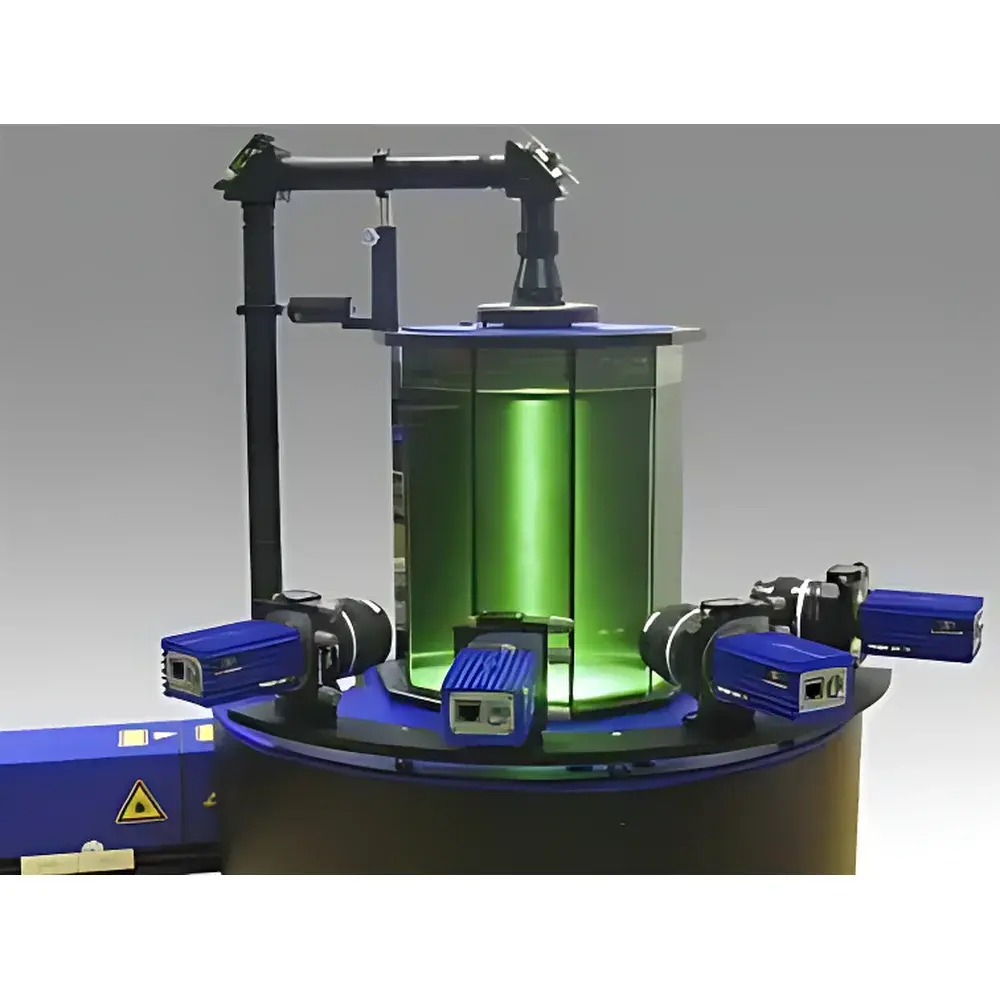
LaVision FlowMaster®-Tomo Tomographic Particle Image Velocimetry System
| Brand | LaVision GmbH |
|---|---|
| Origin | Germany |
| Manufacturer Type | Authorized Distributor |
| Origin Category | Imported |
| Model | FlowMaster®-Tomo |
| Measurement Capability | 3D3C (Three-Dimensional, Three-Component) |
| Measurement Frequency | Low-to-Medium Repetition Rate (Typical Dual-Frame Acquisition) |
| Velocity Range | 0–2000 m/s |
| Accuracy | ±1% of measured velocity magnitude |
| Measurement Volume | 170 mm × 110 mm × 100 mm |
Overview
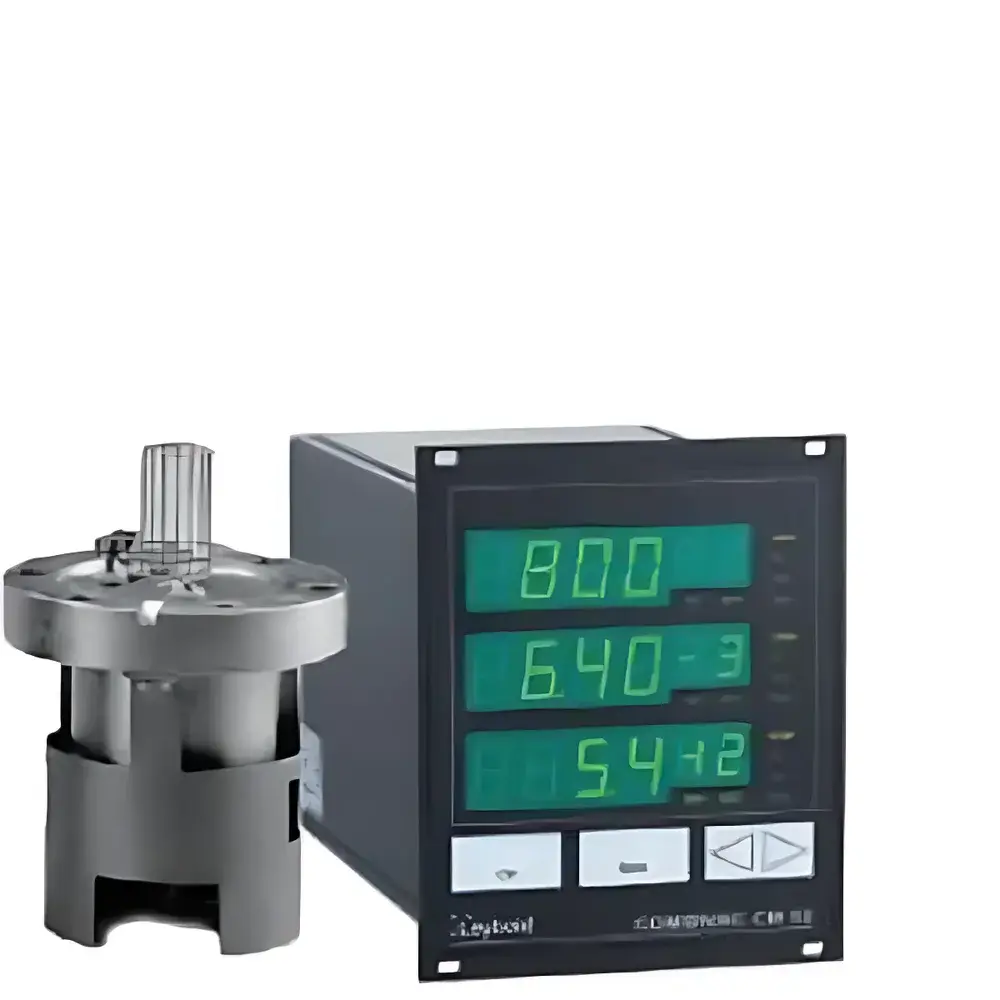
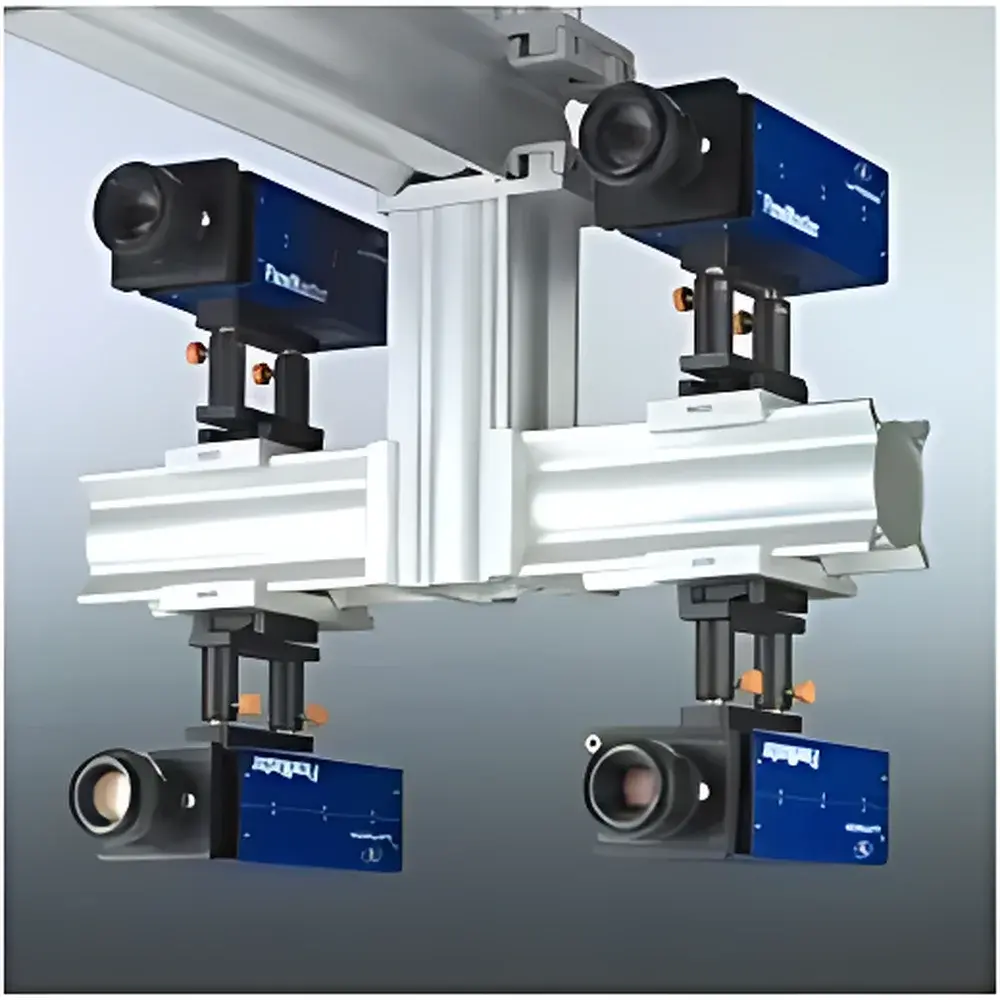
The LaVision FlowMaster®-Tomo is a high-fidelity tomographic particle image velocimetry (Tomo-PIV) system engineered for quantitative, volumetric, and time-resolved measurement of three-dimensional, three-component (3D3C) velocity fields in fluid flows. Unlike planar PIV—which captures velocity data on a single laser-lit sheet—Tomo-PIV reconstructs the full 3D distribution of seeding particles from multiple simultaneous 2D projections acquired by an array of synchronized, high-resolution CCD cameras. The system operates on the principle of optical tomography: four or more calibrated cameras record scattered light from a pulsed laser-illuminated volume; these projections are then processed using the Multiplicative Algebraic Reconstruction Technique (MART) to generate voxel-wise particle intensity distributions. Subsequent 3D cross-correlation between two such reconstructed volumes—acquired at precisely controlled inter-frame delays (Δt)—yields instantaneous 3D3C displacement vectors across the entire interrogation volume. This approach enables true volumetric flow diagnostics without mechanical scanning, supporting investigations of complex unsteady phenomena including vortex dynamics, turbulent coherent structures, and transient mixing processes.
Key Features
- Full-volume 3D3C velocity field acquisition without scanning or slicing—enabling direct observation of spatially extended flow structures
- Integrated multi-camera imaging architecture with precise geometric calibration and volumetric self-calibration (LaVision’s proprietary Spatial Volume Self-Calibration technology)
- Support for high-seeding-density flows: robust reconstruction performance even under moderate-to-high particle loading, where traditional 3D particle tracking velocimetry (3D-PTV) fails due to occlusion and ambiguity
- Modular laser illumination design compatible with dual-cavity Nd:YAG lasers (e.g., 532 nm, up to 15 mJ/pulse), optimized for uniform volumetric illumination and minimal optical distortion
- High-sensitivity, cooled CCD cameras (typically 4 MP or higher resolution) with precise hardware synchronization (sub-microsecond jitter) for accurate Δt control
- Real-time camera triggering and laser pulsing logic integrated via LaVision’s DaVis® acquisition engine, supporting both double-pulse and multi-pulse acquisition modes
Sample Compatibility & Compliance
The FlowMaster®-Tomo is designed for non-intrusive, optical measurement in transparent or semi-transparent fluid media—including air, water, oils, and low-viscosity polymer solutions—provided appropriate optical access and refractive index matching are maintained. Seeding particles must exhibit sufficient Mie scattering efficiency (e.g., silver-coated hollow glass spheres, TiO₂, or polystyrene latex, typically 1–50 µm in diameter) and remain neutrally buoyant within the test fluid. The system complies with international standards governing experimental fluid mechanics instrumentation, including ISO/IEC 17025 for calibration traceability of optical components and alignment procedures. Data acquisition protocols support GLP and GMP-aligned documentation workflows when used in regulated R&D environments. While not FDA-certified per se, the system’s audit-trail-capable DaVis® software satisfies key requirements of 21 CFR Part 11 for electronic records and signatures when deployed with appropriate IT validation.
Software & Data Management
Operation and analysis are fully integrated within LaVision’s DaVis® 10.x software platform—a modular, scriptable environment supporting end-to-end Tomo-PIV workflows: from camera calibration and MART reconstruction to 3D cross-correlation, vector validation (via universal outlier detection, iterative interrogation window deformation, and continuity-based filtering), and advanced post-processing (vortex identification, Q-criterion iso-surfaces, Reynolds stress tensor computation). All raw image data, calibration parameters, reconstruction settings, and processed velocity fields are stored in vendor-neutral HDF5 format with embedded metadata (including timestamp, laser energy, camera gain, and spatial scaling). DaVis® supports batch processing, Python API integration (via daVisPy), and export to standard CFD formats (e.g., VTK, Tecplot PLT) for third-party visualization and simulation coupling. Audit trails—including user actions, parameter changes, and processing history—are automatically logged and exportable for regulatory review.
Applications
- Turbulence research: Quantification of 3D energy cascades, interscale interactions, and Lagrangian statistics in canonical and complex geometries
- Vortex dynamics: Identification, tracking, and topological classification of coherent structures (e.g., hairpin vortices, vortex rings, and breakdown regions) in boundary layers and wakes
- Aerodynamics & combustion: Time-resolved analysis of jet mixing, flame-turbulence interactions, and unsteady separation in combustor models and wind tunnel studies
- Biofluid mechanics: Hemodynamic assessment in anatomically realistic vascular phantoms under pulsatile flow conditions
- Industrial fluid systems: Optimization of pump impeller flows, stirred-tank mixing efficiency, and heat exchanger flow distribution
FAQ
What distinguishes Tomo-PIV from conventional stereo-PIV or 3D-PTV?
Tomo-PIV reconstructs particle volume density directly from multiple 2D projections, enabling high spatial resolution in dense seeding conditions where 3D-PTV suffers from trajectory ambiguity and low vector yield. Unlike stereo-PIV—which infers depth from triangulation of 2D particle images—Tomo-PIV delivers true volumetric velocity data without relying on point-wise correspondence assumptions.
Can the system resolve transient events at high temporal rates?
Yes—though inherently limited by camera frame rate and laser repetition rate, the FlowMaster®-Tomo supports double-frame acquisition at up to ~15 Hz for full-volume reconstruction. Higher effective sampling rates can be achieved using burst-mode acquisition combined with sub-volume interrogation or multi-pulse sequences.
Is volumetric calibration traceable to SI units?
Yes—the Spatial Volume Self-Calibration procedure uses known physical targets (e.g., precision dot grids or volumetric calibration rigs) to establish pixel-to-mm mapping with uncertainty quantified per ISO 5725 guidelines. Calibration certificates are provided upon installation and requalification.
What computing resources are required for real-time MART reconstruction?
Reconstruction of a typical 170 × 110 × 100 mm volume (with 64³ or 128³ voxel grid) requires a workstation with ≥64 GB RAM, multi-core CPU (≥16 threads), and optionally GPU acceleration (NVIDIA CUDA-enabled); full reconstruction times range from seconds to minutes depending on voxel resolution and iteration count.
Does LaVision provide application support for custom experimental setups?
Yes—LaVision offers on-site installation, user training, and application engineering support, including optical layout optimization, seeding strategy guidance, and custom script development for specialized analysis pipelines.