
LaVision FluidMaster-Multi Phase Multiphase Flow Multi-Parameter Imaging System
| Brand | LaVision GmbH |
|---|---|
| Origin | Germany |
| Manufacturer Type | Authorized Distributor |
| Import Status | Imported |
| Model | FluidMaster-Multi Phase |
| Wavelength Accuracy | ±2.0 nm |
| Spectral Bandwidth (Slit) | 1.5–20 nm |
| Optical Resolution | 1.0 nm |
| Sensitivity | 1% |
| Dispersive Elements | Grating and Interference Filters |
Overview
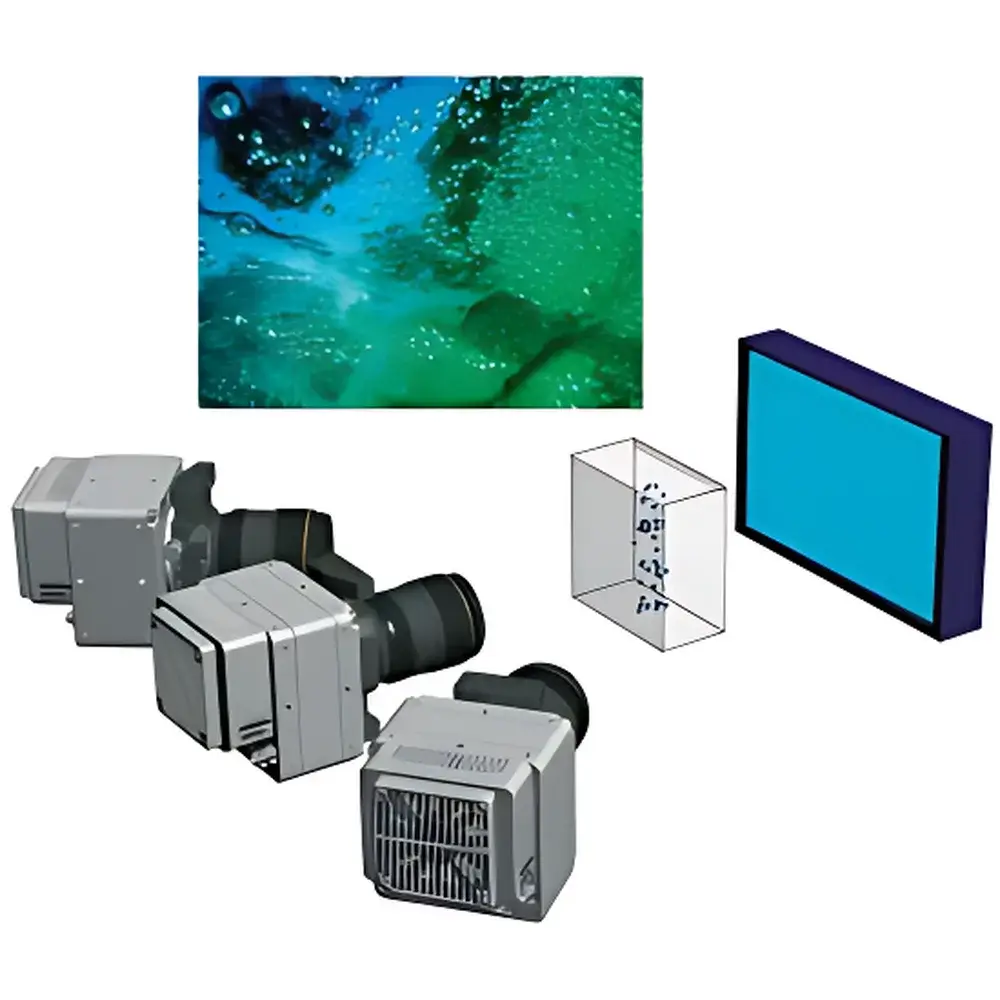
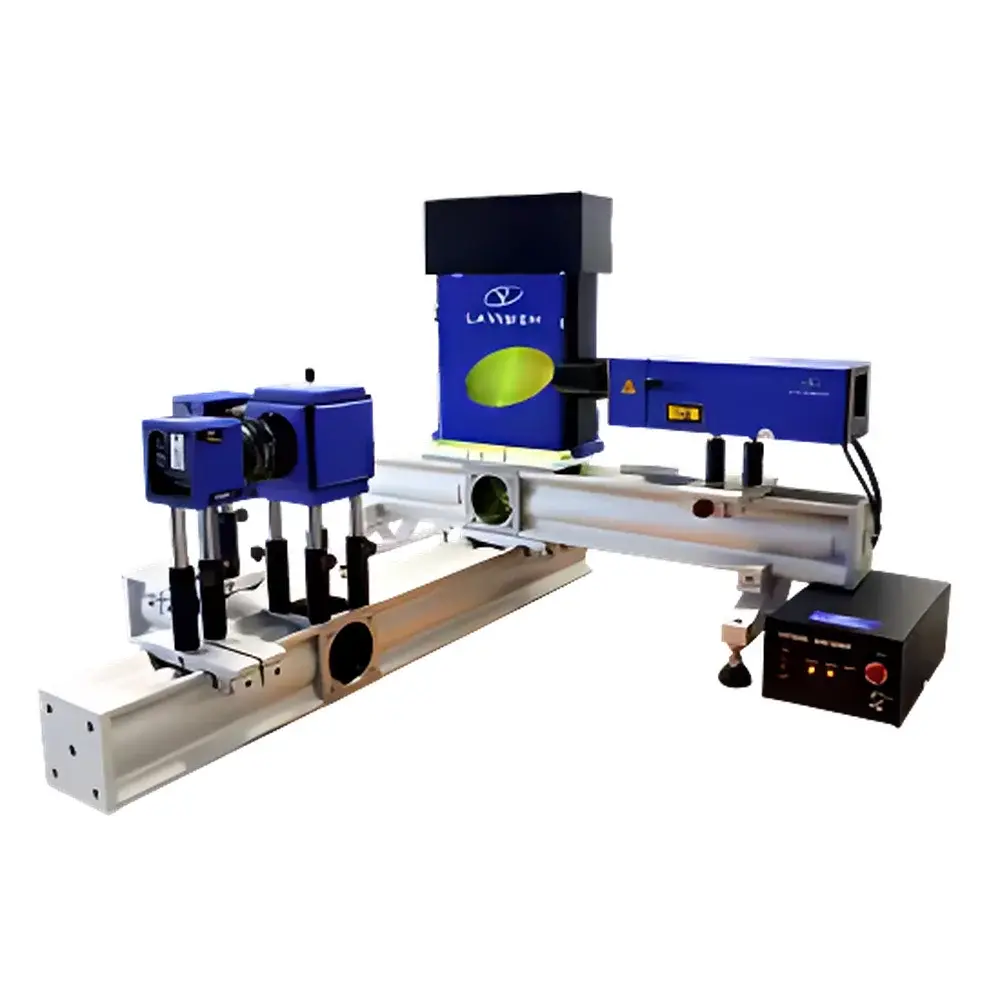
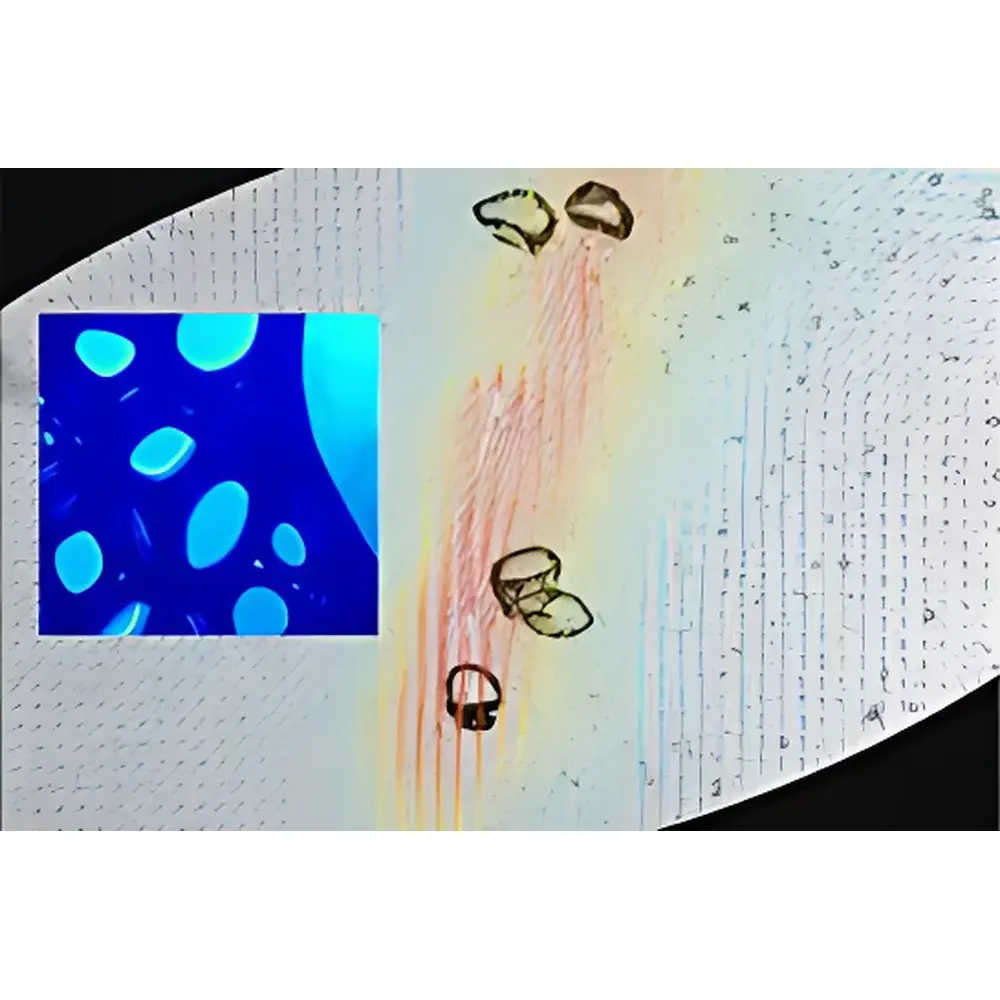
The LaVision FluidMaster-Multi Phase Multiphase Flow Multi-Parameter Imaging System is a high-precision, dual-channel optical diagnostic platform engineered for quantitative, time-resolved characterization of dispersed multiphase flows—particularly gas–liquid systems such as bubbly flows in aqueous media. It integrates two complementary imaging modalities within a single synchronized acquisition framework: planar particle image velocimetry (PIV) with fluorescent tracer particles for continuous-phase velocity field mapping, and time-resolved shadowgraphy for discrete-phase morphology and kinematics (bubble size, shape, trajectory, velocity, and acceleration). The system leverages color-coded illumination—green laser sheet for red-fluorescent PIV seeding and blue LED backlighting for high-contrast bubble silhouette capture—combined with beam-splitting optics and co-registered camera detection to ensure spatial and temporal fidelity across both channels. All image processing, calibration, and reconstruction are performed within DaVis software, LaVision’s industry-standard platform for experimental fluid dynamics analysis.
Key Features
- Dual-channel, color-coded optical architecture enabling simultaneous acquisition of continuous-phase flow fields and discrete-phase morphological dynamics
- Integrated green-laser PIV excitation (for red-emitting fluorescent tracers) and blue-LED backlighting for shadowgraphy—optimized for water-based bubbly flows
- Beam-splitter-based spectral separation ensuring minimal crosstalk and pixel-perfect spatial registration between PIV and shadowgraphy channels
- Time-synchronized high-speed camera triggering (up to kHz frame rates, configurable per application requirement)
- Full compatibility with LaVision’s ParticleMaster 3D Shadow tomographic module for volumetric reconstruction of bubble position, shape, and deformation from ≥3 orthogonal projections
- DaVis software suite with automated image mapping, multi-plane calibration, PIV post-processing (cross-correlation, ensemble averaging), and 3D tomographic reconstruction algorithms
Sample Compatibility & Compliance
The FluidMaster-Multi Phase system is designed for laboratory-scale transparent or semi-transparent multiphase systems, including air–water, nitrogen–aqueous polymer solutions, and CO₂–brine configurations typical in chemical engineering, environmental fluid mechanics, and energy research. It supports standard PIV seeding (e.g., Rhodamine B-doped polystyrene particles, ~1–10 µm) and requires optical access via quartz or borosilicate windows. The system conforms to ISO/IEC 17025 guidelines for measurement traceability in experimental fluid dynamics instrumentation. While not a regulated medical device, its data acquisition architecture supports audit-ready workflows compliant with GLP principles; DaVis logging includes full metadata stamping (timestamp, hardware configuration, calibration files, user ID) and optional 21 CFR Part 11–compliant electronic signatures when deployed with validated server environments.
Software & Data Management
Data acquisition, preprocessing, and analysis are fully integrated into DaVis v10.x or later—a modular, scriptable platform supporting batch processing, Python API integration, and export to HDF5, TIFF, and ASCII formats. Key modules include: Image Mapping (for geometric correction and inter-channel alignment), PIV+ (adaptive interrogation windowing, sub-pixel peak fitting), Shadow Analysis (edge detection, contour extraction, equivalent diameter calculation), and TomoShadow (algebraic reconstruction technique, ART, with GPU acceleration). All raw and processed datasets retain embedded calibration parameters and versioned processing history. Exported results include vector fields (U, V, W), scalar maps (vorticity, strain rate), bubble centroid trajectories, size distributions (d₃₂, d₁₀), and 3D point clouds—all traceable to original image frames.
Applications
- Quantitative validation of CFD simulations for bubbly flow hydrodynamics in stirred tanks, bubble columns, and microfluidic reactors
- Study of bubble coalescence and breakup mechanisms under turbulent shear and interfacial tension gradients
- Characterization of mass transfer coefficients via correlated velocity–interface curvature analysis
- Development and benchmarking of population balance models (PBMs) using experimentally resolved bubble size evolution
- Investigation of non-Newtonian fluid effects on bubble rise dynamics and wake structure
- Support for ASTM D7504 (Standard Practice for Particle Size Analysis of Suspensions by Imaging) and ISO 13322-2 (Particle size analysis — Image analysis methods — Part 2: Dynamic image analysis)
FAQ
What types of multiphase systems can be studied with this system?
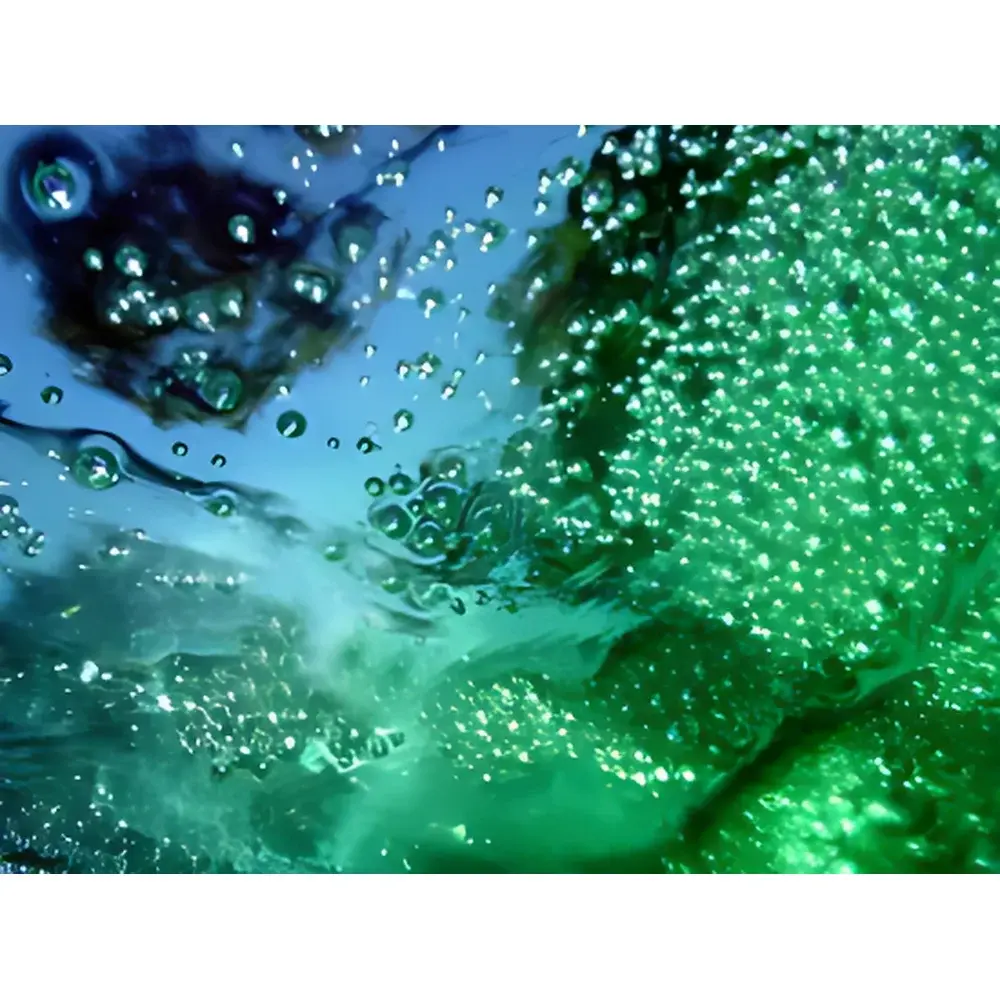
It is optimized for transparent or low-scattering gas–liquid systems (e.g., air/water, N₂/glycerol–water mixtures) and compatible with droplet–gas or solid–liquid suspensions where optical contrast and seeding feasibility permit.
Is tomographic reconstruction included as standard functionality?
Tomographic shadow imaging requires the optional ParticleMaster 3D Shadow add-on module and ≥3 synchronized cameras; the base FluidMaster-Multi Phase configuration supports dual-channel 2D imaging only.
Can the system be calibrated for absolute velocity or size quantification?
Yes—via standard DaVis calibration procedures using known grid targets or micrometer-stage translation, yielding pixel-to-mm conversion factors traceable to NIST-certified standards.
Does the system support real-time processing during acquisition?
Real-time PIV vector field preview is available; full post-processing (including tomographic reconstruction and statistical analysis) is performed offline to ensure numerical rigor and reproducibility.
What fluorescence tracers are recommended for aqueous PIV?
Rhodamine B–doped polystyrene particles (1–5 µm diameter) or Nile Red–labeled silica nanoparticles, selected for Stokes shift compatibility with the green excitation wavelength and minimal photobleaching under pulsed illumination.






