
LaVision FluidMaster-Thermal Temperature Field Imaging System
| Brand | LaVision GmbH |
|---|---|
| Origin | Germany |
| Model | FluidMaster-Thermal |
| Dispersion Unit | Grating and Interference Filters |
| Slit Width (Spectral Bandpass) | 1.5 nm – 20 nm |
| Spectral Resolution | 1.0 nm |
| Sensitivity | 1% |
| Wavelength Accuracy | ±2.0 nm |
Overview
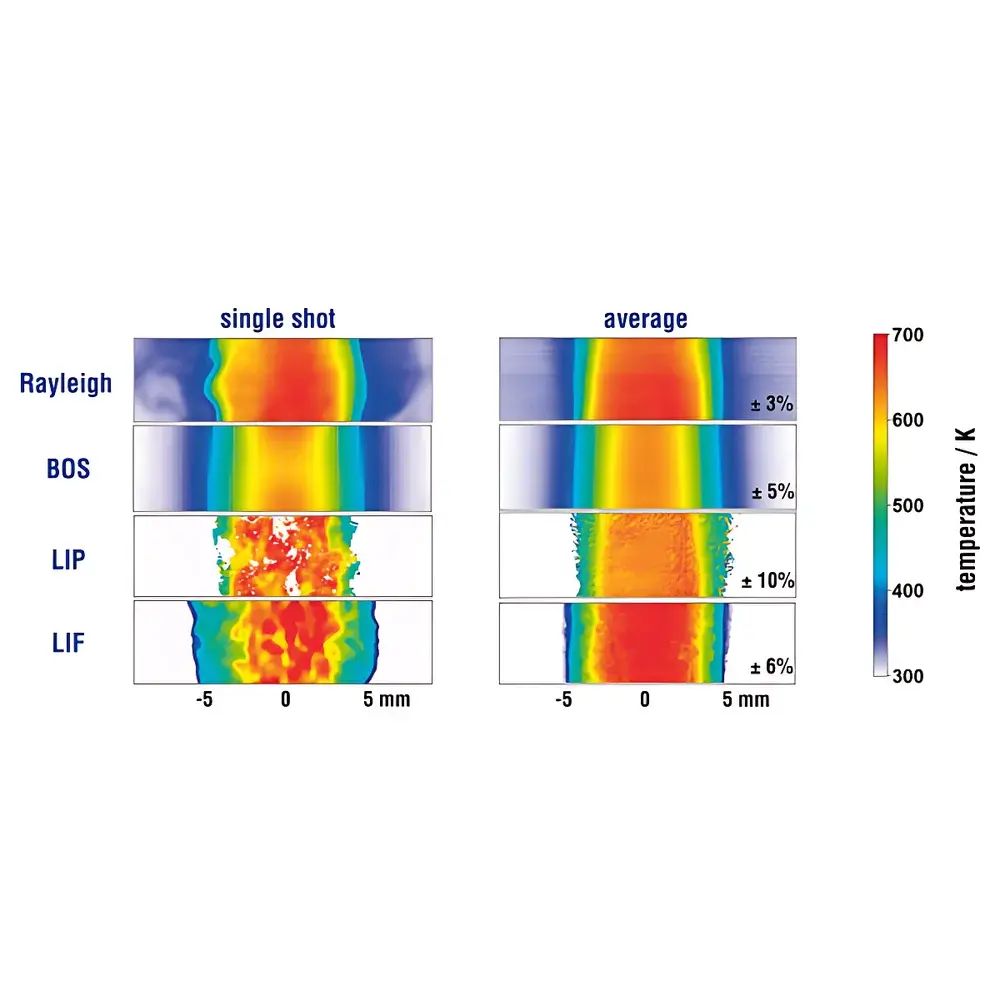
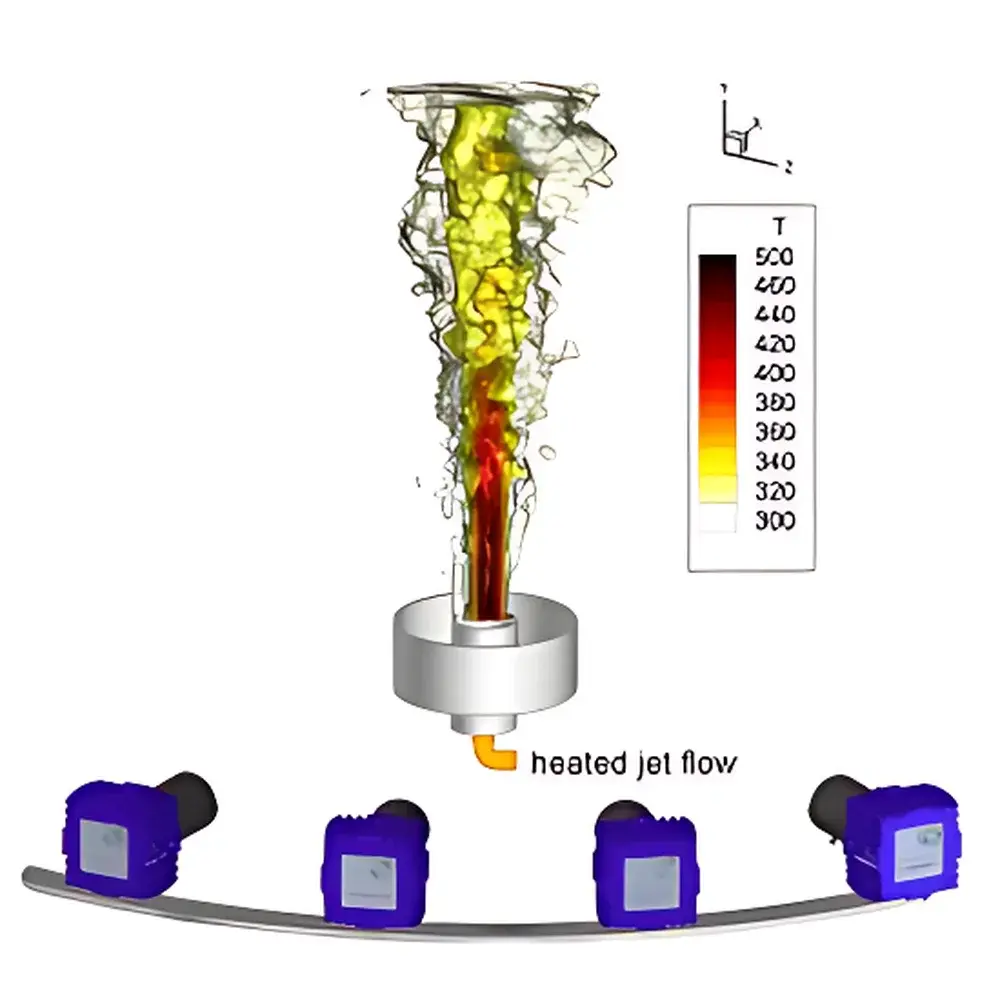
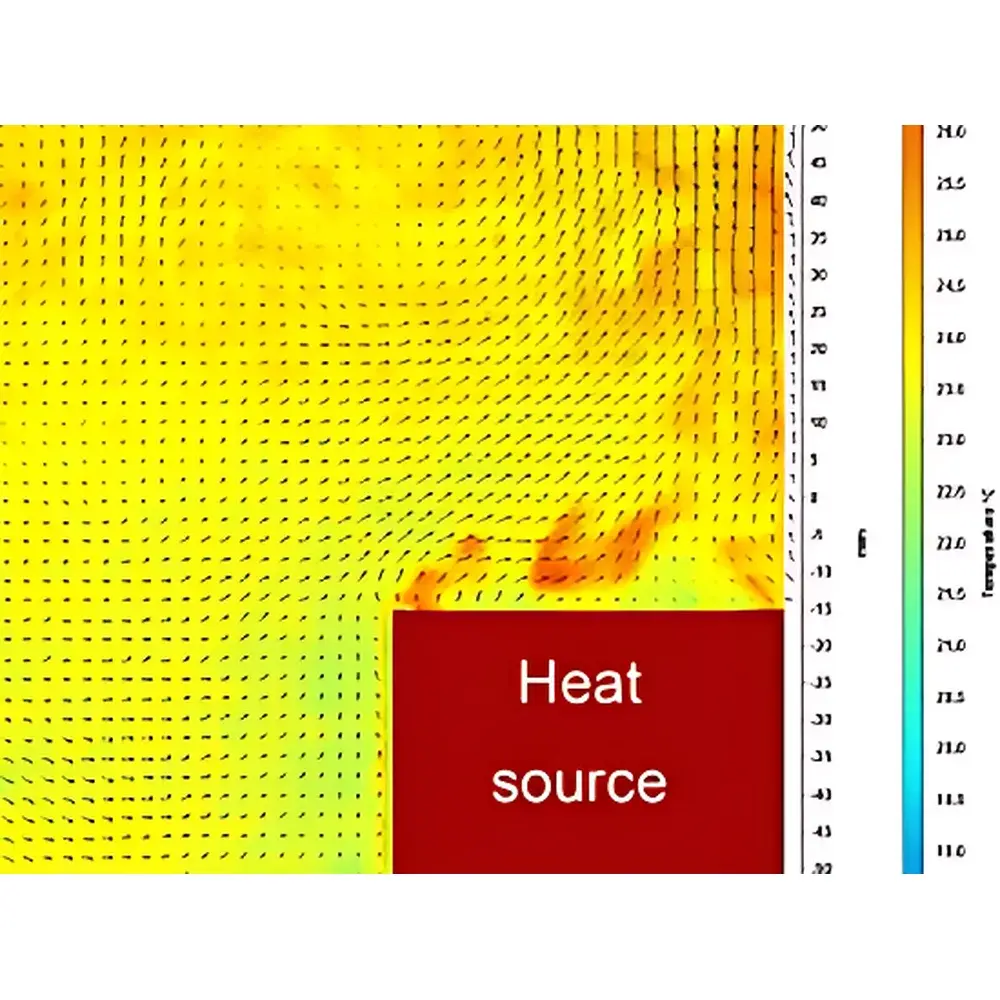
The LaVision FluidMaster-Thermal Temperature Field Imaging System is a high-precision, non-intrusive optical diagnostic platform engineered for quantitative, spatially resolved temperature measurement in transient and steady-state thermal flows. It integrates Background Oriented Schlieren (BOS) tomography and Laser-Induced Fluorescence (LIF) thermometry—two complementary optical methods grounded in gas-phase refractive index gradients and molecular fluorescence emission physics, respectively. Unlike point-wise or line-averaged sensors, this system delivers full-field, time-resolved 2D and 3D temperature distributions with sub-Kelvin sensitivity in gaseous and liquid media. Its core operational principle relies on the temperature-dependent refractive index of gases (for BOS-based reconstruction) and the thermally sensitive spectral shift or intensity ratio of fluorescent tracers (for LIF-based calibration). Designed for fundamental fluid dynamics research and applied thermal engineering, the system supports both single-shot acquisition and phase-locked ensemble averaging—enabling rigorous uncertainty quantification through standard deviation mapping across repeated measurements.
Key Features
- Modular dual-technique architecture supporting both tomographic BOS and multi-color LIF thermometry on a shared optical and software platform
- High-spectral-fidelity imaging path with selectable slit width (1.5–20 nm) and 1.0 nm resolution, enabling precise isolation of tracer emission bands or background illumination spectra
- Wavelength accuracy of ±2.0 nm ensures traceable calibration against NIST-traceable emission standards, critical for inter-laboratory reproducibility
- Integrated DaVis software suite with real-time image correction modules—including laser sheet absorption compensation, pixel-wise intensity normalization, and multi-camera geometric mapping for stereo and tomographic reconstruction
- Support for both 1-color and 2-color LIF thermometry: the latter eliminates dependence on local tracer concentration and inhomogeneous illumination via ratiometric signal processing
- Rugged optomechanical design compliant with ISO 10110 surface quality standards for all internal optics; vibration-isolated optical bench configuration available upon request
Sample Compatibility & Compliance
The FluidMaster-Thermal is validated for use with common thermosensitive LIF tracers—including acetone, toluene, and seeded NO—in air, nitrogen, argon, and combustion-relevant mixtures up to 1200 K. For BOS applications, no seeding is required—making it ideal for clean-room-compatible or high-temperature environments where particle introduction is prohibited. The system conforms to key international standards governing optical diagnostics: ASTM E2533-18 (Standard Guide for Quantitative Flow Visualization), ISO 20486:2021 (Optical Methods for Fluid Mechanics), and supports GLP-compliant data audit trails when configured with DaVis’ FDA 21 CFR Part 11–enabled logging module. All calibration procedures are documented per ISO/IEC 17025 requirements, with traceability to PTB (Physikalisch-Technische Bundesanstalt) reference sources.
Software & Data Management
DaVis v10.3+ serves as the unified acquisition, processing, and analysis environment. It provides native support for synchronized multi-camera acquisition (up to 8 channels), GPU-accelerated tomographic reconstruction algorithms (ART, SART), and automated LIF spectral unmixing using pre-characterized calibration curves. Raw TIFF and HDF5 export formats ensure compatibility with MATLAB, Python (via h5py), and commercial CFD post-processing tools (e.g., Tecplot, FieldView). All processed datasets include embedded metadata: timestamp, laser energy monitoring, environmental pressure/temperature logs, and user-defined experimental annotations. Audit trail functionality records every parameter change, image processing step, and calibration event—meeting GMP documentation requirements for industrial R&D labs.
Applications
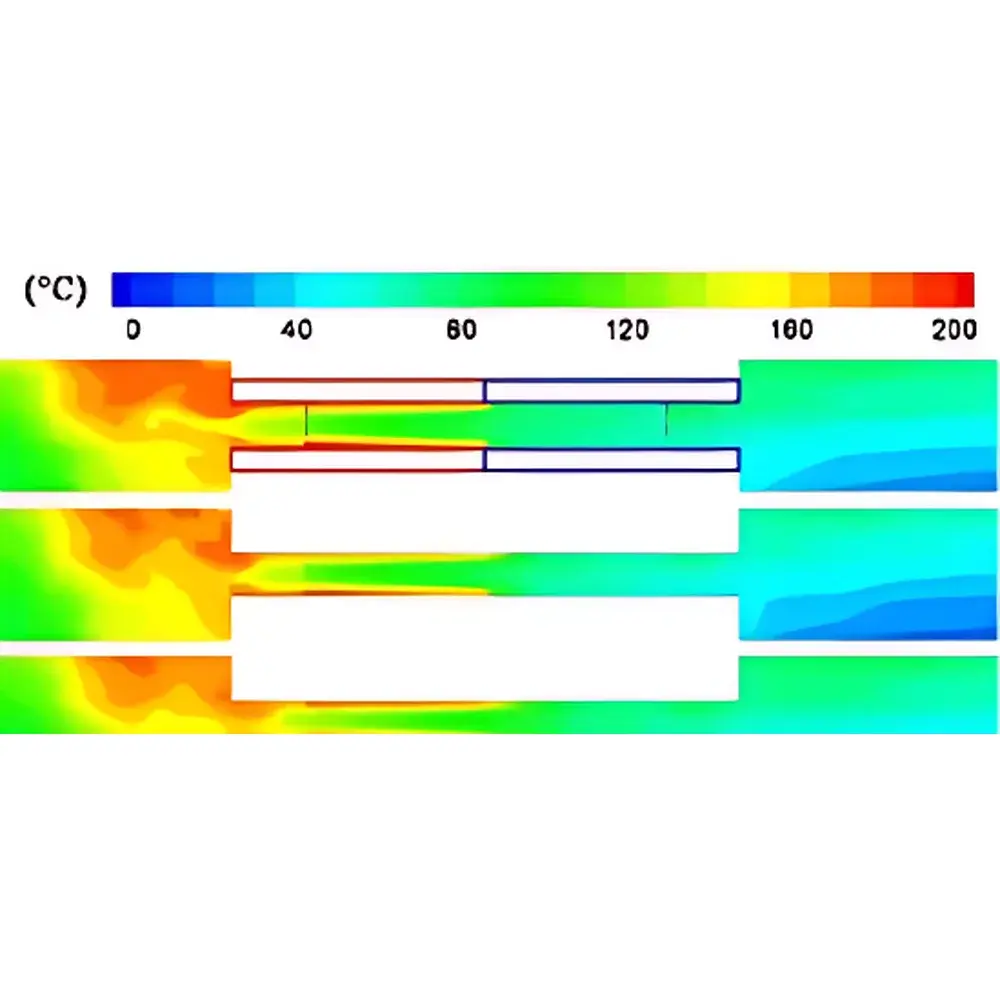
- Quantification of thermal boundary layers in convective heat transfer experiments
- Time-resolved temperature mapping in thermoacoustic resonators and pulse combustors
- Validation of large-eddy simulation (LES) and direct numerical simulation (DNS) models for turbulent thermal mixing
- In situ monitoring of flame stabilization zones and ignition kernel development in lean-premixed burners
- Non-contact thermal profiling in microfluidic devices and heat exchanger test sections
- Intercomparison studies across optical thermometry techniques (e.g., BOS vs. PLIF vs. Rayleigh scattering)
FAQ
Does the system require optical access windows compatible with UV-VIS-NIR transmission?
Yes—quartz or fused silica viewports with broadband AR coating (200–1100 nm) are recommended for optimal LIF signal collection and BOS illumination uniformity.
Can the FluidMaster-Thermal be integrated with existing PIV or Particle Tracking Velocimetry hardware?
Yes—DaVis natively synchronizes LIF/BOS acquisition with LaVision’s HighSpeedStar cameras and pulsed Nd:YAG lasers used in PIV, enabling simultaneous temperature–velocity field coupling.
Is factory recalibration required annually?
While not mandatory, LaVision recommends biennial wavelength and intensity calibration using certified reference lamps and neutral density filters—documented in accordance with ISO/IEC 17025.
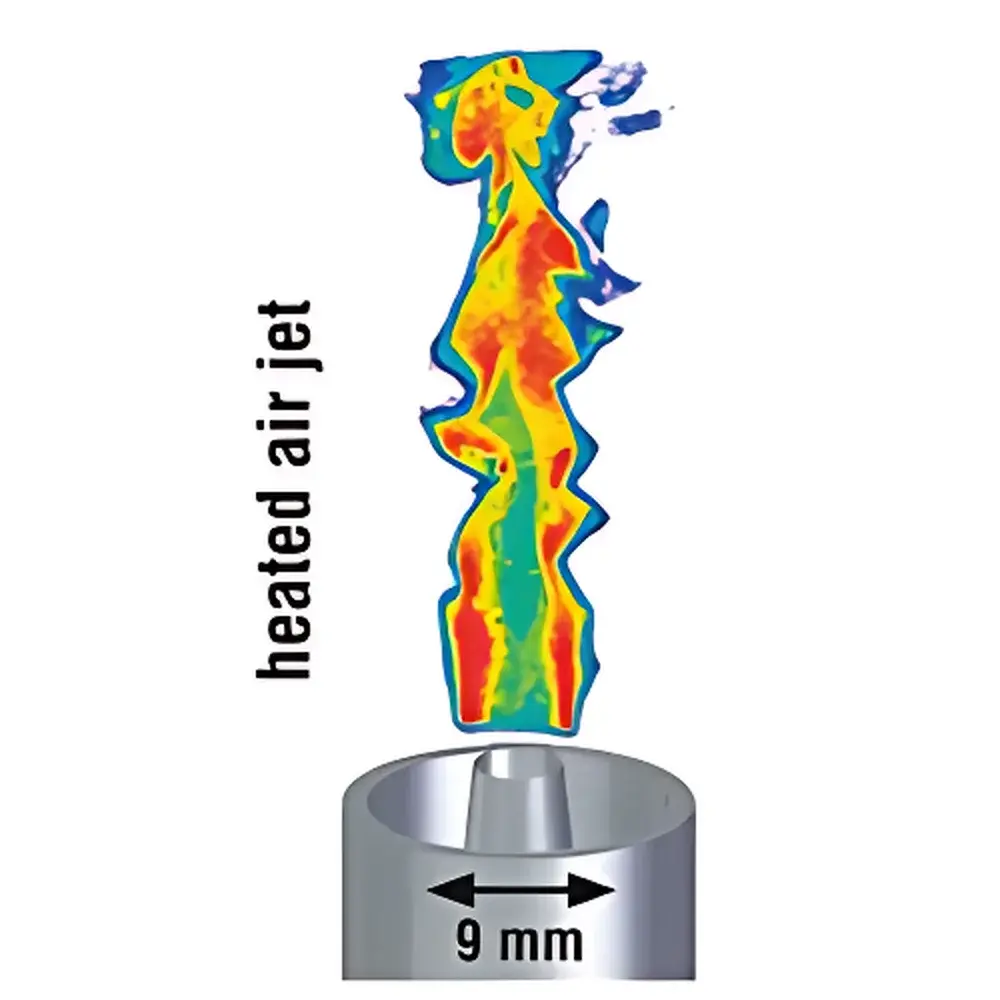
What is the typical spatial resolution achievable in a heated air jet at 700 K?
At 1 m working distance with a 100 mm focal length lens and 4 MP sensor, in-plane resolution is ~120 µm/pixel; volumetric resolution in tomographic mode depends on number of projections (typically 8–16 views) and reconstruction voxel size (0.2–0.5 mm³).
How is temperature uncertainty quantified in LIF ratio imaging?
Uncertainty propagation accounts for photon shot noise, camera readout noise, spectral crosstalk between color channels, and calibration curve residuals—reported as ±0.5–1.5 K (1σ) depending on signal-to-noise ratio and tracer choice.




