
LaVision SprayMaster inspex Spray Imaging & Droplet Size Analysis System
| Brand | LaVision GmbH |
|---|---|
| Origin | Germany |
| Model | SprayMaster inspex |
| Dispersion Method | Dry & Wet Dispersion |
| Measurement Range | 6–3500 µm |
| Repeatability | <1% |
| Measurement Time | 10–15 s |
Overview
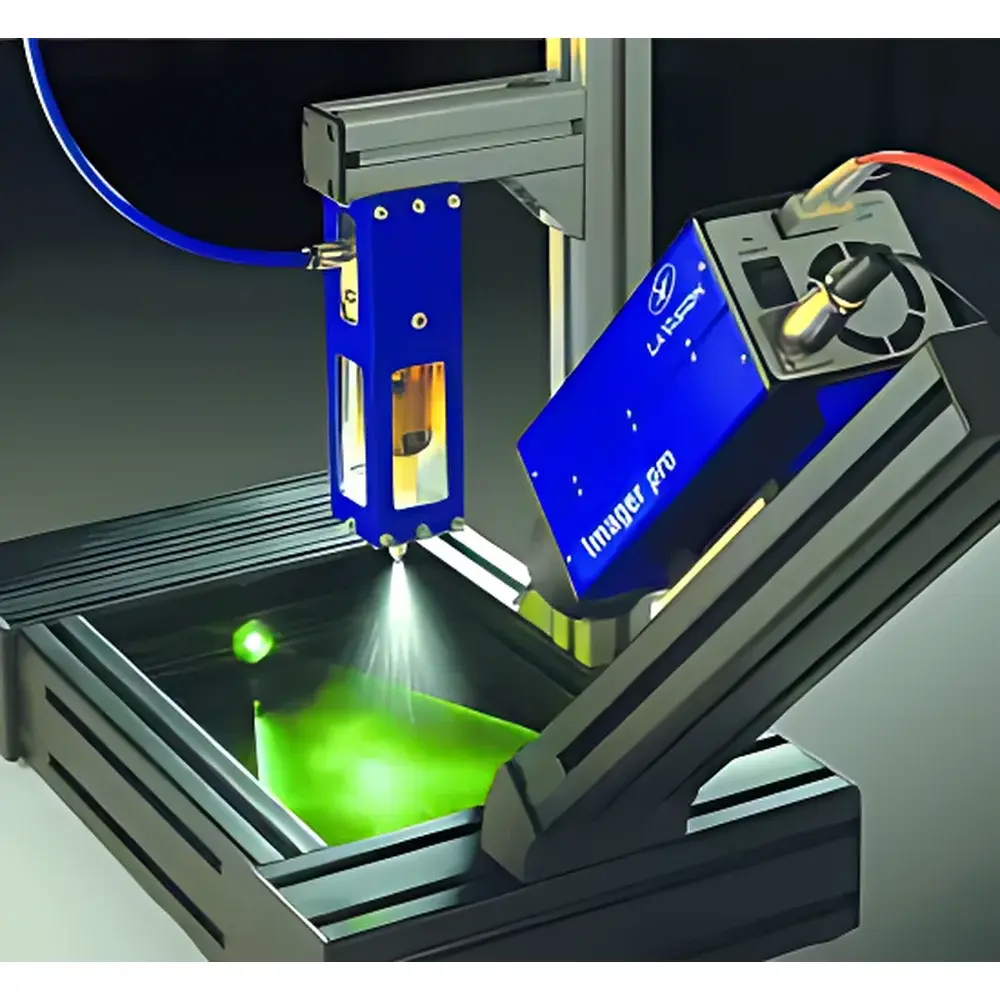
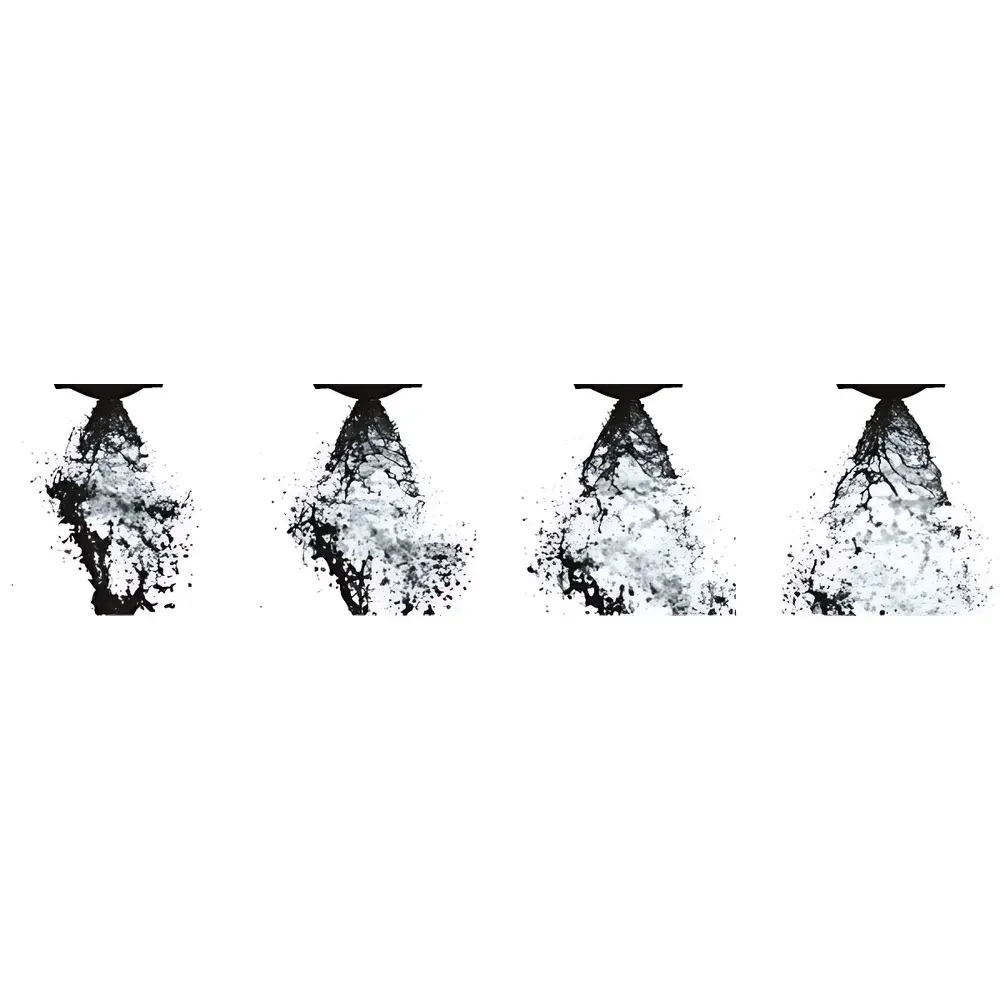
The LaVision SprayMaster inspex is a high-precision, modular spray imaging and droplet size analysis system engineered for quantitative, time-resolved characterization of liquid atomization processes. Unlike conventional laser diffraction or static imaging systems, the SprayMaster inspex employs dual-mode optical detection—Mie scattering combined with Schlieren-based background illumination—to simultaneously resolve spatial spray geometry (e.g., cone angle, penetration length, spray symmetry) and local droplet size distribution (DSD) across the entire spray field. Its core architecture integrates LED-generated light sheets with synchronized high-speed imaging (up to several kHz), enabling phase-resolved analysis of transient sprays under realistic operating conditions—including pulsed, intermittent, or pressure-triggered injection events. Designed and manufactured in Germany by LaVision GmbH, the system complies with fundamental metrological principles for optical particle diagnostics and serves as a reference-grade platform in regulated R&D and quality assurance environments.
Key Features
- Modular optical configuration supporting both Mie scattering and Schlieren imaging modalities for complementary contrast mechanisms—ideal for transparent, opaque, or multi-phase sprays.
- Programmable LED light sheet generation with adjustable thickness (≤1 mm) and uniformity (<±2% intensity variation), eliminating thermal drift and enabling stable long-term acquisition.
- Native integration with industrial-grade high-speed cameras (e.g., Phantom v2512, PCO.dimax HS4) via GenICam-compliant interface; full synchronization with external triggers (TTL, LVDS) for precise event locking.
- Real-time image preprocessing pipeline including background subtraction, dynamic thresholding, and sub-pixel edge detection—optimized for robust segmentation of individual droplets even at high density (>10⁴ droplets/frame).
- Rugged optomechanical design with motorized XYZ stages, precision kinematic mounts, and environmental shielding—validated for continuous operation in vibration-prone test cells and engine dyno bays.
- Firmware-level compliance with IEEE 1588 Precision Time Protocol (PTP) for nanosecond-accurate timestamping across distributed sensor nodes in multi-camera setups.
Sample Compatibility & Compliance
The SprayMaster inspex accommodates a broad range of spray sources without modification: metered-dose inhalers (MDIs), nasal sprays, fuel injectors (GDI, PFI), agricultural nozzles, and cosmetic pump dispensers. It supports both dry dispersion (for powder-laden aerosols) and wet dispersion (for liquid-in-liquid emulsions or solvent-based formulations). All measurement protocols are traceable to ISO 9276-2 (representation of particle size distribution) and ASTM E799 (standard practice for characterizing sprays). Data acquisition workflows adhere to ALCOA+ principles (Attributable, Legible, Contemporaneous, Original, Accurate, Complete, Consistent, Enduring, Available) and support 21 CFR Part 11-compliant electronic signatures when deployed with validated software modules.
Software & Data Management
Acquisition and analysis are performed using LaVision’s DaVis 10.3 platform, a MATLAB-based environment certified for GxP environments. The software provides automated calibration routines (including Scheimpflug correction, pixel-to-length mapping, and Mie scattering efficiency lookup tables), batch processing for multi-condition datasets, and export to standardized formats (HDF5, CSV, XML) for LIMS integration. Audit trails record all parameter changes, user actions, and instrument states with immutable timestamps. Optional add-ons include GLP/GMP report generators compliant with Annex 11 and IQ/OQ/PQ documentation templates aligned with pharmaceutical validation requirements.
Applications
- Pharmaceutical development: Quantitative assessment of dose uniformity, plume geometry, and droplet velocity profiles for pressurized and non-pressurized inhalation products per USP & Ph. Eur. guidelines.
- Automotive R&D: Transient fuel spray characterization under cold-start, low-rail-pressure, and multiple-injection conditions to inform CFD boundary condition definition.
- Consumer product QA: Routine verification of spray consistency across production lots of hair sprays, antiperspirants, and disinfectant mists—meeting ISO 21528-1 statistical process control thresholds.
- Aerospace propulsion: High-speed visualization of cryogenic propellant atomization in LOX/LH₂ injectors, with post-processing for Sauter mean diameter (SMD) and volume median diameter (VMD) mapping.
- Academic fluid mechanics: Experimental validation of primary and secondary breakup models in turbulent shear flows and co-flow configurations.
FAQ
Does the SprayMaster inspex require laser safety certification?
No—it uses Class 1 LED illumination, eliminating the need for laser safety officers, interlocks, or controlled access zones.
Can it measure velocity fields in addition to size distribution?
Yes, when paired with LaVision’s FlowMaster PIV module, it supports simultaneous droplet sizing and two-component velocity vector mapping via stereoscopic particle image velocimetry.
Is calibration traceable to NIST or PTB standards?
Yes—system-level calibration services include traceable verification against NIST-traceable microsphere standards (10–2000 µm) and PTB-certified optical path length references.
What is the minimum required working distance for nozzle mounting?
Standard configuration supports 150–1200 mm working distance; extended optics kits enable measurements down to 50 mm for compact spray sources.
How is data integrity ensured during long-duration tests (e.g., 8-hour durability runs)?
The system implements cyclic memory management, redundant storage (RAID 1), and automatic checksum validation on every frame write—ensuring zero frame loss over >10⁶ consecutive acquisitions.



