
LaVision StrainMaster 2D-/3D Stereo Digital Image Correlation System
| Brand | LaVision GmbH |
|---|---|
| Origin | Germany |
| Model | StrainMaster 2D-/3D Stereo |
| Type | Stereoscopic Digital Image Correlation (DIC) System |
| Measurement Capability | Full-field 2D in-plane and 3D surface displacement & strain tensor mapping |
| Camera Configuration | Dual high-resolution synchronized cameras with calibrated stereo geometry |
| Calibration Standard | ISO/IEC 17025 traceable volumetric calibration protocol |
| Data Output Format | ASCII, HDF5, MATLAB .mat, DIC-compatible binary |
| Software Platform | DaVis v10.3+ with real-time correlation engine |
| Compliance | Supports GLP/GMP audit trails, ASTM E837–22 (strain measurement validation), ISO 12232 (image sensor characterization) |
Overview
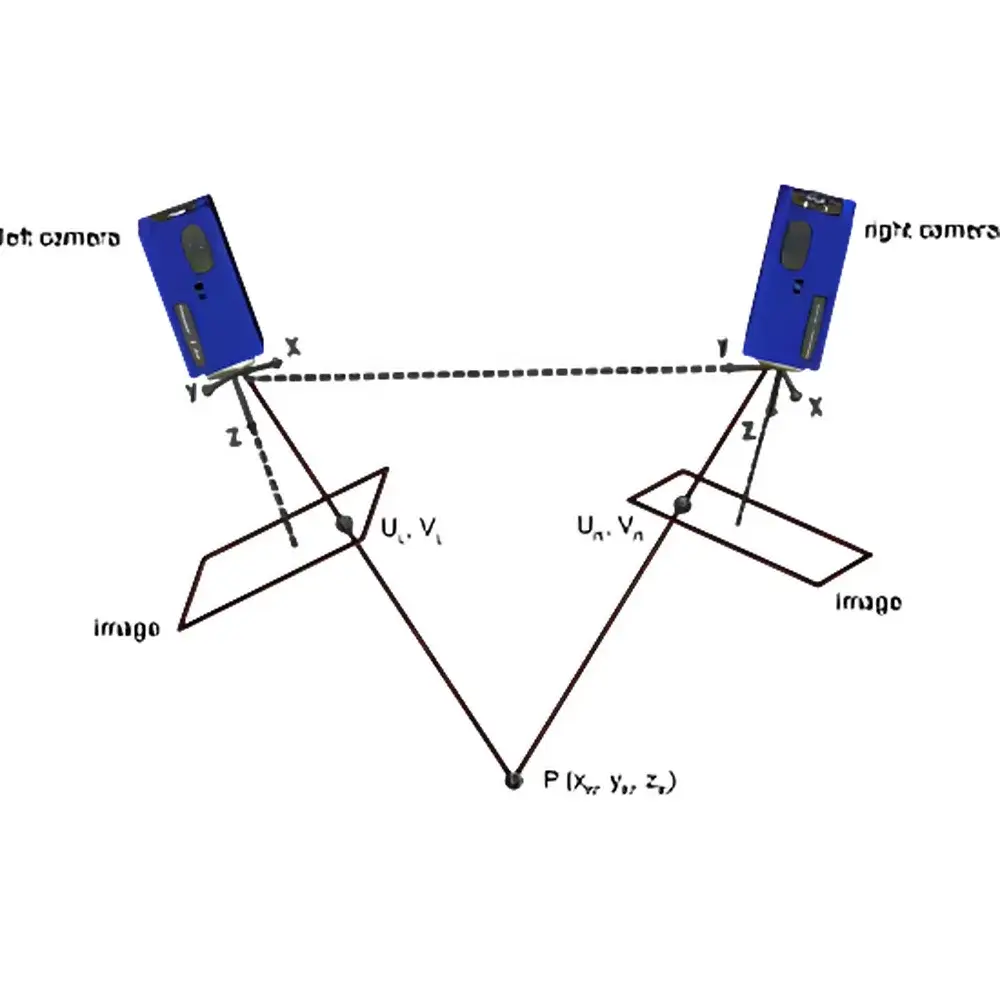
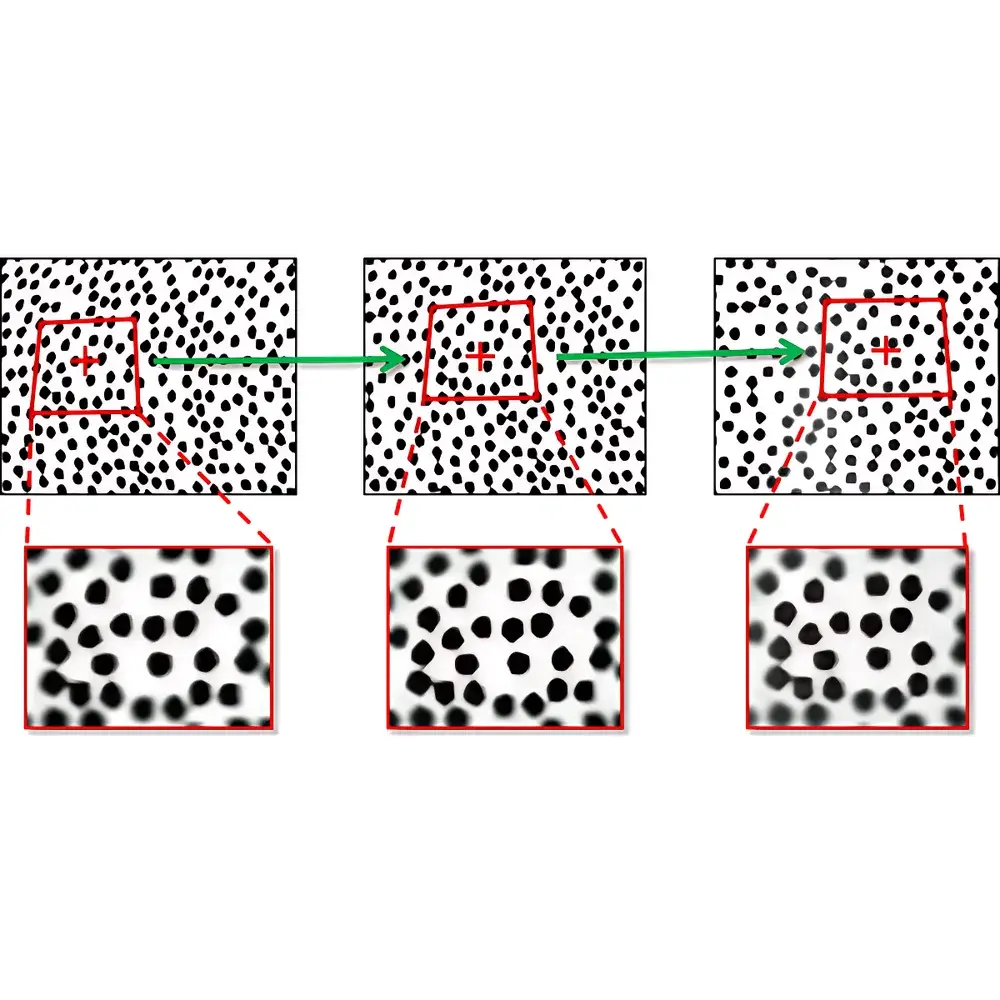
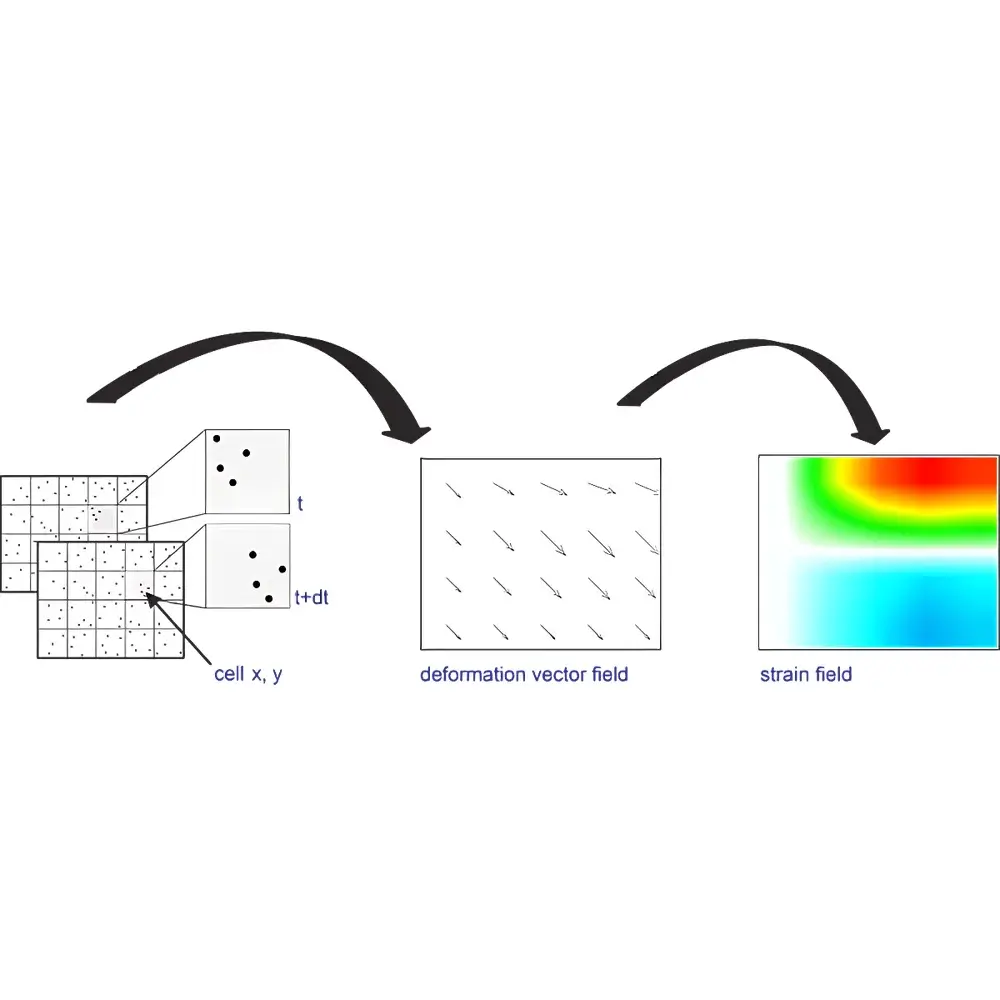
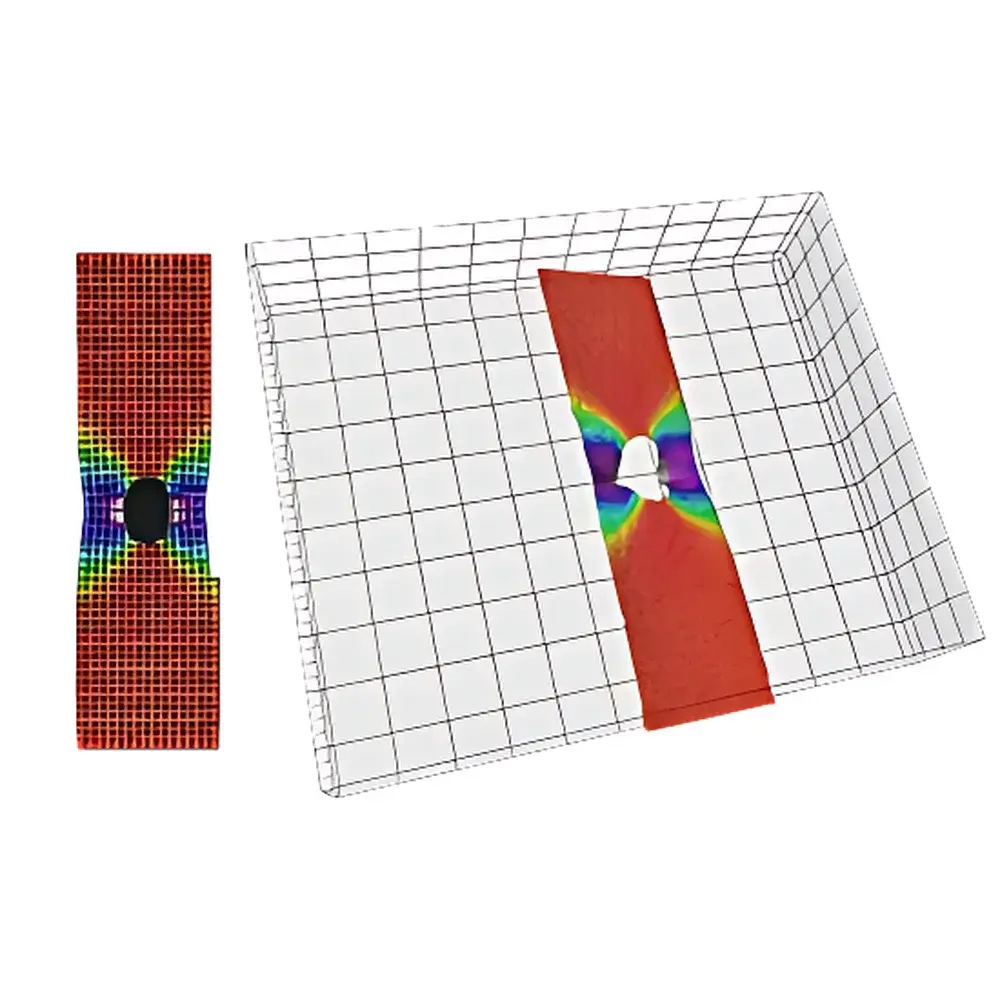
The LaVision StrainMaster 2D-/3D Stereo Digital Image Correlation (DIC) System is an engineered optical metrology platform for non-contact, full-field quantification of surface deformation and strain tensors under static, dynamic, or transient mechanical loading. Based on the principle of sub-pixel intensity pattern matching across temporally resolved image sequences, the system computes displacement vectors by minimizing the sum of squared differences (SSD) between reference and deformed image subsets. In stereoscopic configuration, two spatially separated, rigidly calibrated high-speed CMOS cameras capture simultaneous views of the specimen surface, enabling triangulation-based reconstruction of 3D coordinates and z-axis displacement—critical for out-of-plane bending, buckling, thermal expansion, or large-deformation analysis. Unlike point-wise sensors (e.g., strain gauges or LVDTs), StrainMaster delivers spatially continuous strain fields (εxx, εyy, εxy, εzz) with sub-pixel resolution (typically <0.01 pixel), independent of material conductivity or surface topology—provided adequate speckle contrast and illumination stability are maintained.
Key Features
- Stereoscopic dual-camera architecture with factory-calibrated epipolar geometry and temperature-stable mounting rig
- Real-time correlation engine supporting frame rates up to 100,000 fps (dependent on ROI and camera model)
- Adaptive subset size and step size optimization for heterogeneous strain gradients (e.g., crack tips, weld zones)
- Integrated lighting control module for consistent illumination during thermal or high-speed tests
- Hardware-synchronized triggering interface compatible with universal testing machines (UTMs), servo-hydraulic actuators, and laser shock systems
- Automated speckle pattern generation support via optional projector module for low-contrast or reflective surfaces
- Robust noise suppression algorithms including Gaussian-weighted correlation, zero-mean normalized cross-correlation (ZNCC), and outlier rejection based on correlation coefficient thresholds
Sample Compatibility & Compliance
The StrainMaster accommodates specimens ranging from micro-scale (≥50 µm field-of-view with macro lenses) to structural components (≥2 m FOV with telecentric optics). It supports metallic alloys, composites, polymers, ceramics, biological tissues, and additive-manufactured parts—regardless of electrical conductivity or acoustic coupling requirements. Surface preparation follows ASTM E837–22 guidelines: stochastic speckle patterns with 10–25% coverage density and grain size optimized for subset resolution (typically 15–30 pixels). System calibration adheres to ISO/IEC 17025 procedures, with documented uncertainty budgets covering lens distortion, camera synchronization jitter (<10 ns), and thermal drift compensation. For regulated environments, DaVis software supports 21 CFR Part 11-compliant user access controls, electronic signatures, and immutable audit logs—including timestamped parameter changes and raw image provenance tracking.
Software & Data Management
DaVis v10.3+ serves as the unified acquisition, processing, and visualization environment. Its modular architecture separates image capture (via GenICam-compliant drivers), correlation computation (GPU-accelerated on NVIDIA CUDA platforms), and post-processing (strain derivative calculation, contour mapping, vector field overlays). All datasets are stored in HDF5 format with embedded metadata (calibration parameters, exposure settings, trigger timestamps), ensuring FAIR (Findable, Accessible, Interoperable, Reusable) data principles. Batch processing pipelines enable automated analysis of hundreds of load steps; Python and MATLAB APIs permit custom algorithm integration (e.g., digital volume correlation extensions, machine learning–based anomaly detection). Export options include standardized engineering formats (ANSYS CDB, ABAQUS INP, NASTRAN OP2) for direct finite element model validation.
Applications
- High-strain-rate characterization of aluminum foams and blast-resistant composites using split-Hopkinson pressure bar (SHPB) coupling
- Thermo-mechanical fatigue analysis of turbine blades under cyclic heating (up to 1200 °C with quartz viewport and IR-filtered illumination)
- Micro-scale deformation mapping of MEMS devices and thin-film electrodes during electrochemical cycling
- Fluid-structure interaction studies on flexible aerofoil sections in wind tunnel environments, resolving coupled flutter modes and local strain hotspots
- Biomechanical testing of vascular stents and ring-shaped orthopedic implants under physiological loading protocols
- Geomechanical simulation of granular flow and tectonic plate boundary behavior in triaxial shear cells
FAQ
What minimum speckle pattern quality is required for reliable 3D DIC measurements?
A contrast ratio ≥3:1 between dark and bright speckles, with random distribution and no periodicity, is essential. LaVision recommends generating patterns via airbrushing or projection; particle size should be 5–10× the desired displacement resolution.
Can StrainMaster integrate with existing MTS or Instron test frames?
Yes—via TTL trigger input/output, analog voltage synchronization, or Ethernet-based command protocols (SCPI over TCP/IP). Custom driver modules are available for legacy UTM controllers.
Is real-time strain visualization possible during testing?
DaVis supports live correlation at up to 2 kHz (full resolution) or >10 kHz (reduced ROI), with configurable color-mapped strain overlays overlaid on live camera feeds.
How is measurement uncertainty quantified and validated?
Uncertainty is derived per ISO/IEC Guide 98-3 (GUM), incorporating contributions from camera noise, lens distortion residuals, calibration target uncertainty, and subset interpolation error—validated annually against NIST-traceable grid targets.
Does the system support dynamic thermal imaging fusion?
Yes—synchronized high-speed IR camera inputs (e.g., FLIR X6900sc) can be registered to the DIC coordinate system using common fiducial markers, enabling concurrent thermo-mechanical field analysis.



