
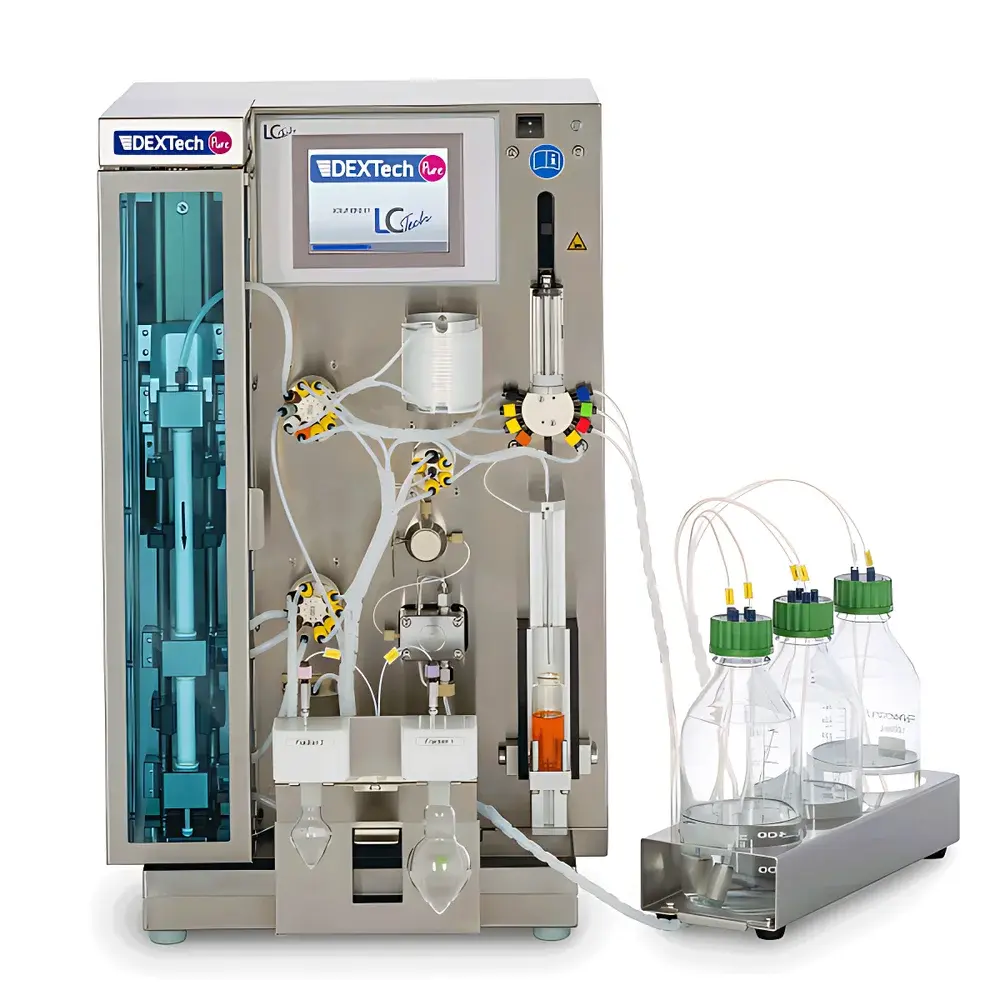
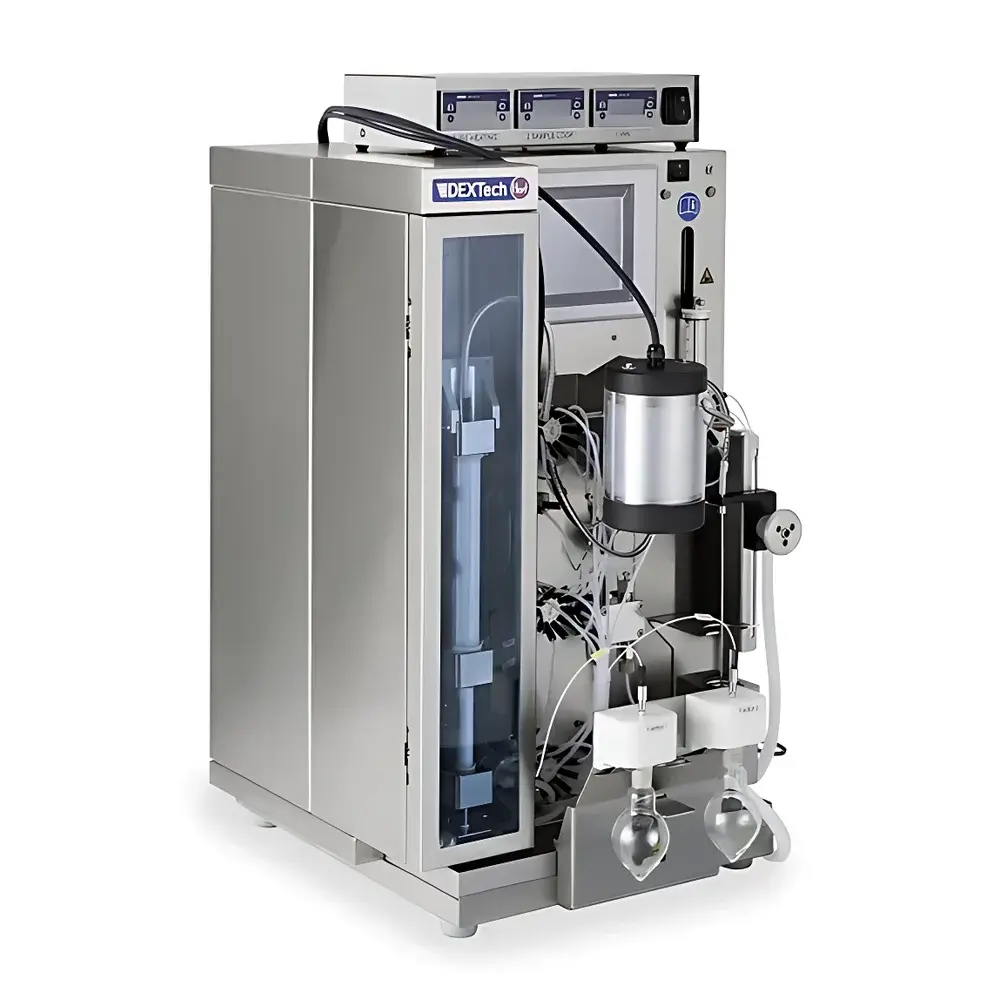
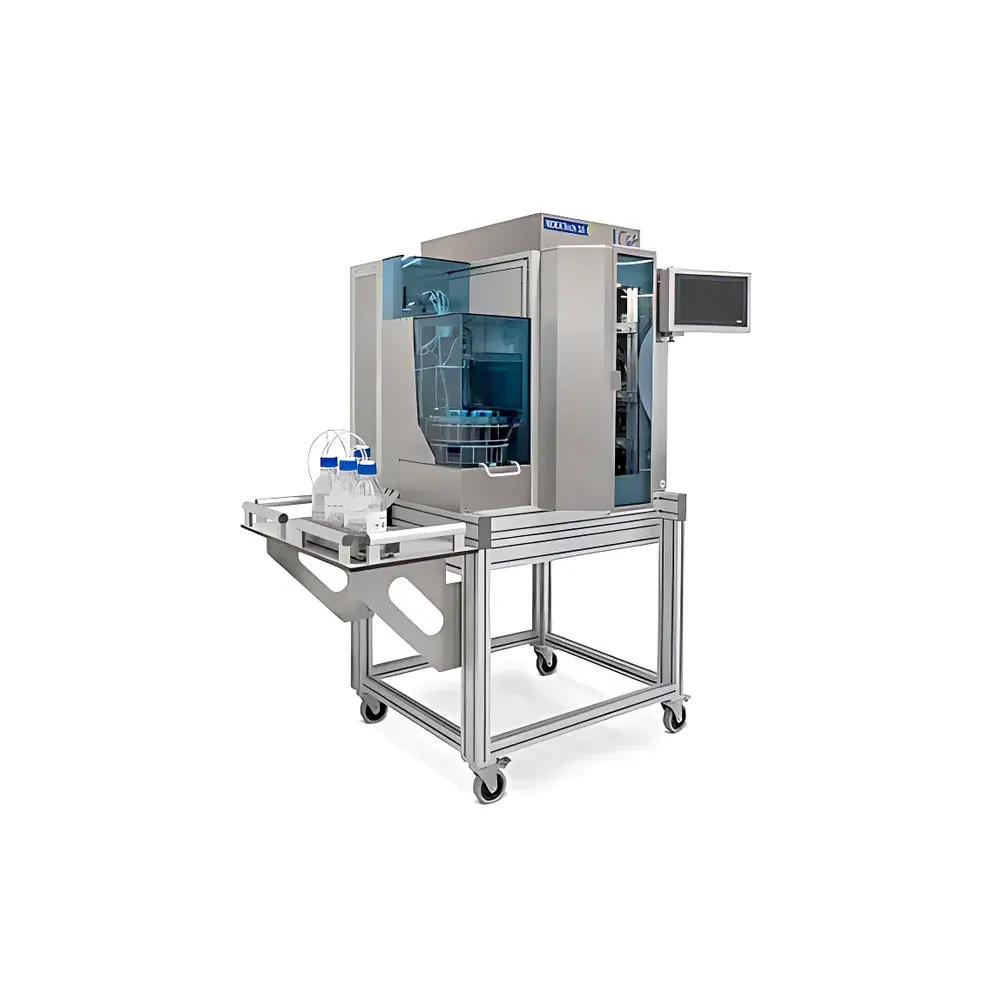
LCTech DEXTech Series Automated Dioxin and PCBs Cleanup System
| Brand | LCTech |
|---|---|
| Origin | Germany |
| Model | DEXTech Series |
| Compliance Standards | GB 5009.205-2013 |
Overview
The LCTech DEXTech Series Automated Dioxin and PCBs Cleanup System is a high-precision, fully automated sample preparation platform engineered for the selective isolation and purification of polychlorinated dibenzo-p-dioxins (PCDDs), polychlorinated dibenzofurans (PCDFs), and polychlorinated biphenyls (PCBs) from complex environmental and food matrices. Based on solid-phase extraction (SPE) and multi-column fractionation principles, the system implements standardized cleanup protocols aligned with internationally recognized analytical workflows—particularly those requiring isotope-dilution high-resolution gas chromatography coupled with high-resolution mass spectrometry (ID-HRGC-HRMS). Designed for laboratories performing routine regulatory monitoring under GLP or ISO/IEC 17025 frameworks, the DEXTech Series ensures trace-level analyte recovery, minimal matrix interference, and robust inter-batch reproducibility across diverse sample types including biological tissues, soils, sediments, fly ash, air filters, and aqueous extracts.
Key Features
- Fully automated operation: One-button initiation enables unattended execution of entire cleanup sequences—from column conditioning and sample loading to fraction collection and solvent elution.
- Tri-column architecture: Simultaneous parallel processing with dedicated columns for PCDD/Fs, non-ortho PCBs, and mono-ortho PCBs ensures high selectivity and eliminates cross-fraction contamination.
- Patented Auto-Lock column interface: Rapid pressure-actuated mechanical clamping secures SPE cartridges without manual torqueing, ensuring consistent flow dynamics and leak-free operation.
- Pre-conditioned, QC-verified columns: All cartridges are factory-tested for breakthrough volume, recovery efficiency, and lot-to-lot consistency—no user equilibration required.
- Non-contact sample handling: Syringe pump and sample vial remain physically isolated during dispensing, eliminating carryover risk between runs.
- Integrated vial rinsing protocol: Post-injection automatic wash cycles guarantee quantitative transfer of viscous or adsorptive samples (e.g., lipid-rich extracts).
- Optimized solvent economy: Method-specific gradient programming reduces total solvent consumption by up to 40% versus conventional manual systems, lowering operational cost and waste disposal burden.
- Intuitive 10.1-inch capacitive touchscreen interface: Preloaded with validated methods per GB, HJ, and EPA guidelines; supports custom parameter adjustment for flow rate, dwell time, and fraction cutoff thresholds.
- Dedicated single-fraction mode: Enables targeted isolation of TCDD-equivalent fractions for congener-specific toxicity assessment.
- Comprehensive safety architecture: Includes pressure sensors, temperature monitoring, solvent level detection, and emergency shutdown logic compliant with IEC 61000-6-2/6-4 electromagnetic compatibility standards.
Sample Compatibility & Compliance
The DEXTech Series accommodates liquid extracts derived from Soxhlet, ASE®, or ultrasonic-assisted extraction of solid and semi-solid matrices—including animal fats, dairy products, fish tissue, soil, sewage sludge, fly ash, and sediment. Aqueous samples (e.g., wastewater, leachates) are compatible following liquid–liquid partitioning. The system meets methodological requirements for all major regulatory frameworks governing dioxin analysis: China’s GB 5009.205-2013 (food), GB 5009.190-2014 (PCBs in food), GB/T 28643-2012 (feed), and the HJ 77 series (environmental media). It also aligns with U.S. EPA Method 1613B and EU Commission Regulation (EU) No 2017/644 for feed and food testing, supporting audit-ready documentation for GLP, GMP, and ISO/IEC 17025 accreditation.
Software & Data Management
The embedded DEXTech Control Software provides full method lifecycle management: creation, validation, version control, and electronic signature support. Each run generates a timestamped audit trail containing column IDs, solvent batches, operator login, parameter logs, pressure profiles, and fraction weights—fully compliant with FDA 21 CFR Part 11 requirements for electronic records and signatures. Raw data export is supported in CSV and XML formats for integration with LIMS platforms. Optional software modules enable automated report generation aligned with CNAS or CMA reporting templates.
Applications
- Food safety laboratories quantifying dioxin-like compounds in meat, eggs, seafood, milk, infant formula, and compound feed.
- Environmental testing facilities analyzing PCDD/Fs and PCBs in soil, sediment, municipal waste incinerator fly ash, and industrial sludge.
- Air quality monitoring programs assessing atmospheric deposition via filter-based sampling (PM10/PM2.5) and stack emissions.
- Research institutions studying bioaccumulation pathways using blood, adipose tissue, or breast milk extracts.
- Reference laboratories performing proficiency testing and interlaboratory comparisons under ILAC-G13 guidance.
FAQ
Does the DEXTech Series support method validation per ISO/IEC 17025?
Yes—the system includes built-in performance verification tools (e.g., surrogate spike recovery tracking, blank monitoring, column efficiency checks) and generates compliant documentation packages for method validation reports.
Can existing LCTech columns be used interchangeably across DEXTech Pure, Heat, and 16 models?
All DEXTech-compatible columns feature standardized mechanical interfaces and are validated for use across the series; however, thermal stability requirements differ between DEXTech Heat and other variants.
Is remote diagnostics and firmware update capability available?
Yes—via optional Ethernet/Wi-Fi connectivity and secure HTTPS-based remote access, enabling real-time status monitoring and over-the-air updates under IT-managed network policies.
What maintenance intervals are recommended for long-term reliability?
Daily visual inspection, weekly seal and valve function check, and quarterly calibration of pressure transducers and syringe pump displacement accuracy—detailed in the included Maintenance Logbook per ISO 13485-aligned service protocols.
Related Products







