
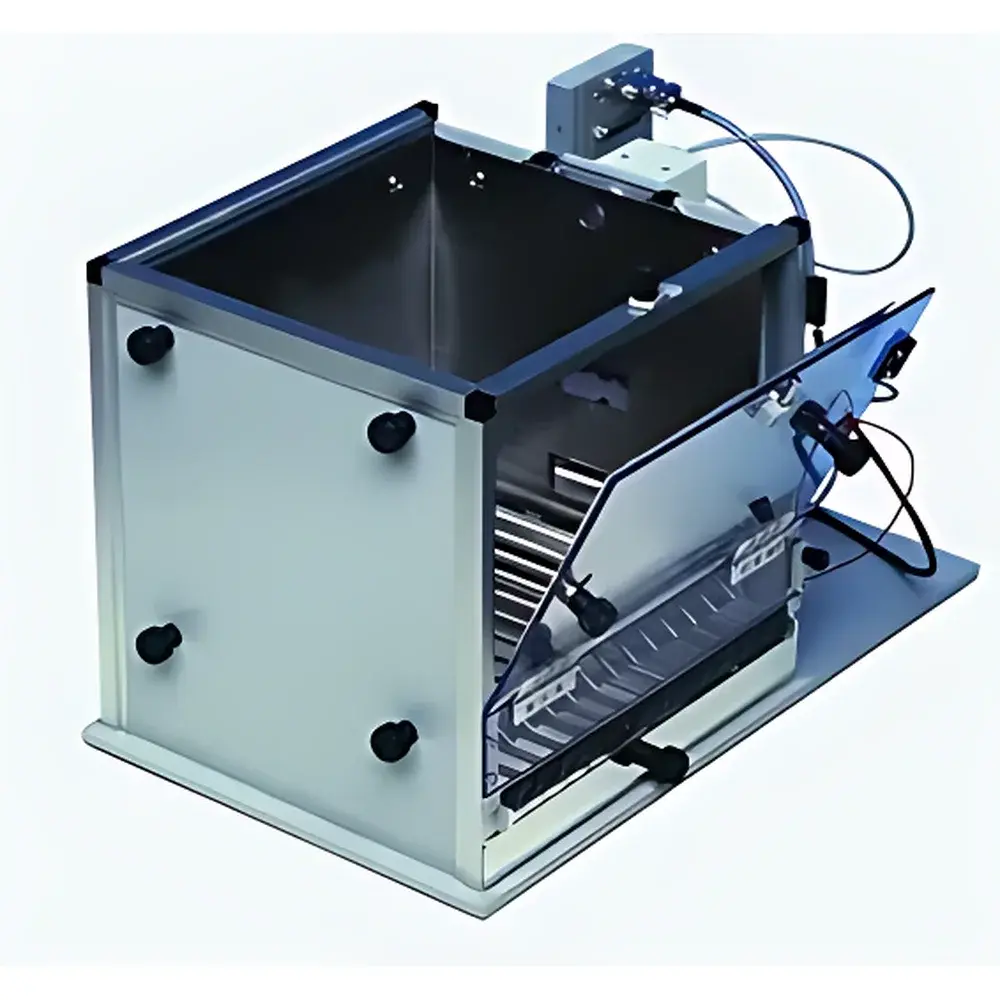
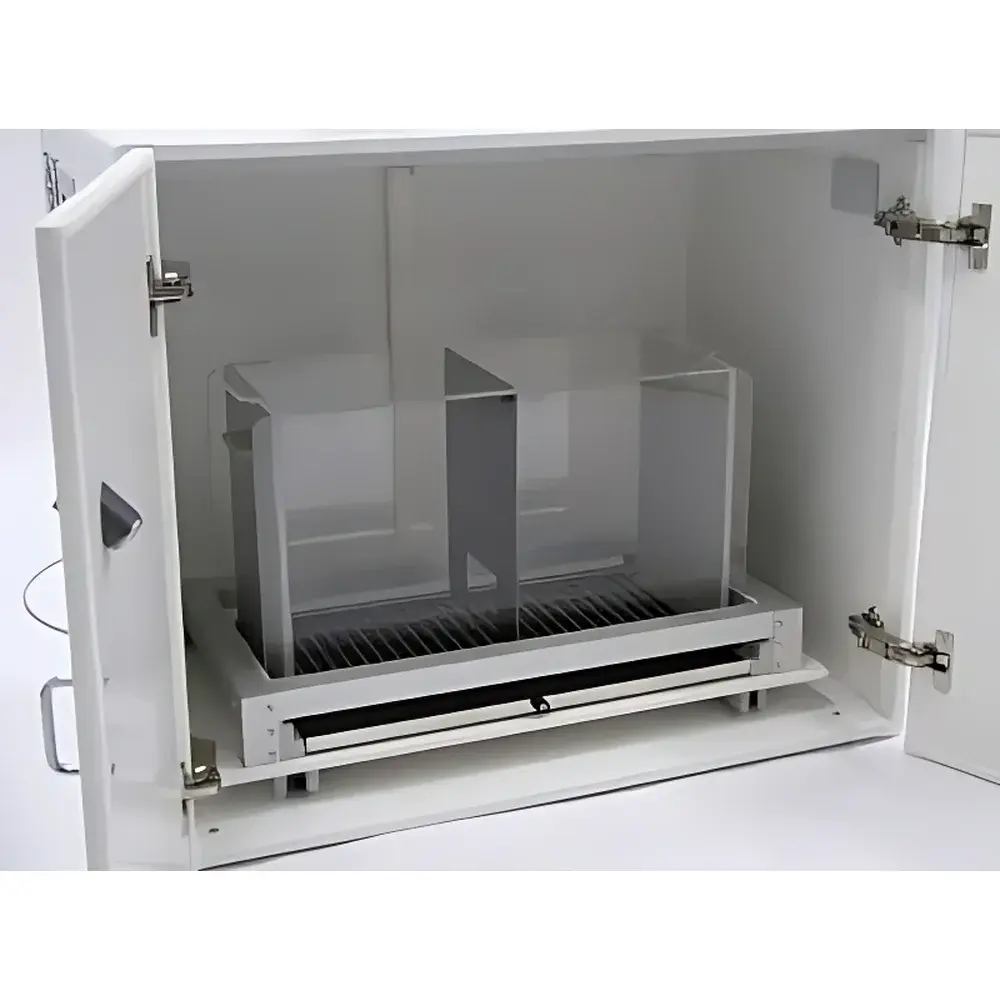
Learned Helplessness I+II System by TSE Systems
| Origin | Germany |
|---|---|
| Manufacturer Type | Authorized Distributor |
| Import Status | Imported |
| Model | Learned Helplessness I+II |
| Pricing | Upon Request |
Overview
The Learned Helplessness I+II System by TSE Systems is a rigorously engineered, modular behavioral phenotyping platform designed for standardized assessment of depression-related deficits in rodent models. It implements the well-validated learned helplessness (LH) paradigm—a cornerstone translational model in preclinical psychiatric research—based on the principle that repeated exposure to uncontrollable and unpredictable aversive stimuli impairs subsequent motivation and ability to execute goal-directed escape or avoidance responses. The system operates under two complementary experimental frameworks: operant response-based termination (lever-press escape) and active avoidance conditioning. Both paradigms are grounded in established principles of associative learning and negative reinforcement, enabling quantification of behavioral despair, motivational latency, response inhibition, and cognitive flexibility—endophenotypes highly relevant to major depressive disorder (MDD), treatment resistance, and antidepressant efficacy screening.
Key Features
- Modular dual-paradigm architecture supporting both lever-press escape (LH-I) and shuttle-box–style active avoidance (LH-II) protocols within a single integrated hardware ecosystem.
- Electrified test chambers with fully insulated stainless-steel grid floors and sidewalls, calibrated for precise current delivery (0.1–1.5 mA, adjustable pulse width 10–200 ms, frequency 0.5–5 Hz) to ensure reproducible, sub-noxious nociceptive stimulation across strains and sexes.
- Integrated environmental control: programmable cue lights (450 nm LED), broadband acoustic stimuli (2–18 kHz, 70–90 dB SPL), ambient illumination modulation, and real-time chamber temperature monitoring (±0.5°C).
- High-fidelity response detection: optical beam break sensors for locomotor tracking, capacitive lever-press transducers with force threshold calibration (0.5–5 g), and synchronized event timestamping at 10 kHz sampling rate.
- Rodent-specific ergonomic design: interchangeable cage inserts for mice (25 × 25 × 25 cm) and rats (30 × 30 × 35 cm), compliant with NIH Guide for Care and Use of Laboratory Animals spatial requirements.
Sample Compatibility & Compliance
The system is validated for use with C57BL/6J, BALB/c, CD-1, Sprague-Dawley, and Wistar rodents (both sexes, 8–16 weeks old). All hardware components meet IEC 61000-6-3 (EMC emission) and IEC 61000-6-2 (immunity) standards. Electrical safety complies with IEC 61010-1 for laboratory equipment. Experimental protocols align with OECD Test Guideline 426 (Neurotoxicity Study) and support adherence to GLP principles when integrated with audit-trail-enabled software configurations. Cage materials are autoclavable and certified non-toxic per ISO 10993-5.
Software & Data Management
Control and analysis are performed via TSE’s Behavior Suite v5.2—a validated, 21 CFR Part 11–compliant platform featuring role-based user access, electronic signatures, and immutable audit trails. Preconfigured LH protocols include pre-exposure (60-min inescapable shock session), acquisition (24-hr interval), and testing phases (10–30 min escape/avoidance trials). Custom protocol scripting is supported via Python-based macro engine. Raw data (lever presses, shuttles, latency, inter-trial intervals, shock duration) are exported in HDF5 format with metadata tagging (animal ID, strain, sex, date, operator, protocol version). Integrated statistical modules compute escape failures, avoidance success rates, response latency distributions, and session-by-session trend analysis.
Applications
- Preclinical evaluation of novel monoaminergic, glutamatergic, and neurogenic antidepressants—including fast-acting agents like ketamine analogs and psychedelics.
- Genetic and optogenetic interrogation of limbic circuitry (e.g., ventral tegmental area → nucleus accumbens; dorsal raphe → prefrontal cortex) in LH susceptibility and resilience.
- Chronic stress modeling: combination with social defeat, chronic mild stress, or early-life adversity protocols to assess interaction effects on behavioral despair.
- Pharmacokinetic–pharmacodynamic correlation studies requiring precise temporal alignment between drug administration and behavioral endpoint measurement.
- Training and standardization across multi-site consortia (e.g., IMI PHOENIX, EU-ROP) due to hardware/software traceability and inter-laboratory validation reports.
FAQ
What species and strains are validated for use with this system?
C57BL/6J, BALB/c, CD-1 mice and Sprague-Dawley/Wistar rats—both sexes, aged 8–16 weeks. Strain-specific parameter presets are included.
Does the system support automated data export to LIMS or ELN platforms?
Yes—via secure RESTful API integration with common laboratory informatics systems (e.g., LabVantage, Benchling, Dotmatics) using OAuth2 authentication and JSON/HDF5 payloads.
Is the electrical stimulation module calibrated and traceable to national standards?
Each unit ships with NIST-traceable calibration certificate for current output (±1.5% accuracy) and pulse timing (±50 µs jitter), renewed annually per ISO/IEC 17025 requirements.
Can the same chamber be reconfigured for both LH-I and LH-II protocols without hardware modification?
Yes—modular partitioning, removable levers, and reversible shuttle gates enable full paradigm switching within <15 minutes using tool-free assembly.
How is animal welfare safeguarded during testing?
Real-time current monitoring with automatic cutoff upon impedance anomaly (>5 kΩ), integrated video-based distress scoring (EthoVision XT plugin), and mandatory pre-test acclimatization protocols embedded in all default workflows.




