
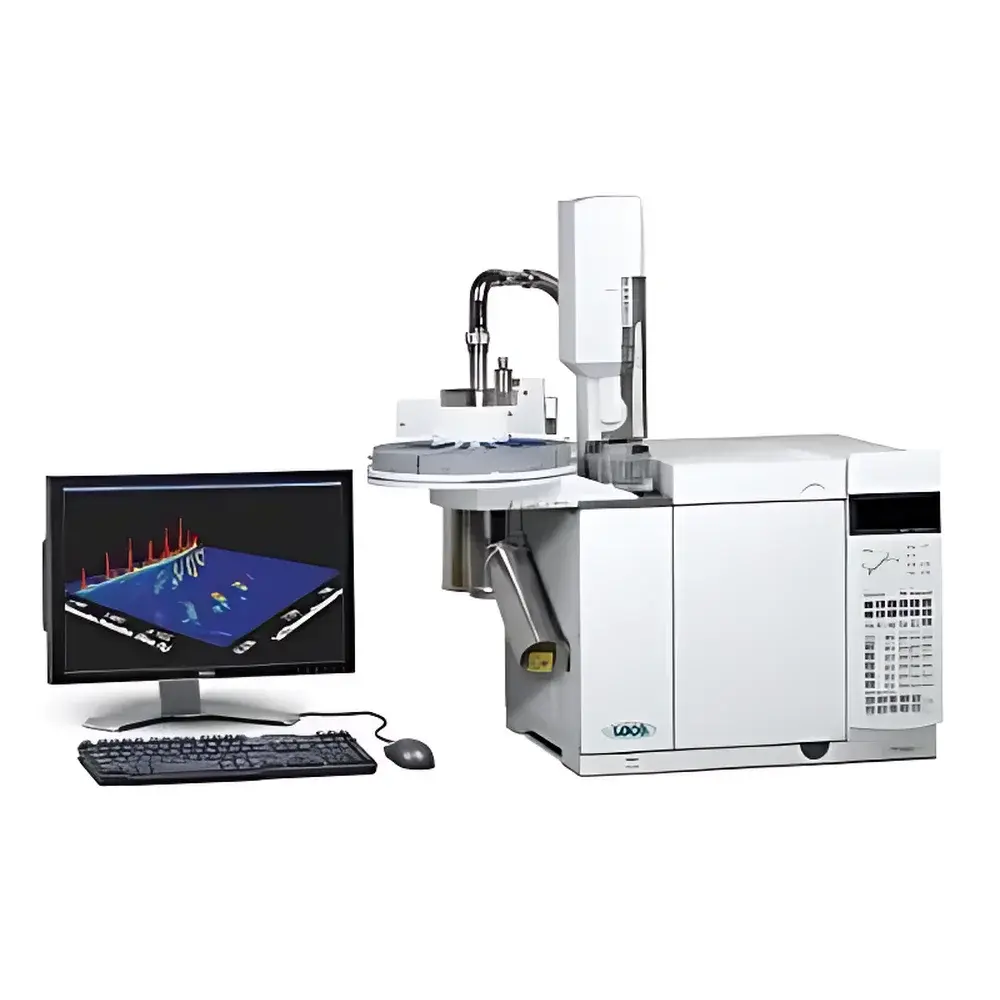
LECO GCxGC Comprehensive Two-Dimensional Gas Chromatograph
| Brand | LECO |
|---|---|
| Origin | USA |
| Manufacturer | LECO Corporation |
| Type | Imported Instrument |
| Model | GCxGC |
| Application Scope | General-Purpose |
Overview
The LECO GCxGC Comprehensive Two-Dimensional Gas Chromatograph represents the state-of-the-art evolution in separation science, engineered for high-resolution, high-sensitivity analysis of complex volatile and semi-volatile organic mixtures. Unlike conventional one-dimensional gas chromatography (1D-GC) or heart-cutting (GC+GC) approaches, GC×GC employs orthogonal column chemistries and cryogenic modulation to achieve true comprehensive sampling across the entire elution profile. This architecture delivers peak capacities exceeding 10,000—orders of magnitude greater than standard GC—enabling resolution of co-eluting analytes that remain inseparable in 1D systems. The instrument is built upon a robust, fully integrated platform combining LECO’s proprietary modulator technology with industry-standard Agilent 7890A GC hardware (or compatible alternatives), ensuring seamless thermal control, precise retention time alignment, and reproducible modulation cycles.
Key Features
- Two modular cryogenic modulator options: (1) Dual-stage quad-jet liquid nitrogen-cooled modulator—delivering near-100% modulation efficiency across a wide boiling point range (C2–C40+) with exceptional long-term stability and negligible failure rate; (2) Consumable-free modulator design—eliminating cryogen dependency and reducing operational cost and maintenance overhead.
- Orthogonal separation capability: First-dimension column (non-polar or mid-polar) paired with second-dimension column (polar or highly polar) enables separation based on volatility *and* chemical functionality (e.g., polarity, hydrogen bonding, functional group affinity), significantly improving compound identification confidence.
- High-speed detection compatibility: Fully synchronized with fast-response detectors including FID, ECD, SCD, and NPD—supporting both quantitative screening and trace-level detection without compromising data fidelity.
- Enhanced signal-to-noise ratio: GC×GC produces narrower, more concentrated peaks with reduced baseline interference—critical for reliable deconvolution and library matching in mass spectrometry-coupled workflows.
- Automated instrument control: Native integration with Agilent 7890A GC and 7683/CTC CombiPAL autosamplers via Ethernet-based communication protocols; full sequence scheduling, method recall, and real-time status monitoring.
Sample Compatibility & Compliance
The LECO GCxGC system accommodates a broad spectrum of sample matrices—including petrochemical distillates, environmental extracts (soil, water, air), pesticide formulations, forensic toxicology specimens, food volatiles, and polymer leachables—without requiring derivatization or extensive pre-treatment. It supports ASTM D7213 (petroleum hydrocarbon fingerprinting), EPA Method 8270/8260 (semivolatile/ volatile organics), ISO 17993 (environmental VOC analysis), and USP (chromatographic separations). When coupled with time-of-flight mass spectrometry (TOFMS), the platform meets FDA 21 CFR Part 11 requirements for electronic records and signatures when deployed with validated ChromaTOF software configurations supporting audit trails, user access controls, and electronic signature enforcement.
Software & Data Management
ChromaTOF v5.x or later serves as the native acquisition and processing engine—designed specifically for GC×GC-TOFMS data. Its algorithmic architecture supports real-time peak finding, spectral deconvolution, retention time locking, and structured database searching against NIST, Wiley, and custom libraries. Key capabilities include:
- Automated Peak Find: Configurable by signal-to-noise threshold (>3:1 typical), peak width (0.02–5 s), and minimum intensity—generating comprehensive peak tables with retention indices, area, height, and mass spectra.
- Compare Workflow: Pairwise or multi-sample comparison with statistical significance testing (t-test, ANOVA); differential peak reporting with fold-change, p-value, and VIP scoring for biomarker discovery.
- Data export: Direct Excel (.xlsx) export of peak tables, chromatograms, and spectral libraries; support for .cdf, .netCDF, .mzML, and .csv formats for third-party tools (e.g., R, Python, SIMCA).
- Report customization: Template-driven report generation with embedded chromatograms, 2D contour plots, heatmaps, and annotated spectral overlays—fully compliant with GLP/GMP documentation standards.
Applications
The LECO GCxGC platform is routinely deployed in regulated and research-intensive environments where compositional complexity demands unambiguous identification and quantification. Representative use cases include:
- Petroleum & fuels analysis: Hydrocarbon class typing (PIONA), sulfur speciation, biomarker profiling in crude oils, and additive degradation studies.
- Environmental monitoring: Non-target screening of emerging contaminants (e.g., PFAS precursors, flame retardants, pharmaceutical metabolites) in wastewater and sediment extracts.
- Food & flavor chemistry: Volatile profiling of fermented products, off-flavor detection, authenticity verification (e.g., olive oil, honey, wine), and Maillard reaction product mapping.
- Forensic toxicology: Comprehensive drug screening in blood/urine, metabolite tracking, and isomeric differentiation (e.g., synthetic cannabinoids, opioid analogues).
- Agrochemical residue analysis: Multi-residue methods covering >500 pesticides in fruits, vegetables, and cereals—meeting EU MRL and USDA PDP requirements.
FAQ
What distinguishes GC×GC from heart-cutting (GC+GC)?
GC×GC samples the *entire* effluent from the first dimension column at regular intervals (typically every 2–10 s), transferring all components to the second dimension for rapid re-separation. Heart-cutting only transfers selected narrow time windows—limiting information content and risking missed analytes.
Is cryogenic modulation mandatory for GC×GC?
While thermal modulation exists, cryogenic modulation (especially dual-stage jet-based) remains the gold standard for reproducibility, resolution, and compound coverage—particularly for low-boiling and labile species.
Can GC×GC be used without mass spectrometry?
Yes—GC×GC-FID is widely applied for quantitative hydrocarbon analysis (e.g., ASTM D5292, D6730), where detector linearity, dynamic range, and robustness outweigh the need for structural identification.
How does ChromaTOF handle large-scale comparative studies?
It employs batch processing with retention time alignment (RTA), peak table normalization (TIC, internal standard, or total ion current), and multivariate statistical modules (PCA, PLS-DA) to extract meaningful patterns from hundreds of samples.
Does LECO provide application support and method development assistance?
Yes—LECO maintains an Applications Lab in St. Joseph, MI, offering remote and on-site method optimization, validation protocol development, and regulatory compliance consulting aligned with ISO/IEC 17025 and FDA guidance documents.




