
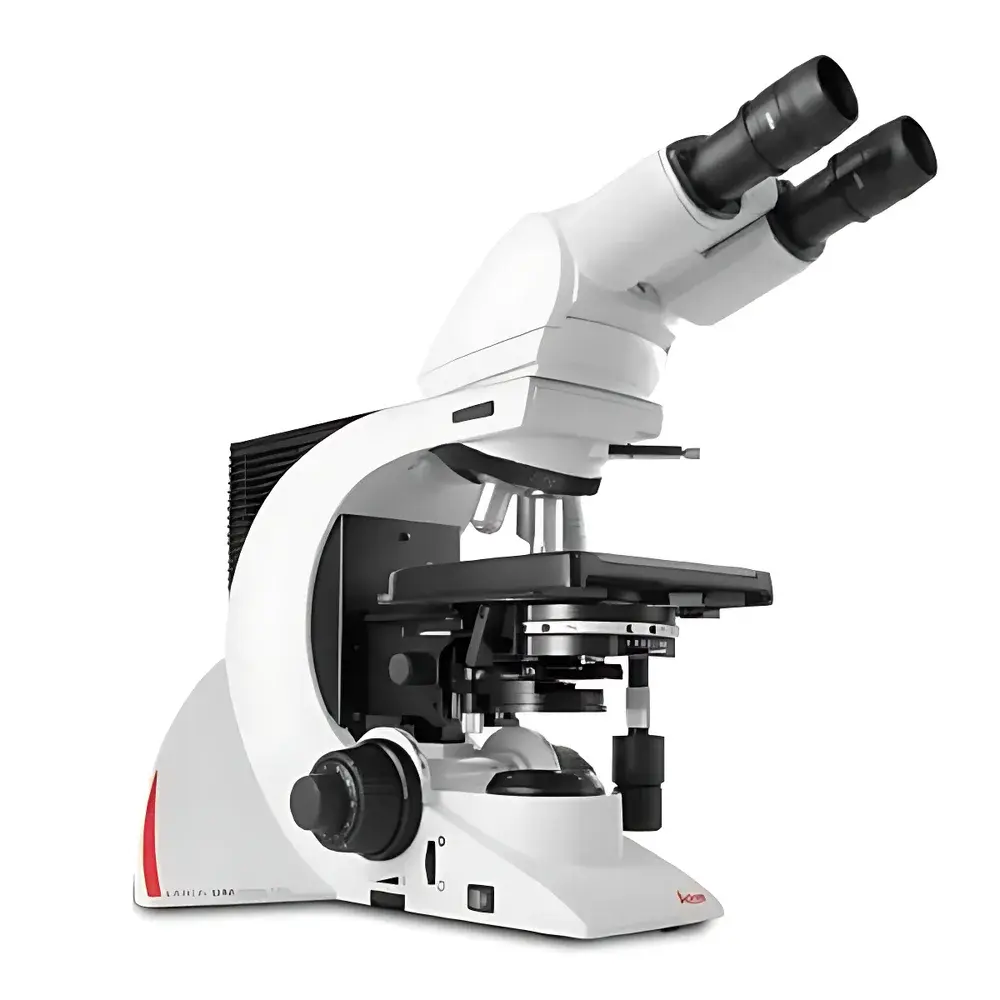
Leica DM2000 LED Upright Microscope
| Brand | Leica |
|---|---|
| Origin | Shanghai, China |
| Manufacturer Type | Authorized Distributor |
| Product Category | Domestic (China-assembled) |
| Model | Leica DM2000 LED Upright Microscope |
| Pricing | Upon Request |
| Instrument Type | Upright Microscope |
| Eyepiece Configuration | Binocular |
Overview
The Leica DM2000 LED is a high-performance upright microscope engineered for routine and advanced life science applications—including histopathology, cytology, hematology, and clinical diagnostics. Built on Leica Microsystems’ proven optical architecture, it employs Köhler illumination with an integrated high-efficiency LED light source (6,000 K color temperature, >50,000-hour lifetime), delivering stable, flicker-free, and heat-free illumination across all contrast modes. Its modular optical design supports brightfield, darkfield, phase contrast, polarized light, and fluorescence imaging—enabling seamless transitions between modalities without mechanical realignment. The microscope’s core optical path maintains Leica’s proprietary PlanApo and HCX objective compatibility, ensuring diffraction-limited resolution and chromatic fidelity consistent with Leica’s research-grade platforms. Designed for sustained daily use in diagnostic laboratories and academic core facilities, the DM2000 LED emphasizes ergonomic integrity without compromising optical rigor or system reliability.
Key Features
- Ergonomic modular design: Fully adjustable binocular observation tube (fixed 15° or variable 0–35° inclination), height-adjustable focusing knobs, and vertically repositionable stage controls minimize musculoskeletal strain during prolonged observation sessions.
- Symmetrical control layout: Coaxial coarse/fine focusing knobs and X/Y mechanical stage controls are positioned for bilateral hand operation—reducing spinal torsion and shoulder asymmetry common in extended microscopy workflows.
- Intelligent illumination management: LED brightness automatically synchronizes with objective magnification changes via encoded nosepiece communication—eliminating manual intensity readjustment and preventing photostress-induced visual fatigue.
- Customizable workflow integration: Stage handedness (left/right), focusing speed configuration (2-step or 3-step fine-focus gearing), and observation tube selection accommodate individual operator preferences and institutional standard operating procedures.
- Fluorescence-ready platform: Compatible with Leica’s full line of research-grade fluorescence filter cubes (e.g., GFP, TRITC, DAPI sets), all incorporating zero-pixel-shift optical coatings to ensure spatial registration stability across multi-channel acquisitions.
Sample Compatibility & Compliance
The DM2000 LED accommodates standard glass slides (1 × 3 inches / 26 × 76 mm), petri dishes (up to 100 mm diameter), and multi-well plates (6–96-well formats) using optional stage adapters. Its mechanical stage offers 76 × 52 mm travel range with vernier-scale precision (0.1 mm resolution). The system complies with IEC 61000-6-3 (EMC emissions), IEC 61000-6-1 (EMC immunity), and IEC 61010-1 (safety requirements for laboratory equipment). While not certified under FDA 21 CFR Part 11, its hardware architecture supports audit-trail-capable digital imaging systems when integrated with Leica LAS X software and compliant peripheral devices—facilitating GLP/GMP-aligned documentation in regulated environments.
Software & Data Management
The DM2000 LED functions as a hardware platform optimized for integration with Leica Application Suite (LAS) X software. LAS X provides image acquisition, annotation, measurement (length, area, particle count), multi-channel fluorescence overlay, and export to TIFF, JPEG2000, or OME-TIFF formats compliant with Bio-Formats. When deployed with a Leica DFC camera and configured with user authentication and electronic signature modules, LAS X can meet ALCOA+ data integrity principles. Metadata embedding includes objective ID, exposure time, illumination intensity, and stage coordinates—ensuring traceability for QC/QA reporting and ISO 15189-accredited pathology labs.
Applications
- Routine histopathological screening of H&E-, PAS-, and trichrome-stained tissue sections.
- Peripheral blood smear analysis and bone marrow aspirate evaluation in hematology labs.
- Live-cell phase contrast monitoring in undergraduate teaching laboratories and biotech QC settings.
- Fluorescence-based immunohistochemistry (IHC) validation and low-magnification multiplex marker localization.
- Polarized light examination of birefringent structures (e.g., collagen, urate crystals, starch granules) in clinical rheumatology and dermatology workflows.
FAQ
Is the DM2000 LED manufactured in Germany?
No—the DM2000 LED model distributed in China is assembled at Leica’s Shanghai manufacturing facility under strict adherence to Leica’s global quality standards and optical calibration protocols.
Does it support motorized components or automated focus?
The base DM2000 LED configuration is manually operated; motorized Z-drive, encoded stage, or automated filter turrets require upgrade to the DM2000 M or DM4000 B platform.
Can third-party fluorescence filter sets be used?
Yes—mechanically compatible filter cubes (25 mm diameter, 32 mm thread) may be installed, though Leica-certified cubes guarantee optimal spectral transmission, zero-pixel-shift alignment, and long-term coating durability.
What is the warranty coverage for this instrument?
Standard warranty is 24 months parts and labor, extendable to 36 months with Leica ServicePlus agreement—including preventive maintenance, calibration verification, and priority technical support.
Is DIC (Differential Interference Contrast) available on this model?
DIC is not natively supported on the DM2000 LED; it requires additional Nomarski prism sets, condenser modifications, and dedicated objectives—features reserved for the DM4000 B and DM6 B research systems.






