
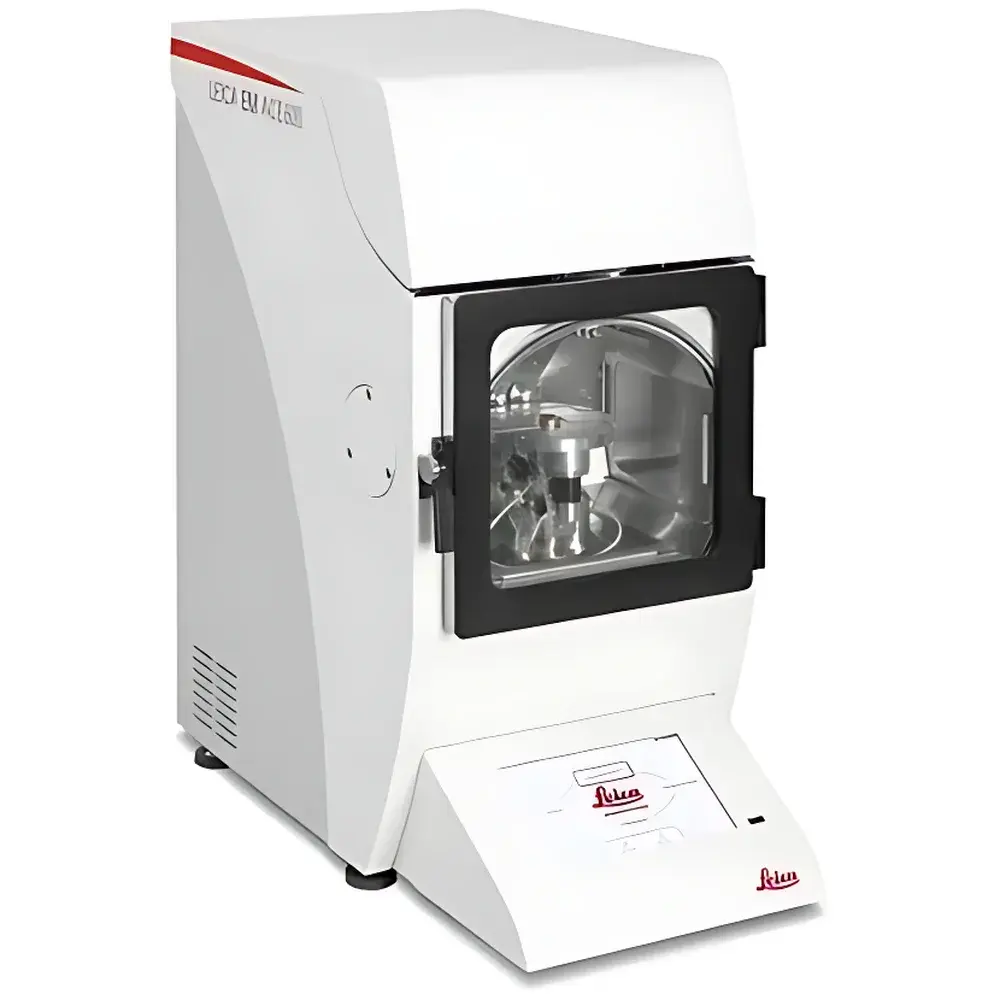
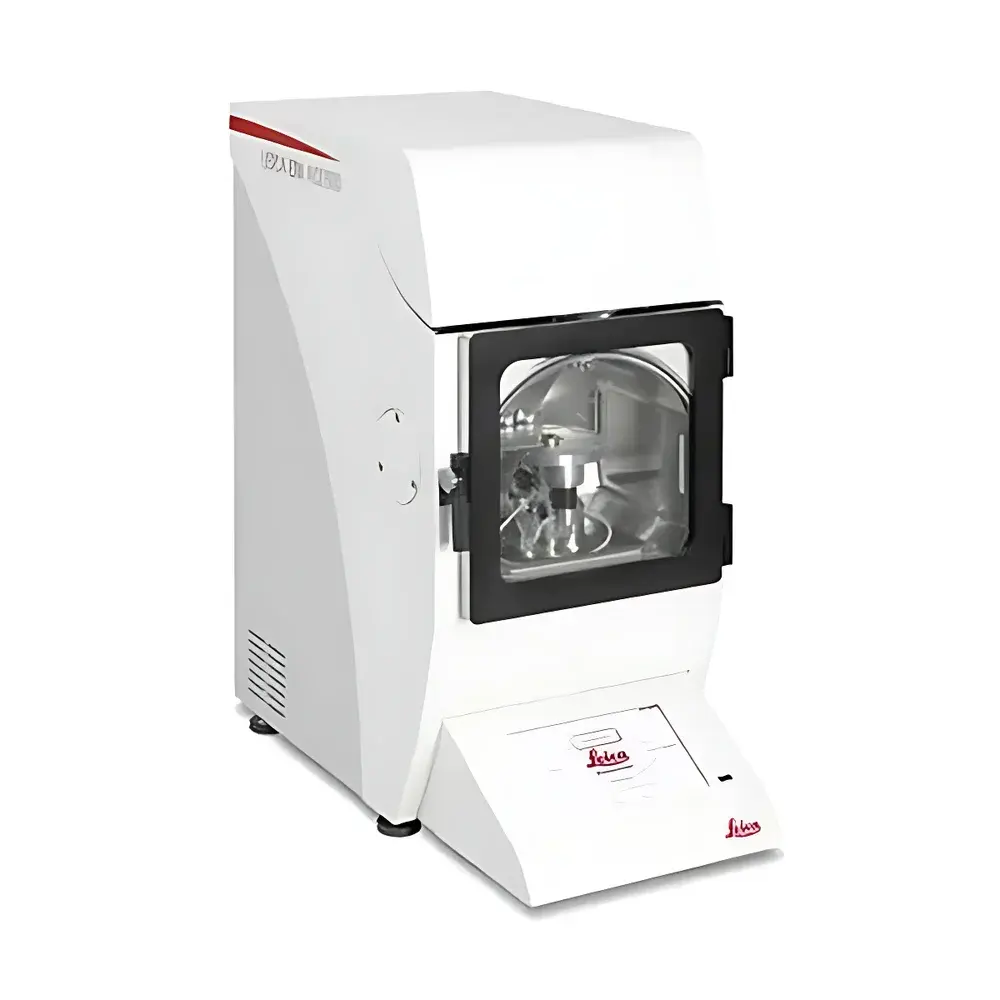
Leica EM ACE600 High-Vacuum Coating System
| Brand | Leica |
|---|---|
| Origin | Germany |
| Model | Leica EM ACE600 |
| Coating Methods | Sputter Coating, Carbon Filament Evaporation, Carbon Rod Evaporation (with optional resistive heating), Electron Beam Evaporation, Glow Discharge |
| Vacuum Level | <1 × 10⁻⁶ mbar (base pressure) |
| Chamber Diameter | 180 mm |
| Chamber Height | 220 mm |
| Sample Stage | Motorized tilt/rotation stage (0–90° tilt, 0–360° rotation) |
| Control Interface | Touchscreen GUI with pre-programmed coating protocols |
| Compliance | CE-marked,符合ISO 9001 manufacturing standards |
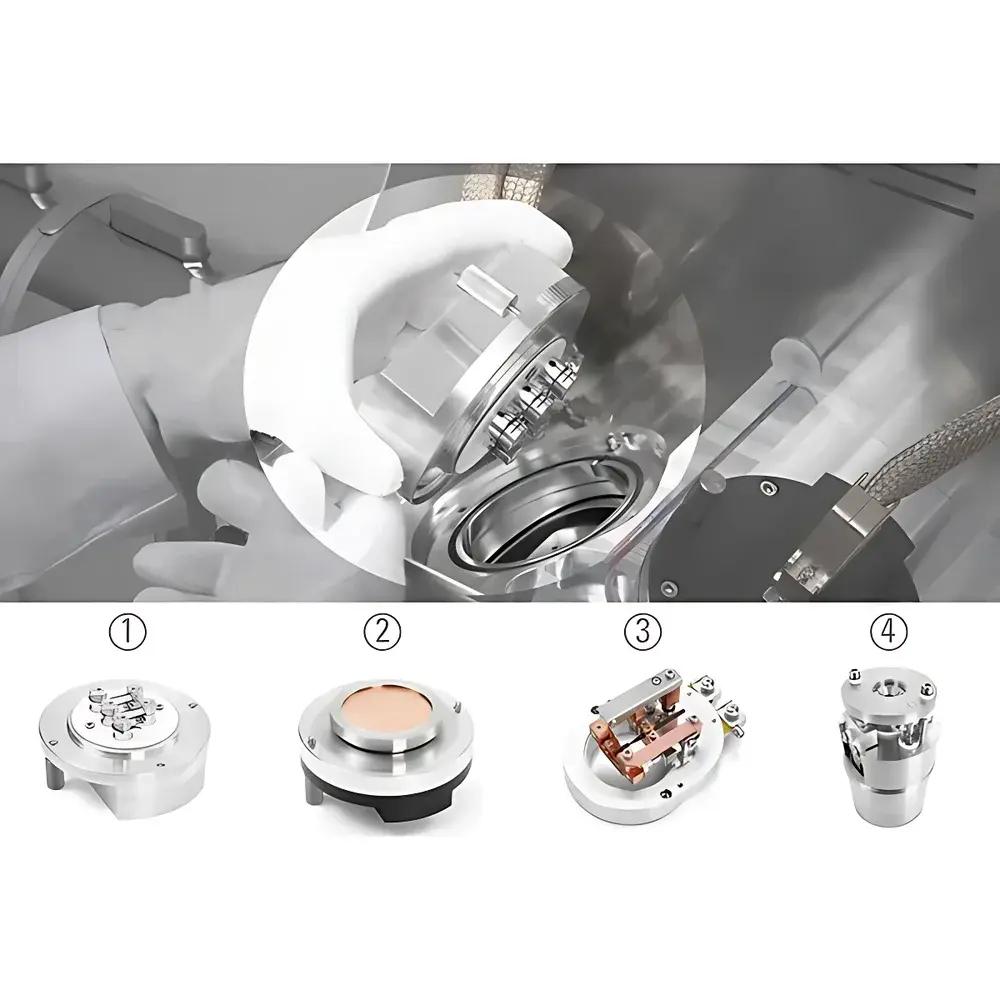
| Optional Integration | Compatible with Leica EM VCT cryo-transfer system |
Overview
The Leica EM ACE600 is a high-vacuum, multi-technique thin-film deposition system engineered for precision sample preparation in transmission electron microscopy (TEM), field-emission scanning electron microscopy (FE-SEM), and cryo-electron microscopy (cryo-EM). Operating at base pressures below 1 × 10⁻⁶ mbar, the system ensures minimal hydrocarbon contamination and optimal film uniformity—critical for high-resolution imaging and quantitative elemental analysis. Its modular architecture supports five distinct coating modalities: argon-ion sputtering (for Au, Pt, Pd, Cr, Ir), carbon filament evaporation (for ultra-thin amorphous carbon support films), carbon rod evaporation (with resistive heating option for higher deposition rates), electron beam evaporation (for refractory metals and oxides), and low-energy glow discharge (for hydrophilization of TEM grids). The vacuum chamber—constructed from stainless steel with all-metal seals and a turbomolecular pump backed by a dry scroll pump—meets stringent requirements for reproducible, contamination-free thin-film growth under controlled residual gas environments.
Key Features
- High-vacuum architecture with ultimate base pressure ≤1 × 10⁻⁶ mbar, enabling sub-nanometer thickness control and atomic-level film homogeneity
- Motorized, programmable sample stage offering continuous 0–90° tilt and full 360° rotation for conformal coating of irregular or high-aspect-ratio specimens
- Integrated touchscreen interface with >20 factory-loaded, application-specific protocols—including FE-SEM sputtering (5 nm Pt/Pd), TEM carbon replica deposition (2–5 nm), and cryo-EM grid hydrophilization
- Real-time process monitoring via quartz crystal microbalance (QCM) with ±0.1 Å resolution for precise thickness feedback during evaporation
- Modular source bay accommodating up to three simultaneous sources (e.g., dual carbon rods + sputter target), configurable without tooling or vacuum break
- CE-compliant design manufactured under ISO 9001-certified quality management systems; fully traceable component sourcing and calibration documentation available
Sample Compatibility & Compliance
The Leica EM ACE600 accommodates standard 3.05 mm TEM grids, 12.7 mm SEM stubs, and custom substrates up to Ø150 mm × 25 mm height. It supports both room-temperature and cryogenic workflows: when interfaced with the Leica EM VCT vacuum cryo-transfer system, the ACE600 enables in-situ freeze-fracture replication, cryo-carbon coating at ≤−140 °C, and solvent-free freeze-drying under high vacuum—eliminating ice contamination and surface recrystallization. All coating processes adhere to ASTM E1558 (standard practice for carbon coating of specimens for SEM), ISO 27888 (electron microscopy specimen preparation), and GLP-compliant audit trails when paired with Leica’s optional EM Script software module (21 CFR Part 11–enabled electronic signatures and change logs).
Software & Data Management
The embedded operating system provides intuitive, icon-driven workflow navigation with password-protected user levels (Operator, Supervisor, Administrator). Each coating run automatically logs timestamp, vacuum profile, source parameters (power, current, deposition rate), QCM readings, and end-point confirmation. Export formats include CSV and XML for integration into LIMS or ELN platforms. Optional EM Script software extends functionality with remote monitoring via Ethernet/Wi-Fi, automated report generation (PDF/HTML), and version-controlled protocol libraries synchronized across multiple ACE600 installations within a single facility.
Applications
- Conductive metal sputtering for charge dissipation in non-conductive biological or polymeric FE-SEM samples
- Ultra-thin (<5 nm) amorphous carbon film deposition on TEM grids for high-contrast, low-background imaging of macromolecular complexes
- Glow discharge treatment of lacey carbon grids to enhance hydrophilicity and improve vitrified ice layer uniformity in cryo-EM
- Electron beam evaporation of chromium or titanium adhesion layers prior to gold sputtering for robust metallization of MEMS devices
- Cryo-TEM double-replica preparation via sequential platinum/carbon shadowing at liquid nitrogen temperatures
- Resistive carbon rod evaporation for rapid, high-rate carbon coating of large-area SEM samples (e.g., geological thin sections)
FAQ
What vacuum level does the Leica EM ACE600 achieve, and how is it maintained?
The system achieves a base pressure of ≤1 × 10⁻⁶ mbar using a turbomolecular pump backed by a maintenance-free dry scroll pump; all internal surfaces are electropolished stainless steel with metal-sealed flanges to minimize outgassing.
Can the ACE600 be used for cryo-coating without breaking vacuum?
Yes—when integrated with the Leica EM VCT cryo-transfer system, the ACE600 maintains continuous high vacuum during sample loading, cooling, and coating, enabling contamination-free cryo-EM grid preparation.
Is protocol validation supported for regulated environments (e.g., pharmaceutical QA/QC)?
Yes—optional EM Script software provides 21 CFR Part 11 compliance, including electronic signatures, audit trails, and IQ/OQ documentation templates aligned with FDA and EMA expectations.
How is film thickness accuracy ensured across different coating modes?
A calibrated quartz crystal microbalance (QCM) provides real-time, in-situ thickness measurement with ±0.1 Å resolution; deposition rate algorithms are empirically validated for each source material and geometry.
What maintenance intervals are recommended for routine operation?
Pump oil replacement is not required (dry scroll pump); turbomolecular pump service is recommended every 12,000 hours; QCM sensors are consumables replaced per 200–300 coating cycles depending on material type.



