
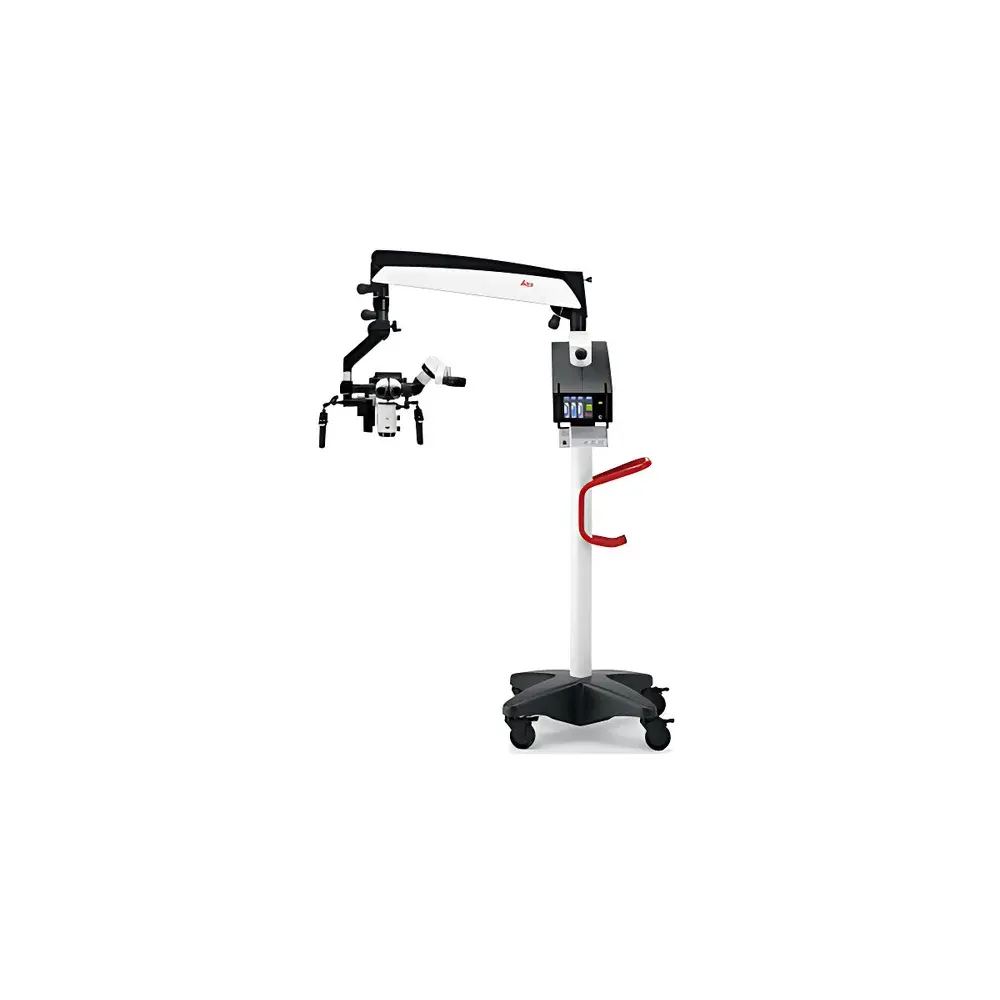
Leica M525 F20 Surgical Microscope System
| Brand | Leica |
|---|---|
| Origin | Germany |
| Model | Leica M525 F20 |
| Surgical Application Scope | Neurosurgery, Otolaryngology (ENT), Spine Surgery, Hand Surgery, Plastic & Reconstructive Surgery |
| Working Distance Range | 207–470 mm (motorized MultiFoc objective) |
| Illumination | Dual independent 180 W xenon light sources |
| Optical Design | High-resolution apochromatic optics with extended depth of field |
| Compliance | CE-marked per EU MDR 2017/745, ISO 13485 certified manufacturing environment |
| Safety | Integrated patient-safe illumination control with real-time intensity monitoring |
Overview
The Leica M525 F20 Surgical Microscope System is a precision-engineered optical platform designed for high-acuity microsurgical procedures across multiple specialties. Built upon Leica Microsystems’ legacy in apochromatic optical design, the M525 F20 employs a coaxial, telecentric optical path with chromatic aberration correction across the visible spectrum (400–700 nm), ensuring faithful color rendition and minimal distortion at magnifications from 4× to 40×. Its core measurement principle relies on stereoscopic binocular vision enhanced by high numerical aperture (NA) objectives and optimized light-path geometry—enabling simultaneous depth perception, high spatial resolution, and consistent image brightness across variable working distances. The system is specifically engineered for intraoperative use where optical fidelity, ergonomic stability, and procedural adaptability are non-negotiable requirements—particularly in neurosurgical tumor resection, microvascular anastomosis, cochlear implantation, and peripheral nerve repair.
Key Features
- Motorized MultiFoc Objective: Enables seamless, programmable adjustment of working distance between 207 mm and 470 mm without mechanical refocusing—supporting rapid transitions between deep cranial cavities and superficial reconstructive fields.
- Dual Independent Xenon Illumination: Two 180 W cold-light xenon sources operate in parallel or standby mode, delivering stable, flicker-free illumination (>98% color rendering index, CRI) with automatic intensity compensation based on real-time distance feedback.
- Extended Depth of Field Optics: Achieves up to 30% greater usable depth than conventional surgical microscopes at equivalent magnification—reducing frequent refocusing and improving workflow continuity.
- Ergonomic Boom Mount & Precision Drive: Counterbalanced articulating arm with harmonic drive motors ensures vibration-free positioning and sub-millimeter repeatability; compatible with ceiling-mounted, wall-mounted, or mobile base configurations.
- Integrated Safety Architecture: Automatic illumination shutoff during instrument collision detection, thermal overload protection, and ISO 15004-2 compliant ocular light exposure limits ensure compliance with international ophthalmic safety standards.
Sample Compatibility & Compliance
The Leica M525 F20 is validated for use in human surgical environments under strict regulatory frameworks. It meets essential requirements of the European Union’s Medical Device Regulation (MDR 2017/745) and carries CE marking for Class IIa medical devices. Manufacturing adheres to ISO 13485:2016 quality management systems. The system supports integration with third-party navigation platforms (e.g., Brainlab Curve, Medtronic StealthStation) via standardized DICOM-SR and HL7 interfaces. All optical components comply with ISO 10940 (Surgical Microscopes – Requirements and Test Methods) and IEC 62304 (Medical Device Software Lifecycle Processes). Sterilizable accessories—including disposable drape kits and autoclavable eyepiece covers—are available under separate regulatory submissions.
Software & Data Management
The M525 F20 integrates with Leica’s optional LAS X Surgical Suite software, which provides DICOM-compliant image capture, time-stamped video recording (H.264/MPEG-4 AVC), and synchronized annotation tools for intraoperative documentation. All imaging metadata—including magnification, working distance, illumination intensity, and timestamped user ID—are embedded into exported files to support audit trails required under FDA 21 CFR Part 11 and EU Annex 11 for electronic records. Optional encryption modules enable HIPAA- and GDPR-aligned data handling. No local storage is embedded in the microscope hardware; all media are routed through secure network endpoints or removable SSDs with write-protection controls.
Applications
- Neurosurgery: Tumor margin delineation, arteriovenous malformation (AVM) dissection, and intraoperative fluorescence guidance (compatible with 5-ALA and ICG protocols).
- Otolaryngology: Stapedectomy, tympanoplasty, cochlear implant electrode insertion, and endoscopic-assisted skull base surgery.
- Spine Surgery: Microdiscectomy, laminectomy, and transforaminal lumbar interbody fusion (TLIF) with integrated navigation overlay.
- Hand & Peripheral Nerve Surgery: Digital nerve repair, tendon transfer visualization, and vascularized lymph node transfer (VLNT).
- Plastic & Reconstructive Surgery: Free flap monitoring, perforator vessel identification, and facial reanimation procedures requiring submillimeter tissue differentiation.
FAQ
Is the Leica M525 F20 compatible with fluorescence-guided surgery workflows?
Yes—the system supports external excitation light coupling via Leica’s FL400 or FL500 modules, enabling integration with 5-aminolevulinic acid (5-ALA), indocyanine green (ICG), and fluorescein sodium protocols.
What is the maximum supported magnification with digital zoom enabled?
Optical magnification ranges from 4× to 40×; digital zoom extends effective magnification up to 80× while preserving full HD resolution through pixel-binning interpolation algorithms.
Does the system include built-in documentation capabilities?
Standard configuration includes HDMI and SDI outputs for external recording; LAS X Surgical Suite (optional) adds DICOM-compliant archiving, structured reporting, and PACS integration.
Can the M525 F20 be installed in an existing OR infrastructure with limited ceiling access?
Yes—multiple mounting options exist, including low-profile wall brackets, mobile floor stands with dynamic braking, and retrofit-compatible ceiling booms meeting ISO 9001 structural load specifications.
How is calibration maintained during long-term clinical deployment?
Leica recommends annual performance verification per ISO 10940 Annex B, including resolution testing (MTF measurement), illumination uniformity mapping, and working distance linearity validation—performed by authorized service engineers using traceable NIST-certified test targets.



