
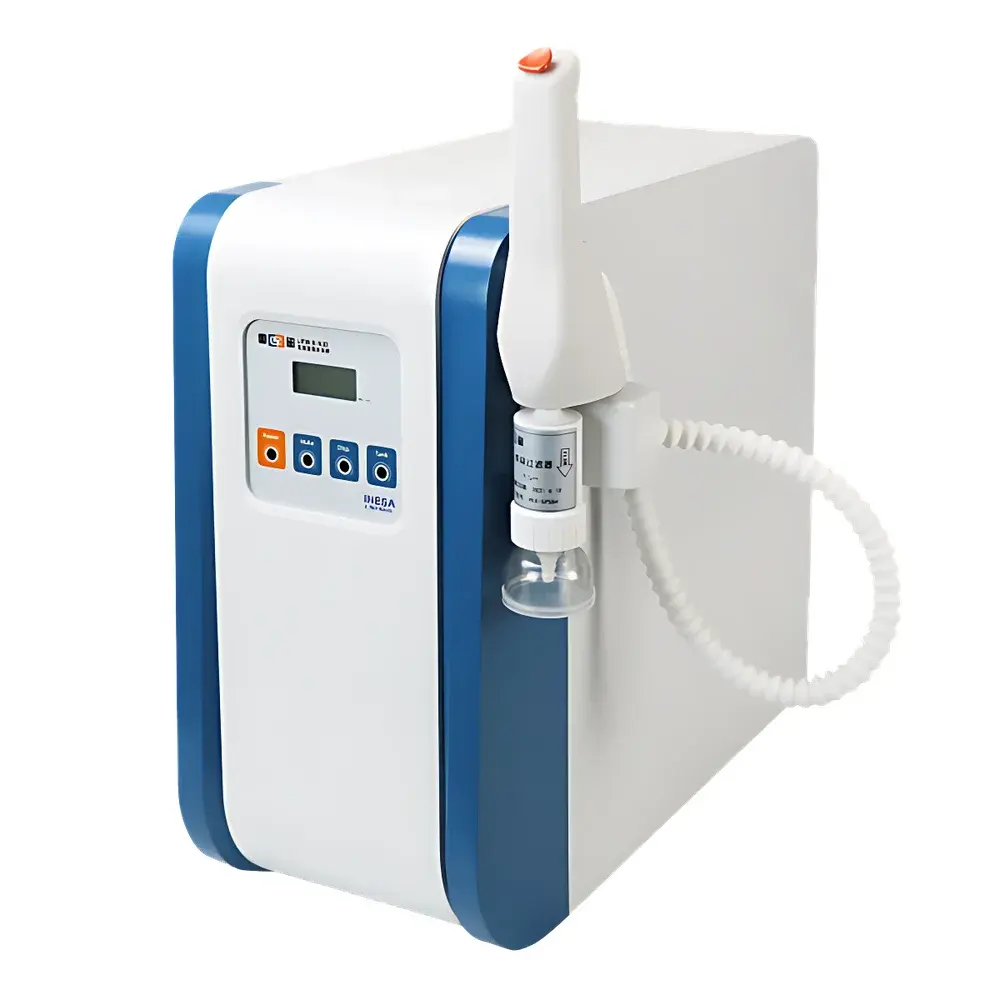
Leichi UPW-B-N30 Ultra-Pure Water System
| Brand | Leichi |
|---|---|
| Origin | Shanghai, China |
| Model | UPW-B-N30 |
| Purified Water Grade | Type I (ASTM D1193-20) |
| Resistivity | ≥18.2 MΩ·cm at 25 °C |
| Bacterial Count | ≤1 CFU/mL |
| TOC | ≤30 ppb |
| Production Rate (Pure Water) | 30 L/h |
| Ultrapore Water Flow Rate | 1–1.5 L/min |
| Feed Water Conductivity | <400 µS/cm |
| Feed Temperature | 5–40 °C |
| Feed Pressure | 0.1–0.4 MPa |
| Desalination Efficiency | >95% |
| Microbial Reduction | >99% |
| Particle Retention | ≥0.22 µm |
Overview
The Leichi UPW-B-N30 Ultra-Pure Water System is an integrated, modular laboratory water purification platform engineered for consistent production of Type I ultrapure water per ASTM D1193-20 and ISO 3696:1987 standards. It employs a multi-stage purification architecture comprising pre-treatment (sediment + activated carbon), dual-stage reverse osmosis (RO), ion exchange (mixed-bed resin), and final ultrafiltration (0.22 µm membrane), followed by UV photooxidation (185/254 nm) to control organic contamination. Designed for routine analytical, life science, and QC/QA applications—including HPLC mobile phase preparation, cell culture media formulation, trace metal analysis, and molecular biology workflows—the system delivers stable resistivity ≥18.2 MΩ·cm at 25 °C with real-time temperature-compensated conductivity monitoring. Its narrow-footprint chassis (≤350 mm depth) and split-body configuration—separating the main unit from the ergonomic wall- or bench-mounted dispensing arm—optimize spatial efficiency in high-density lab environments without compromising service accessibility.
Key Features
- Modular cartridge architecture with quick-connect fittings: Pre-filter, RO membrane, mixed-bed polishing column, and 0.22 µm final filter are independently replaceable within seconds—no tools required.
- Dual-column extended-life resin design increases consumable service interval by up to 40% compared to single-column configurations under typical municipal feed water conditions.
- Intelligent LCD interface displaying real-time resistivity (µS/cm and MΩ·cm), TOC trend (ppb), water temperature (°C), tank level (%), cumulative volume dispensed (L), and system status codes.
- Integrated temperature-compensated resistivity sensor calibrated to NIST-traceable standards; automatic correction applied across 5–35 °C operating range.
- Independent dual-output design: Dedicated ports for purified water (Type III, ~5–15 µS/cm) and ultrapure water (Type I, ≥18.2 MΩ·cm), each with flow-controlled dispensing and programmable volume dosing.
- Visual status indicators: LED array for power, RO operation, UPW generation, tank fill level (four-tier), and maintenance alerts—enabling rapid operational assessment without menu navigation.
Sample Compatibility & Compliance
The UPW-B-N30 is validated for continuous operation with municipal tap water meeting WHO Guidelines for Drinking-water Quality (2022) and local regulatory limits for hardness (<300 mg/L CaCO₃), chlorine (<3 mg/L), and turbidity (<1 NTU). All wetted materials—including housing, tubing, and cartridges—comply with USP Class VI biocompatibility requirements and FDA 21 CFR 177.2600 for food-contact polymers. The system supports GLP/GMP documentation workflows via optional audit trail logging (CSV export) and meets ISO/IEC 17025:2017 environmental monitoring prerequisites for water quality assurance. Final ultrapure water output conforms to ASTM D1193-20 Type I specifications for resistivity, sodium, silica, and microbial content, and satisfies USP Purified Water and Water for Injection (WFI) pre-purification requirements when paired with validated downstream sterilizing filtration.
Software & Data Management
While the UPW-B-N30 operates as a standalone instrument without proprietary software dependency, its embedded controller stores 30 days of time-stamped operational logs—including daily volume totals, peak resistivity values, alarm history (e.g., low pressure, high TOC, low tank level), and cartridge usage counters. Data export is supported via USB-C port (FAT32 formatted drive) in comma-separated values (CSV) format compatible with LIMS integration and Excel-based trending. Optional RS-485 Modbus RTU interface enables remote monitoring and centralized facility water management via SCADA or building automation systems. All calibration parameters—including sensor slope, offset, and temperature coefficient—are password-protected and modifiable only by authorized technicians, ensuring data integrity alignment with FDA 21 CFR Part 11 electronic record controls.
Applications
- HPLC, UHPLC, and LC-MS mobile phase and blank preparation requiring low ionic background and minimal organic interference.
- Preparation of reagents and standards for ICP-MS, AAS, and ion chromatography where sub-ppt metal contamination must be avoided.
- Cell culture media, PBS, and trypsin solutions demanding endotoxin-free, nuclease-free, and low-bioburden water (≤1 CFU/mL, ≤0.001 EU/mL inferred).
- Electrophysiology and patch-clamp experiments sensitive to trace ions and organic leachables.
- Calibration laboratories performing ISO/IEC 17025-compliant reference material dilution and volumetric standardization.
- Pharmaceutical QC labs fulfilling EP 2.2.45 and JP 17 water quality monographs for purified and water for injection support.
FAQ
What feed water quality is required for optimal RO membrane life?
Feed water must have conductivity <400 µS/cm, free chlorine <3 mg/L, and SDI <5. Pretreatment with sediment and activated carbon cartridges is mandatory to prevent fouling.
Does the system include TOC monitoring capability?
Yes—the built-in 185/254 nm dual-wavelength UV oxidizer reduces TOC to ≤30 ppb; real-time TOC estimation is derived from post-UV resistivity decay kinetics and displayed on the LCD.
Can the UPW-B-N30 be connected to a central water distribution loop?
No—it is designed exclusively for point-of-use operation. For loop-fed installations, consult Leichi’s UPW-D series with recirculation pump and heat-exchange options.
Is the resistivity measurement NIST-traceable?
The factory-calibrated sensor is traceable to NIST Standard Reference Material (SRM) 3194; certificate of calibration is provided with each unit.
How often must consumables be replaced under typical lab use?
Pre-filters: every 3–6 months; RO membrane: 12–24 months; polishing column: 6–12 months—dependent on feed water quality and daily usage volume (30 L/h max duty cycle).



