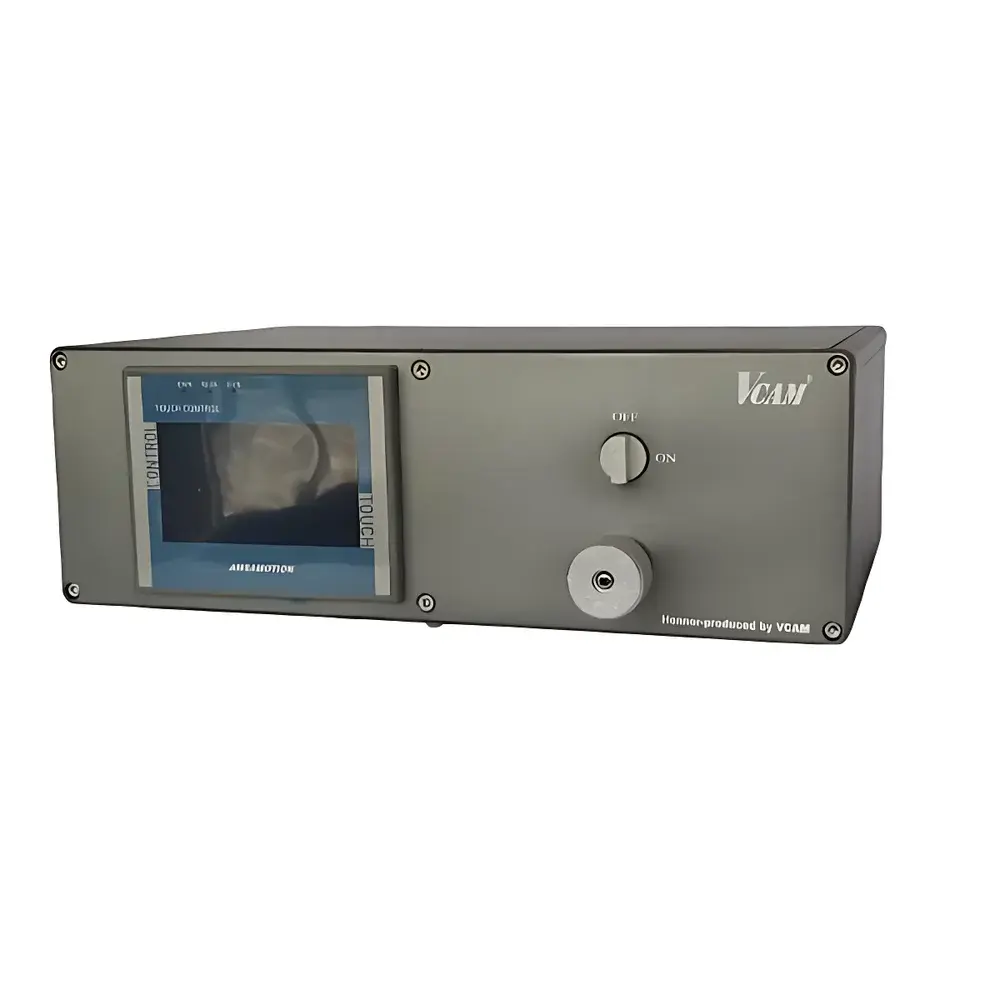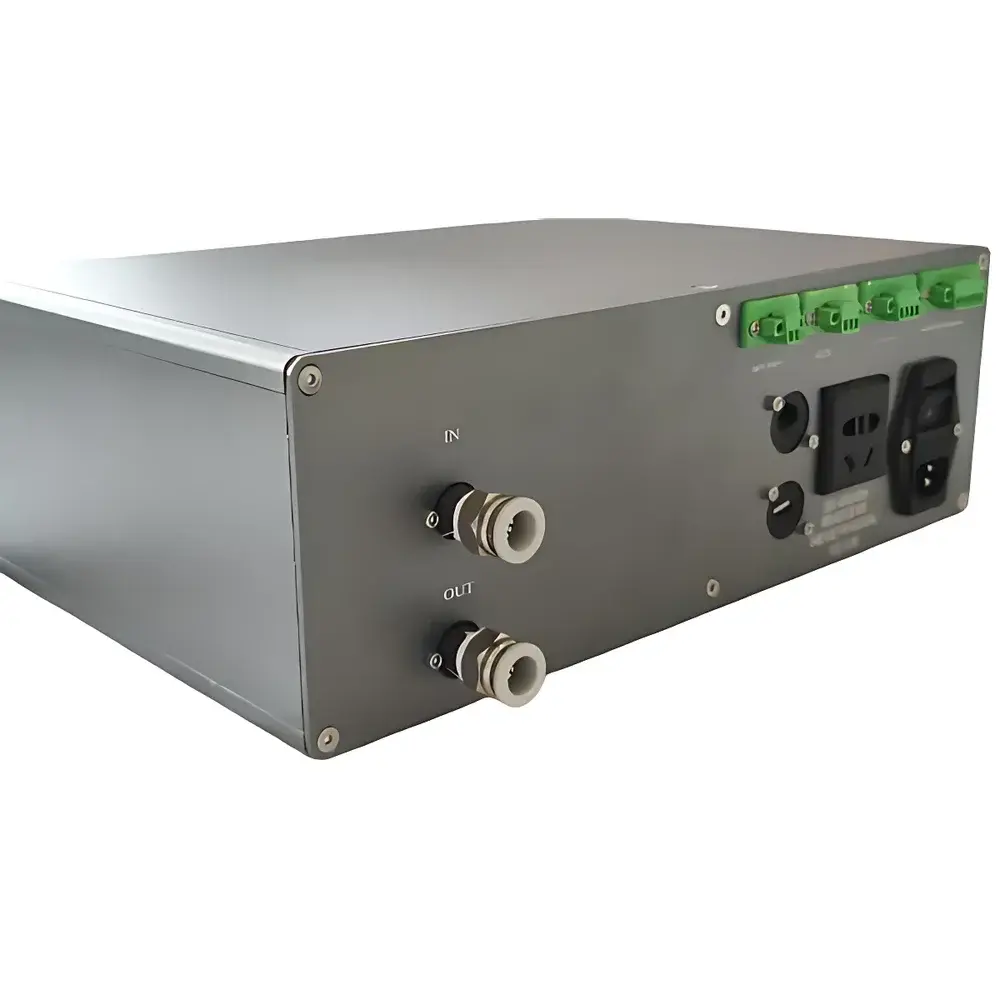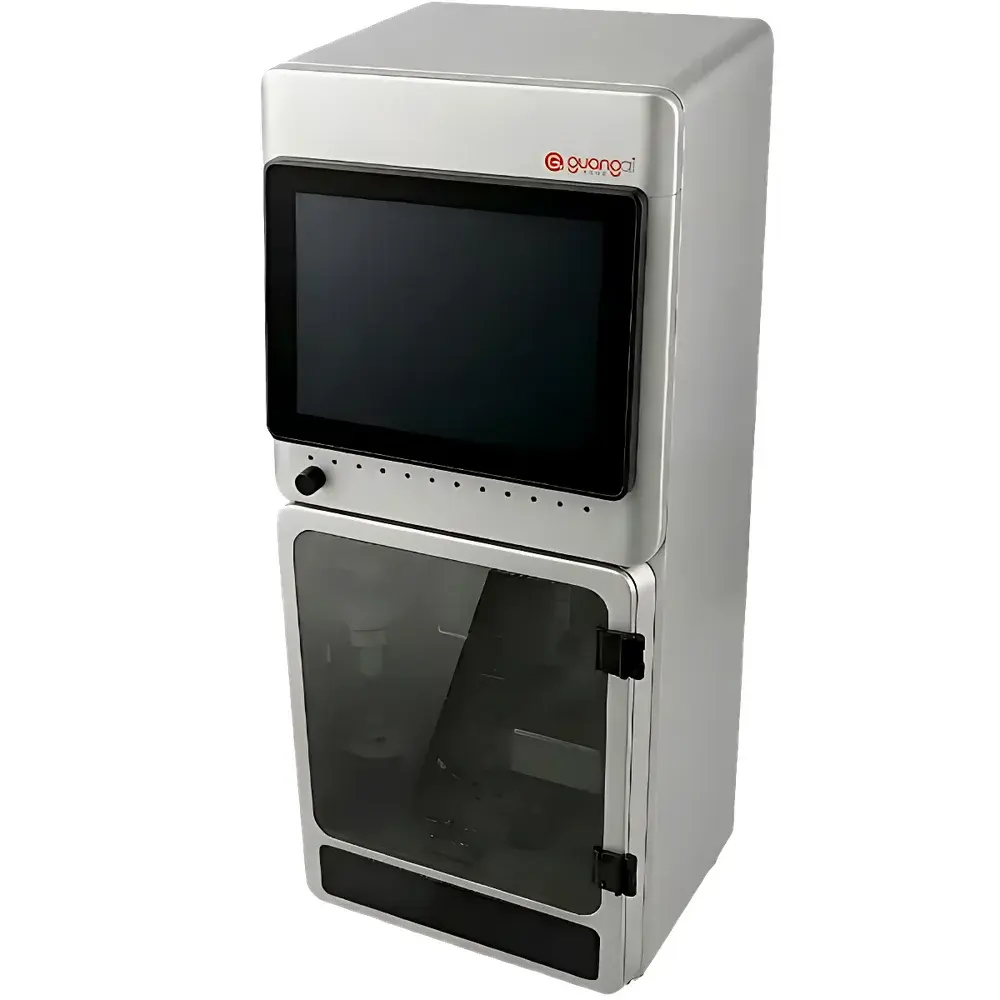
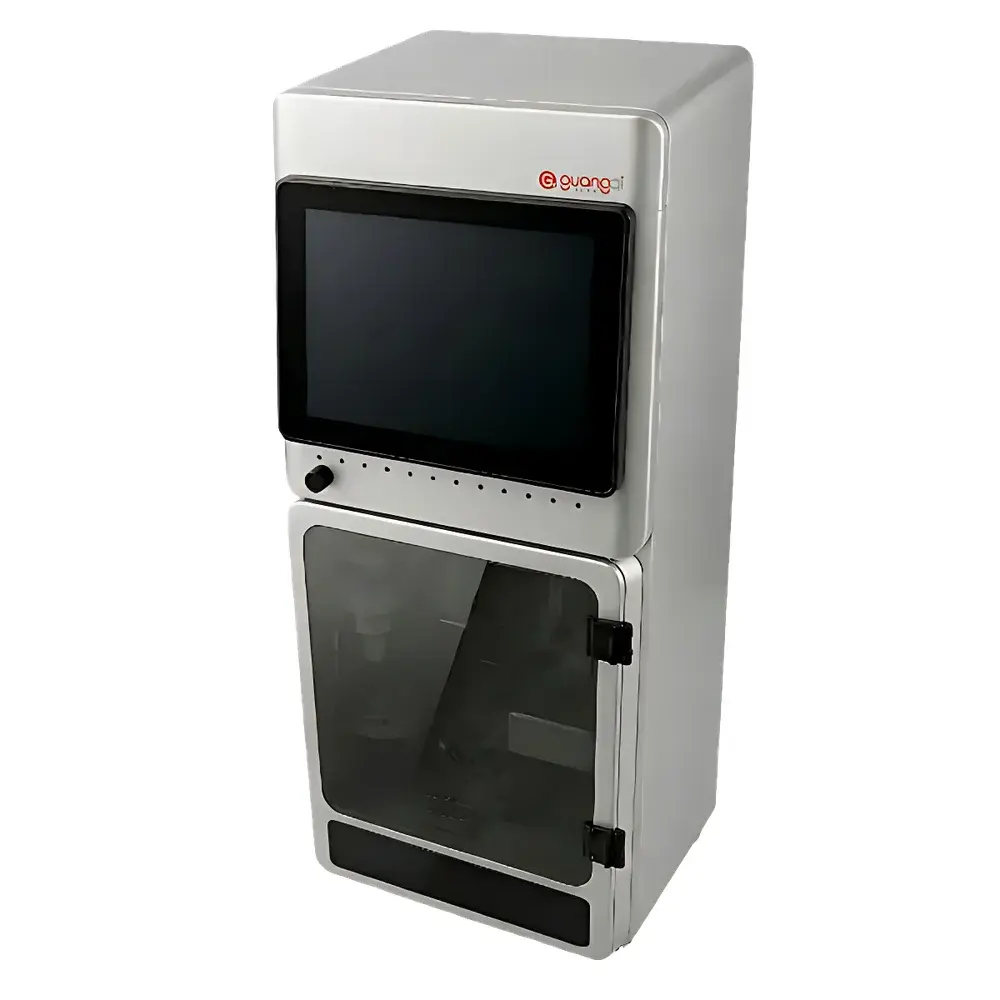
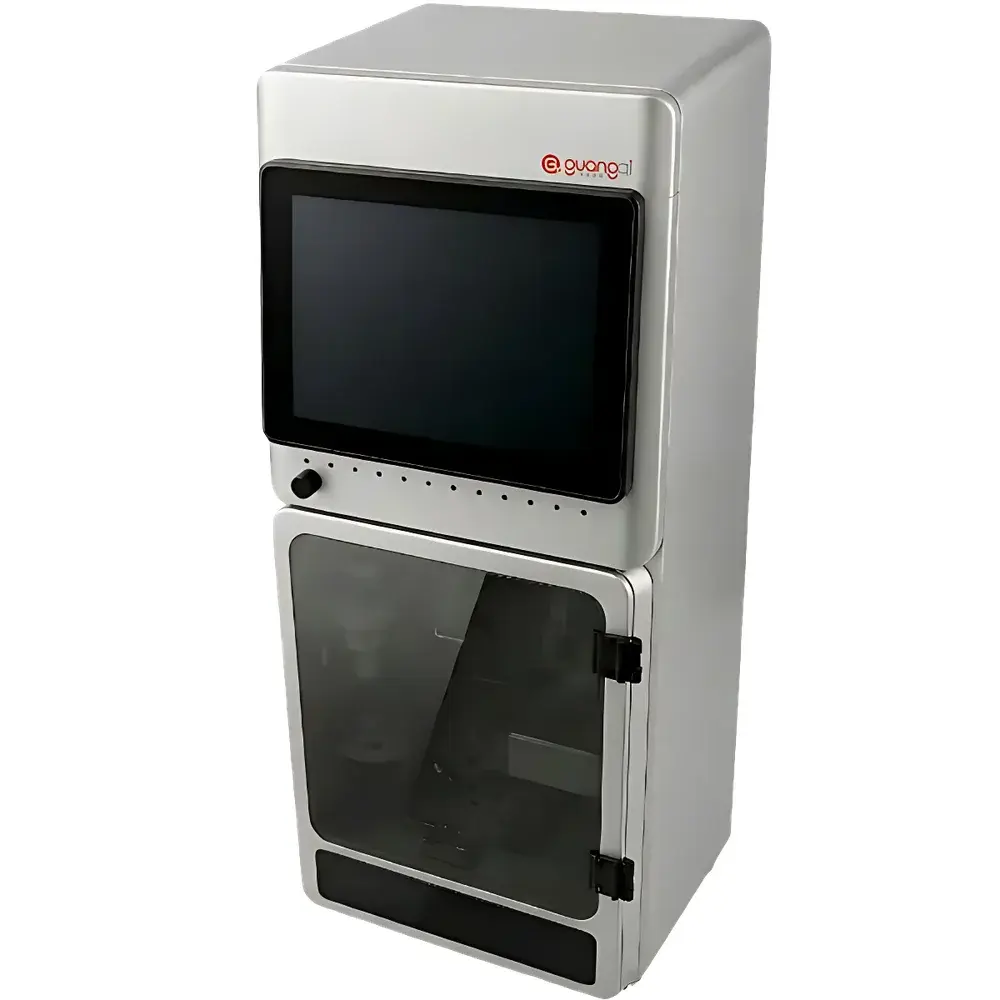
LightQ Acona LE Mini Online Liquid Particle Counter
| [Brand | LightQ / Acona |
|---|---|
| Origin | Shanghai, China |
| Manufacturer Type | OEM Manufacturer |
| Model | Acona LE Mini |
| Pricing | Upon Request] |
Overview
The LightQ Acona LE Mini Online Liquid Particle Counter is an industrial-grade, process-integrated particle monitoring system engineered for real-time, in-line quantification of large particles (LPC) in high-purity, high-value process liquids—specifically chemical mechanical planarization (CMP) slurries. It operates on the Single Particle Optical Sensing (SPOS) principle, also known as light extinction or light blockage detection, where each particle passing through a precisely defined optical sensing zone generates a pulse proportional to its cross-sectional area. This enables direct, calibrated counting and sizing of individual particles ≥0.5 µm with high statistical fidelity and low coefficient of variation (<5% RSD for repeat measurements under controlled flow). Unlike ensemble techniques such as laser diffraction, SPOS delivers discrete particle count data per size bin—critical for detecting low-frequency, high-impact events like filter breakthrough or slurry agglomeration. The LE Mini is purpose-built for Point-of-Use (POU) deployment in semiconductor manufacturing environments, where LPC trends directly correlate with wafer defectivity, polishing pad scratching, and tool downtime risk.
Key Features
- True POU-Optimized Architecture: Compact, modular bypass flow cell design allows non-invasive integration into existing slurry delivery infrastructure—no process interruption, no dilution, no sample transfer losses.
- SPOS-Based Large Particle Counting: Measures particle counts and cumulative distributions in user-defined thresholds (e.g., >0.5 µm, >1.0 µm, >5.0 µm), aligned with industry-standard LPC definitions used in CMP quality control protocols.
- Process-Ready Fluid Handling: Optional integrated modules include flow stabilization, backpressure regulation, degassing, protective pre-filtration (0.2 µm), and automated flush cycles—ensuring signal stability and long-term measurement reproducibility in variable slurry viscosity and gas content conditions.
- Real-Time Trending & Threshold Alarms: Outputs time-synchronized particle count rates, cumulative counts, and pass/fail status against configurable size-based limits—enabling closed-loop feedback for filter changeout scheduling and SDS event correlation.
- Industrial Communication Interface: Standard Modbus TCP and optional OPC UA support for seamless integration with Slurry Delivery Systems (SDS), MES, SCADA, or LIMS platforms; includes timestamped audit trail logging compliant with GLP/GMP documentation requirements.
Sample Compatibility & Compliance
The Acona LE Mini is validated for use with aqueous and solvent-based CMP slurries—including silica, ceria, and alumina formulations—across pH 2–12 and viscosities up to 50 cP. Its wetted path employs chemically resistant materials (e.g., PEEK, fused silica, sapphire optics) compatible with common slurry additives (e.g., oxidizers, surfactants, biocides). All firmware and data handling comply with ISO/IEC 17025 traceability principles for measurement uncertainty reporting. While not FDA-cleared, the system’s data integrity architecture—including electronic signatures, user access controls, and immutable audit logs—supports alignment with 21 CFR Part 11 readiness for regulated environments. It meets IEC 61000-6-2 (EMC immunity) and IEC 61000-6-4 (EMC emissions) standards for industrial installations.
Software & Data Management
The embedded web-based interface provides real-time visualization of particle count trends, histogram overlays, and alarm history without requiring local software installation. Raw SPOS pulse data (amplitude, width, timestamp) is stored internally and exportable via secure FTP or USB in CSV/JSON formats. Optional LightQ Process Analytics Suite (LPAS) adds advanced capabilities: multi-node correlation analysis, statistical process control (SPC) charting (X-bar/R, CUSUM), batch-to-batch consistency scoring, and automated report generation aligned with internal QA templates or customer-specific SLA dashboards. All data exports retain full metrological traceability, including calibration certificate references, sensor health metrics, and environmental metadata (temperature, pressure, flow rate).
Applications
- CMP Slurry Manufacturers: In-process monitoring during blending, aging, and filling; batch release verification; shelf-life stability assessment; root cause analysis of out-of-spec LPC excursions.
- SDS Integrators: Continuous validation of slurry integrity across distribution loops; predictive maintenance scheduling based on LPC drift; alarm-triggered isolation valve actuation; performance benchmarking of filter cartridges across vendors.
- Front-End Semiconductor Fabs: Pre-tool POU qualification prior to chamber introduction; dynamic filter lifetime modeling; forensic investigation of post-CMP defect clusters; integration with fab-wide yield management systems (YMS).
FAQ
Where should the LE Mini be deployed in a CMP slurry delivery chain?
Typical POU locations include pre-filter (to establish upstream baseline and detect mixing inconsistencies), post-filter (to validate removal efficiency and generate filter degradation curves), and tool-end (to assess final slurry integrity and identify transport-induced contamination).
What does LPC mean in CMP process control?
Large Particle Count (LPC) refers to the number of particles exceeding a user-defined threshold diameter (commonly ≥0.5 µm or ≥1.0 µm) per unit volume. Elevated LPC correlates strongly with surface defects and is monitored per internal specifications aligned with SEMI F39 and JEDEC JESD22-A117 guidelines.
How are online particle data used for operational decision-making?
LPC trend data inform filter replacement timing (reducing unnecessary changeouts), trigger SDS parameter adjustments (e.g., flow velocity, recirculation dwell time), support quarantine decisions for suspect batches, and serve as objective evidence for POU release authorization prior to tool use.
Related Products