
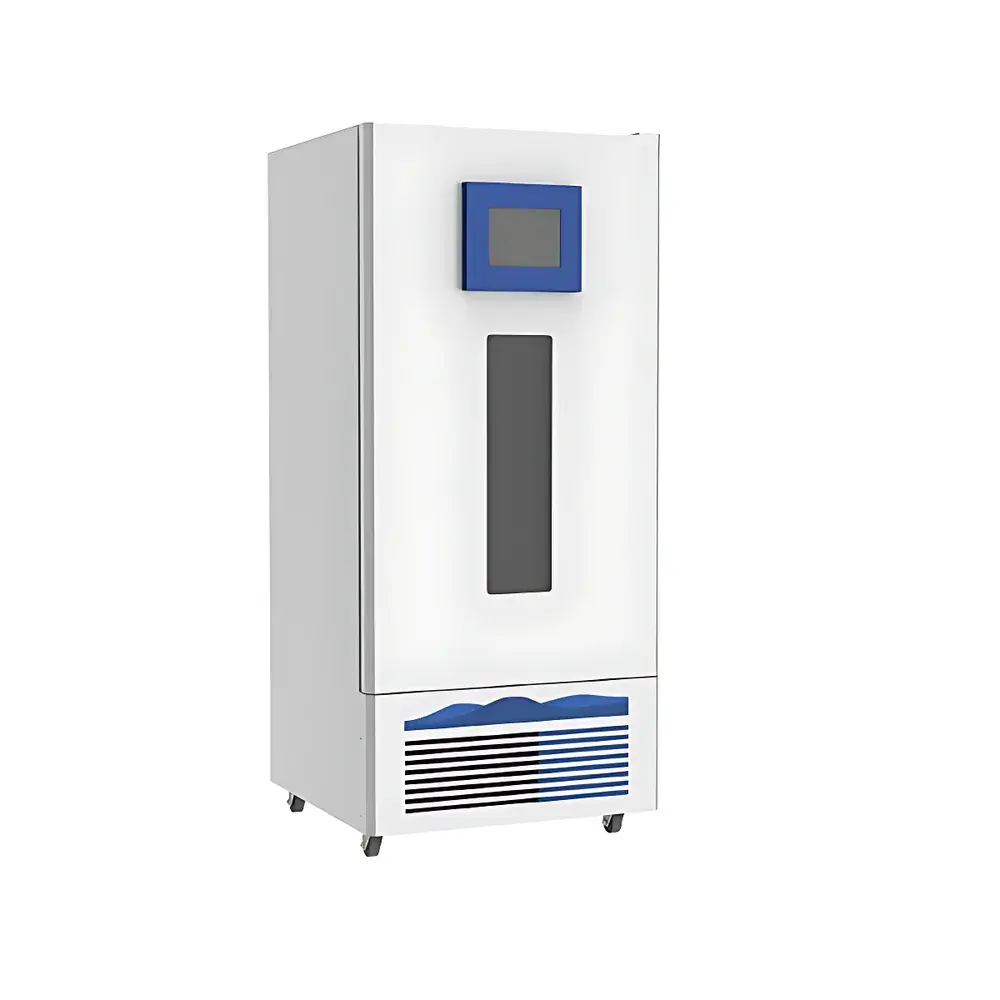
Lihero LFBOD₅-2015 Online Biochemical Oxygen Demand (BOD₅) Analyzer
| Brand | Lihero |
|---|---|
| Model | LFBOD₅-2015 |
| Measurement Principle | Mercury-Free Pressure-Difference Method |
| Sample Throughput | 16 Channels Simultaneous |
| Temperature Control Accuracy | ±0.1 °C |
| Data Storage | Internal Memory for 20 Years + External microSD Card Support |
| Connectivity | USB 2.0 & Infrared Interface |
| Compliance | Designed to Meet ASTM D5210, ISO 5815-1:2019, and HJ 505-2009 (China) Requirements for BOD₅ Determination |
Overview
The Lihero LFBOD₅-2015 Online Biochemical Oxygen Demand (BOD₅) Analyzer is an automated, multi-channel environmental monitoring instrument engineered for precise, unattended determination of 5-day biochemical oxygen demand in surface water, wastewater, effluent, and low-nutrient aquatic samples. It operates on the mercury-free pressure-difference principle—measuring the partial pressure decline of dissolved oxygen within sealed, temperature-controlled BOD bottles as aerobic microorganisms metabolize biodegradable organic matter. Unlike manometric or titrimetric methods requiring manual intervention or hazardous reagents, this system employs a high-stability pressure transducer coupled with a precision incubation module (±0.1 °C) to quantify oxygen consumption gravimetrically via real-time differential pressure tracking. The analyzer eliminates mercury vapor hazards while maintaining metrological equivalence to reference-standard methods, making it suitable for regulatory-compliant monitoring in municipal treatment plants, industrial discharge control stations, and environmental research laboratories operating under GLP or ISO/IEC 17025 frameworks.
Key Features
- 16-channel parallel measurement architecture enables simultaneous BOD₅ analysis of up to 16 independent samples—significantly improving laboratory throughput and reducing per-sample operational cost.
- Integrated high-precision temperature-controlled incubation module ensures strict adherence to the standard 20 °C ±0.1 °C incubation condition required by ASTM D5210 and ISO 5815-1:2019.
- Mercury-free pressure-difference detection eliminates toxic material handling, disposal, and calibration drift associated with traditional manometers—enhancing long-term measurement stability and operator safety.
- Automatic data acquisition, curve generation, and endpoint recognition eliminate subjective interpretation; final BOD₅ values (mg/L O₂) are displayed directly without unit conversion or manual calculation.
- Low-maintenance design supports continuous operation for ≥7 days between routine service intervals—reducing technician labor and minimizing process interruption in 24/7 monitoring environments.
- Embedded microprocessor controls all phases—sample loading confirmation, incubation timing, pressure sampling frequency (adjustable from 15-min to 2-hr intervals), data validation, and auto-shutdown upon assay completion.
Sample Compatibility & Compliance
The LFBOD₅-2015 accommodates diverse sample matrices including raw sewage, secondary effluent, river water, groundwater, and nutrient-depleted reservoir samples. Its pressure-based detection mechanism is inherently immune to optical interference—ensuring reliable performance regardless of turbidity, color, or suspended solids concentration (up to 500 NTU). The system meets methodological equivalency requirements of ASTM D5210–22 (Standard Test Method for Determining the Anaerobic Biodegradation of Plastic Materials in Municipal Solid Waste), ISO 5815-1:2019 (Water quality — Determination of biochemical oxygen demand after n days (BODₙ) — Part 1: Dilution and seeding method), and China’s HJ 505–2009 (Determination of biochemical oxygen demand (BOD₅) in water quality—Dilution and inoculation method). All internal data logging timestamps, user access logs, and calibration records comply with audit-trail requirements for regulated environments.
Software & Data Management
The analyzer features an onboard 32-bit ARM-based controller with non-volatile flash memory capable of storing over 20 years of time-stamped BOD₅ results (including raw pressure readings, calculated oxygen depletion rates, and QC flags). Historical datasets can be exported via USB 2.0 or infrared interface to Windows-based desktop software supporting CSV, Excel, and PDF report generation. The companion application provides graphical overlay of kinetic BOD curves across multiple samples, statistical comparison (mean, SD, CV%), and automated outlier detection based on ISO 5815-2:2019 validity criteria. Data integrity safeguards include write-protection modes, password-protected configuration changes, and optional electronic signature support aligned with FDA 21 CFR Part 11 Annex 11 principles.
Applications
- Continuous compliance monitoring of BOD₅ in municipal wastewater treatment plant influent, activated sludge effluent, and discharge outfalls.
- Industrial pretreatment verification for food processing, pharmaceutical, textile, and pulp & paper facilities subject to local discharge permits.
- Environmental impact assessment studies requiring high-reproducibility BOD₅ profiling across seasonal or spatial gradients in rivers and lakes.
- Research laboratories evaluating biodegradability kinetics of emerging contaminants, microplastics leachates, or novel wastewater treatment technologies.
- Academic teaching labs conducting standardized BOD₅ experiments under ISO/ASTM protocols with minimal instructor supervision.
FAQ
Does the LFBOD₅-2015 require sample dilution or seeding prior to analysis?
Yes—consistent with ISO 5815-1 and ASTM D5210, samples with expected BOD₅ > 6–7 mg/L must be diluted using phosphate-buffered dilution water, and nitrification-inhibited seed (e.g., domestic wastewater supernatant or commercial BOD seed) must be added to ensure sufficient microbial activity.
How does the system handle nitrification interference during extended incubation?
The analyzer supports configurable incubation durations (standard 5-day or extended 7-day), and users may add allylthiourea (ATU) or other nitrification inhibitors during sample preparation—per ISO 5815-2 guidance—to isolate carbonaceous BOD (cBOD) from total BOD.
Is remote monitoring or network integration supported?
While the base model uses USB/infrared for local data retrieval, optional RS-485 Modbus RTU or Ethernet TCP/IP modules are available for SCADA integration and centralized telemetry in industrial or municipal infrastructure deployments.
What calibration and verification procedures are recommended?
Daily zero-pressure verification using nitrogen-purged blanks and weekly span checks with certified glucose-glutamic acid (GGA) standard (198 mg/L theoretical BOD₅) are advised per ISO 5815-3:2019. Full system verification includes temperature uniformity mapping across all 16 incubation positions.







