
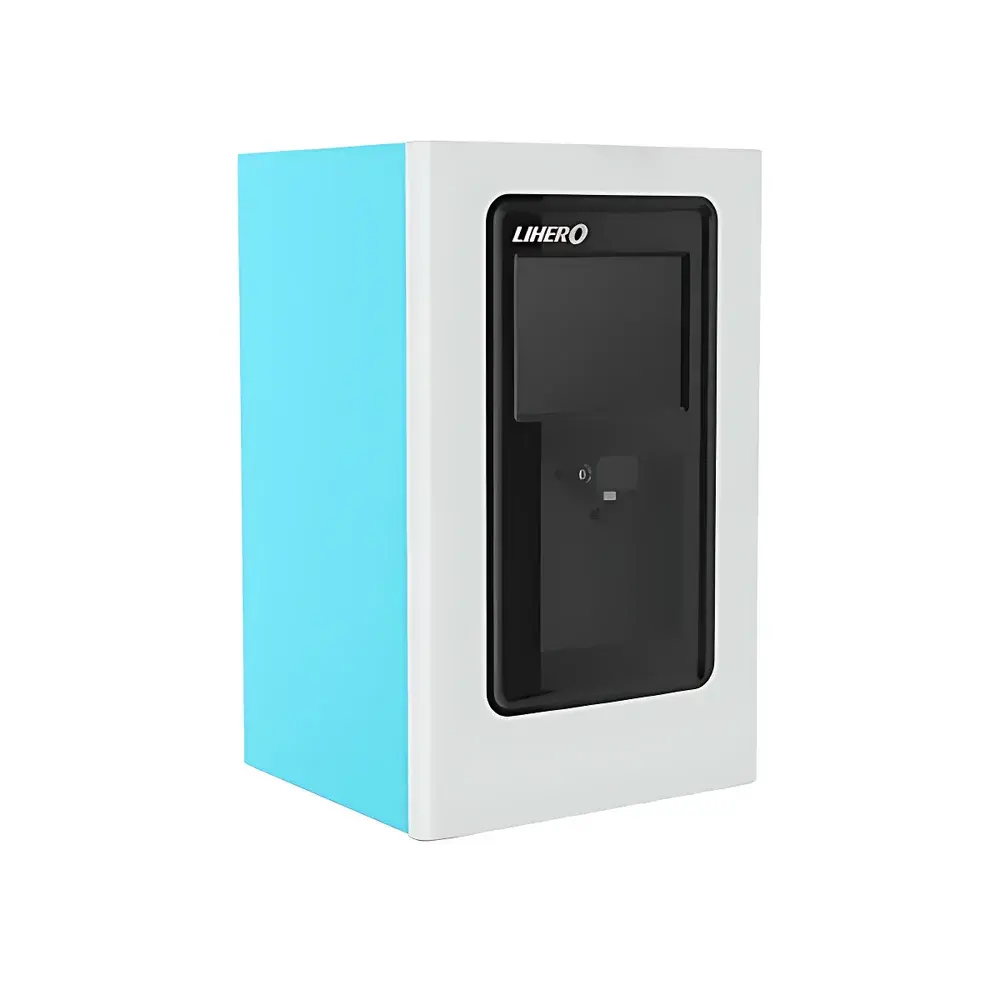
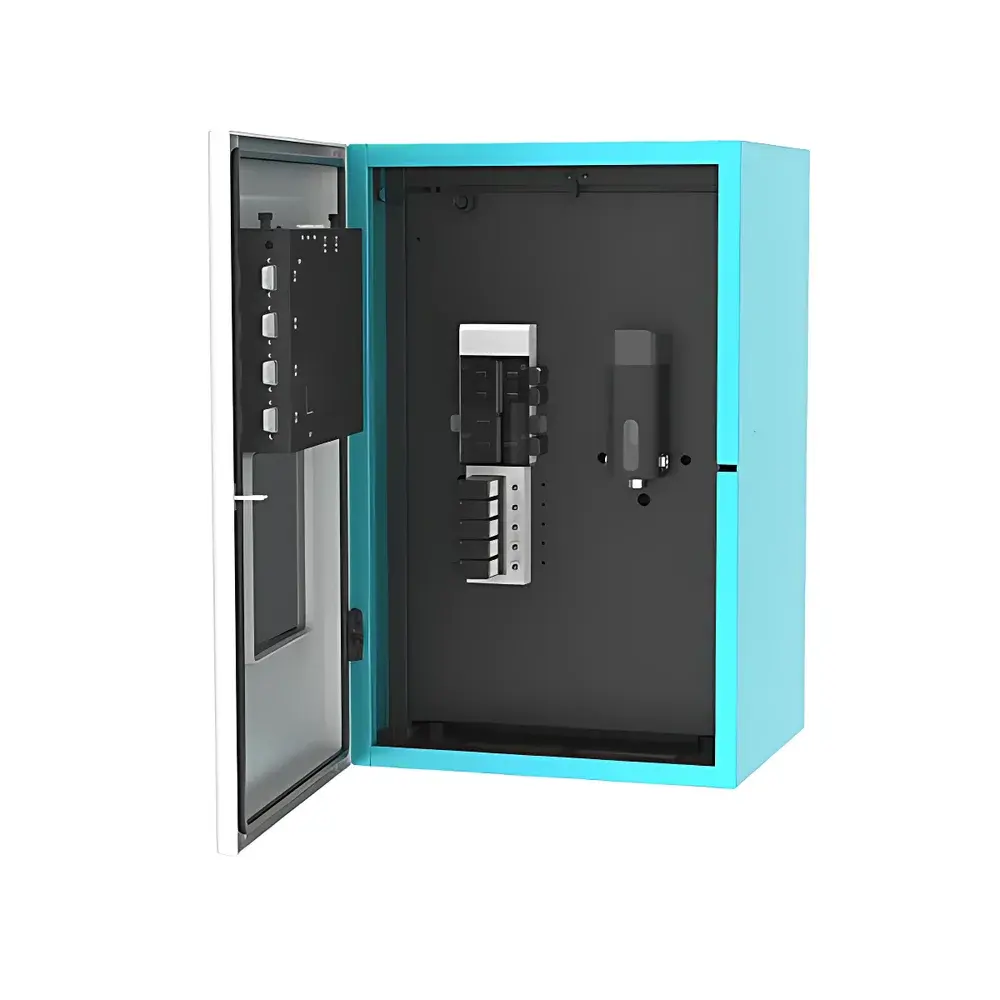
Lihero LFS-2002 (LAS) Anionic Surfactant Water Quality Analyzer
| Brand | Lihero |
|---|---|
| Model | LFS-2002 (LAS) |
| Measurement Principle | Methylene Blue Active Substances (MBAS) Spectrophotometric Method |
| Wavelength | 650 nm ± 2 nm |
| Optical Path | 10 mm quartz cuvette or flow cell |
| Detection Range | 0.05–2.00 mg/L LAS (as MBAS) |
| Resolution | 0.01 mg/L |
| Repeatability | ≤ ±2.0% RSD |
| Calibration | Automatic 2-point calibration with standard reference solutions |
| Cleaning | Programmable automatic rinsing cycle using deionized water |
| Communication Interfaces | RS-232, RS-458, RJ-45 Ethernet |
| Operating System | Real-time embedded Linux |
| Compliance | GB/T 7494–1987, ISO 7875-2:1987, ASTM D2330–18 |
Overview
The Lihero LFS-2002 (LAS) Anionic Surfactant Water Quality Analyzer is a dedicated benchtop or online-capable spectrophotometric instrument engineered for the quantitative determination of anionic surfactants—primarily linear alkylbenzene sulfonates (LAS)—in environmental water matrices. It implements the standardized Methylene Blue Active Substances (MBAS) method, in strict accordance with GB/T 7494–1987, ISO 7875-2:1987, and ASTM D2330–18. In this method, anionic surfactants in the sample react quantitatively with methylene blue dye under controlled pH and ionic strength to form a stable ion-pair complex soluble in chloroform. The resulting blue-colored organic phase is measured at 650 nm using a high-stability LED light source and precision optical path (10 mm quartz flow cell or cuvette), enabling direct photometric quantification based on Beer–Lambert law correlation. Designed for routine monitoring in municipal wastewater treatment plants, surface water quality stations, industrial effluent discharge points, and environmental laboratories, the LFS-2002 delivers trace-level sensitivity, operational robustness, and regulatory traceability without requiring manual extraction or organic solvent handling.
Key Features
- Integrated MBAS methodology with automated reagent dosing, phase separation, and chloroform extraction—eliminating operator-dependent variability
- Dual-wavelength photometric detection (650 nm primary, reference channel optional) with temperature-compensated LED source and low-noise photodiode array for high signal-to-noise ratio (SNR > 300:1)
- Automatic range switching across 0.05–2.00 mg/L LAS (as MBAS), supporting both low-concentration ambient waters and higher-strength industrial discharges
- Onboard QC protocols including parallel sample analysis, certified reference material (CRM) verification, spike recovery assessment (target: 85–115%), and full audit trail logging per GLP requirements
- Self-maintenance architecture featuring scheduled deionized water flush cycles, optical window cleaning, and zero-point auto-calibration prior to each measurement sequence
- Embedded real-time Linux OS with deterministic response time (< 50 ms control loop), enabling synchronized operation with SCADA or LIMS via Modbus TCP/IP over RJ-45 or serial RTU over RS-485
Sample Compatibility & Compliance
The LFS-2002 accepts raw or filtered aqueous samples—including domestic wastewater, river water, lake water, cooling tower blowdown, and treated effluent—with minimal pretreatment (0.45 µm filtration recommended). It is validated for matrix interference suppression from common co-analytes such as humic substances, chloride (≤ 5,000 mg/L), nitrate (≤ 100 mg/L), and non-ionic surfactants (up to 5 mg/L Tween 80). Instrument design adheres to IEC 61326-1:2013 (EMC for laboratory equipment) and meets CE marking requirements. Data integrity conforms to ALCOA+ principles; all measurements include timestamped metadata (operator ID, calibration status, reagent lot, ambient temperature), satisfying FDA 21 CFR Part 11 readiness when deployed with external electronic signature infrastructure.
Software & Data Management
The analyzer operates with Lihero’s proprietary AquaTrace™ firmware, supporting local touchscreen operation and remote configuration via web-based HMI (HTTPS-enabled). All raw absorbance values, calculated concentrations, QC flags, and maintenance logs are stored internally (8 GB eMMC) with configurable export intervals (CSV/JSON) via FTP, SFTP, or OPC UA. Audit trails retain ≥12 months of immutable records, including user login/logout events, method parameter changes, and calibration history—fully searchable by date, sample ID, or error code. Optional integration with LabVantage LIMS or Siemens Desigo CC enables automated report generation aligned with ISO/IEC 17025 accreditation workflows.
Applications
- Regulatory compliance monitoring of LAS discharge limits per EU Directive 2004/62/EC and China’s “Emission Standard of Pollutants for Municipal Wastewater Treatment Plants” (GB 18918–2002)
- Trend analysis of surfactant loadings in receiving waters upstream/downstream of detergent manufacturing facilities
- Performance evaluation of tertiary treatment units (e.g., activated carbon adsorption, ozonation) targeting surfactant removal
- Method validation studies in accredited environmental testing laboratories seeking CNAS or UKAS recognition for ISO 7875-2
- Long-term ecological risk assessment where chronic LAS exposure thresholds (e.g., PNEC = 0.3 mg/L) must be verified against field data
FAQ
What standards does the LFS-2002 comply with for anionic surfactant analysis?
It is fully aligned with GB/T 7494–1987, ISO 7875-2:1987, and ASTM D2330–18 for MBAS determination.
Can the instrument operate unattended for extended periods?
Yes—configured with weekly calibration and daily self-cleaning cycles, it supports continuous 30-day deployment with < 2 hr/mo maintenance downtime.
Is chloroform handling automated and contained?
Yes—the integrated fluidic module performs closed-loop chloroform delivery, phase separation, and waste containment in sealed, pressure-relieved reservoirs meeting OSHA 1910.1200 requirements.
How is data integrity ensured during remote transmission?
All communications use TLS 1.2 encryption; digital signatures applied to exported datasets ensure non-repudiation and chain-of-custody continuity.
Does the system support multi-point calibration curves?
It supports up to 6-point calibration curves with polynomial fitting (linear or quadratic), stored per method profile with version-controlled revision history.
Related Products







