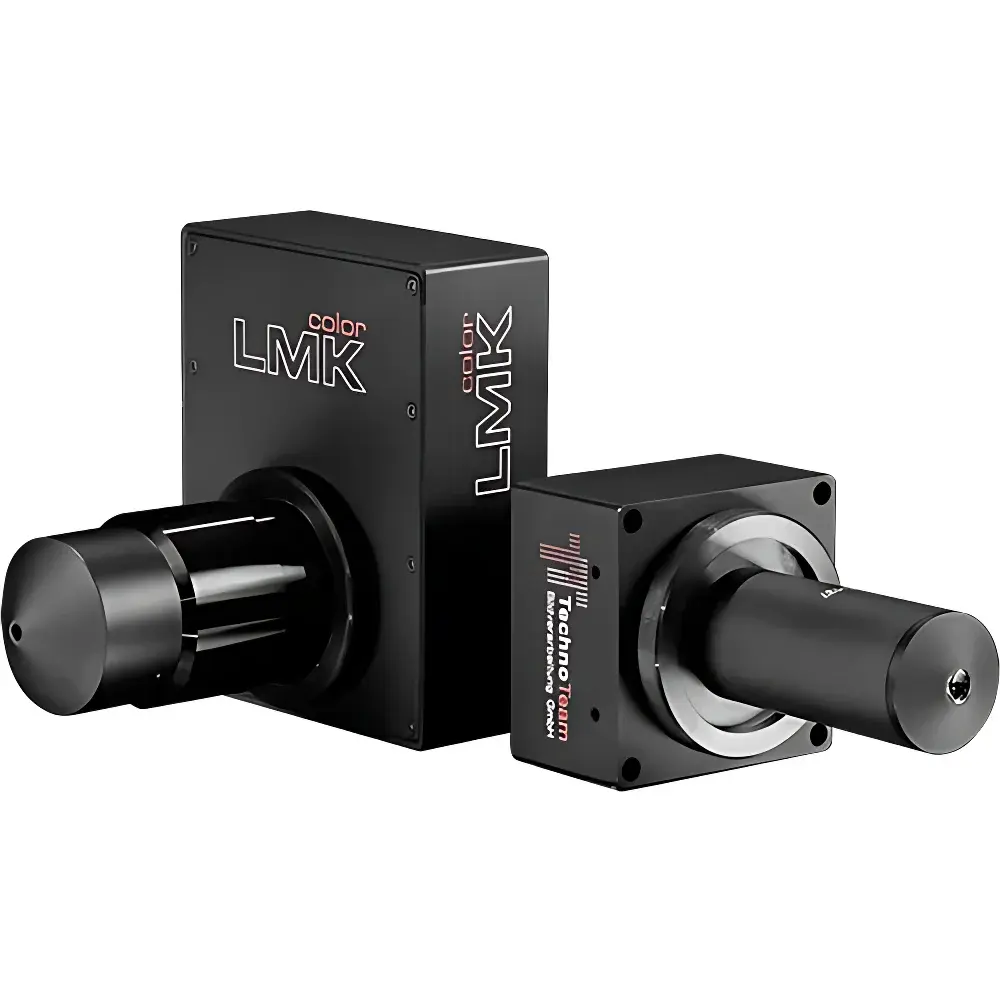
LMK Cono Imaging Goniophotometer for Display Viewing Angle Characterization
| Brand | TechnoTeam |
|---|---|
| Origin | Germany |
| Model | LMK Cono |
| Measurement Principle | Conoscopic Imaging Photometry |
| Compliance | TCO 03, ISO 13406-2, IEC 61747-6, VESA DisplayHDR™ (metadata-aware evaluation) |
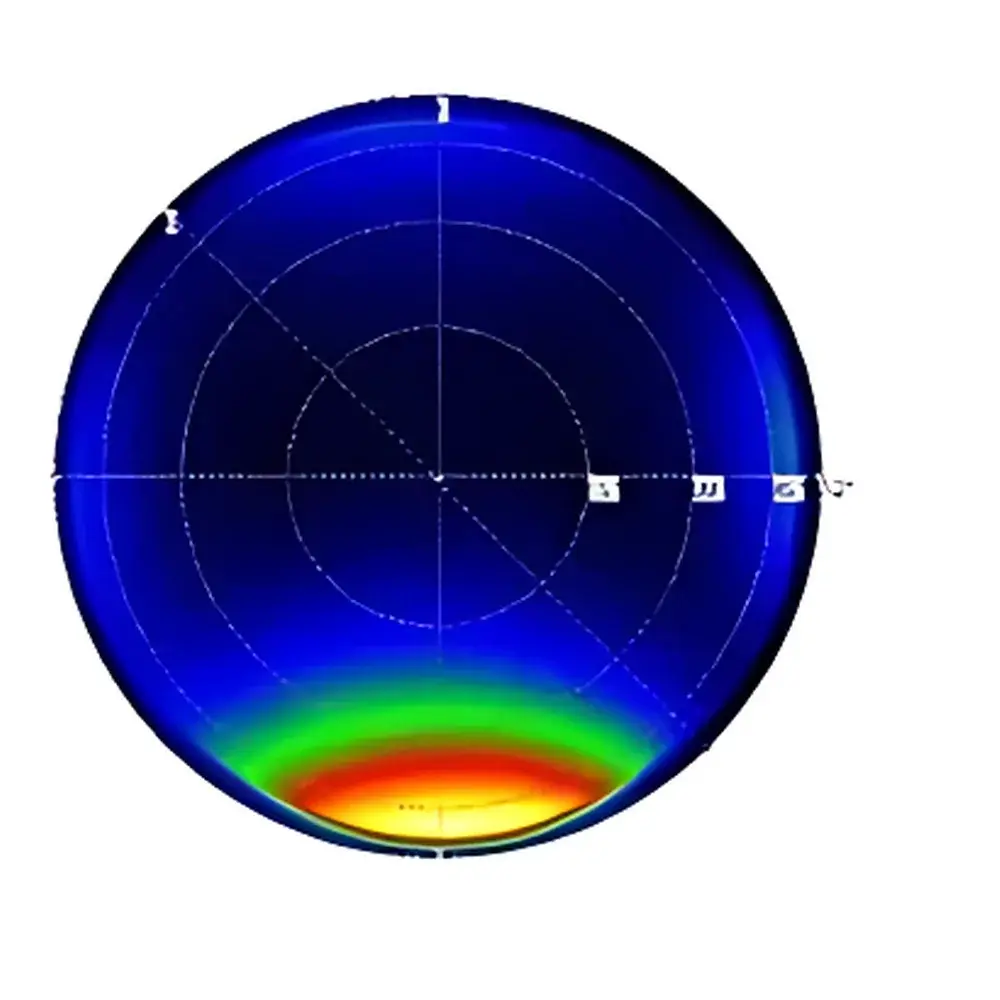
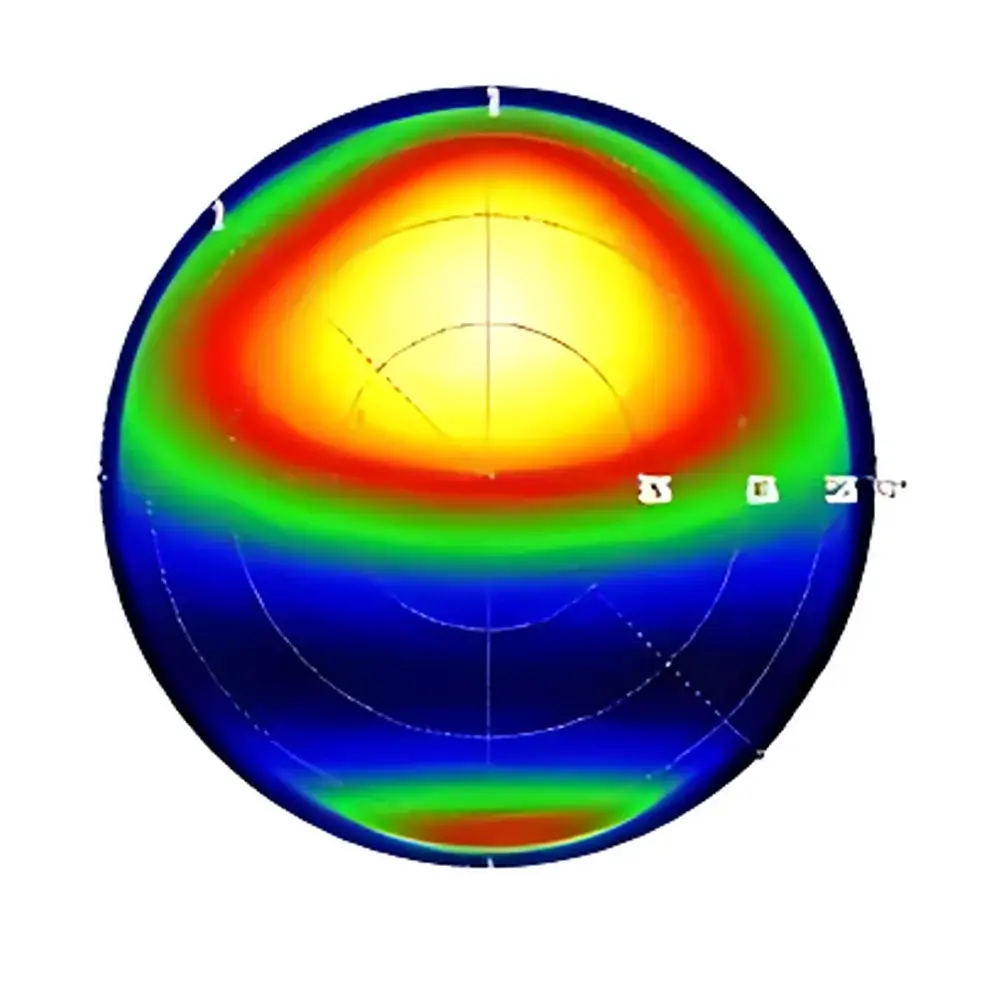
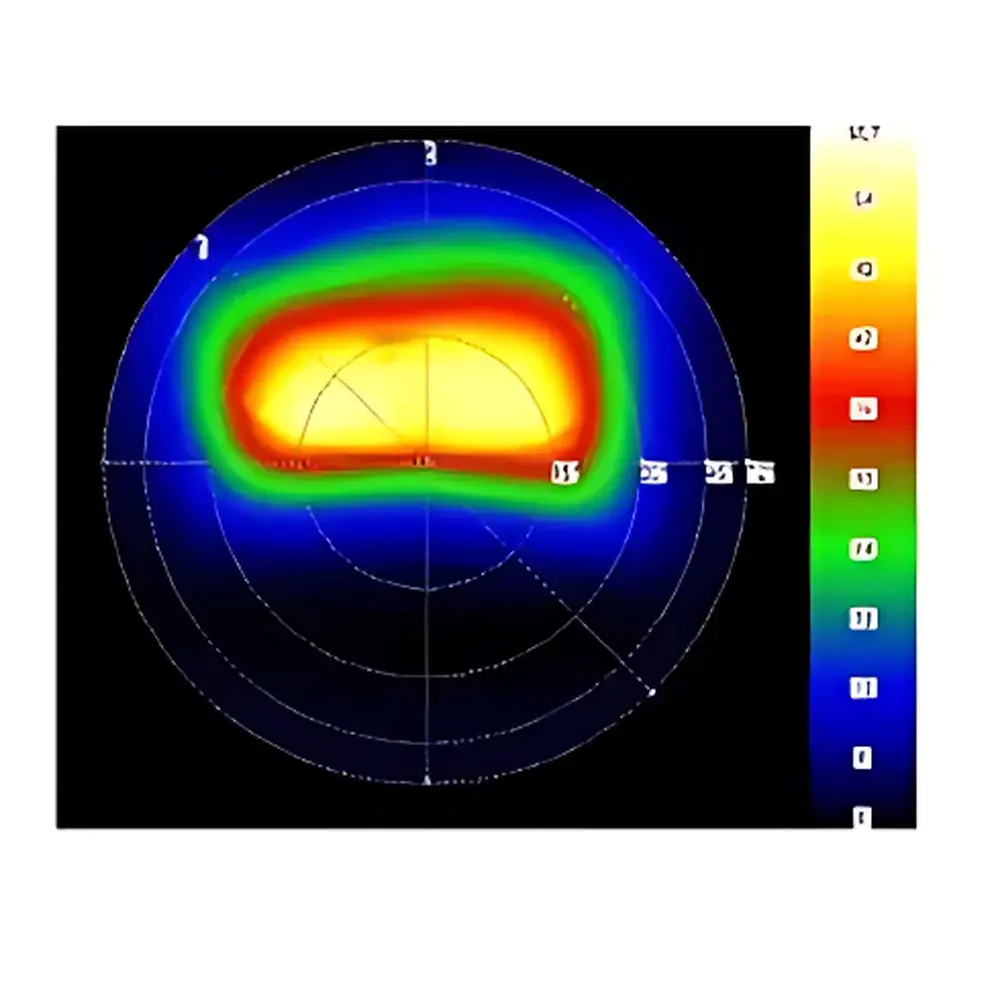
| Output Format | Radiance (cd/m²), Luminance Ratio, Contrast Ratio (CR), CIE 1931 xy & u'v' Chromaticity vs. Polar Angle (θ) and Azimuthal Angle (φ) |
| Spatial Resolution | Full hemispherical field-of-view (0°–90° θ, 0°–360° φ) captured in single exposure |
| Detector | Scientific-grade monochrome CMOS sensor with linear response and calibrated photopic weighting |
| Lens Type | Conoscopic objective with birefringent crystal stack and polarization-preserving optical path |
Overview
The LMK Cono Imaging Goniophotometer is a high-precision, conoscope-based measurement system engineered for comprehensive viewing angle characterization of flat-panel displays—including LCD, OLED, microLED, and quantum-dot hybrid devices. Unlike conventional goniometric setups relying on mechanical angular scanning and pointwise photometry, the LMK Cono employs a proprietary conoscopic lens assembly that maps the entire angular distribution of luminance and chromaticity onto a two-dimensional CCD sensor in a single acquisition. This optical architecture leverages the physical principle of conoscopy: light rays entering the lens at distinct polar (θ) and azimuthal (φ) angles are spatially separated via birefringent crystal optics and focused onto unique pixel coordinates, enabling simultaneous, full-hemispherical (0°–90° θ, 0°–360° φ) radiance sampling without motion artifacts or interpolation. The system delivers traceable, NIST-traceable photometric data aligned with international display metrology standards including TCO Certified 03/06/12/16, ISO 13406-2 (Ergonomic requirements for work with visual displays), IEC 61747-6 (Liquid-crystal display devices — Measuring methods), and VESA DisplayHDR™ Test Specification v1.2 for wide-gamut, high-dynamic-range validation.
Key Features
- Single-shot hemispherical angular sampling: Captures luminance, contrast ratio, and CIE 1931 chromaticity across all viewing directions in one exposure—eliminating sequential motorized positioning errors and reducing test time from hours to seconds.
- Conoscopic optical engine: German-engineered birefringent lens with polarization-maintaining design ensures accurate angular mapping and minimizes Fresnel reflection-induced bias at high incidence angles.
- Calibrated photopic response: Sensor spectral sensitivity conforms to CIE 1931 V(λ) function; factory calibration includes absolute luminance traceability to PTB (Physikalisch-Technische Bundesanstalt) reference standards.
- High dynamic range imaging: 16-bit digitization with dual-gain readout enables simultaneous capture of specular highlights and dark-state uniformity (e.g., black level stability at 89° viewing angle).
- Thermal-stabilized housing: Integrated temperature control maintains optical alignment within ±0.02° over 8-hour continuous operation—critical for GLP-compliant production line qualification.
- Modular software interface: Supports both standalone operation and integration into automated test benches via TCP/IP and LabVIEW-compatible drivers.
Sample Compatibility & Compliance
The LMK Cono accommodates display modules ranging from 0.9-inch wearable panels to 65-inch commercial signage, with optional motorized stage adapters for active matrix backplane synchronization (e.g., LVDS/TTL trigger input for frame-locked acquisition). It satisfies regulatory and industry audit requirements for display performance certification: raw data files include embedded EXIF metadata (timestamp, sensor temperature, lens ID, calibration epoch), supporting FDA 21 CFR Part 11-compliant electronic records when used with validated software environments. All measurement reports conform to ISO/IEC 17025 documentation structure and include uncertainty budgets per GUM (Guide to the Expression of Uncertainty in Measurement) Annex SL. Compliance testing workflows are preconfigured for TCO 03 Annex B (viewing angle luminance drop thresholds), ISO 13406-2 Class I–III ergonomic classification, and IEC 62341-6-2 OLED-specific contrast uniformity metrics.
Software & Data Management
Acquisition and analysis are performed using TechnoTeam’s LMK Control Suite v4.8—a Windows-based application validated under GMP Annex 11 and ISO 13485 quality systems. The suite provides real-time polar plot rendering, iso-luminance contour generation, and automatic extraction of key parameters: half-luminance angle (HLA), contrast inversion angle (CIA), color shift Δu’v’, and viewing cone volume (in steradians). Export formats include CSV (for statistical process control), HDF5 (for machine learning training datasets), and PDF reports with digital signature and audit trail (including user login, parameter changes, and recalibration events). Data integrity is enforced through SHA-256 hashing of each acquisition sequence and write-once archival mode compatible with long-term storage in network-attached storage (NAS) systems compliant with EU GDPR Article 32 technical safeguards.
Applications
- Display R&D labs quantifying angular dependence of blue-phase LCD response times and OLED burn-in asymmetry.
- Automotive HMI validation per ISO 15008:2017—measuring contrast retention at extreme off-axis angles (e.g., driver’s seat lateral offset).
- AR/VR microdisplay characterization: evaluating etendue mismatch between waveguide exit pupil and eyebox geometry.
- Quality assurance in panel manufacturing: 100% inline inspection of viewing angle uniformity across Gen 8.5+ glass substrates using ROI-based pass/fail thresholds.
- Academic research in perceptual color science: correlating CIELAB ΔE2000 shifts across viewing sphere with observer psychophysical thresholds.
FAQ
Does the LMK Cono require external calibration sources for routine operation?
No—each unit ships with a certified integrating sphere source and NIST-traceable calibration certificate valid for 12 months. Onboard self-check routines verify optical throughput and sensor linearity before every measurement session.
Can it measure temporal modulation transfer function (T-MTF) at oblique angles?
Yes—when synchronized with a high-speed LED backlight driver or pattern generator, the system captures time-resolved angular luminance sequences at up to 1 kHz frame rate, enabling T-MTF derivation per VESA FPDM 2.0 Annex E.
Is the conoscopic lens compatible with curved or flexible displays?
The standard lens assumes planar emission geometry; TechnoTeam offers an optional aspheric adapter lens (LMK-Cono-CURV) for radius-of-curvature compensation down to 500 mm, validated per ISO 11431 for automotive instrument cluster curvature.
How is measurement uncertainty quantified for contrast ratio at 85° viewing angle?
Uncertainty is calculated per GUM using Type A (repeatability SD from 10 acquisitions) and Type B (lens MTF degradation, sensor non-uniformity, and calibration certificate uncertainty) components; typical expanded uncertainty (k=2) is ±3.2% CR at 85° for 100 cd/m² white field.
Does the system support automated report generation for ISO/IEC 17025 accreditation?
Yes—LMK Control Suite includes configurable templates compliant with ILAC-P15:2023, auto-populating uncertainty budgets, equipment IDs, environmental conditions, and technician signatures with PKI-based digital certificates.