
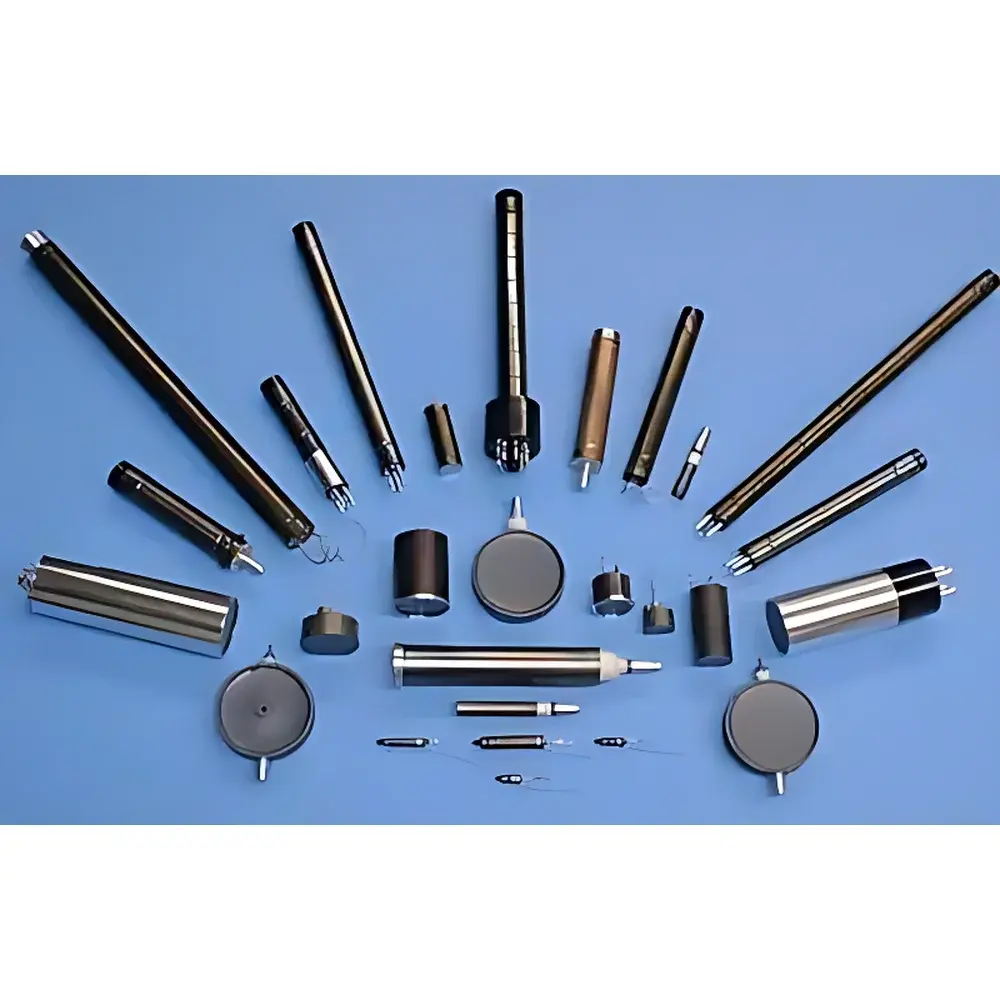
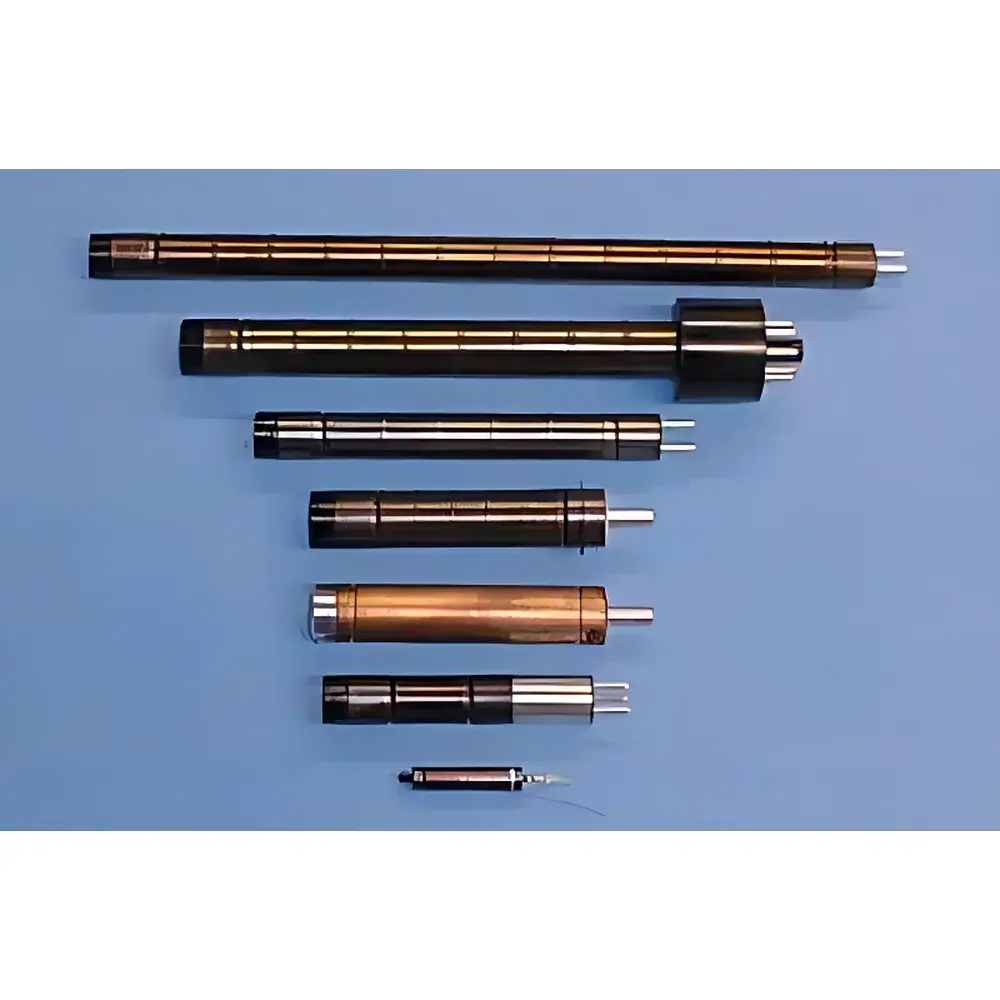
LND Inc. Geiger-Mueller Tubes, Ionization Chambers, Proportional Counters, Neutron Detectors, Gas Sampling Counters & Anti-Coincidence Assemblies
| Brand | LND Inc. |
|---|---|
| Origin | USA |
| Manufacturer Type | Authorized Distributor |
| Origin Category | Imported |
| Model | Custom-Configurable |
| Pricing | Available Upon Request |
Overview
LND Inc. radiation detection modules represent a comprehensive family of gas-filled detectors engineered for precise, reliable measurement across the full spectrum of ionizing radiation—alpha, beta, gamma, X-ray, and neutron emissions. These devices operate on well-established principles of gas ionization: incident radiation interacts with fill gas (e.g., argon-methane, BF3, 3He, or nitrogen-based mixtures), generating charge carriers that are collected under applied electric fields. The operational mode—Geiger-Müller (GM), ionization chamber, or proportional counter—dictates signal amplification, energy resolution, count rate capability, and dead time characteristics. GM tubes deliver high-sensitivity pulse counting for low-dose rate surveys; ionization chambers provide linear current-mode response essential for dosimetry and beam monitoring; proportional counters enable energy discrimination and particle identification via pulse-height analysis. All detectors are manufactured to U.S. military specification QPL (Qualified Products List) standards where applicable and comply with ANSI N42.17A, IEC 60731, and ISO 4037-1 for reference radiation fields.
Key Features
- Multi-geometry configurations: end-window, side-window, cylindrical, pancake, quadrilateral, spherical, and flow-through designs optimized for specific radiation types and experimental geometries.
- Thin mica or polymer windows (down to 1.5–2.0 mg/cm²) enabling efficient detection of low-energy beta particles (e.g., 3H, 14C) and soft X-rays.
- Energy-compensated GM tubes with built-in filters for flat gamma response over 60 keV–1.3 MeV, meeting ANSI N42.22 requirements for survey instrumentation.
- Neutron-sensitive variants utilizing 10B-lined walls, BF3 or 3He gas fill, with thermal neutron detection efficiencies up to 75% (for 25-mm diameter 3He tubes) and intrinsic gamma rejection ratios exceeding 10⁴:1.
- Position-sensitive proportional counters employing resistive anode or delay-line readout for spatial resolution ≤1 mm FWHM in neutron imaging and beam profiling applications.
- Anti-coincidence assemblies integrating primary neutron or gamma detectors with surrounding veto scintillators or guard chambers to suppress cosmic-ray-induced background events—critical for low-background spectroscopy and rare-event experiments.
Sample Compatibility & Compliance
These detectors interface directly with standard nuclear instrumentation modules (NIM) and CAMAC systems, supporting both analog pulse output (TTL/NIM logic) and current-mode operation. All units are RoHS-compliant and rated for continuous operation at ambient temperatures (–20 °C to +50 °C) and relative humidity ≤90% non-condensing. Gamma-sensitive models meet ASTM E666 (standard practice for determining radioisotope concentrations) and are routinely employed in environmental monitoring per EPA Method 901.3. Neutron detectors satisfy ANSI/ANS-6.4.3 for reactor instrumentation and are referenced in IAEA-TECDOC-1340 for neutron fluence mapping. Units intended for medical physics applications conform to IEC 61674 and support GLP/GMP audit trails when integrated with compliant data acquisition software.
Software & Data Management
LND detectors are protocol-agnostic and integrate seamlessly with industry-standard platforms including ORTEC Maestro, Canberra Genie 2000, CAEN WinOSS, and custom LabVIEW or Python-based DAQ systems. Pulse processing firmware supports pile-up rejection, baseline restoration, and multi-parameter list-mode acquisition. For regulatory environments, compatible software packages support 21 CFR Part 11-compliant electronic signatures, audit trail logging, and user access control—enabling traceable calibration records and raw-data archiving aligned with ISO/IEC 17025 requirements.
Applications
- Radiation safety and environmental monitoring: portable survey meters, area monitors, effluent stack monitors.
- Nuclear power plant instrumentation: neutron flux mapping, startup channel monitoring, fission chamber-based reactor control.
- Research laboratories: neutron scattering beamline diagnostics, activation analysis, low-background dark matter prototype shielding validation.
- Medical physics: brachytherapy source verification, LINAC output constancy checks, PET isotope production yield assessment.
- Industrial gauging: thickness measurement (beta backscatter), density profiling (gamma transmission), moisture content analysis (thermal neutron capture).
- Space radiation dosimetry: TID and LET spectra characterization using stacked proportional counter arrays.
FAQ
Are LND detectors calibrated prior to shipment?
Yes—each detector undergoes factory calibration using traceable NIST-standard sources (e.g., 137Cs, 60Co, 252Cf) and includes a certificate of conformance with measured sensitivity, plateau slope, and operating voltage specifications.
Can these detectors be used in vacuum or high-pressure environments?
Standard units are rated for atmospheric pressure; however, hermetically sealed variants with ceramic-metal feedthroughs and reinforced envelopes are available for vacuum-compatible (<10⁻⁶ Torr) or high-pressure (up to 10 atm) operation upon request.
What is the typical lifetime of a BF₃ or 3He neutron tube?
Under normal operating conditions (≤10⁷ total counts), BF₃ tubes maintain stable gain for >5 years; 3He tubes exhibit negligible aging and are rated for >10⁹ counts with proper voltage regulation and temperature control.
Do you offer OEM integration support?
Yes—LND provides mechanical drawings, electrical schematics, thermal derating curves, and EMC test reports to facilitate seamless integration into third-party instruments and regulatory-grade systems.






