
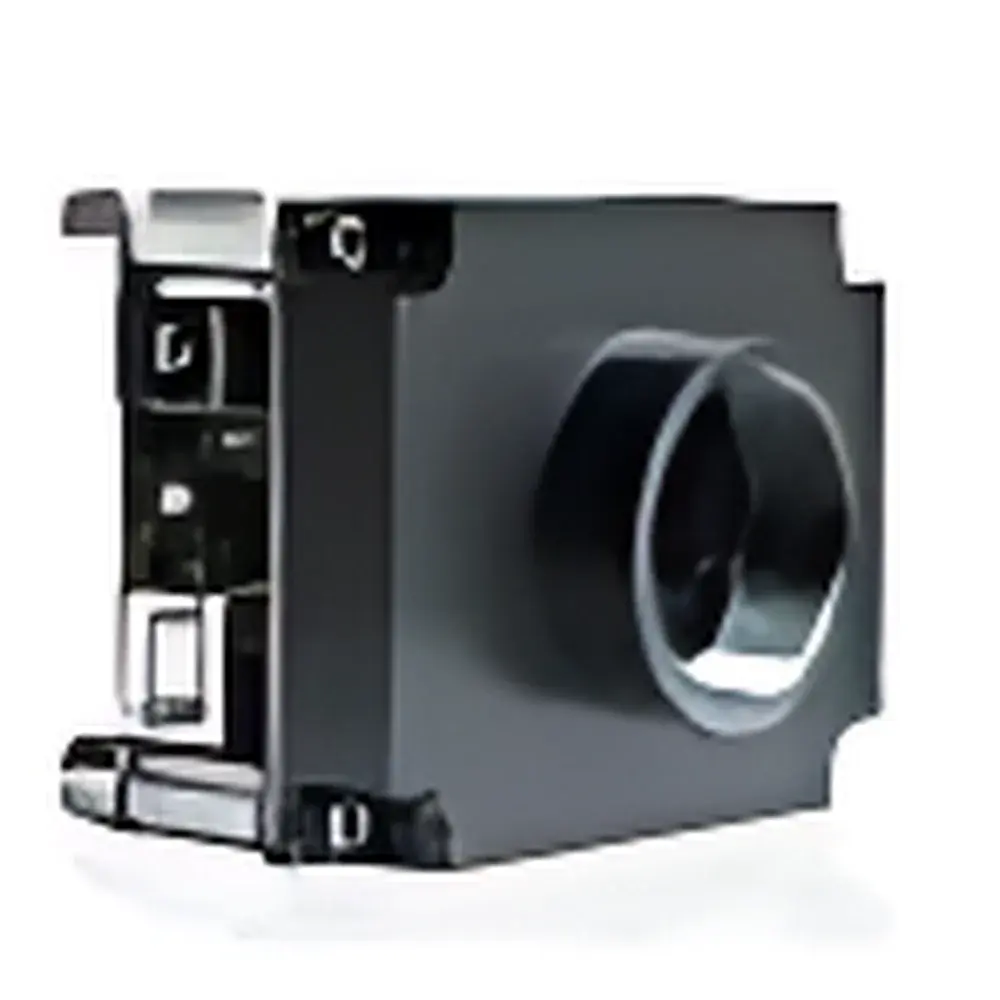
Lumenera Industry Camera Series – High-Performance USB 2.0 Industrial Imaging Solutions
| Brand | Lumenera |
|---|---|
| Origin | Canada |
| Model | Industry Camera Series (Lu/Lw Series) |
| Interface | USB 2.0 |
| Sensor Types | CCD & CMOS |
| Resolution Range | 0.5 MP to 16 MP |
| Dynamic Range Options | 8/10/12-bit |
| Pixel Size Range | 3.45–7.4 µm |
| Sensor Sizes | 1/3" to >2/3" |
| I/O | Up to 4 IN & 4 OUT |
| Compliance | DirectShow/DirectX Compatible |
| Operating System Support | Windows 7/8/10/11 (x64/x86) |
| SDK Provided | Yes |
| Distribution Model | Authorized Distributor |
Overview
Lumenera’s Industry Camera Series represents a mature, field-proven family of industrial-grade digital imaging devices engineered for precision machine vision, automated inspection, scientific documentation, and real-time process monitoring. Built upon decades of optical sensor design expertise, these cameras leverage both high-sensitivity CCD and high-speed, low-noise CMOS image sensors—selected and calibrated to meet the demanding stability, repeatability, and thermal robustness requirements of 24/7 industrial environments. Each model operates on the universally supported USB 2.0 interface (480 Mbps), eliminating the need for proprietary frame grabbers while ensuring deterministic latency and plug-and-play integration with standard industrial PCs. The architecture is optimized for deterministic triggering, precise exposure control, and hardware-level synchronization—critical for applications requiring multi-camera coordination or external event correlation (e.g., encoder-triggered capture, strobe-gated imaging).
Key Features
- Sensor Flexibility: Broad selection across CCD and CMOS technologies—including global and rolling shutter variants—enabling trade-off optimization between quantum efficiency (CCD) and frame rate/power efficiency (CMOS).
- Resolution Scalability: Models span from VGA (640 × 480) to ultra-high-definition 3000 × 2208 (≈6.6 MP), with select variants supporting binning and region-of-interest (ROI) readout to sustain high frame rates at reduced resolution.
- Precision Timing & Synchronization: Onboard programmable timing engine supports hardware-triggered acquisition, exposure control down to microsecond resolution, and TTL-compatible input/output lines (up to 4 IN / 4 OUT) for seamless integration into PLC-controlled or motion-synchronized systems.
- Dynamic Range Control: Configurable bit-depth output (8-, 10-, or 12-bit) allows adaptation to varying scene contrast—supporting both high-speed inspection under uniform illumination and low-light metrology requiring extended linear response.
- Robust Firmware Architecture: Embedded firmware enables persistent configuration storage, automatic gain/exposure compensation, and pixel defect correction—reducing host CPU load and improving system determinism.
- Software Ecosystem: Full compatibility with Microsoft DirectShow and DirectX frameworks ensures out-of-the-box support in common vision libraries (e.g., HALCON, OpenCV, NI Vision) and custom C/C++/.NET applications via comprehensive, documented SDK (C++, C#, Python bindings included).
Sample Compatibility & Compliance
The Industry Camera Series is designed for integration into ISO/IEC 17025-accredited laboratories and GMP-regulated production lines where traceability and reproducibility are mandatory. While not inherently FDA 21 CFR Part 11-compliant as a standalone device, its SDK supports audit-trail-enabling features—including timestamped metadata logging, firmware version reporting, and user-configurable parameter change history—facilitating validation under GLP/GMP frameworks. All models comply with CE (EMC & LVD), FCC Class B, and RoHS directives. Mechanical housing options include bare PCB (board-level) and fully enclosed, IP-rated housings suitable for factory-floor deployment. Optical interfaces accommodate standard C-mount lenses, with optional M12 (S-mount) variants available for space-constrained embedded applications.
Software & Data Management
Lumenera provides the Lumenera Camera Control Software—a cross-platform GUI application for rapid evaluation, parameter tuning, and live image acquisition. For production integration, the Lumenera Software Development Kit (SDK) delivers low-level access to all camera registers and streaming controls, including ROI definition, black level calibration, flat-field correction, and asynchronous callback-based frame delivery. The SDK includes sample code for Windows (Visual Studio), Linux (GCC), and macOS (Xcode), along with detailed API reference documentation and conformance test suites. All acquired image data is delivered in uncompressed, lossless formats (e.g., RAW, BMP, TIFF) with embedded EXIF-like metadata—ensuring full fidelity for quantitative analysis and archival compliance.
Applications
- Automated optical inspection (AOI) of PCBs, semiconductors, and precision mechanical components
- Real-time dimensional metrology using sub-pixel edge detection algorithms
- Biological and material science documentation requiring consistent color fidelity and exposure linearity
- High-speed packaging line verification (fill-level, cap presence, label orientation)
- Embedded vision systems in robotics, agricultural sorting, and medical device assembly
- Time-lapse process monitoring in pharmaceutical manufacturing and chemical synthesis
FAQ
Are these cameras compatible with Linux or macOS?
Yes—the Lumenera SDK includes native support for Linux (x86_64, ARM64) and macOS (Intel & Apple Silicon), with full source examples and build scripts.
Can I synchronize multiple cameras to a single trigger signal?
Yes—hardware trigger input is standardized across all models; advanced synchronization (e.g., master-slave clock alignment) is achievable via SDK-controlled delay compensation and firmware-timed exposure sequencing.
Is lens mount customization available?
Standard models ship with C-mount; custom M12, F-mount, or threaded adapter options are available through OEM channels.
What is the typical mean time between failures (MTBF)?
Based on accelerated life testing and field telemetry, MTBF exceeds 50,000 hours under continuous operation at ambient temperatures ≤40°C.
Do you provide calibration certificates or radiometric characterization data?
Factory calibration reports (including dark current, gain uniformity, and PRNU maps) are provided upon request; NIST-traceable radiometric calibration is available as an optional service.






