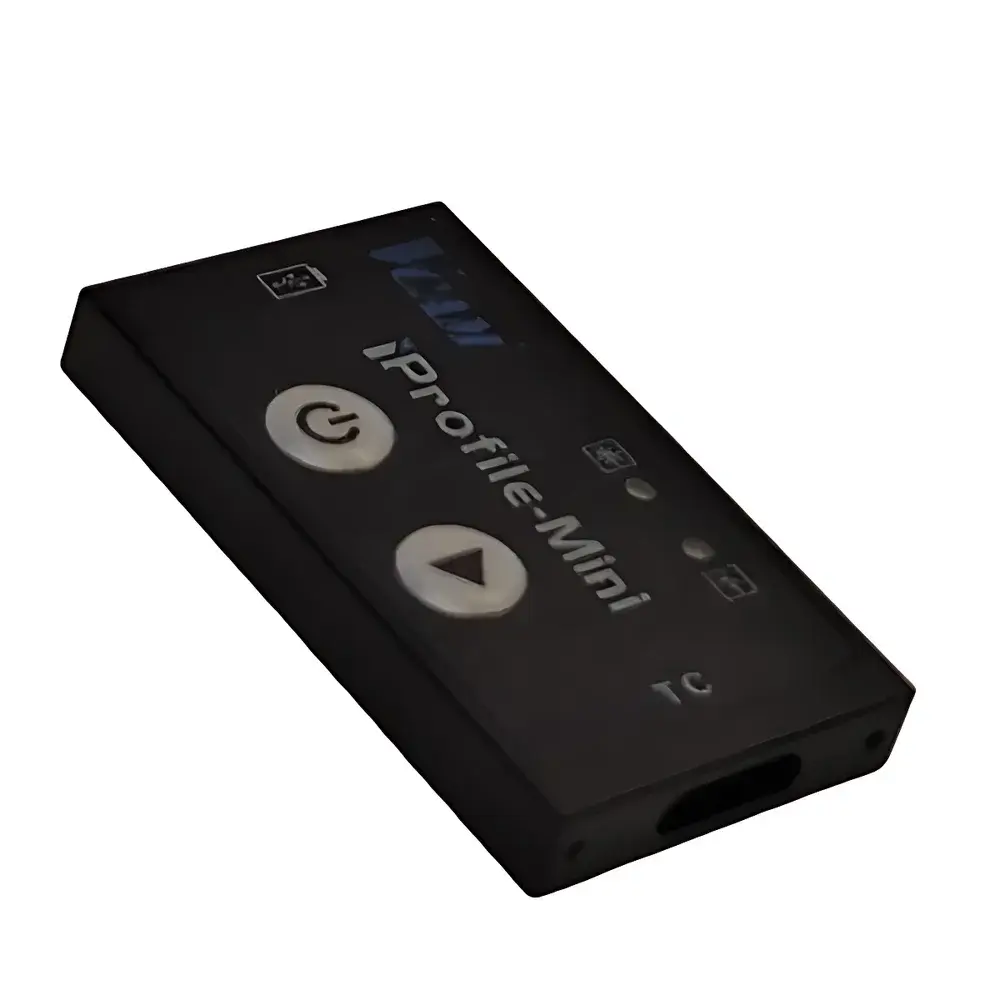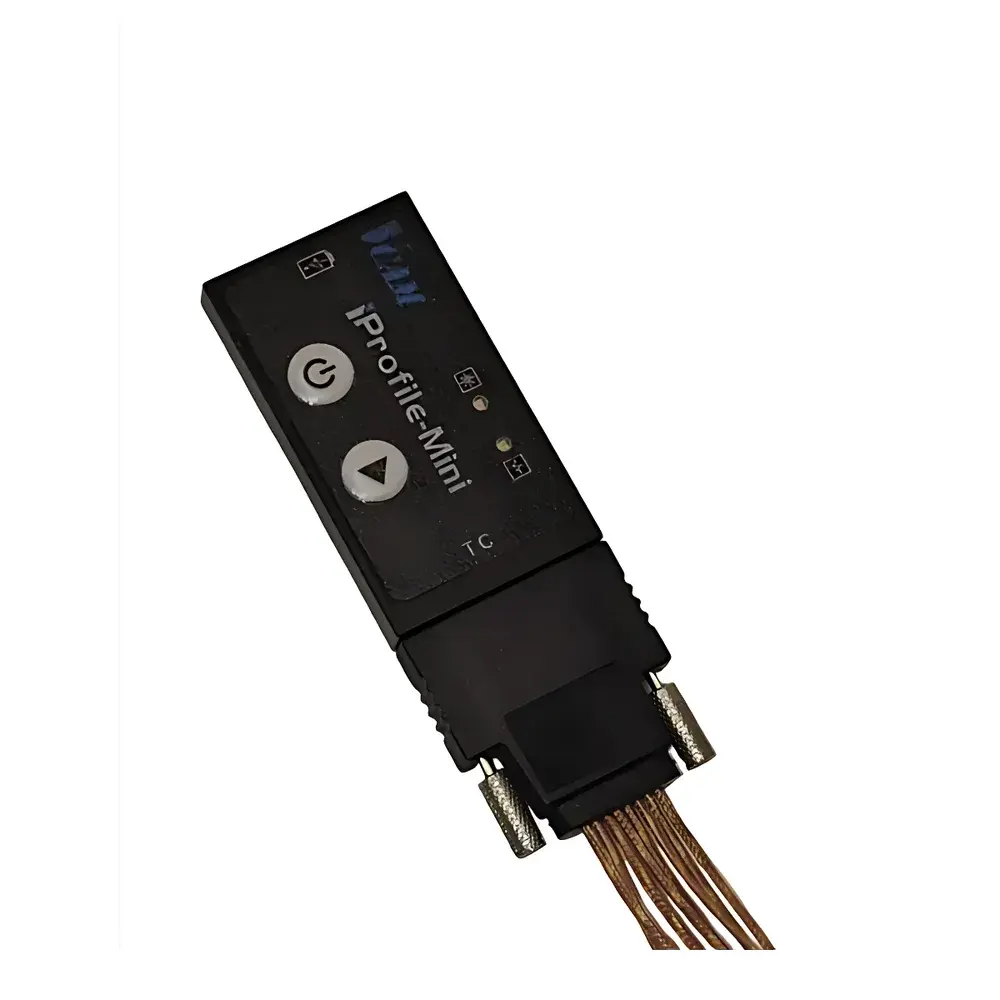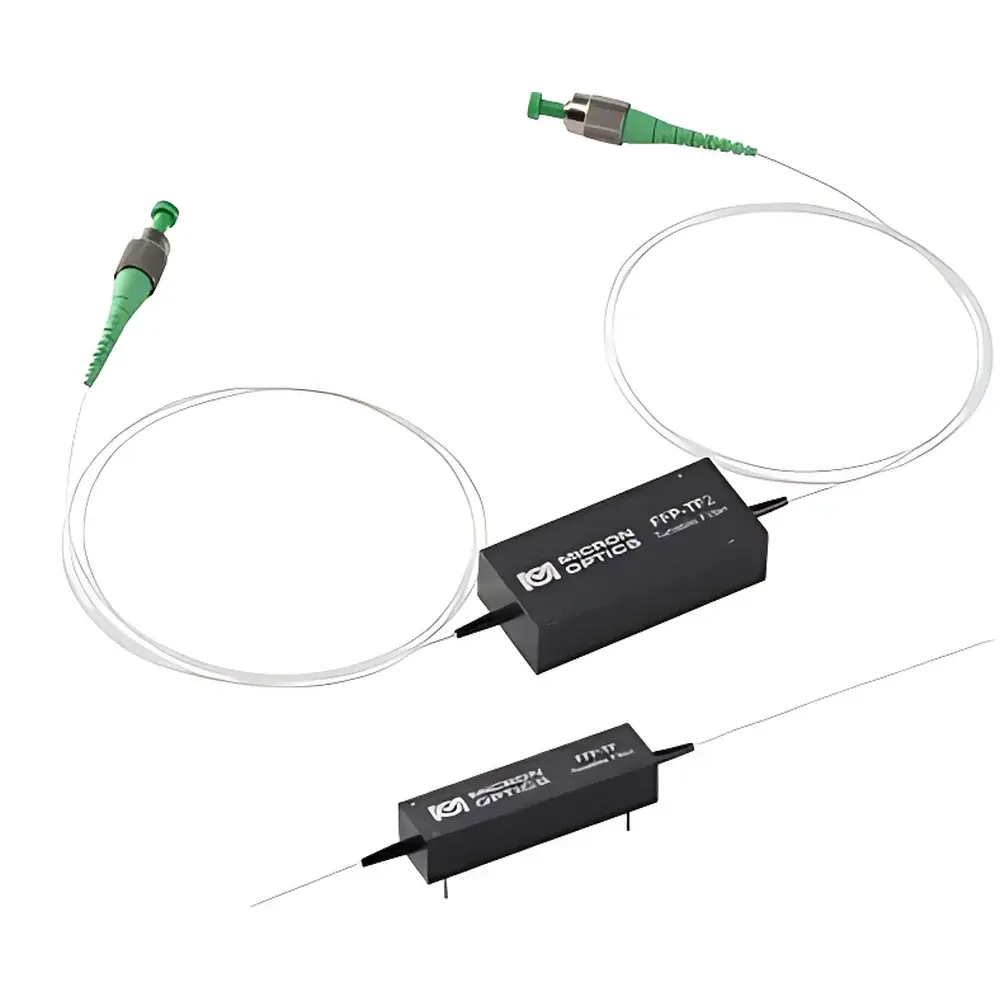
Luna Innovations FFP-I & FFP-TF2 Fiber Fabry-Perot Interferometers
| Origin | Imported |
|---|---|
| Manufacturer Type | Authorized Distributor |
| Light Source | Single-Frequency Laser |
| Model | FFP-I / FFP-TF2 |
| Free Spectral Range (FSR) | Customizable per specification |
| Tuning Mechanism | Thermo-Electric Cooler (TEC) |
| Cavity Structure | All-Fiber, Lensless, Monolithic Fabry-Perot Resonator |
| Finesse | High (>1000 typical) |
| Insertion Loss | <1.5 dB |
| Polarization Dependence | <0.05 dB |
| Environmental Stability | Telcordia-qualified packaging (FFP-TF2), vibration- and shock-resistant |
Overview
The Luna Innovations FFP-I and FFP-TF2 Fiber Fabry-Perot Interferometers are monolithic, all-fiber resonant devices engineered for high-precision optical frequency selection, wavelength referencing, and spectral characterization in demanding photonic systems. Unlike bulk-optic or micro-machined Fabry-Perot interferometers, these instruments eliminate free-space alignment, collimating lenses, and air gaps—replacing them with a fully integrated single-mode fiber cavity bounded by two dielectric multilayer mirrors. This lensless architecture ensures intrinsic mode matching, eliminates misalignment drift, and delivers exceptional environmental stability. The transmission spectrum follows the Airy function with high finesse (>1000 typical), enabling narrow linewidth filtering and precise determination of optical frequency spacing. The FFP-I serves as a fixed, ultra-stable etalon ideal for calibration-grade wavelength references; the FFP-TF2 implements fast, monotonic thermal tuning via integrated TEC control, supporting dynamic channel selection in DWDM testbeds and tunable laser stabilization loops.
Key Features
- All-fiber, monolithic construction with no free-space optics or active alignment required
- Lensless design ensures inherent polarization insensitivity and long-term repeatability
- Customizable Free Spectral Range (FSR) across C-, L-, and O-bands to match system-level dispersion requirements
- Integrated thermo-electric cooler (TEC) enables sub-picometer center-wavelength tuning and thermal stabilization (±0.01 °C control)
- Telcordia GR-1221 qualified mechanical packaging (FFP-TF2) for telecom-grade reliability under vibration, shock, and thermal cycling
- Low insertion loss (45 dB) suitable for cascaded filter architectures
- Compatible with picoWave® multi-wavelength reference sources for real-time picometer-level calibration traceability
Sample Compatibility & Compliance
These interferometers operate within standard SMF-28 or HI1060 fiber interfaces (FC/APC or SC/APC connectors optional) and are compatible with ITU-T G.694.1 grid-compliant wavelengths. The FFP-TF2 meets Telcordia GR-1221-CORE and GR-63-CORE specifications for mechanical robustness, including 5–500 Hz random vibration (0.16 g²/Hz PSD) and 30 g half-sine shock testing. All units comply with IEC 61300-2-1 (vibration), IEC 61300-2-5 (shock), and RoHS 2015/863/EU directives. When deployed in regulated environments (e.g., metrology labs or telecom equipment qualification), the FFP-I’s fixed cavity supports GLP-aligned wavelength verification protocols traceable to NIST-calibrated sources.
Software & Data Management
Luna Innovations provides LabVIEW-compatible drivers and ASCII-based SCPI command sets for integration into automated test platforms. The FFP-TF2 supports analog voltage input (0–5 V) and digital I²C interface for closed-loop temperature control and real-time wavelength tracking. Data logging includes timestamped TEC current/voltage, internal thermistor readings, and user-defined sweep parameters. Audit trails generated during calibration sequences meet FDA 21 CFR Part 11 requirements when used with validated host software (e.g., Keysight PathWave or custom Python-based frameworks with electronic signature modules). Firmware updates are delivered via secure signed HEX packages with CRC-32 validation.
Applications
- High-resolution optical spectrum analysis using FFP-I as a calibrated frequency comb generator
- Real-time wavelength stabilization of external cavity diode lasers (ECDLs) and DBR lasers
- ITU channel filtering and reconfiguration in ultra-dense WDM (uD-WDM) system validation
- Optical performance monitoring (OPM) in coherent receiver front-ends and optical channel monitors (OCMs)
- Picometer-accurate wavelength referencing in FBG sensor interrogation systems and distributed acoustic sensing (DAS) backends
- Spectral slicing for multi-wavelength source generation in quantum optics experiments
- Calibration transfer between optical frequency standards and commercial OSAs (optical spectrum analyzers)
FAQ
What is the typical finesse achievable with the FFP-I cavity?
Finesse values range from 800 to 1500 depending on mirror reflectivity and cavity length; custom designs can exceed 2000 for ultra-narrow linewidth applications.
Can the FFP-TF2 be operated in open-loop temperature control mode?
Yes—open-loop operation is supported via analog voltage input, though closed-loop PID control is recommended for long-term wavelength stability below ±1 pm.
Is the FFP-I compatible with polarization-maintaining (PM) fiber systems?
Standard units use non-PM fiber; however, PM-fiber versions (with aligned slow-axis coupling) are available as custom configurations upon request.
How is wavelength calibration performed for traceability?
Calibration is performed using picoWave® multi-wavelength references traceable to NIST SRM-2034, with uncertainty budgets documented per ISO/IEC 17025:2017 Annex A.
What is the maximum scan rate for FFP-TF2 wavelength tuning?
Thermal tuning bandwidth is limited by thermal mass; full FSR sweeps require ~100–500 ms, while small-range adjustments (<10 GHz) achieve sub-10 ms response with optimized TEC drive profiles.