
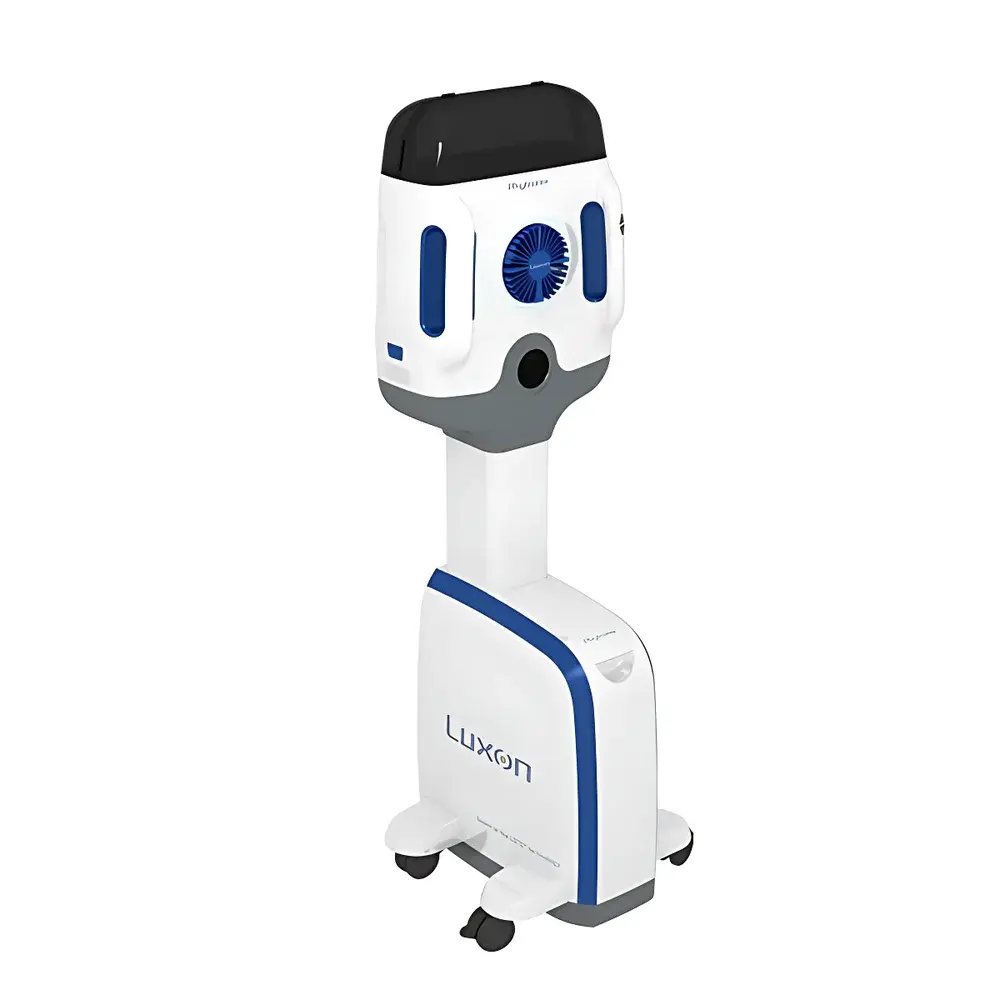
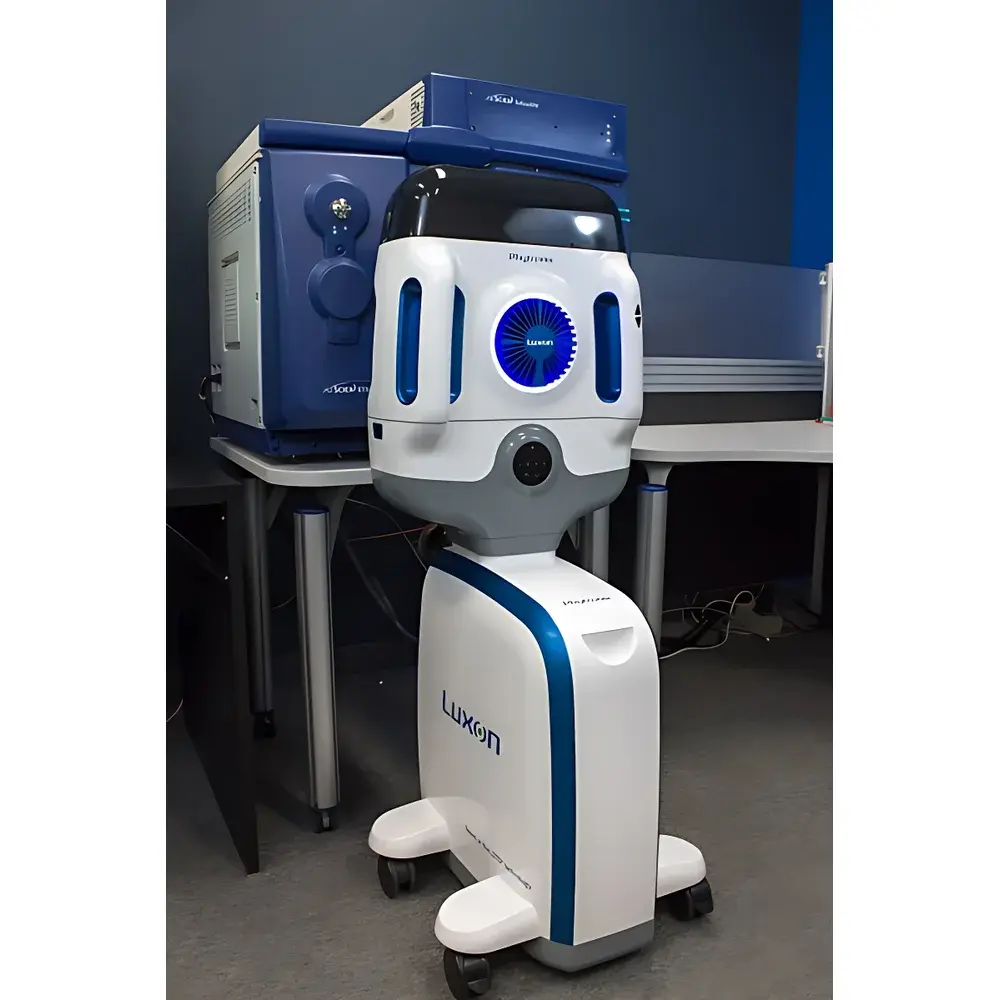
Luxon High-Speed Laser Thermal Desorption Ion Source by Phytronix
| Brand | Phytronix |
|---|---|
| Origin | Canada |
| Model | Luxon |
| Instrument Type | Atmospheric Pressure Ion Source |
| Technology | Second-Generation Laser Diode Array Thermal Desorption (LDTD²) |
| Sample Throughput | Up to 30,000+ samples/24h |
| Analysis Time per Sample | ≤ 0.6 s |
| Compatible Plate Formats | 96-well, 384-well, 1536-well LazWell™ microplates |
| Automation Level | Fully Robotic, Unattended Operation |
| MS Compatibility | SCIEX, Thermo Fisher, Waters, Shimadzu triple quadrupole and Q-TOF mass spectrometers |
| Regulatory Alignment | Designed for GLP/GMP-compliant workflows with audit-trail-ready software architecture |
| Ionization Mechanism | Solvent-free, atmospheric-pressure chemical ionization (APCI) via laser-induced rapid thermal desorption |
Overview
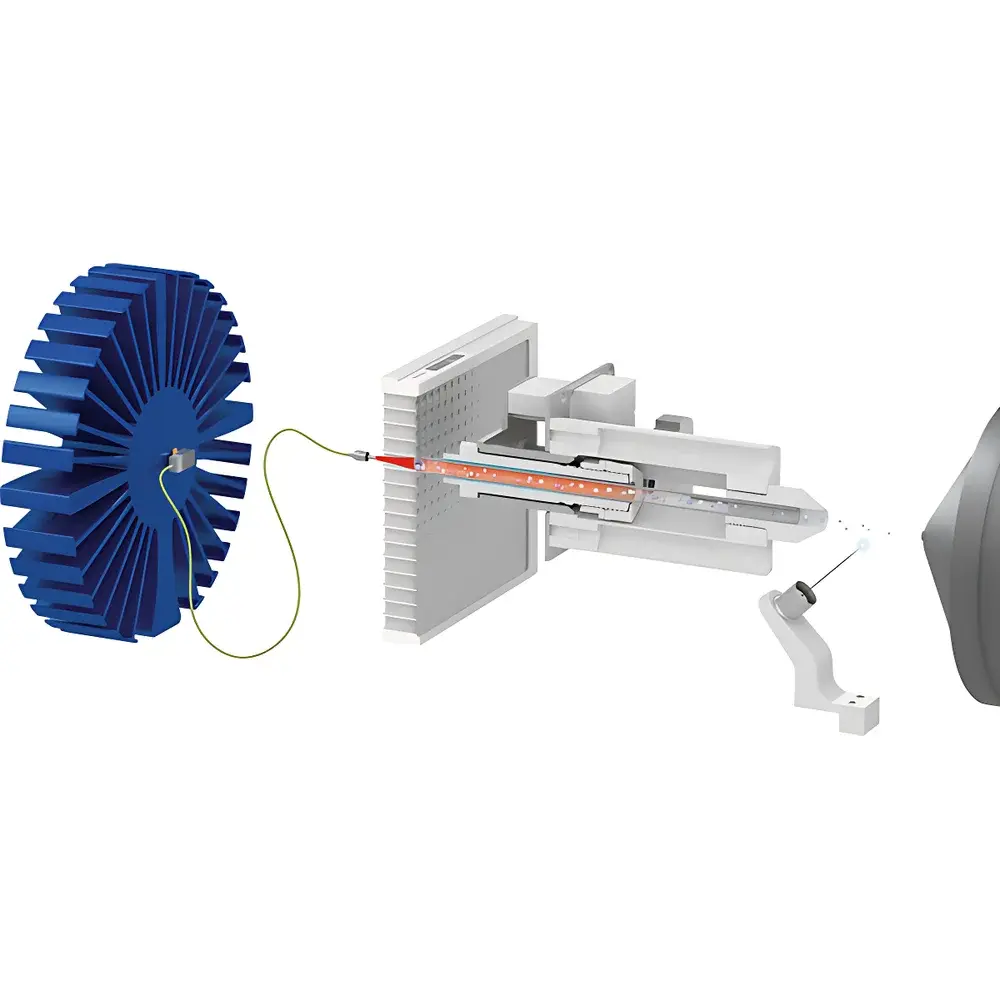
The Luxon High-Speed Laser Thermal Desorption Ion Source is a second-generation atmospheric pressure ionization platform engineered by Phytronix (Canada) for ultra-high-throughput quantitative mass spectrometry. Unlike conventional electrospray ionization (ESI) or standard APCI sources, Luxon employs a fiber-coupled, high-density laser diode array to deliver spatially uniform thermal energy to the reverse side of solid-phase sample plates—enabling near-instantaneous desorption of neutral analytes without solvent, mobile phase, or nebulization gas. These volatilized molecules are then swept into a dedicated corona discharge region where controlled APCI occurs under ambient pressure. This decoupling of desorption and ionization steps eliminates matrix effects commonly observed in liquid-phase interfaces, resulting in significantly reduced ion suppression, improved inter-day reproducibility, and enhanced robustness for complex biological, environmental, and forensic matrices.
Key Features
- Fiber-optic coupled laser diode array ensures exceptional thermal uniformity across the entire 1536-well LazWell™ plate surface—critical for quantitative consistency across high-density formats.
- Sub-second analysis cycle: Full ion signal acquisition within ≤ 0.6 seconds per well, enabling true high-speed screening at scale.
- 24/7 unattended operation supported by integrated robotic sample handling, auto-calibration routines, and real-time system health monitoring.
- Modular plate compatibility: Native support for 96-, 384-, and 1536-well LazWell™ plates—eliminating manual reformatting and reducing cross-contamination risk.
- Zero-solvent, zero-flow operation reduces instrument downtime, lowers maintenance frequency, and avoids LC-related carryover or gradient delay issues.
- Open-source API integration enables seamless coupling with third-party LIMS, ELN, and CDS platforms compliant with ASTM E1578 and ISO/IEC 17025 data integrity requirements.
Sample Compatibility & Compliance
The Luxon source accepts dried-down samples deposited directly onto inert LazWell™ plates—ideal for plasma, serum, urine, tissue homogenates, food extracts, soil digests, and pesticide residues. Its solvent-free workflow meets key regulatory expectations for method ruggedness and traceability: each analysis event is timestamped, plate-position logged, and laser power calibrated prior to every run—fully auditable under FDA 21 CFR Part 11 and EU Annex 11 frameworks. The system conforms to ISO 15197:2013 principles for analytical performance verification and supports IQ/OQ/PQ documentation packages aligned with GxP laboratory validation standards.
Software & Data Management
Controlled via Phytronix’s LDTMS Suite v4.x, the Luxon platform delivers deterministic scheduling, plate-level QC flagging, and automated peak integration optimized for triple quadrupole MRM transitions. Raw data export adheres to mzML 1.1.0 schema; processed results are structured in CSV/Excel formats with embedded metadata (plate ID, well address, laser fluence, corona voltage, dwell time). Audit trails record all user actions, parameter modifications, and calibration events—retained for ≥ 36 months as required under GLP Annex 1 and ICH M10 guidelines.
Applications
- Preclinical DMPK studies requiring >10,000 compound bioanalysis points per week.
- Forensic toxicology labs performing rapid multi-analyte screening of benzodiazepines, opioids, and novel psychoactive substances in whole blood.
- Food safety surveillance programs targeting mycotoxins, veterinary drug residues, and adulterants across batch-managed production lines.
- Environmental monitoring of persistent organic pollutants (POPs) in sediment and wastewater sludge using minimal sample preparation.
- Biopharmaceutical quality control of peptide therapeutics where residual solvents or phospholipid interference compromises ESI sensitivity.
FAQ
Is Luxon compatible with my existing mass spectrometer?
Yes—Luxon is designed as a drop-in replacement for standard APCI inlets on SCIEX Triple Quad™, Thermo Scientific TSQ Altis™/Quantis™, Waters Xevo TQ-S micro™, and Shimadzu LCMS-8060 systems.
Does Luxon require method redevelopment when switching from ESI or APCI?
Minimal reoptimization is needed: only corona current, vaporizer temperature, and declustering potential require adjustment; retention time alignment is unnecessary since no chromatography is involved.
How is calibration maintained across extended unattended runs?
An internal reference standard strip is scanned every 96 wells; laser output is monitored in real time via photodiode feedback, triggering automatic recalibration if deviation exceeds ±1.5% of nominal fluence.
Can Luxon be integrated into a regulated GMP environment?
Yes—the LDTMS Suite includes electronic signatures, role-based access control, and full 21 CFR Part 11 compliance out-of-the-box, validated per ASTM E2500-13 and USP .



