
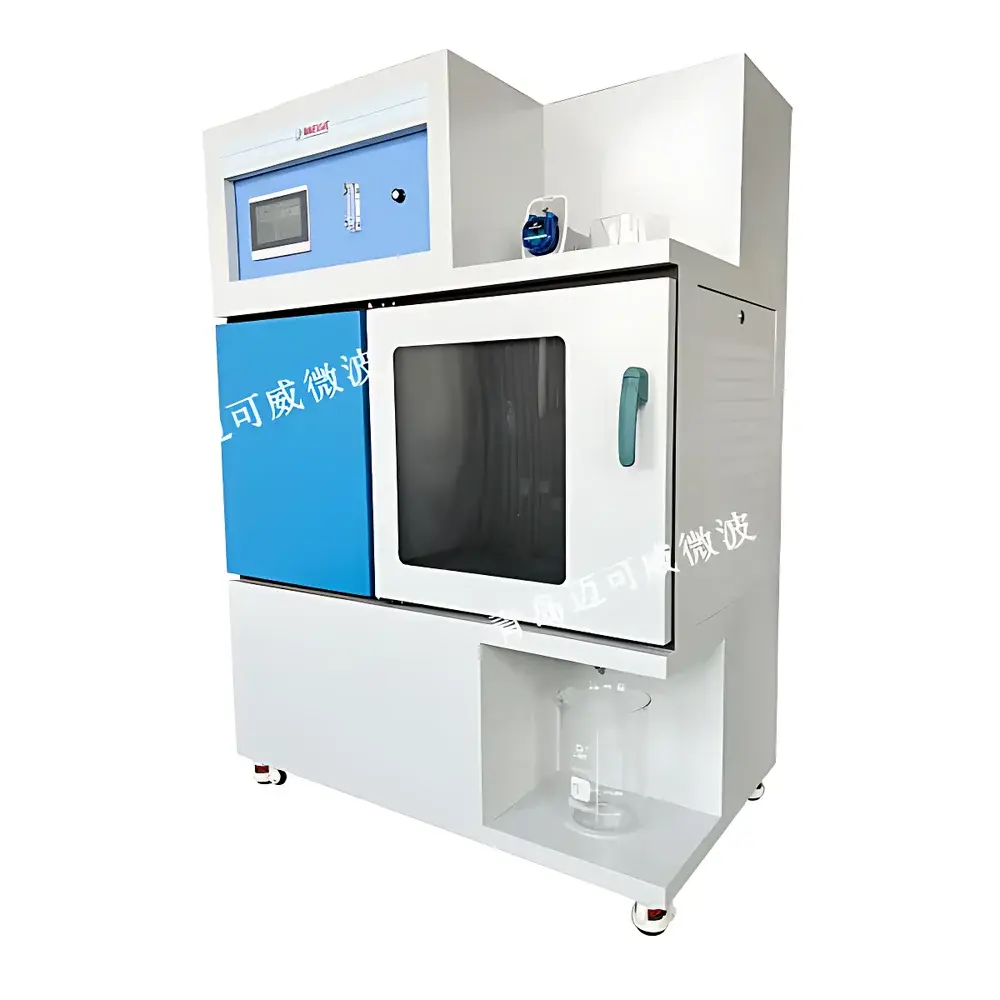
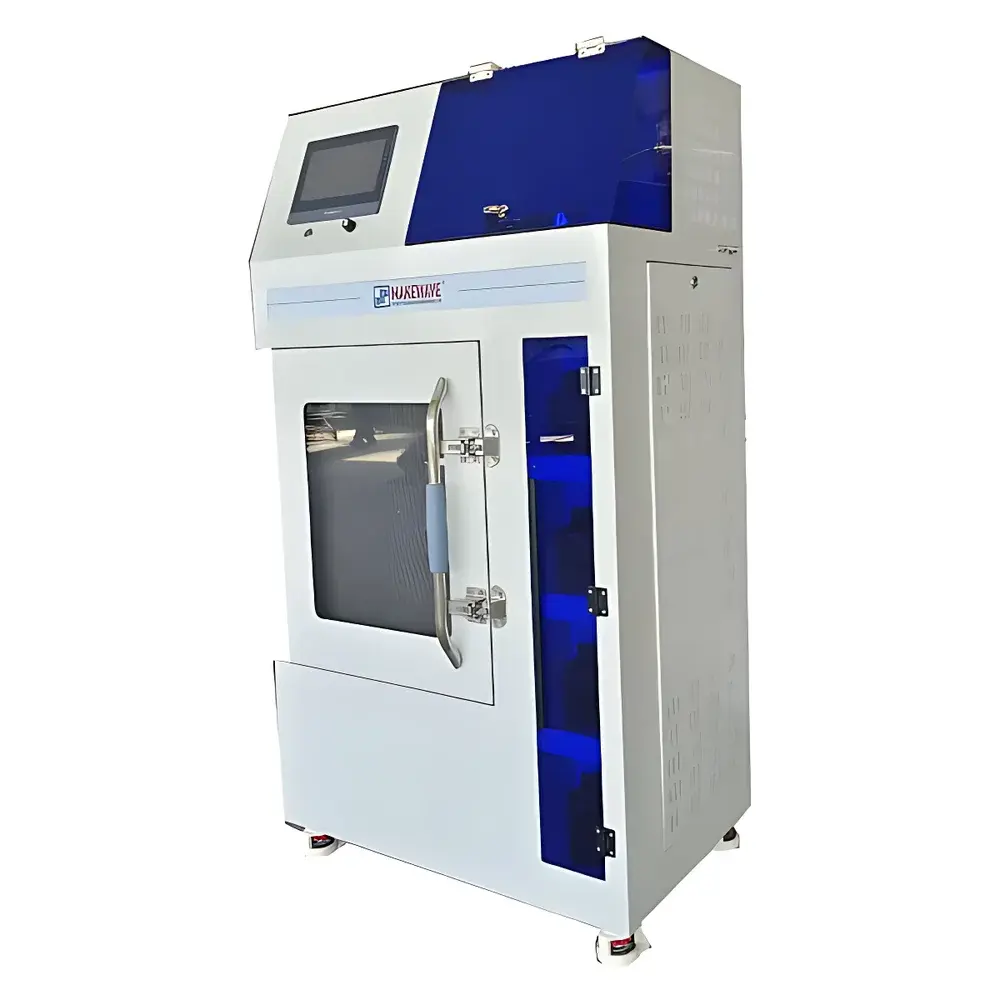
MakeWave HXO-CW30L Automated Wet Oxidation System for Total Organic Carbon (TOC) Sample Preparation
| Brand | MakeWave |
|---|---|
| Origin | Shandong, China |
| Manufacturer Type | OEM Manufacturer |
| Country of Origin | China |
| Model | HXO-CW30L |
| Price Range | USD 700 – 1,400 |
Overview
The MakeWave HXO-CW30L is an automated, benchtop-scale wet oxidation system engineered for standardized preparation of aqueous samples prior to total organic carbon (TOC) and total carbon (TC) analysis. It implements microwave-assisted acid digestion under controlled inert atmosphere—leveraging rapid, volumetric dielectric heating at 2450 MHz—to quantitatively convert refractory and labile organic carbon species into CO₂, which is then selectively trapped and recovered for downstream quantification (e.g., by NDIR, IC, or combustion-IR). Unlike conventional reflux or persulfate-based oxidation methods, this system delivers accelerated reaction kinetics, improved reproducibility, and reduced reagent consumption while maintaining full compliance with methodological prerequisites for regulatory TOC workflows—including those referenced in USP , ASTM D7573, ISO 8245, and EPA Method 415.3.
Key Features
- Microwave power control (0–3200 W, 2450 MHz) with linear, temperature-dependent modulation—enabling precise thermal management during exothermic oxidation cycles.
- Integrated 30 L multi-neck round-bottom flask reactor with mechanical stirring (variable speed), nitrogen purge capability, condenser reflux loop, and immersion-type PT100 temperature sensing (90–100 °C operational range).
- Corrosion-resistant stainless steel 304 chamber (≥162 L internal volume) with PTFE-coated interior surfaces and λ/4 choke-sealed door—ensuring microwave leakage <5 mW/cm² (IEC 61000-3-2 compliant).
- Automated reagent delivery via calibrated peristaltic metering pumps—supporting sequential or simultaneous addition of oxidants (e.g., persulfate, chromic acid, or acidic KMnO₄) and catalysts.
- Dual-stage desiccant drying train (e.g., Mg(ClO₄)₂ + Ascarite® II) to eliminate water vapor interference prior to CO₂ capture—critical for high-fidelity gravimetric or volumetric recovery.
- PLC-based control architecture with 7-inch color touchscreen HMI—featuring programmable SOP sequences, real-time parameter logging (temperature, power, time), audit-trail-capable event history, and user-level access control aligned with FDA 21 CFR Part 11 requirements.
Sample Compatibility & Compliance
The HXO-CW30L accommodates diverse aqueous matrices including surface water, wastewater effluents, drinking water, leachates, and biologically derived process streams (e.g., algal lysates, fermentation broths). Its design supports both dissolved and suspended carbon fractions, enabling “total carbon” recovery across particulate, colloidal, and truly dissolved phases. All fluid-contact materials (glassware, tubing, seals) comply with USP Class VI and ISO 10993-5 standards. The system’s automation architecture supports GLP/GMP documentation protocols—including electronic signature, version-controlled method storage, and timestamped raw data export (CSV/Excel)—to facilitate laboratory accreditation under ISO/IEC 17025.
Software & Data Management
The embedded control firmware provides native support for method-driven operation: users define oxidation profiles (ramp rate, hold time, cooling phase), reagent volumes, purge durations, and drying intervals via intuitive drag-and-drop sequencing. All parameters are stored with metadata (operator ID, date/time stamp, sample ID) and exported as tamper-evident .csv files. Optional OPC UA integration allows bidirectional communication with LIMS platforms (e.g., LabVantage, Thermo Fisher SampleManager) and centralized SCADA systems. Audit trails record all configuration changes, manual overrides, and alarm events—meeting traceability mandates for regulated environmental testing laboratories.
Applications
- Preparation of calibration standards and reference materials for TOC analyzers (e.g., Sievers, GE Analytical, Elementar vario TOC).
- Method validation studies comparing oxidation efficiency across matrix types (e.g., humic-rich vs. saline wastewater).
- Carbon mass balance assessments in bioreactor monitoring, nutrient removal optimization, and carbon sequestration research.
- Supporting EPA-approved methods for carbon speciation (DOC, POC, TC) in ecological and hydrological investigations.
- Enabling high-throughput sample prep in contract environmental labs requiring >20 samples/day throughput with ≤5% RSD between replicates.
FAQ
What types of carbon species does the HXO-CW30L oxidize?
It achieves near-quantitative conversion of non-purgeable organic carbon (NPOC), particulate organic carbon (POC), and recalcitrant heteroatomic compounds (e.g., lignin derivatives, humic substances) when paired with appropriate oxidant chemistries.
Is the system compatible with existing TOC analyzers?
Yes—the CO₂ collection interface follows standard gas-tight coupling specifications (¼” Swagelok or PTFE Quick-Connect), ensuring seamless integration with commercial NDIR detectors, infrared spectrometers, or titrimetric manifolds.
Can the system be validated per IQ/OQ/PQ protocols?
Full validation documentation packages—including factory acceptance test (FAT) reports, installation qualification templates, and performance qualification checklists—are provided upon request.
What maintenance is required for long-term reliability?
Routine tasks include quarterly calibration of temperature sensors, annual verification of microwave leakage, and replacement of desiccant cartridges after 50 cycles or moisture breakthrough detection.
Does the system support remote monitoring?
Via optional Ethernet/Wi-Fi module, users can access live status, receive SMS/email alerts on cycle completion or fault conditions, and initiate emergency shutdown from external networks.



