
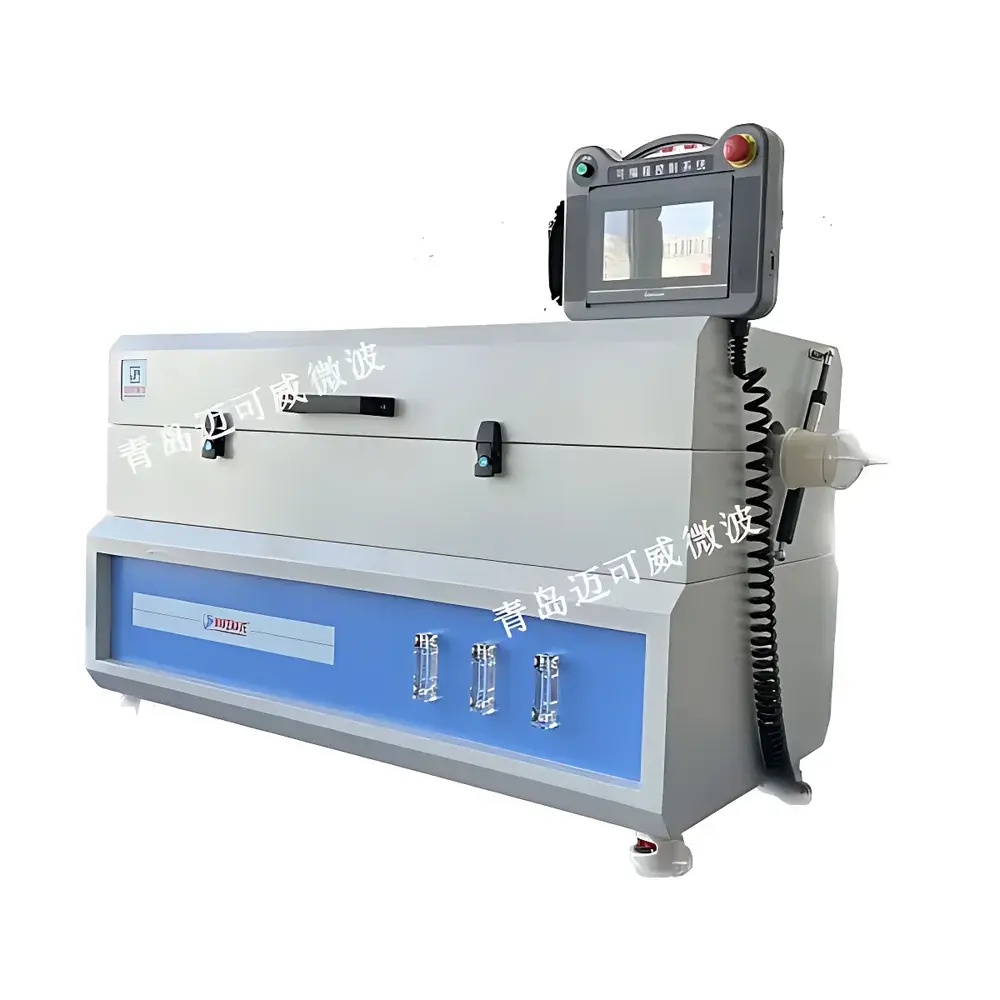
Makewave HXO-T60 Series Organic Tritium (³H) and Carbon-14 (¹⁴C) Combustion Oxidation Furnace
| Brand | Makewave |
|---|---|
| Origin | Shandong, China |
| Manufacturer Type | Direct Manufacturer |
| Country of Origin | China |
| Model | HXO-T60 Series |
| Application Field | Radioisotope Sample Preparation & Environmental Radiometric Analysis |
| Measurement Target | Organic ³H and ¹⁴C in biological, environmental, and combustible matrices (e.g., plant/animal tissues, soils, polymers, fuels) |
| Operating Temperature | Up to 1200 °C (standard operation at 1000 °C) |
| Thermal Zones | Three independently controlled zones (combustion, buffer, reduction) |
| Gas Control | Dual O₂/N₂ supply with mass flow regulation |
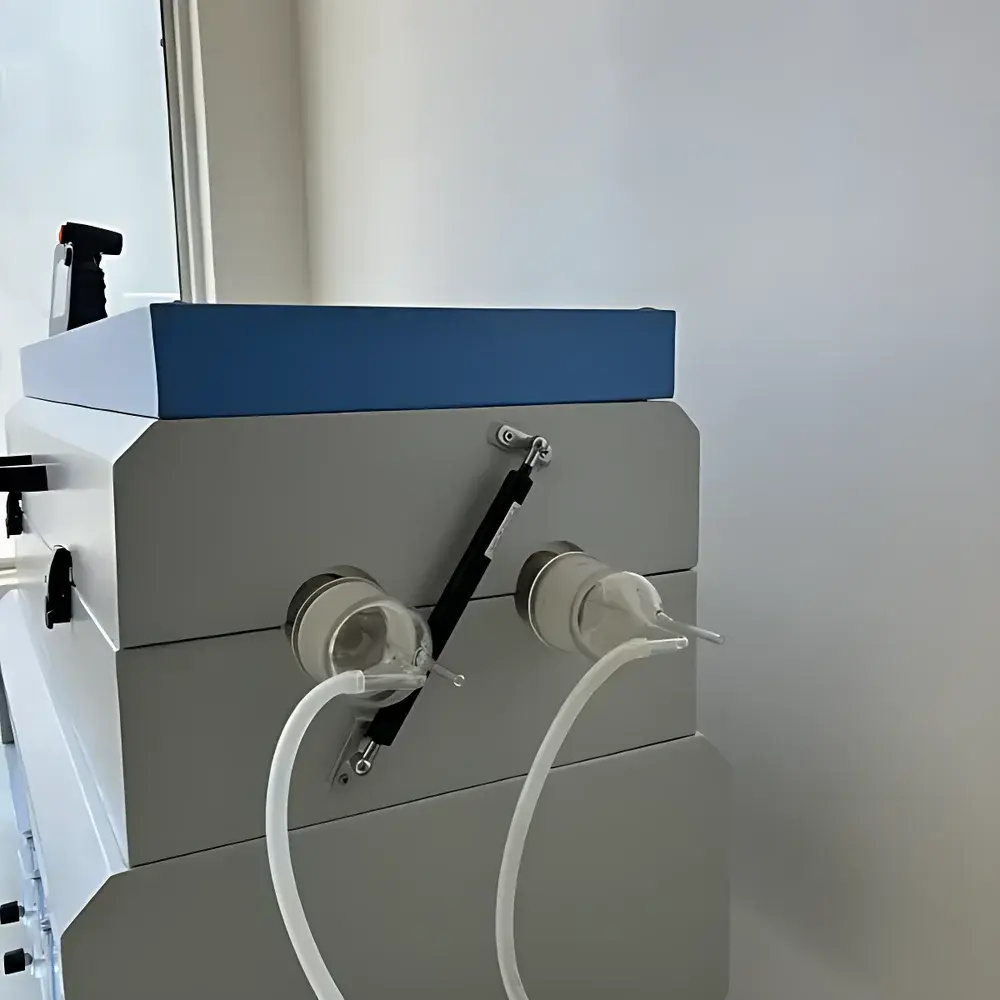
| Water Collection | Dual-stage chilled condensation (recirculating chiller + secondary cold trap) |
| CO₂ Capture | Tandem absorption bottles with high-efficiency bubbling design |
| Reactor Tube | Custom quartz tubing (replaceable, low-memory, low-background) |
| Sample Vessels | Boat-type ceramic crucibles with optimized gas-path geometry for complete secondary combustion |
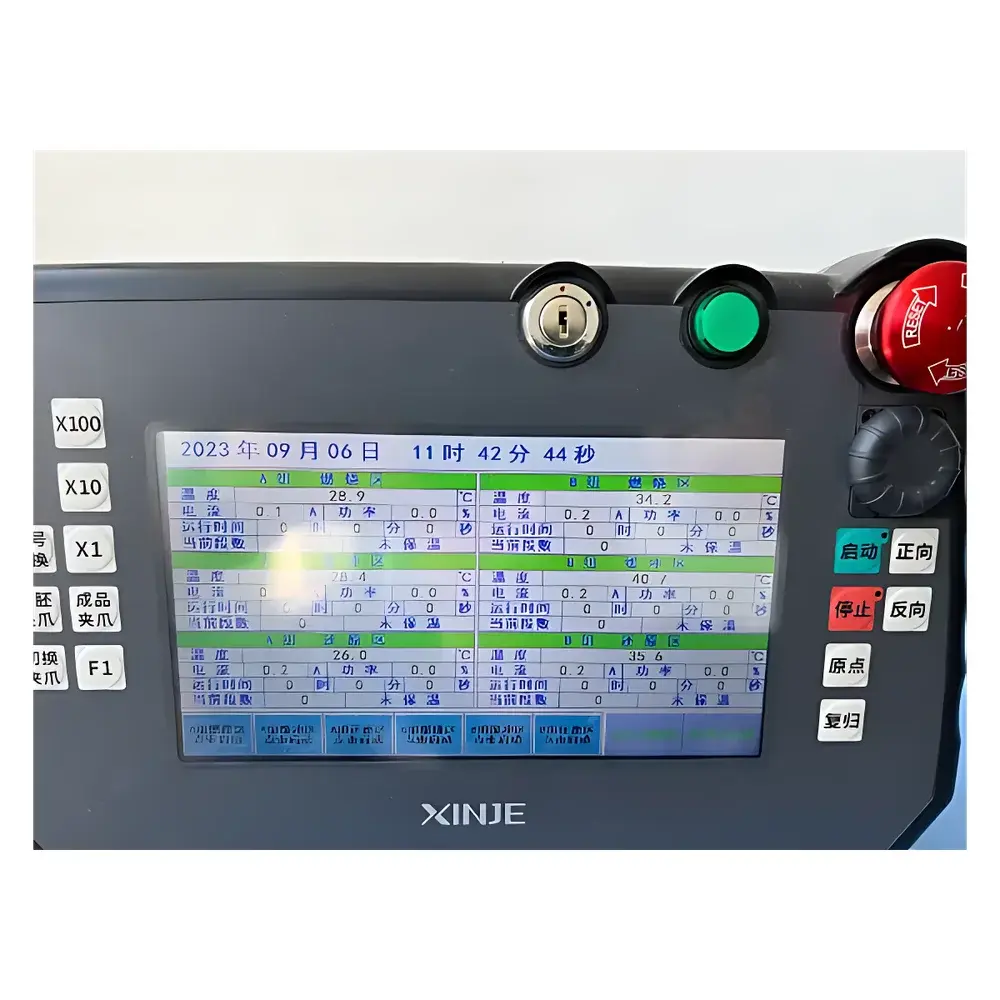
| Control System | PLC-based automation with HMI touchscreen interface (real-time temperature profiling, data logging, alarm history) |
| Safety | Independent over-temperature protection per zone |
| Chamber Access | Top-hinged dual-door configuration for maintenance and visual inspection |
Overview
The Makewave HXO-T60 Series is a purpose-engineered high-temperature combustion oxidation furnace designed specifically for quantitative recovery of organic-bound tritium (³H) and carbon-14 (¹⁴C) from complex environmental and biological matrices. It operates on the principle of controlled, sequential oxidative pyrolysis—where samples undergo thermal decomposition in a precisely regulated oxygen-rich atmosphere, followed by catalytic oxidation of volatile intermediates to yield quantitatively recoverable H₂O (for ³H analysis) and CO₂ (for ¹⁴C analysis). Unlike generic muffle furnaces, the HXO-T60 implements a three-zone thermal architecture—combustion (1000–1200 °C), buffer (600–800 °C), and reduction (300–500 °C)—to ensure complete volatilization of organics, suppression of recombination artifacts, and stabilization of reactive species prior to collection. This architecture is essential for achieving high isotopic recovery yields (>95% for ¹⁴C in cellulose; >92% for ³H in proteinaceous tissue), minimizing memory effects, and meeting the stringent reproducibility requirements of radiocarbon dating laboratories, nuclear regulatory monitoring programs, and environmental radioecology studies.
Key Features
- Three independently programmable thermal zones with dedicated PID controllers and redundant over-temperature cut-off circuits—ensuring process stability and compliance with IEC 61000-6-2 electromagnetic compatibility standards.
- Modular sample handling: configurable single-tube or multi-tube (up to 6 parallel channels) operation, supporting both individual and replicate analyses without cross-contamination.
- High-purity fused quartz reaction tubing—chemically inert, thermally shock-resistant, and easily replaceable to maintain low background and prevent isotopic carryover between runs.
- Boat-style alumina crucibles integrated with a coaxial gas injection manifold, enabling staged O₂ delivery and promoting turbulent mixing for thorough secondary combustion of residual hydrocarbons and CO.
- Dual-gas manifold with calibrated mass flow controllers (MFCs) for O₂ and N₂—supporting inert purging, oxidative ramping, and catalytic post-combustion under Pt/Pd catalyst beds (optional).
- Integrated water capture system: primary condensation via recirculating chiller (−10 °C to +5 °C range) followed by a secondary Peltier-cooled trap (−30 °C), achieving >99.2% H₂O recovery efficiency as verified per ASTM D7575-21.
- CO₂ absorption train comprising two串联 (in-series) U-shaped absorption bottles containing Carbosorb® or NaOH solution, coupled with high-efficiency gas dispersion bubblers—validated for >98.7% CO₂ retention across 1–50 mg C sample loads.
- PLC-based control architecture compliant with IEC 61131-3 programming standards, featuring audit-trail-enabled data logging (timestamped temperature, flow, pressure, alarm events) suitable for GLP/GMP environments.
- 10.1-inch capacitive touchscreen HMI with real-time multi-curve plotting (zone temperatures, gas flows, system status), user-defined method storage, and USB export of raw process logs.
- Top-hinged dual-access doors with safety interlocks—facilitating rapid visual inspection, quartz tube replacement, catalyst bed servicing, and residue removal without disassembly.
Sample Compatibility & Compliance
The HXO-T60 accommodates solid, semi-solid, and homogenized organic materials—including plant biomass, animal tissue, soil cores, filter papers, synthetic polymers, and spent ion-exchange resins—within a mass range of 10 mg to 500 mg per vessel. Its design conforms to ISO 11730:2022 (radiocarbon measurement—sample preparation), ASTM D6866-23 (determining biobased content via ¹⁴C), and IAEA Technical Reports Series No. 460 (environmental tritium analysis). All wet chemistry interfaces (e.g., absorption bottle ports, condensate collection lines) are constructed from borosilicate glass or PFA-lined stainless steel to prevent adsorption losses. The system supports traceability documentation required for ISO/IEC 17025-accredited laboratories, including calibration certificates for MFCs and temperature sensors (NIST-traceable), and firmware versioning for 21 CFR Part 11 readiness.
Software & Data Management
The embedded control software provides full method scripting capability—including ramp/soak profiles, gas switching sequences, and auto-triggered collection phase initiation. Process data—including all sensor readings, actuator states, and alarm timestamps—are logged at 1 Hz resolution and stored internally (≥10,000 cycles) with optional network upload via Ethernet (Modbus TCP or OPC UA). Export formats include CSV and XML, compatible with LIMS integration. Audit trail functionality records user login/logout, parameter changes, and critical event acknowledgments—meeting ALCOA+ principles (Attributable, Legible, Contemporaneous, Original, Accurate, Complete, Consistent, Enduring, Available). Firmware updates are performed via secure signed packages, with rollback capability and integrity verification.
Applications
- Environmental monitoring: ¹⁴C analysis of atmospheric CO₂, soil organic carbon turnover, and bio-based content verification in industrial feedstocks.
- Nuclear facility surveillance: routine ³H and ¹⁴C assay of vegetation, milk, and sediment near reactor sites per EPA Method 906.0 and IAEA Safety Standards Series RS-G-1.8.
- Radiopharmaceutical QA: release testing of ¹⁴C-labeled drug metabolites following OECD TG 307 and USP <643>.
- Archaeological and geological dating labs: high-yield combustion of charcoal, bone collagen, and peat for AMS or LSC target preparation.
- Decommissioning waste characterization: quantification of activation products in polymeric insulation, cable jacketing, and graphite moderators.
FAQ
What sample types are compatible with the HXO-T60?
Solid and semi-solid organic materials—including plant matter, animal tissue, soils, filters, polymers, and resins—with mass ranges from 10 mg to 500 mg per boat.
Does the system meet regulatory requirements for radiocarbon dating labs?
Yes—it complies with ISO 11730:2022, ASTM D6866-23, and IAEA TRS-460, and supports full traceability for ISO/IEC 17025 accreditation.
How is water vapor recovered for tritium analysis?
Via dual-stage condensation: primary cooling using a recirculating chiller (−10 °C), followed by secondary capture in a Peltier-cooled trap (−30 °C), achieving >99.2% recovery efficiency.
Can the furnace operate under inert atmosphere for controlled pyrolysis?
Yes—N₂ purge capability enables inert ramping, while O₂ flow is independently regulated for staged oxidation, supporting method development per ASTM D7575-21.
Is remote monitoring or LIMS integration supported?
Yes—Ethernet connectivity supports Modbus TCP and OPC UA protocols; data export is available in CSV/XML for seamless LIMS ingestion.



