
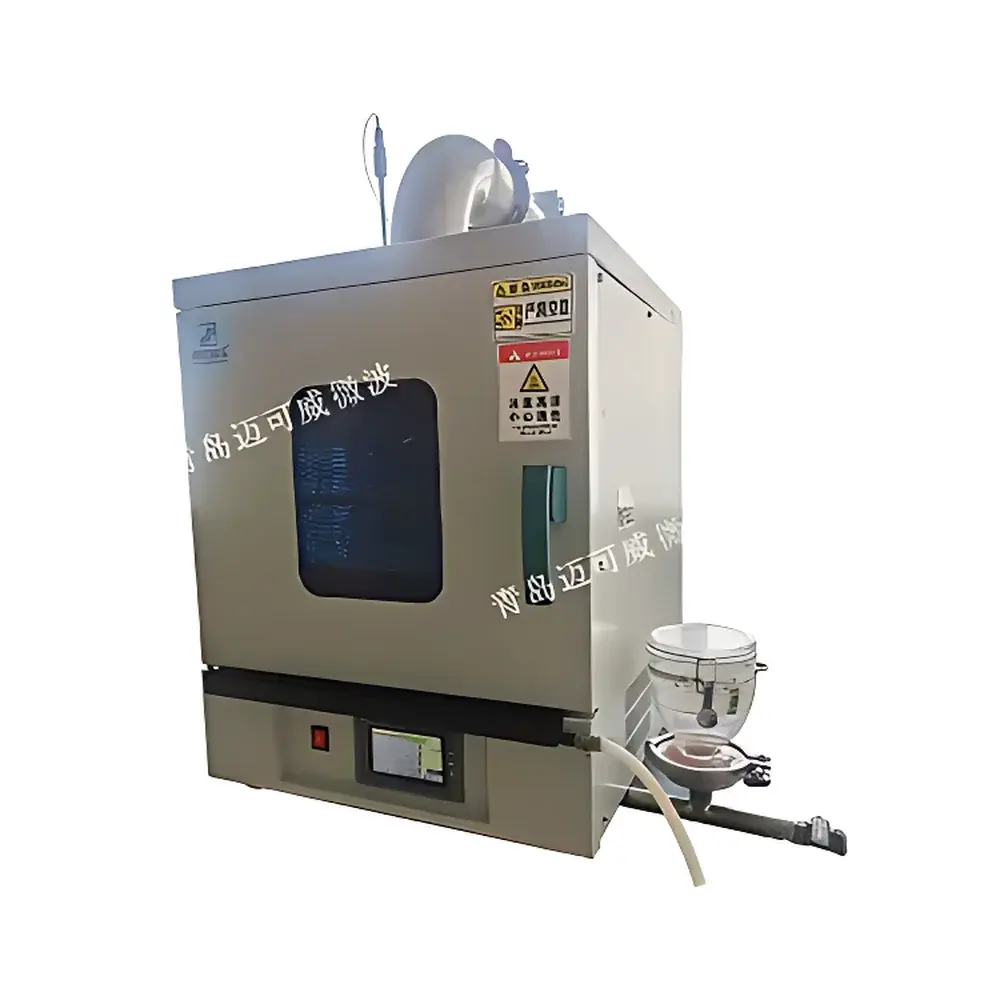
MakeWave MSX-G2A Microwave-Steam-UV Sterilization Chamber
| Brand | MakeWave |
|---|---|
| Origin | Shandong, China |
| Manufacturer Type | Direct Manufacturer |
| Product Origin | Domestic (China) |
| Model | MSX-G2A |
| Dimensions (W×D×H) | 520 × 550 × 616 mm |
| Chamber Volume | 33 L |
| Liquid Reservoir Capacity | 1000 mL |
| Liquid Dispensing Rate | 50 mL/min |
| Infrared Sensor Detection Range | 100 mm |
| Microwave Frequency | 2450 MHz |
| Rated Microwave Power | 1600 W (continuously adjustable, non-pulsed) |
| Electric Heating Power | 800 W |
| Operating Temperature Range | 0–150 °C |
| UV Wavelength | 253.7 nm |
Overview
The MakeWave MSX-G2A Microwave-Steam-UV Sterilization Chamber is an integrated laboratory-grade disinfection system engineered for rigorous microbiological research and biosafety-critical workflows. It combines three complementary physical sterilization modalities—microwave dielectric heating, saturated steam thermal treatment, and germicidal ultraviolet irradiation—within a single, programmable chamber architecture. Unlike conventional standalone autoclaves or UV cabinets, the MSX-G2A operates on a synergistic multi-mechanism principle: microwave energy rapidly elevates intracellular water temperature to disrupt nucleic acid integrity; steam at up to 100 °C ensures thermal inactivation of spores and vegetative cells via protein denaturation; and 253.7 nm UV-C photons induce thymine dimer formation in microbial DNA. This tri-modal approach significantly reduces reliance on chemical biocides while enabling validated, residue-free decontamination of heat- and moisture-stable labware, pipette tips, Petri dishes, forceps, and other non-porous surfaces. Designed for ISO 13485-aligned cleanroom environments and GLP-compliant laboratories, the chamber supports reproducible, auditable sterilization cycles under controlled atmospheric conditions.
Key Features
- Triple-modality sterilization platform: independently controllable microwave (1600 W, 2450 MHz), electric steam generator (up to 100 °C), and dual-side UV-C lamps (253.7 nm)
- 33 L stainless-steel cavity (304 grade, fully welded construction) with multi-layer PTFE coating for corrosion resistance against acidic, alkaline, and high-temperature exposure
- Dual-temperature monitoring system: non-contact infrared sensor for real-time surface temperature mapping of samples + embedded thermocouple for ambient chamber temperature validation
- Configurable atmosphere management: selectable recirculating hot-air mode (for uniform thermal distribution) or direct exhaust mode (for volatile byproduct removal)
- Automated liquid handling: 1000 mL reservoir with precision metering pump (50 mL/min dispensing rate), condensate recovery loop, and auto-refill function
- Three-tier perforated stainless-steel shelves enabling unobstructed vertical airflow and full UV exposure from both lateral lamp arrays
- PLC-based control system with 7-inch resistive touchscreen interface, supporting cycle parameter logging, curve visualization (time vs. temp/power), and secure data export via USB
Sample Compatibility & Compliance
The MSX-G2A accommodates standard laboratory consumables including glassware (e.g., beakers, flasks), metal instruments (tweezers, scalpels), plastic Petri dishes (polypropylene, polycarbonate), and silicone tubing—provided materials are rated for continuous exposure to 150 °C and UV-C radiation. It excludes heat-sensitive polymers (e.g., LDPE, PETG), biological tissues, or liquids requiring sterile filtration. The system complies with key international standards for equipment qualification and process validation: ASTM E565-21 (standard guide for evaluating sterilization processes), ISO 14937:2009 (general requirements for characterization of sterilization agents), and USP (sterility assurance). All firmware operations support audit trail generation per FDA 21 CFR Part 11 requirements when configured with user authentication and electronic signature protocols.
Software & Data Management
The embedded PLC controller provides deterministic, deterministic cycle execution with time-stamped event logging (start/stop, temperature thresholds, power modulation, UV activation). Up to 20 customizable programs can be stored, each defining microwave ramp profiles, steam dwell durations, UV exposure intervals, and ventilation sequences. Real-time graphs display temperature and power trajectories during operation. Data files (CSV format) are exportable via USB port for integration into LIMS or quality documentation systems. Optional Ethernet module enables remote monitoring and centralized fleet management in multi-unit installations—fully compatible with SNMP v3 and Modbus TCP protocols for enterprise-level SCADA integration.
Applications
- Routine decontamination of reusable lab tools between experiments in microbiology, virology, and cell culture facilities
- Pre-sterilization conditioning of glassware prior to autoclaving or dry-heat baking
- Validation studies comparing log-reduction efficacy across microwave, steam, and UV parameters
- Biosafety Level 2 (BSL-2) containment support: rapid turnaround disinfection of external surfaces of centrifuge rotors, biosafety cabinet accessories, and portable incubators
- Teaching labs requiring visual demonstration of synergistic sterilization mechanisms through observation window monitoring
FAQ
Does the MSX-G2A meet regulatory requirements for pharmaceutical QC labs?
Yes—when operated within validated parameters and paired with documented SOPs, it satisfies core elements of EU GMP Annex 1 and USP for non-steam sterilization methods. Full validation kits (IQ/OQ/PQ templates) are available upon request.
Can the chamber be used for sterilizing liquid media?
No—this system is designed exclusively for solid or dry-surface decontamination. Liquids must be sterilized separately using membrane filtration or conventional autoclaving.
Is UV lamp intensity monitored in real time?
The current configuration uses fixed-output low-pressure mercury lamps. Optional UV radiometer integration (with NIST-traceable calibration) is available as a factory-installed upgrade.
What maintenance is required for long-term reliability?
Annual inspection of microwave waveguide integrity, UV lamp output decay (lamp replacement recommended every 8,000 hours), and PTFE coating adhesion assessment. Service logs are automatically appended to cycle history files.



