
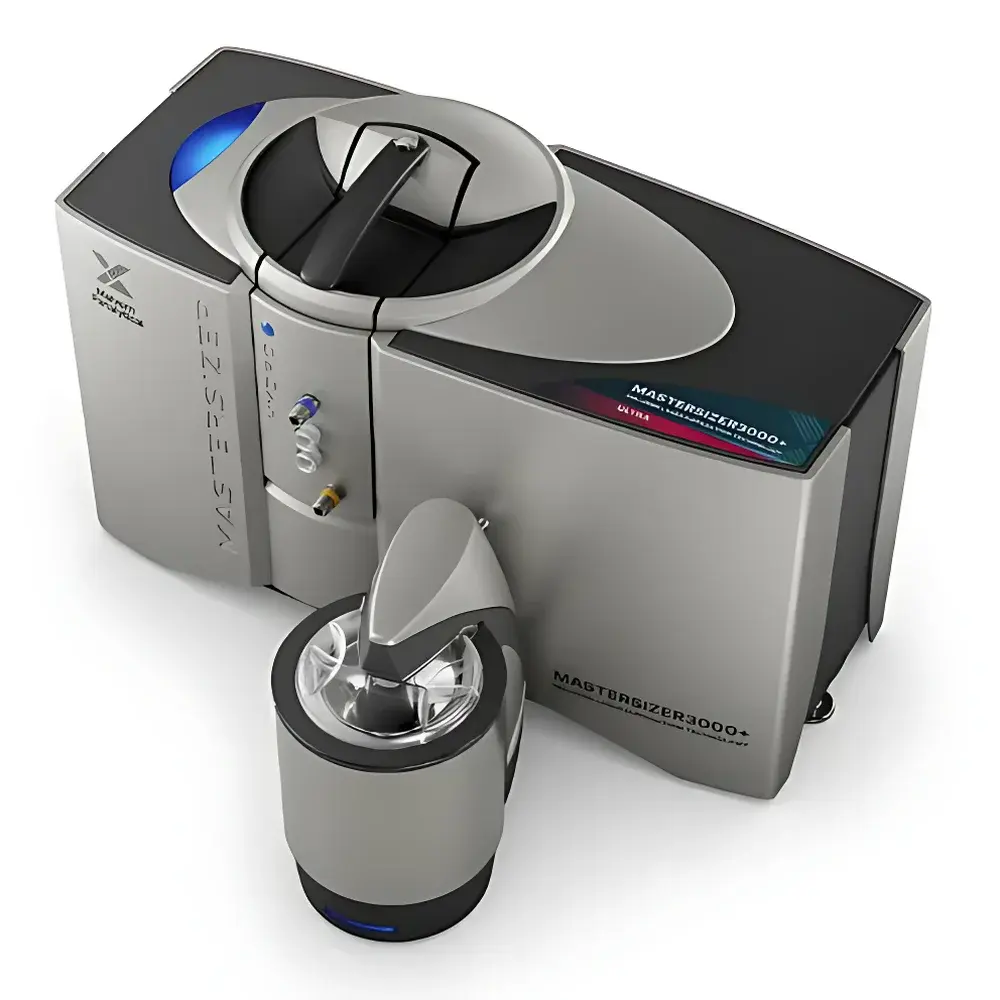
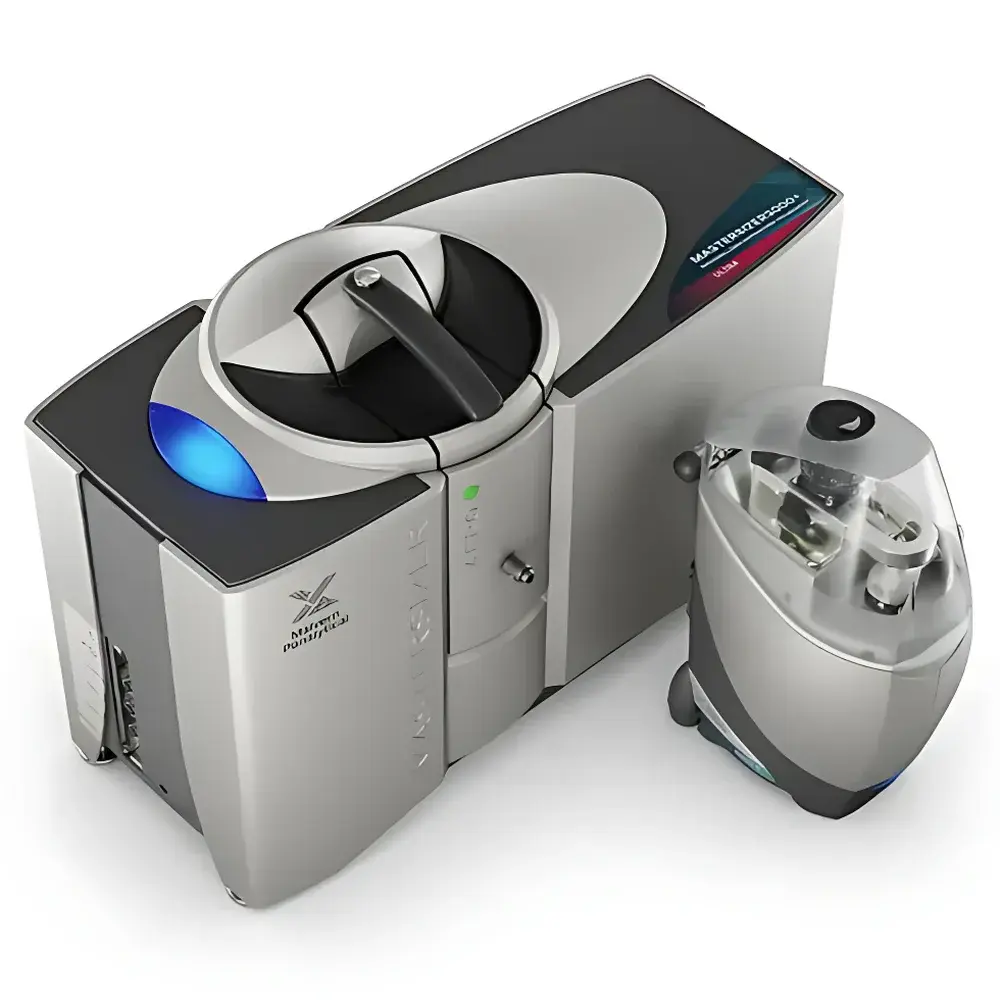
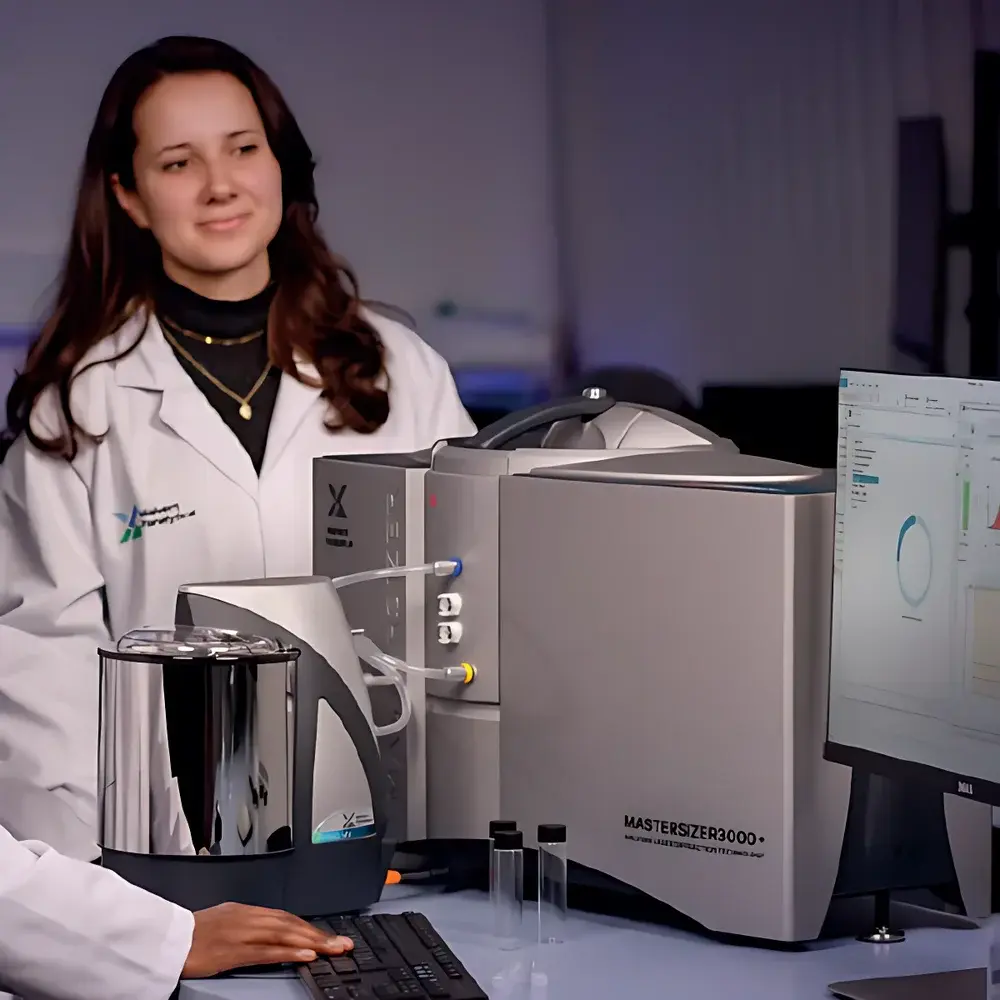
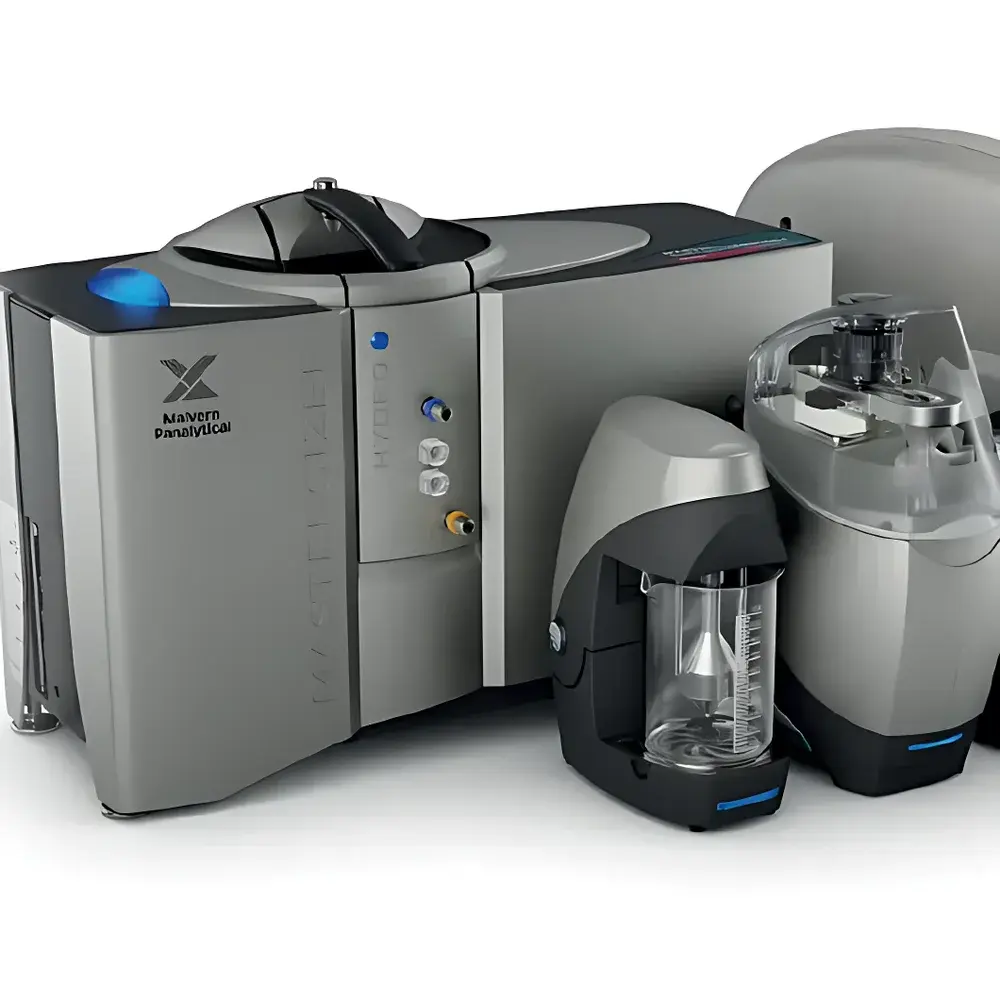
Malvern PANalytical Mastersizer 3000+ Laser Particle Size Analyzer
| Brand | Malvern PANalytical |
|---|---|
| Origin | United Kingdom |
| Model | Mastersizer 3000+ |
| Dispersion Method | Dry & Wet |
| Instrument Type | Laboratory Laser Diffraction Particle Size Analyzer |
| Measurement Range | 0.01–3500 µm |
| Repeatability | <1% RSD |
| Measurement Time | <10 s |
Overview
The Malvern PANalytical Mastersizer 3000+ is a high-performance laboratory laser diffraction particle size analyzer engineered for precision, robustness, and regulatory compliance in demanding R&D, QC, and manufacturing environments. Built upon the proven optical architecture of the Mastersizer 3000 platform, the + variant integrates advanced algorithmic intelligence and hardware-level automation to enhance measurement fidelity, method robustness, and operational traceability. Its core measurement principle relies on Mie and Fraunhofer light scattering theory, enabling accurate quantification of particle size distributions (PSD) across a dynamic range spanning from 10 nm to 3.5 mm—covering colloidal dispersions, micronized APIs, catalysts, pigments, ceramics, and metal powders. The system’s dual-laser design (blue and red) ensures optimal signal-to-noise ratio across both sub-micron and coarse fractions, while its fixed-focus optics eliminate manual alignment drift—a critical factor in long-term reproducibility.
Key Features
- Automated optical alignment and cuvette positioning: Real-time beam centering and sample cell auto-locking occur prior to every measurement, eliminating operator-dependent variability and ensuring consistent optical path geometry.
- Data Quality Guidance: Embedded real-time diagnostics assess signal quality, obscuration stability, and background noise, providing actionable feedback (e.g., “Increase dispersion energy” or “Check for air bubbles”) directly within the acquisition interface.
- SOP Architect: A guided workflow engine that assists users in defining, validating, and documenting standardized operating procedures—including dispersion parameters, measurement duration, and analysis models—aligned with internal SOPs or external standards such as ISO 13320 and USP <429>.
- SizeSure™ algorithm: Discriminates between primary particles and agglomerates or contaminants using multi-angle scattering signature analysis, reducing false positives in heterogeneous samples without requiring manual gating.
- Smart Manager IoT connectivity: Enables remote health monitoring, predictive maintenance alerts, and usage analytics via secure cloud-based infrastructure—supporting lab-wide instrument utilization optimization and uptime assurance.
- OmniTrust framework: Enforces ALCOA+ data integrity principles through full audit trail logging (user actions, parameter changes, raw data exports), electronic signatures, and configurable access controls compliant with FDA 21 CFR Part 11 and EU Annex 11 requirements.
Sample Compatibility & Compliance
The Mastersizer 3000+ supports both wet dispersion (via integrated SCIROCCO or HYDRO EV modules) and dry dispersion (using the Aero S dry powder feeder), accommodating suspensions in aqueous or organic media, as well as free-flowing, cohesive, or electrostatically charged powders. All dispersion units are designed to minimize shear-induced breakage or aggregation, preserving native particle state. The system meets ISO 13320:2020 for laser diffraction methodology, and its software architecture supports GLP/GMP-aligned workflows, including method validation reports, uncertainty estimation per GUM guidelines, and export-ready PDF/CSV outputs traceable to original raw scattering patterns.
Software & Data Management
Mastersizer Xplorer software delivers an intuitive, role-based interface with context-sensitive guidance for novice and expert users alike. It features embedded statistical tools for batch comparison (t-tests, ANOVA), trend analysis over time-series measurements, and customizable report generation with embedded metadata (instrument ID, operator, calibration date, dispersion settings). Raw scattering data (intensity vs. angle) is stored in open-format .msr files, enabling third-party reanalysis or integration into LIMS and ELN platforms via standard APIs. All software updates, firmware patches, and calibration certificates are centrally managed through the Malvern PANalytical Support Portal.
Applications
- Pharmaceutical development: Quantifying API crystallinity, excipient blend uniformity, and inhaler aerosol particle distribution per USP <601> and Ph. Eur. 2.9.32.
- Advanced materials: Characterizing nanoparticle synthesis batches, battery cathode/anode powders, and additive manufacturing feedstocks per ASTM E2937 and ISO/IEC 17025 requirements.
- Food & beverage: Monitoring emulsion droplet stability, starch granule swelling, and cocoa particle fineness during processing.
- Environmental science: Analyzing sediment grain size distributions in soil and wastewater sludge for regulatory reporting under EPA Method 9040C.
- Coatings & inks: Optimizing pigment dispersion stability and correlating PSD with gloss, opacity, and rheological behavior.
FAQ
What standards does the Mastersizer 3000+ comply with for particle sizing?
It conforms to ISO 13320:2020, ASTM E2937-22, and supports method validation per ICH Q5A(R2) and USP <429>.
Can the system be integrated into a regulated QC environment?
Yes—OmniTrust provides full 21 CFR Part 11 compliance, including electronic signatures, immutable audit trails, and role-based access control.
Is method transfer between different Mastersizer 3000+ units straightforward?
Absolutely—the standardized optical path, factory-calibrated detectors, and SOP Architect ensure consistent results across instruments when configured with identical dispersion protocols.
How is data integrity maintained during software upgrades?
All historical datasets remain fully accessible and unaltered; upgrade processes preserve metadata integrity and do not overwrite raw .msr files.
Does the system support automated cleaning validation for wet modules?
While no built-in cleaning cycle is present, the HYDRO EV’s quick-release flow cell enables visual inspection and residue testing per cleaning validation protocols (e.g., TOC or HPLC residue assays).



