
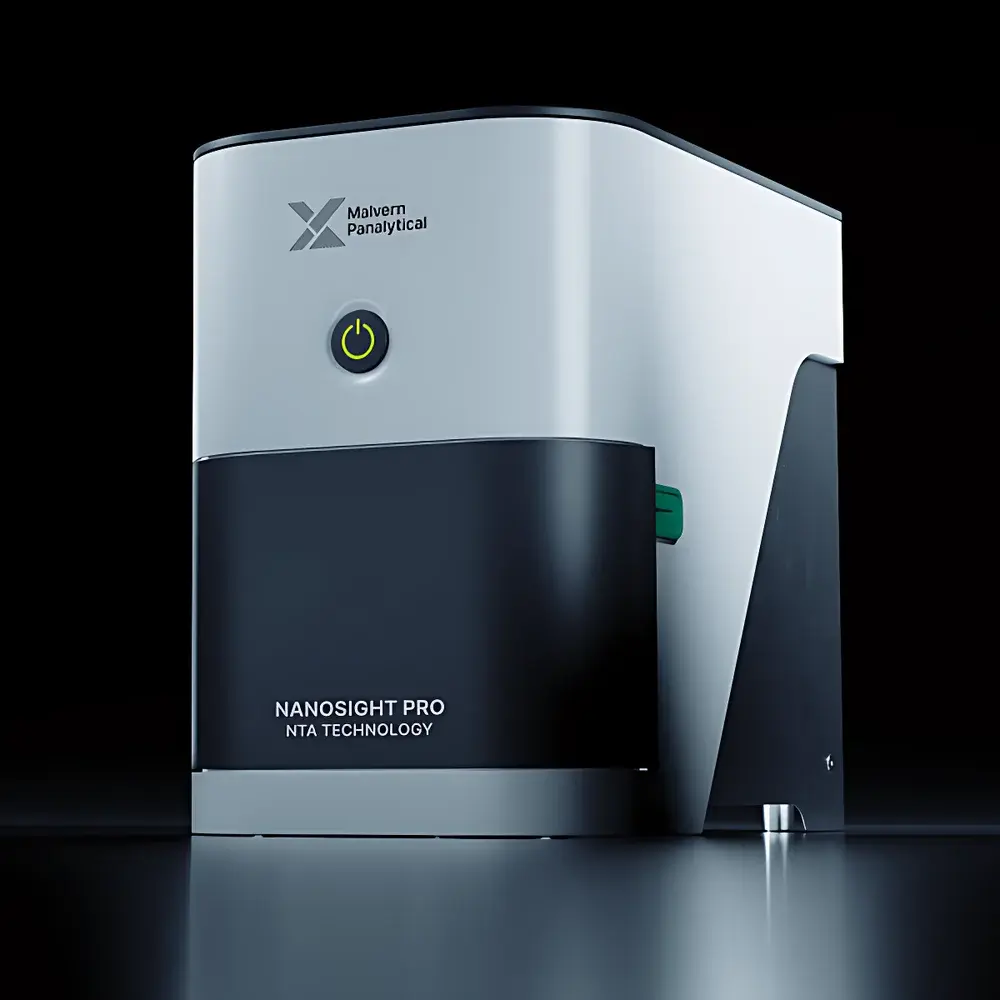
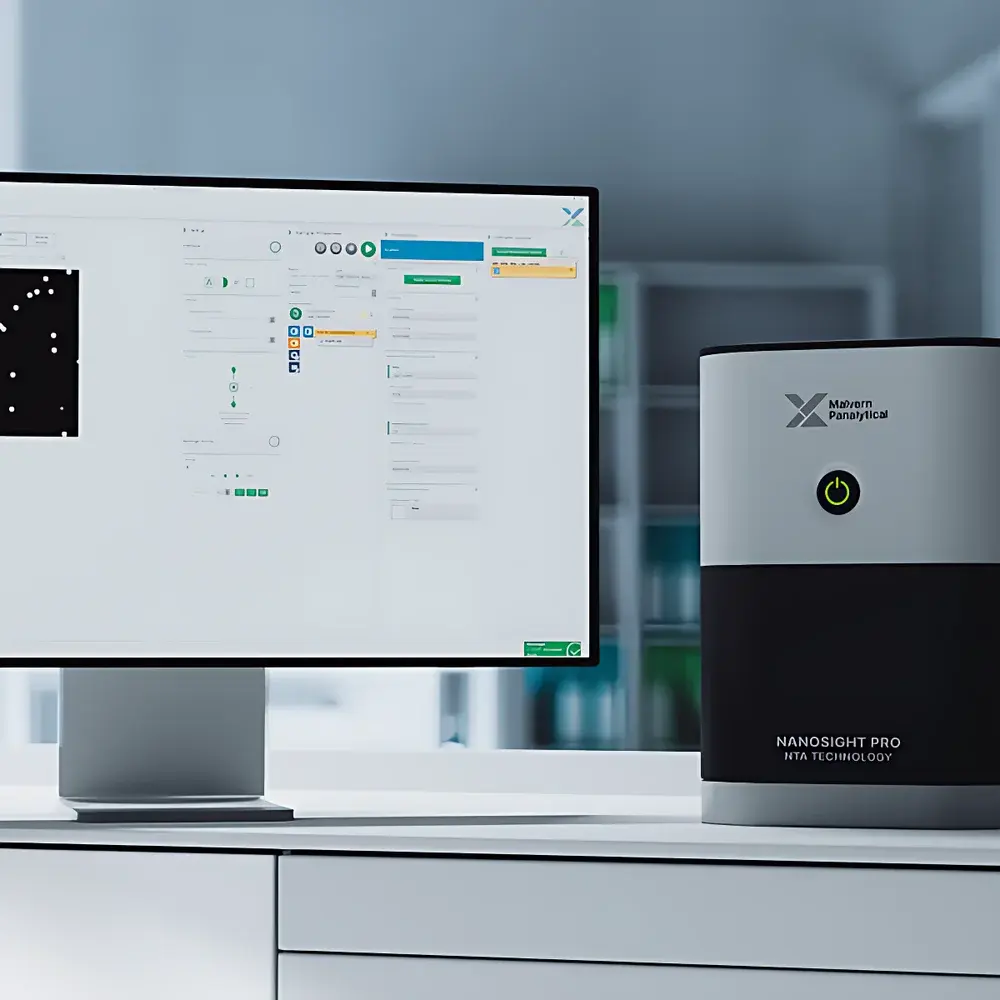
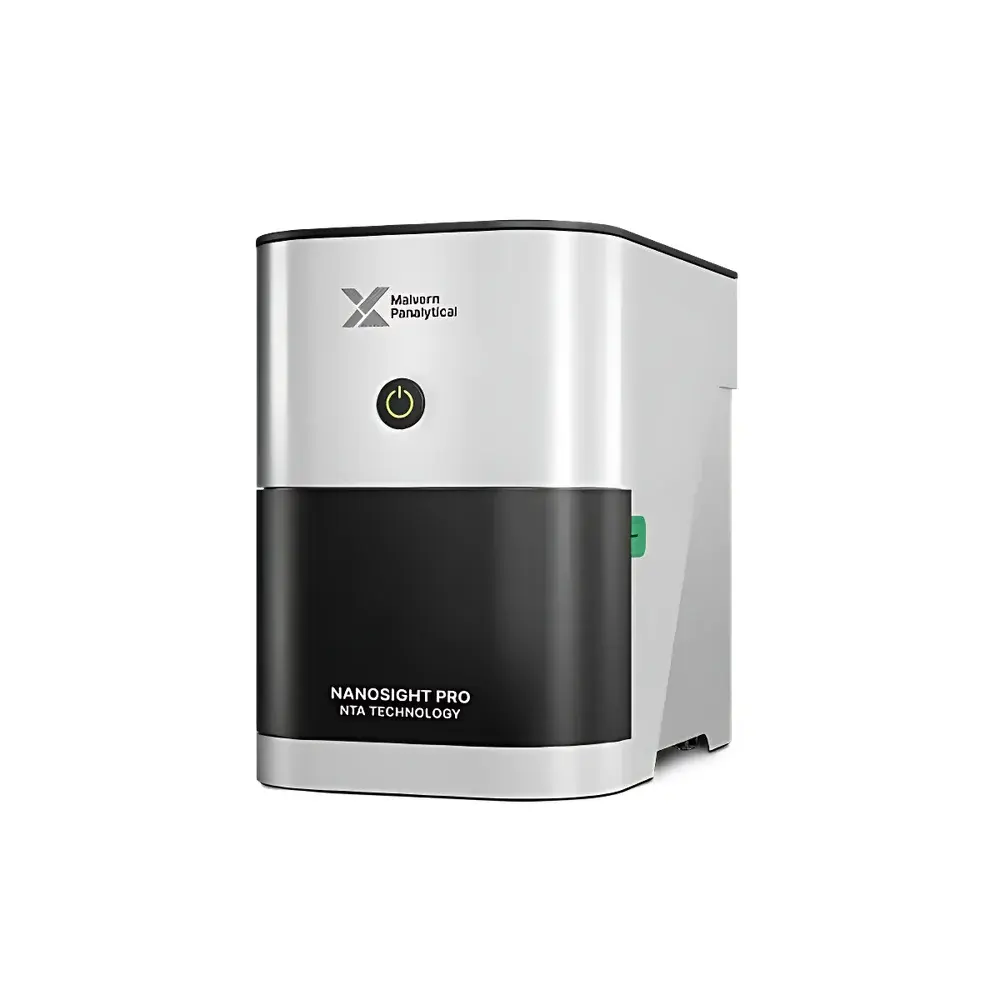
Malvern PANalytical NanoSight Pro Nanoparticle Tracking Analyzer
| Brand | Malvern PANalytical |
|---|---|
| Origin | United Kingdom |
| Manufacturer Type | Original Equipment Manufacturer (OEM) |
| Origin Category | Imported |
| Model | NanoSight Pro |
| Price | Upon Request |
| Particle Size Range | 10 nm – 1000 nm |
| Temperature Control Range | 5°C below ambient to 70°C |
| Measurement Principle | Nanoparticle Tracking Analysis (NTA) |
| Sample Concentration Range | 1×10⁶ – 1×10⁹ particles/mL |
| Minimum Sample Volume | 250 µL |
| Laser Wavelengths | 405 nm (<70 mW), 488 nm (<55 mW), 532 nm (<60 mW), 642 nm (<50 mW) |
| Detection Camera | High-sensitivity sCMOS (USB 3.0) |
| Compliance | Class 1 Laser Product (BS EN 60825-1:2014), EMC Directive (EN IEC 61326-1:2021), Low Voltage Directive (IEC 61010-1:2010 + AMD1:2016) |
| Dimensions (W×D×H) | 34 × 35 × 25 cm |
| Weight | 11 kg (instrument), 1.6 kg (laser module) |
| Power Supply | AC 110–240 V, 50–60 Hz, 4.0 A |
| Operating Environment | ≤80% RH at 31°C, linearly decreasing to 50% RH at 40°C |
Overview
The Malvern PANalytical NanoSight Pro is a high-performance nanoparticle tracking analyzer engineered for quantitative, particle-by-particle characterization of colloidal dispersions and biological nanosystems in liquid suspension. It implements Nanoparticle Tracking Analysis (NTA)—a technique based on real-time visualization and trajectory mapping of Brownian motion under laser illumination—enabling simultaneous determination of hydrodynamic diameter distribution and particle concentration on a per-particle basis. Unlike ensemble-averaging methods such as dynamic light scattering (DLS), NTA preserves heterogeneity information and delivers number-weighted size distributions with high resolution across the 10 nm to 1000 nm range. The instrument is purpose-built for applications demanding rigorous physicochemical insight into extracellular vesicles, viral vectors, lipid nanoparticles, protein aggregates, and synthetic nanomaterials—particularly where low-scattering or fluorescently labeled species require discrimination beyond conventional optical detection limits.
Key Features
- Real-time particle tracking using high-sensitivity sCMOS camera (USB 3.0 interface) optimized for low-noise, high-frame-rate imaging at sub-10 nm resolution.
- Four interchangeable laser modules (405 nm, 488 nm, 532 nm, 642 nm) with integrated long-pass filter selection—enabling multiplexed fluorescence detection and tailored excitation for diverse labeling chemistries.
- Integrated thermoelectric temperature control (−5°C below ambient to +70°C) with active feedback and digital readout, ensuring reproducible measurement conditions across batch and time.
- Automated syringe pump (1 mL capacity) supporting continuous flow injection and programmable sample introduction—critical for stability assessment and kinetic studies.
- NS Xplorer software powered by machine learning algorithms for automated focus calibration, particle identification, trajectory reconstruction, and concentration calculation—minimizing operator dependency and enhancing inter-laboratory reproducibility.
- Class 1 laser safety certification (BS EN 60825-1:2014) and full electromagnetic compatibility (EN IEC 61326-1:2021) and electrical safety compliance (IEC 61010-1:2010 + AMD1:2016).
Sample Compatibility & Compliance
The NanoSight Pro accommodates aqueous and low-viscosity organic suspensions within a concentration window of 1×10⁶ to 1×10⁹ particles/mL, with a minimum volume requirement of 250 µL per analysis. Its optical architecture supports both brightfield (light-scattering) and fluorescence-mode operation, allowing dual-channel validation of particle identity—e.g., distinguishing CD63-positive exosomes from co-isolated lipoprotein contaminants. Instrument design adheres to ISO/IEC 17025-relevant principles for analytical instrumentation, and NS Xplorer software includes audit trail functionality compliant with FDA 21 CFR Part 11 requirements for electronic records and signatures when configured for regulated environments (GMP/GLP). All firmware and software updates are version-controlled and traceable through Malvern PANalytical’s secure support portal.
Software & Data Management
NS Xplorer provides a unified platform for acquisition, processing, and reporting. It features embedded machine-learning models trained on thousands of reference datasets to optimize particle detection thresholds, reject background artifacts, and classify trajectories based on diffusion coefficient consistency. Raw video files (AVI format) and processed data (CSV, PDF, PNG) are stored with metadata including instrument configuration, environmental logs, and user annotations. Batch processing workflows support standardized SOP execution across multiple samples; export modules enable direct integration with LIMS and statistical analysis tools (e.g., R, Python pandas). Data integrity is reinforced via encrypted local storage, user-level access controls, and configurable auto-backup to network drives or cloud repositories.
Applications
- Extracellular Vesicle (EV) Characterization: Quantifies size distribution and concentration of EV subpopulations in conditioned media or purified fractions; fluorescence mode enables phenotypic classification using antibody-conjugated dyes or membrane dyes.
- Viral Vector & Vaccine Development: Supports process development and release testing by measuring titer and aggregation state of lentiviral, AAV, and mRNA-LNP formulations—reducing reliance on plaque assays or qPCR-based titration.
- Drug Delivery Systems: Validates critical quality attributes (CQAs) of lipid nanoparticles, polymeric micelles, and dendrimers during formulation screening and stability studies.
- Biopharmaceutical Aggregation Monitoring: Detects sub-visible aggregates (≥10 nm) in monoclonal antibodies and fusion proteins under stress conditions (e.g., thermal, mechanical, pH), informing developability assessments.
- Nanotoxicology & Regulatory Science: Generates number-based concentration metrics required by OECD Test Guidelines (e.g., TG 318) and EU REACH frameworks for nanoform registration.
- Ultrafine Bubble Analysis: Resolves low-refractive-index gaseous microbubbles (<200 nm) in water treatment, aquaculture, and biomedical ultrasound contrast agent research—where traditional DLS fails due to signal-to-noise limitations.
FAQ
What is the lower detection limit for particle size?
The validated lower size limit is 10 nm for high-refractive-index particles (e.g., gold, polystyrene) under optimal optical alignment and sample preparation. For low-scattering biological particles (e.g., exosomes), the practical limit is typically ~30–40 nm depending on buffer composition and camera gain settings.
Can the NanoSight Pro be used in regulated GMP environments?
Yes—when deployed with NS Xplorer in audit-trail-enabled mode and accompanied by documented IQ/OQ/PQ protocols, it meets key elements of FDA 21 CFR Part 11 and EU Annex 11 for electronic data integrity in pharmaceutical quality control laboratories.
How does NTA differ from dynamic light scattering (DLS)?
NTA measures individual particle motion to generate number-weighted size distributions and absolute concentration; DLS reports intensity-weighted averages and requires assumptions about particle homogeneity and refractive index, limiting its utility for polydisperse or low-concentration samples.
Is calibration required before each measurement?
No routine calibration is needed—the system uses intrinsic pixel-scale calibration verified during factory acceptance testing. Users perform daily focus and sensitivity checks using standardized reference beads (e.g., 100 nm polystyrene) as part of system suitability protocols.
What sample preparation steps are recommended?
Samples should be filtered through 0.22 µm membranes to remove dust and large aggregates; dilution in matched buffer is essential to maintain osmolarity and avoid artifacts from refractive index mismatch or sedimentation effects.



