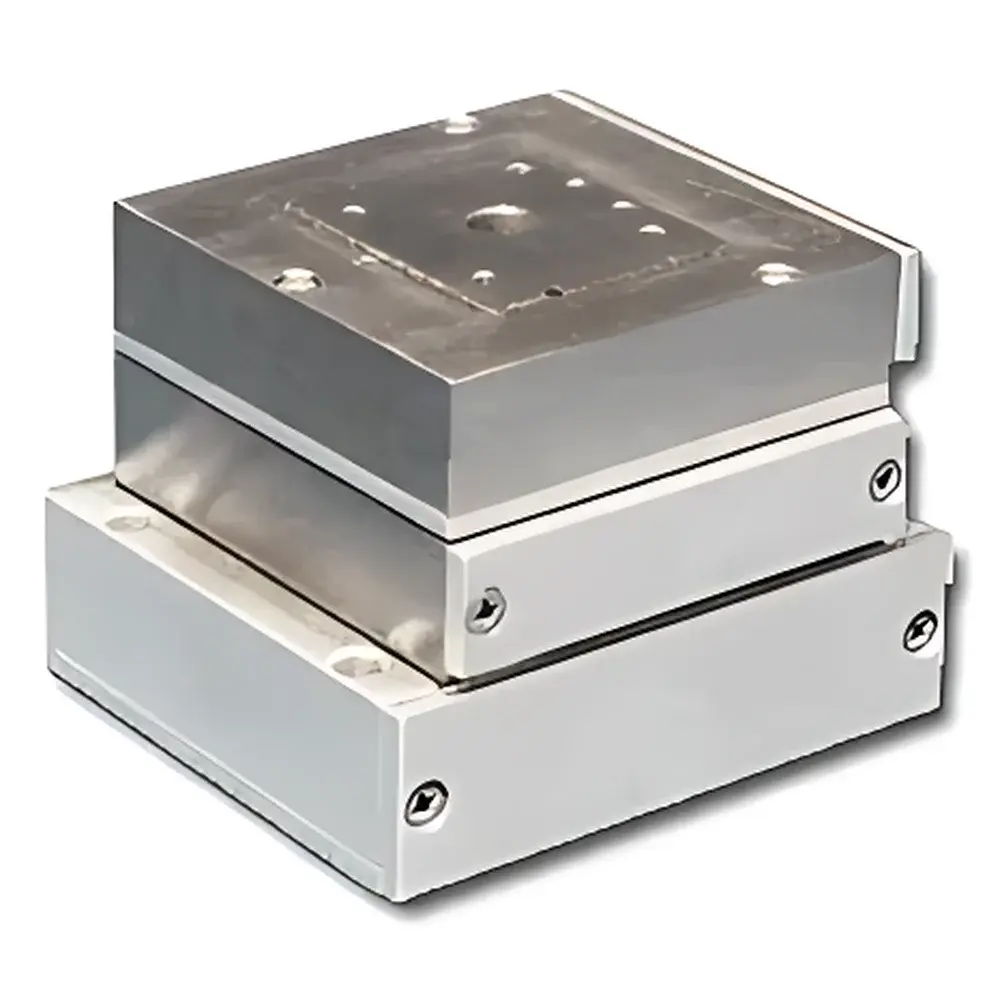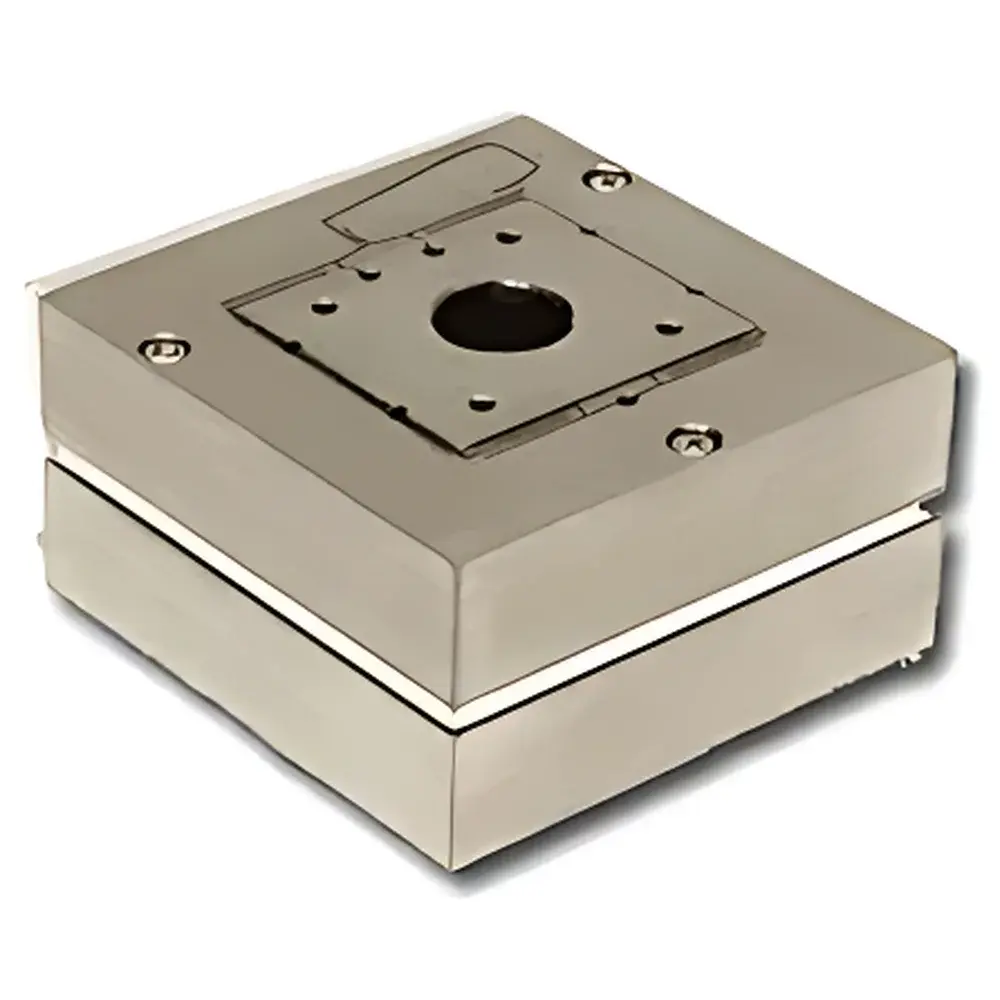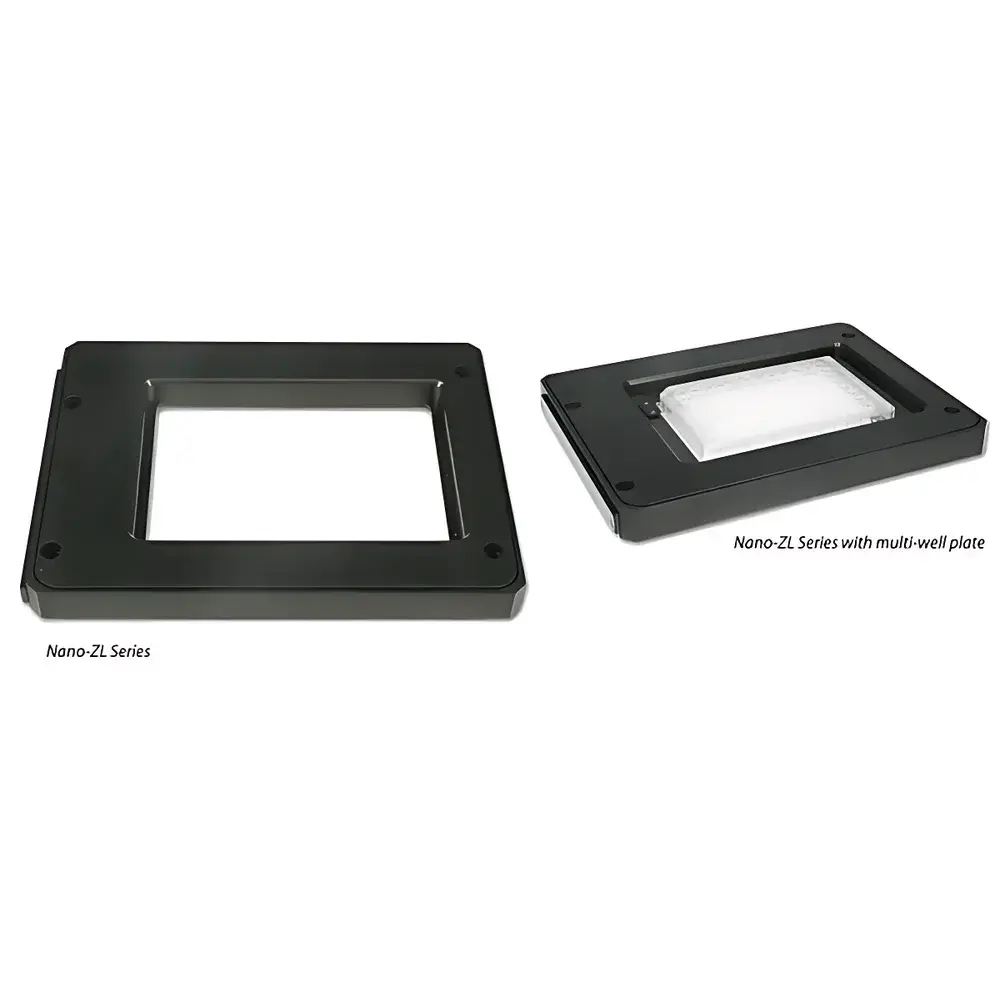
MCL Think Nano Nano-ZL Series Piezo-Driven Z-Axis Nanopositioning Stage

| Brand | MCL Think Nano |
|---|---|
| Origin | USA |
| Model | Nano-ZL Series |
| Motion Range | 100 μm or 500 μm (Z-axis) |
| Position Resolution | 0.2 nm (Nano-ZL100) / 1 nm (Nano-ZL500) |
| Resonant Frequency | 250 Hz |
| Max. Horizontal Load | 0.5 kg |
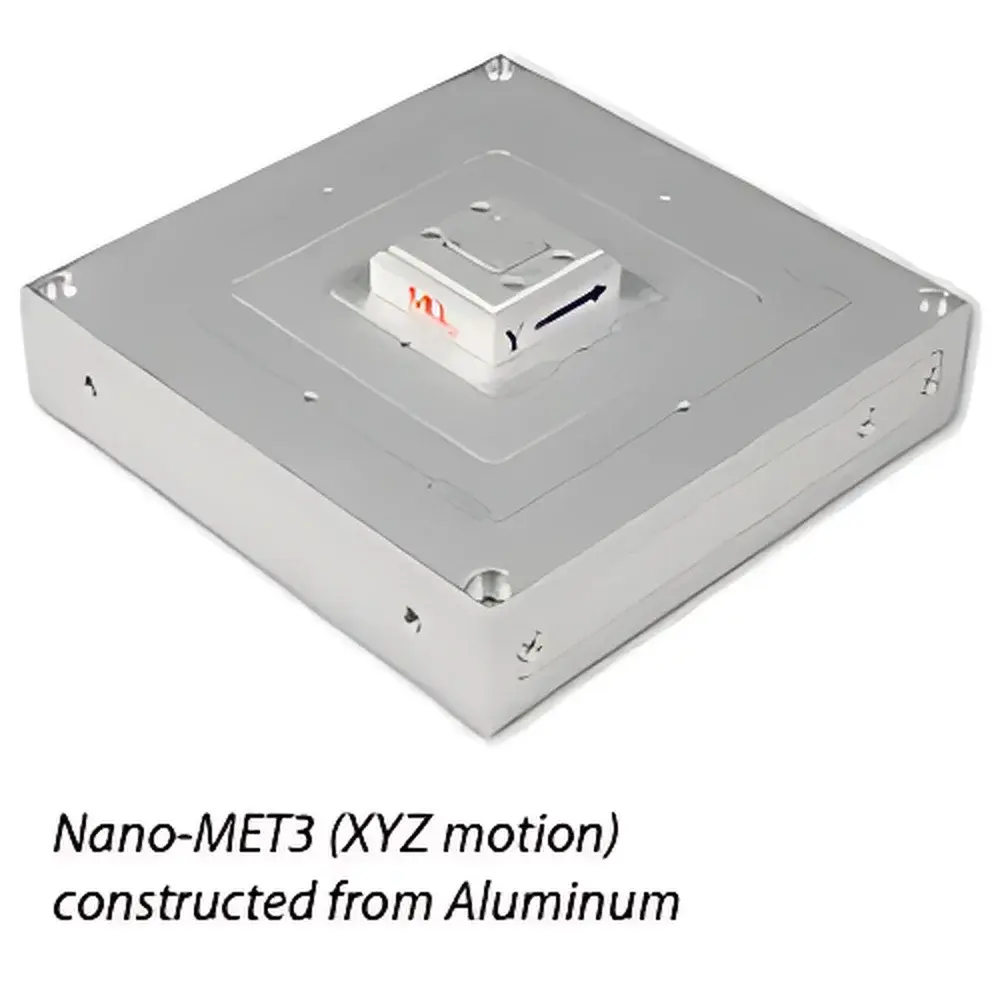
| Body Material | Aluminum |
| Control | Closed-loop with integrated PicoQ® absolute position sensing |
| Software Compatibility | Nano-Drive® controller suite |
| Compliance | Designed for GLP-compliant optical microscopy workflows requiring traceable, reproducible Z-positioning |
Ask about pricing, availability and specifications.
Overview
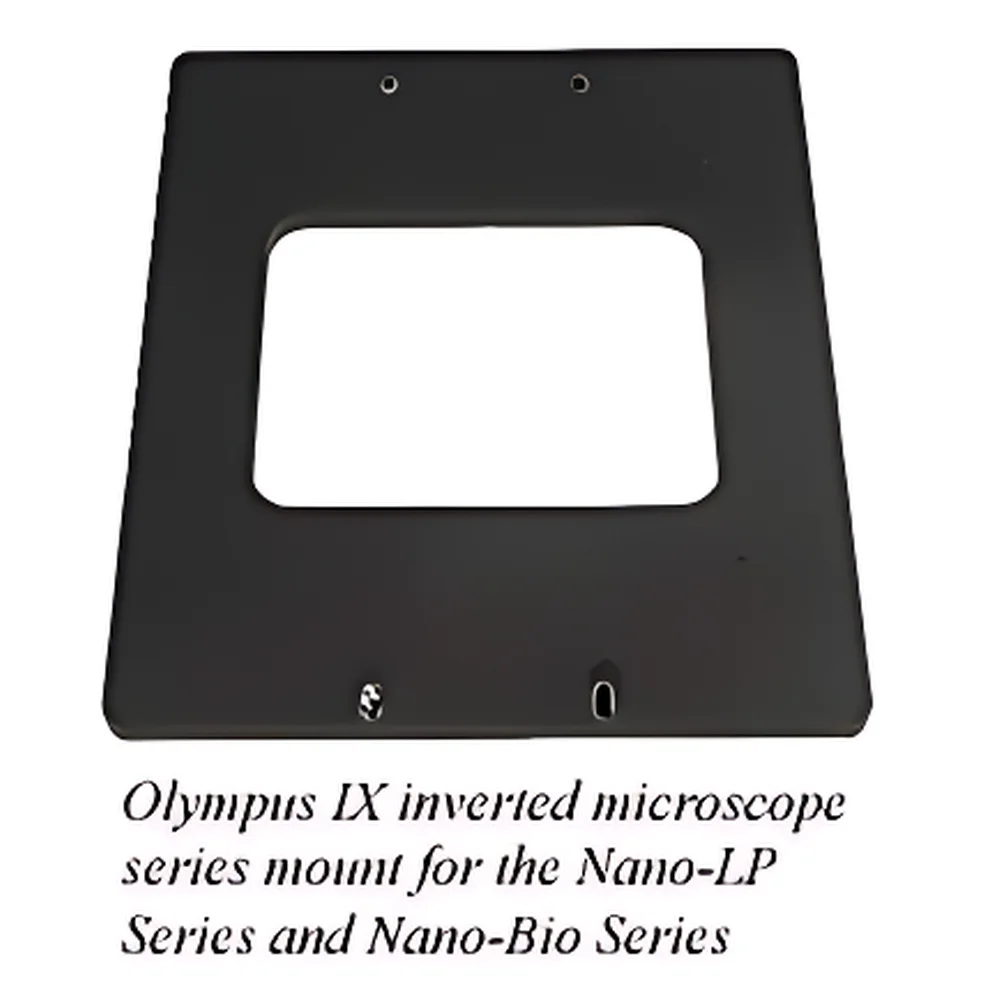
The MCL Think Nano Nano-ZL Series is a high-precision, piezo-driven Z-axis nanopositioning stage engineered for demanding optical microscopy applications where nanometer-scale vertical positioning stability, repeatability, and dynamic response are critical. Unlike traditional stepper- or servo-motor-based translation stages, the Nano-ZL leverages monolithic flexure-guided mechanics combined with proprietary PicoQ® capacitive position sensing to deliver true closed-loop control over its full travel range. Its core measurement principle relies on non-contact, absolute capacitive displacement feedback—ensuring zero hysteresis, no drift, and sub-nanometer resolution without reliance on external encoders or homing routines. The stage is purpose-built to interface directly with standard multiwell plates (4.3″ × 6.3″ aperture), enabling automated, plate-level Z-correction during high-throughput imaging protocols. This eliminates focus drift caused by well-to-well height variations—common in 96- and 384-well microplates—and supports consistent optical sectioning across heterogeneous biological samples.
Key Features
- True flexure-guided motion architecture: Eliminates friction, backlash, and wear—ensuring long-term positional stability and maintenance-free operation.
- Integrated PicoQ® absolute position sensing: Provides real-time, drift-free feedback with <0.2 nm resolution (Nano-ZL100) and <1 nm resolution (Nano-ZL500) across the entire travel range.
- High resonant frequency (250 Hz): Enables rapid Z-section acquisition with minimal settling time—critical for minimizing photobleaching in live-cell fluorescence and confocal imaging.
- Low-profile mechanical design (≤25 mm height): Facilitates seamless integration into existing microscope stands, inverted platforms, and automated screening systems without optical path obstruction.
- Closed-loop control firmware embedded in Nano-Drive® controller: Supports programmable step-and-settle, continuous scanning, and synchronized triggering via TTL/USB/Ethernet interfaces.
- Biocompatible aluminum housing with black anodized finish: Reduces stray light reflection and complies with cleanroom-compatible material standards (ISO 14644 Class 5 compatible surface treatment).
Sample Compatibility & Compliance
The Nano-ZL Series accommodates standard SBS-format multiwell plates (up to 384-well), including glass-bottom, polymer, and UV-transparent variants. Its aperture geometry (109 mm × 160 mm) aligns precisely with ANSI/SLAS dimensional specifications. The stage meets mechanical and electromagnetic compatibility requirements per FCC Part 15 Subpart B and CE Directive 2014/30/EU. While not certified as medical device hardware, its performance characteristics—including traceable position repeatability (<±0.5 nm over 24 h at constant temperature), linear thermal coefficient (<0.05 µm/°C), and deterministic step response—support compliance with ISO/IEC 17025 calibration frameworks when used within validated laboratory workflows. It is routinely deployed in environments adhering to FDA 21 CFR Part 11–aligned data integrity practices when paired with Nano-Drive®’s audit-trail-enabled software logging.
Software & Data Management
Control and automation are executed via the Nano-Drive® software platform (Windows 10/11, 64-bit), which provides native support for Python (via PyNanoDrive SDK), MATLAB Instrument Control Toolbox, and LabVIEW VIs. All position commands, sensor readings, and system status logs are timestamped and stored in HDF5 format—enabling metadata-rich experiment reconstruction and FAIR data principles adherence. The software implements configurable safety limits, trajectory pre-compensation for hysteresis-free scanning, and real-time position error monitoring. Export options include CSV, TIFF stack metadata embedding, and direct integration with MicroManager 2.0 and NIS-Elements via third-party plugin architecture. Firmware updates preserve calibration coefficients and retain user-defined macros across revisions.
Applications
- High-speed confocal Z-stack acquisition with adaptive focus correction per well.
- Single-cell phenotypic screening using multiwell plate-based fluorescence lifetime (FLIM) or FRET assays.
- Structured illumination microscopy (SIM) and STORM/PALM super-resolution workflows requiring precise axial registration across thousands of frames.
- In situ cryo-microscopy sample positioning where thermal contraction compensation is applied via calibrated Z-offset tables.
- Automated patch-clamp electrophysiology rigs requiring sub-micron Z-registration between micropipette tip and cell membrane.
- Optical coherence tomography (OCT) reference arm stabilization in benchtop biomedical imaging systems.
FAQ
What distinguishes the Nano-ZL from the Nano-Z or Nano-ZS series?
The Nano-ZL is optimized for large-aperture, multiwell plate handling with extended travel (100/500 µm) and higher load capacity (0.5 kg horizontal). In contrast, the Nano-Z targets compact objectives with 50 µm travel, while the Nano-ZS emphasizes ultra-high speed (>500 Hz) at reduced range.
Is vacuum-compatible operation supported?
Standard Nano-ZL units are rated for ambient air use only. Vacuum-compatible variants (with outgassing-certified adhesives and modified cabling) are available under custom configuration—contact engineering support for bake-out specifications.
Can the Nano-ZL be integrated into a fully automated HTS platform?
Yes—TTL synchronization inputs/outputs, Ethernet-based command protocol (TCP/IP), and deterministic latency (<100 µs jitter) enable deterministic integration with PLCs, robotic liquid handlers, and commercial HCS systems such as Molecular Devices ImageXpress or PerkinElmer Opera Phenix.
Does the Nano-Drive® controller support FDA 21 CFR Part 11 compliance?
While the controller itself is not independently certified, its audit trail functionality—including user authentication, electronic signatures, immutable log archiving, and role-based access control—provides the technical foundation required for Part 11 compliance when implemented within a validated site-specific quality management system.
What maintenance is required over the product lifecycle?
None—flexure mechanisms contain no lubricants or moving parts subject to wear. Annual verification of position accuracy using NIST-traceable interferometric calibration is recommended for GxP-regulated environments.