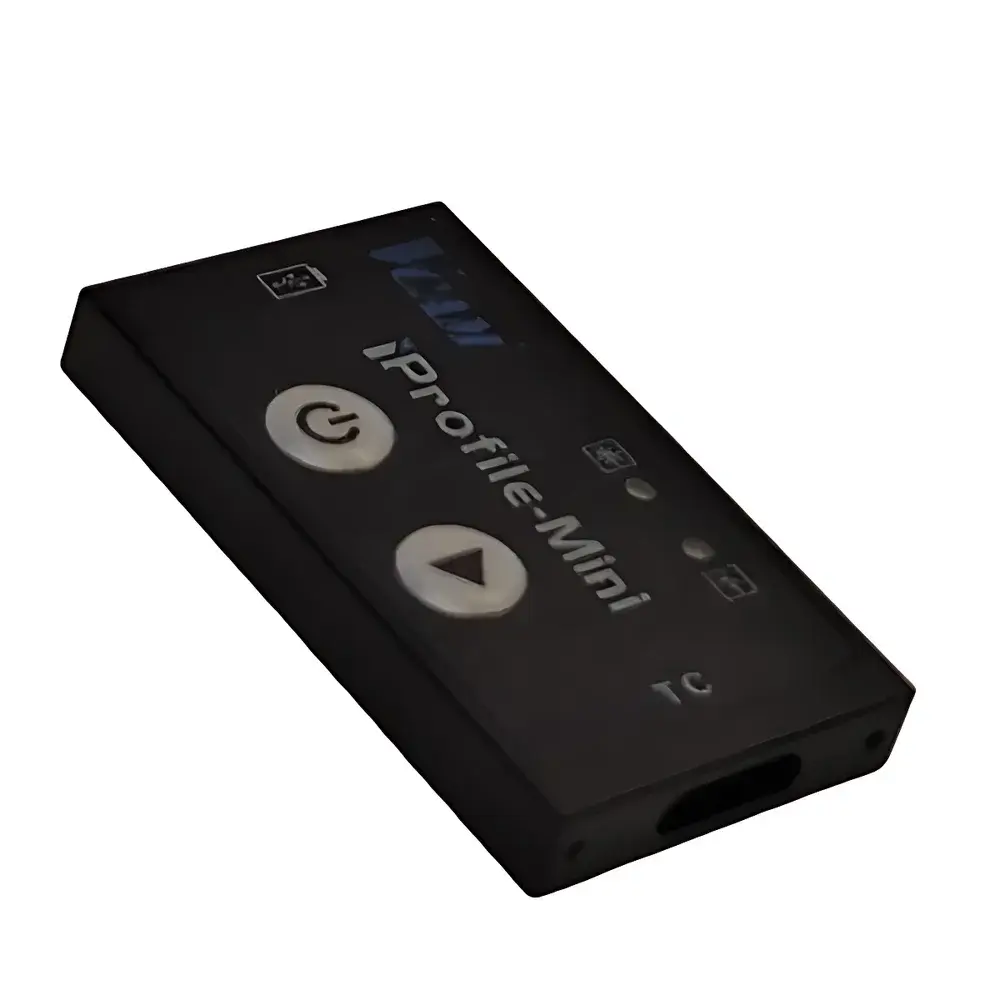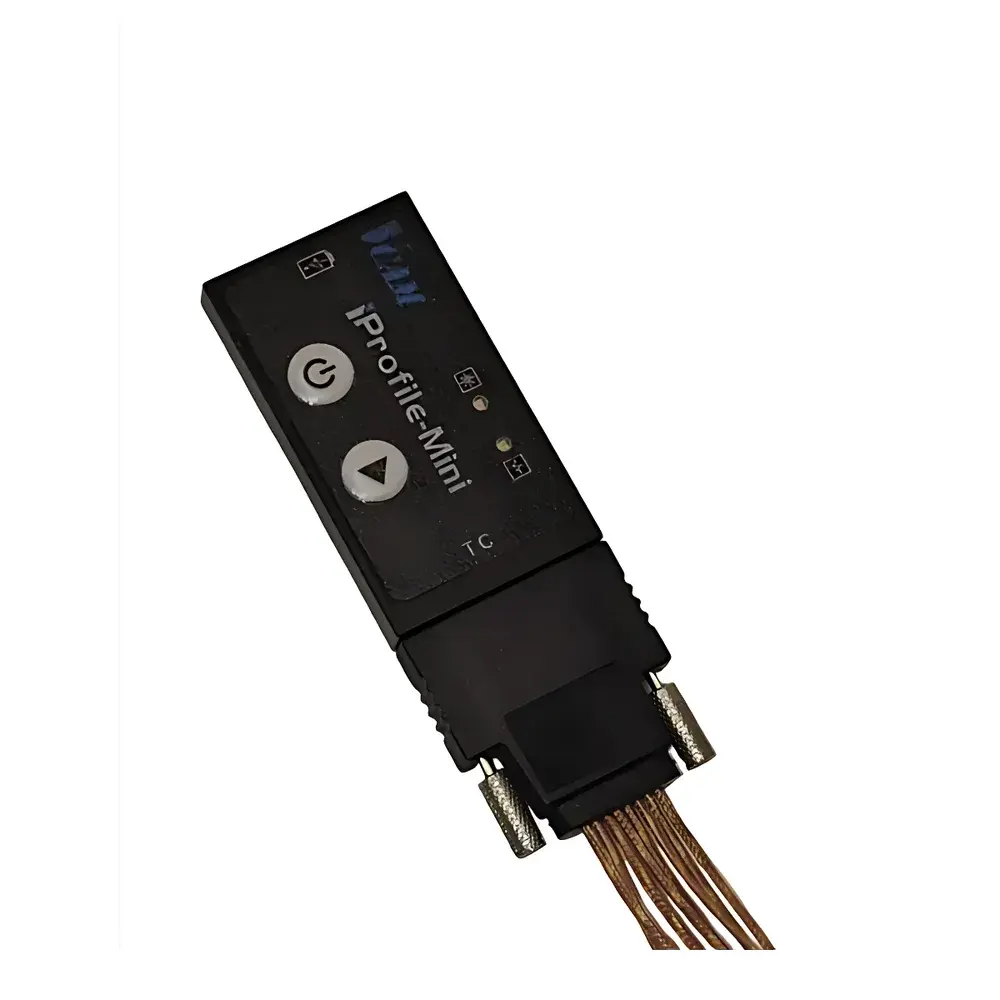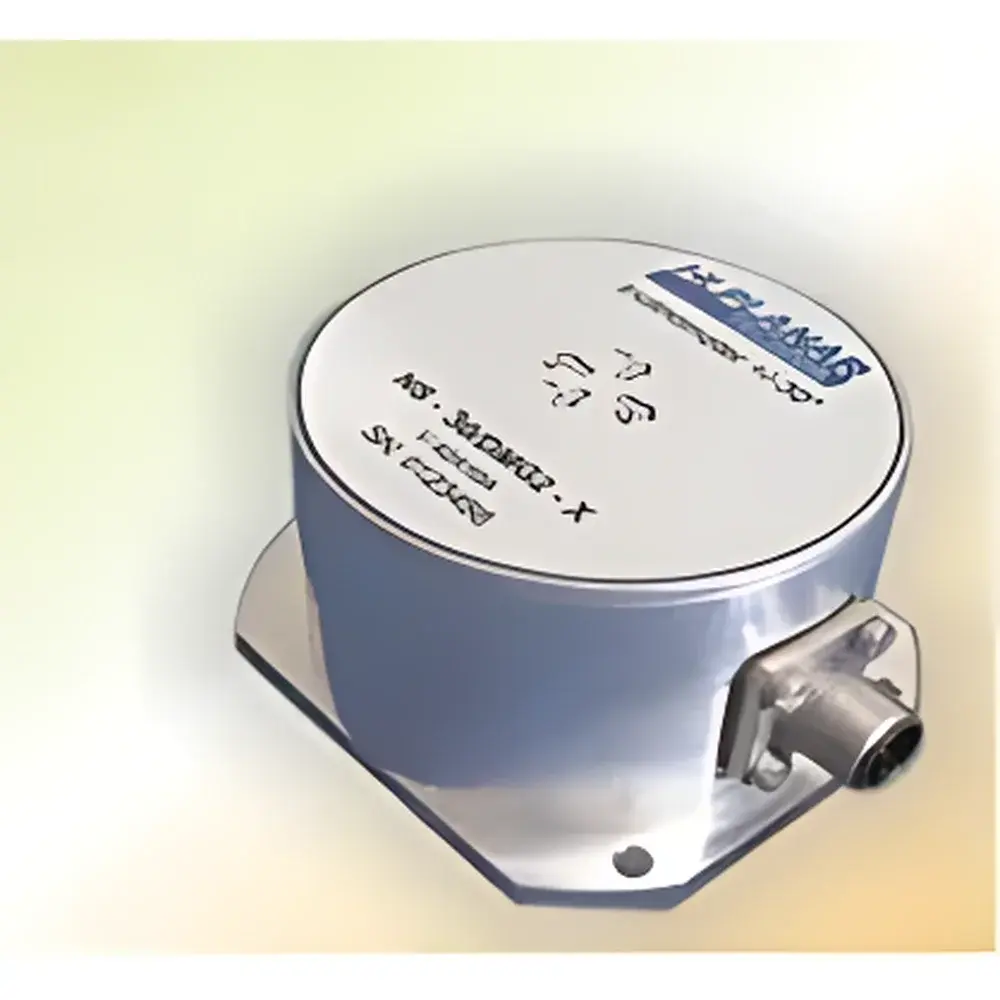
MEAS D-Series Dual-Axis Inclinometer
| Brand | MEAS |
|---|---|
| Origin | Beijing, China |
| Manufacturer Type | Authorized Distributor |
| Country of Origin | China |
| Model | D-Series |
| Pricing | Upon Request |
| IP Rating | IP67 |
| Output Options | Analog (0–5 V / 4–20 mA), Digital (RS232/RS485), Switch Output |
| Measurement Ranges | ±5°, ±15°, ±30° |
| Resolution | 0.001° |
| Accuracy (Digital/Analog, typical at 25°C) | ±0.04° |
| Accuracy (Digital/Analog, full temp range −40°C to +85°C) | ±0.15° (±0.3° for ±15° range, ±0.8° for ±30° range) |
| Temperature Drift | 0.06% FS/°C |
| Bandwidth | 23 Hz |
| Noise Density | 0.001° RMS |
| Supply Voltage | 10–30 VDC |
| Supply Current | 30–40 mA |
| Operating Temperature | −40°C to +85°C |
| Storage Temperature | −40°C to +85°C |
| Dimensions (W × D × H) | 84 × 70 × 46 mm |
| Weight | 290 g |
| EMC Compliance | EN 61000-6-2 / EN 61000-6-4 |
| Shock & Vibration | MIL-STD-810G compliant |
| Certifications | CE, RoHS |
Overview
The MEAS D-Series Dual-Axis Inclinometer is a high-stability, industrial-grade angular displacement sensor engineered for precise tilt measurement across two orthogonal axes (X and Y). Based on MEMS capacitive sensing technology, it employs a hermetically sealed silicon sensing element integrated with an on-board microprocessor featuring real-time linearization and temperature compensation algorithms. This architecture ensures consistent angular accuracy across wide thermal gradients and dynamic mechanical environments—critical for applications where structural alignment, platform leveling, or motion-state feedback must remain reliable under vibration, thermal cycling, or exposure to dust and moisture. Designed and calibrated in accordance with ISO 9001-certified processes, the D-Series complies with international standards for angular metrology traceability and long-term repeatability.
Key Features
- True dual-axis measurement with independent X/Y output channels, enabling simultaneous roll and pitch determination
- Robust aluminum housing rated IP67—fully protected against immersion up to 1 m for 30 minutes and ingress of dust
- Integrated digital signal conditioning: onboard microcontroller performs real-time temperature compensation, nonlinearity correction, and zero-point stabilization
- Flexible output configuration: selectable analog (0–5 V or 4–20 mA), digital (RS232 or RS485, Modbus RTU protocol supported), or discrete switch outputs
- Software-configurable parameters via PC-based utility—including zero offset, sensitivity scaling, communication baud rate (9.6 kbps standard), and output update rate (0.1–16 Hz)
- EMC-hardened design meeting EN 61000-6-2 (immunity) and EN 61000-6-4 (emission) requirements; qualified per MIL-STD-810G for shock (50 g, 11 ms) and random vibration (10–2000 Hz, 0.04 g²/Hz)
- CE-marked and RoHS-compliant; suitable for integration into safety-critical systems requiring documented conformity
Sample Compatibility & Compliance
The D-Series inclinometer is compatible with rigidly mounted metallic, composite, or concrete substrates where mechanical coupling integrity is maintained. It requires stable mounting using M4 threaded inserts or adhesive bonding with epoxy-compatible surfaces. No external calibration fixtures are needed—the device supports field zeroing via software command or hardware jumper. Regulatory compliance includes full adherence to EU Machinery Directive 2006/42/EC, Low Voltage Directive 2014/35/EU, and Electromagnetic Compatibility Directive 2014/30/EU. While not intrinsically safe, it may be deployed in Zone 2 hazardous locations when installed within appropriately rated enclosures per ATEX/IECEx guidelines. All units undergo 100% functional testing and receive individual calibration certificates traceable to NIST-equivalent national metrology institutes.
Software & Data Management
MEAS provides the D-Series Configuration Utility—a Windows-based application supporting firmware updates, parameter programming, live data streaming, and batch calibration logging. The utility exports time-stamped CSV files compatible with MATLAB, LabVIEW, and SCADA historian systems (e.g., Ignition, Siemens WinCC). For OEM integration, ASCII command sets and Modbus register maps are documented in the Technical Reference Manual. Audit trails—including configuration changes, calibration timestamps, and environmental operating logs—are retained internally and retrievable via serial query. The system supports GLP/GMP-aligned workflows: user access levels, electronic signatures, and change history logging are available when deployed with validated third-party data acquisition platforms compliant with FDA 21 CFR Part 11.
Applications
- Structural health monitoring in high-rise buildings and bridges—detecting settlement, torsion, or foundation drift over time
- Real-time leveling control for hydraulic excavators, pavers, and drilling rigs operating on uneven terrain
- Pitch/yaw angle feedback in wind turbine nacelles for yaw brake engagement and blade pitch optimization
- Dynamic load distribution analysis in mobile cranes and telescopic handlers during lifting cycles
- Static inclination verification in weighbridge foundations and rail weigh-in-motion (WIM) installations
- Platform stabilization subsystems in marine survey vessels, autonomous ground vehicles, and antenna positioning systems
FAQ
What is the recommended mounting orientation for optimal thermal stability?
Mount the sensor with its longest axis horizontal and label side facing upward to minimize convective thermal gradients across the MEMS die.
Can the D-Series be used in sub-zero environments without condensation-related drift?
Yes—the IP67-rated enclosure and internal conformal coating prevent moisture ingress; validated performance extends continuously from −40°C to +85°C with no warm-up requirement.
Is factory recalibration required after mechanical shock events?
No—onboard self-diagnostics monitor sensor health continuously; if drift exceeds ±0.2°, the unit triggers a diagnostic flag but retains operational integrity until scheduled maintenance.
Does the RS485 interface support multidrop configurations?
Yes—up to 32 nodes on a single bus, with configurable Modbus slave IDs and termination resistor support per ANSI/TIA/EIA-485-A.
How is zero-point stability verified during long-term deployment?
The embedded microcontroller logs baseline offsets every 24 hours; deviation trends are exportable for predictive maintenance analysis per ISO 13374-1.