
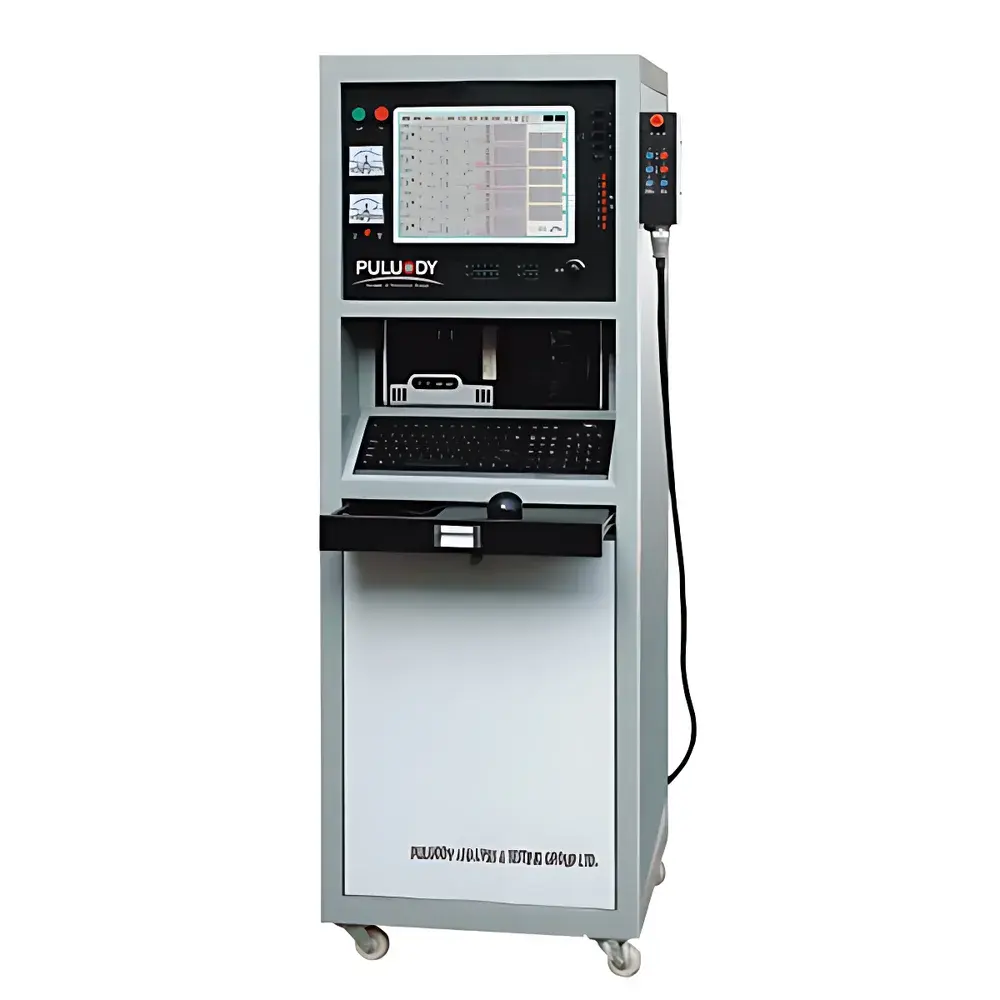
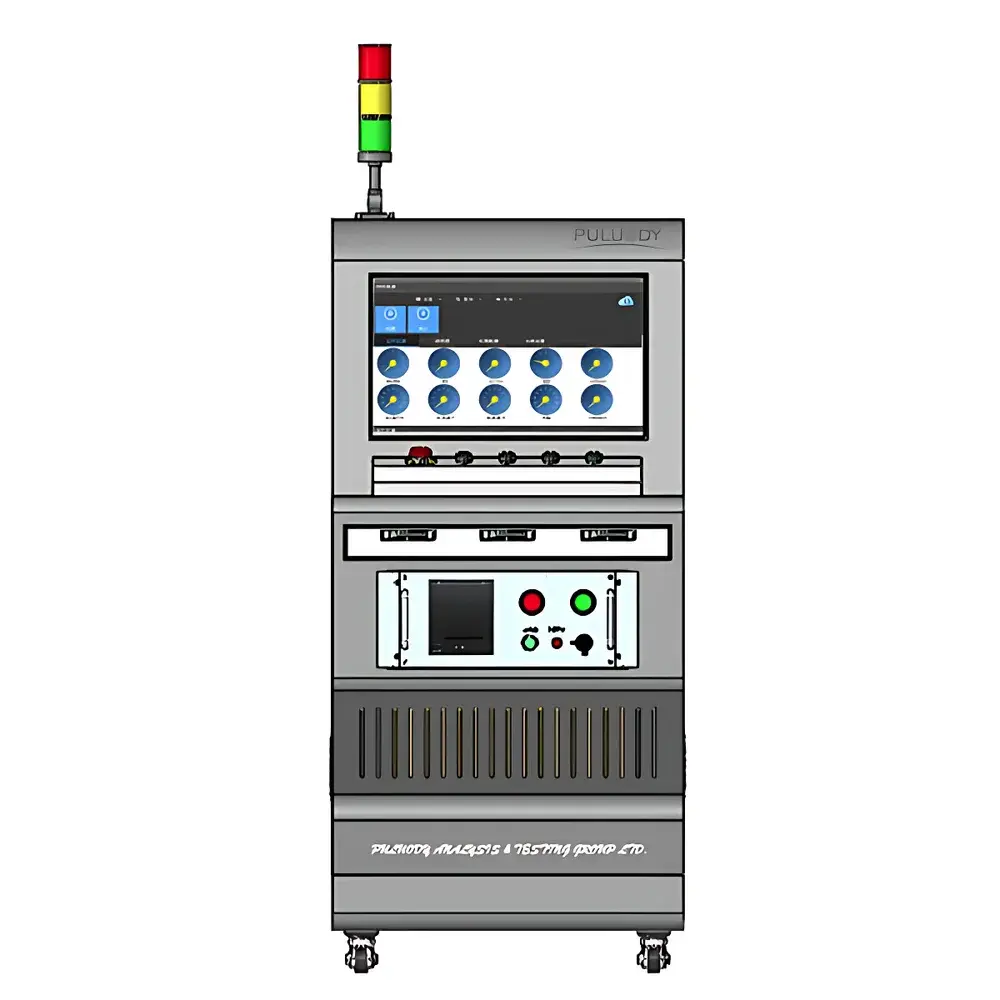
PULUODY OMS-IIA-16 Mobile Oil Particle Contamination Analyzer
| Brand | PULUODY |
|---|---|
| Origin | Shaanxi, China |
| Model | OMS-IIA-16 |
| Instrument Type | Optical Light-Blockage Particle Counter |
| Detection Principle | Light Obscuration (LO) |
| Measurement Range | 0.03–3000 µm (configurable) |
| Sensitivity | 1 µm (per ISO 4402) / 4 µm(c) (per ISO 11171 & GB/T 18854) |
| Channel Count | Up to 1000 user-definable size channels |
| Accuracy | <3% |
| Coincidence Limit | ≤5% at 10,000 particles/mL |
| Resolution | ≥90% @ 60 mL/min |
| Sample Viscosity | Offline: 0–99 mm²/s |
| Online | 0–500 mm²/s |
| Flow Rate | Sampling: 5–60 mL/min |
| Cleaning | 5–150 mL/min |
| Operating Pressure (Online) | 0–0.6 MPa (standard), up to 31.5 MPa (with pressure regulator) |
| Temperature Range | Sample: RT–65°C |
| Ambient | 0–50°C |
| Compliance Standards | ISO 4406, NAS 1638, SAE AS4059F, GJB 420B, DL/T 432, GB/T 18854, ISO 11171, USP <788>, EP 8.0, JP 16, ChP 2015, ISO 16889, GB/T 30176 |
| Data Output | RS232, RS485, MODBUS, 4–20 mA, 0–5 V analog |
| Software | P6.4 Integrated Analysis Platform (PC & embedded versions) |
| Calibration Traceability | NIM-accredited reference materials (GBW), MTD/ISO 11171, ACFTD/ISO 4402, PSL latex spheres per ASTM F658-87 |
Overview
The PULUODY OMS-IIA-16 Mobile Oil Particle Contamination Analyzer is a field-deployable, dual-laser narrow-beam light obscuration (LO) instrument engineered for quantitative, real-time particulate contamination assessment in hydraulic fluids, lubricants, aviation oils, insulating oils, and other industrial liquids. Based on the seventh-generation dual-laser optical sensing architecture, it delivers high reproducibility across viscosity ranges (0–500 mm²/s online; 0–99 mm²/s offline) and operates under extreme environmental conditions — including elevated temperatures (up to 65°C sample inlet), high system pressures (up to 31.5 MPa with integrated pressure regulation), and electrically noisy industrial settings. Its core measurement principle adheres strictly to ISO 11171:2010 and GB/T 18854–2002, ensuring metrological traceability to national primary standards (e.g., National Northwest Metrology Testing Center, China). Designed for both continuous online monitoring and portable offline analysis, the OMS-IIA-16 bridges the gap between laboratory-grade accuracy and ruggedized field operation — eliminating the need for sample transport, dilution, or pre-filtration.
Key Features
- Seventh-generation dual-laser narrow-beam optical sensor with enhanced signal-to-noise ratio, enabling stable detection of particles from 0.03 µm to 3000 µm (model-dependent configuration)
- 1000 programmable particle size channels — supports user-defined binning (e.g., 8, 16, 32, 64, or 128 bins) aligned with NAS 1638, ISO 4406, GJB 420B, or custom grading schemes
- Integrated industrial-grade embedded controller with color LCD touchscreen interface and onboard thermal printer — no external PC required for basic operation or reporting
- Multi-interface data output: RS232, RS485, MODBUS RTU, 4–20 mA, and 0–5 V analog signals — fully compatible with DCS, SCADA, and PLC-based plant automation systems
- Automatic self-cleaning cycle post-analysis using adjustable flow rates (5–150 mL/min), minimizing carryover and operator intervention
- Real-time alarm logic with configurable thresholds — triggers visual, audible, and relay outputs upon exceedance of ISO or NAS contamination class limits
- Full compliance with international calibration protocols: MTD/ISO 11171, ACFTD/ISO 4402, and PSL latex sphere standards per ASTM F658-87
Sample Compatibility & Compliance
The OMS-IIA-16 accommodates a broad spectrum of liquid media without chemical compatibility limitations, including hydrocarbon-based oils (e.g., turbine oil, gear oil, engine oil), phosphate ester hydraulic fluids, synthetic lubricants, transformer oil, aviation fuels (Jet A-1, JP-8), and aggressive solvents. It is validated for use with high-acidity or high-alkalinity solutions and has demonstrated operational stability in corrosive environments typical of aerospace maintenance bays and naval propulsion systems. Regulatory alignment includes full support for pharmacopeial water testing (USP , EP 8.0, JP 16, ChP 2015), hydraulic fluid cleanliness grading (ISO 4406:2021, NAS 1638 Rev. 2022), and filtration efficiency evaluation per ISO 16889:2008 and GB/T 30176–2013. All firmware and software modules are designed to meet GLP documentation requirements, including electronic audit trails, user access control, and version-locked method files — facilitating FDA 21 CFR Part 11 readiness when deployed with optional PC-based P6.4 software.
Software & Data Management
The embedded P6.4 Analytical Platform provides unified control over calibration, validation, measurement, and reporting workflows. The PC version extends functionality with advanced statistical tools: particle size distribution curve fitting, trend analysis over time-series datasets, cross-channel correlation mapping, and automated report generation compliant with ISO 21501-4 and ASTM E2457. Data integrity safeguards include timestamped test logs, operator ID tagging, digital signature fields, and encrypted U-disk export with SHA-256 checksum verification. Calibration records — including reference material lot numbers, certificate IDs, and drift compensation values — are stored in non-volatile memory and exportable as CSV or PDF. Optional cloud synchronization enables centralized fleet-level monitoring for multi-site maintenance programs in power generation, defense logistics, and marine engineering sectors.
Applications
This analyzer serves critical roles across lifecycle maintenance domains: real-time wear debris monitoring in gas turbine lube systems; ISO cleanliness verification of hydraulic fluid prior to commissioning of wind turbine pitch control actuators; NAS-class grading of aviation hydraulic fluid during aircraft turnaround; filter performance validation per ISO 16889 in offshore oil platform filtration skids; particulate load trending in nuclear power plant coolant loops; and pharmaceutical-grade water particulate certification per USP . It is routinely deployed in mobile maintenance units for armored vehicle fleets, naval vessel dry-dock inspections, and aerospace ground support equipment qualification. Its portability and low power draw (<80 W) make it suitable for battery-powered operation in remote field locations where grid infrastructure is unavailable.
FAQ
What calibration standards does the OMS-IIA-16 support?
It accepts MTD/ISO 11171, ACFTD/ISO 4402, and PSL latex sphere suspensions per ASTM F658-87. Certified reference materials (GBW series) are supplied for annual recalibration.
Can the instrument measure particles below 1 µm?
Yes — with optional sub-micron optical configuration, detection down to 0.03 µm is achievable under controlled laminar flow and low-noise ambient conditions.
Is the device suitable for high-viscosity gear oils?
Offline measurements support viscosities up to 99 mm²/s; online mode with integrated heater and pressure regulation extends capability to 500 mm²/s.
Does the system comply with FDA 21 CFR Part 11 requirements?
When operated with the P6.4 PC software package and configured with role-based authentication, electronic signatures, and immutable audit logs, it meets predicate rules for regulated environments.
How is data security ensured during remote transmission?
All network-capable configurations use TLS 1.2 encryption for data-in-transit; local storage employs AES-256 encryption for data-at-rest on removable media.



