
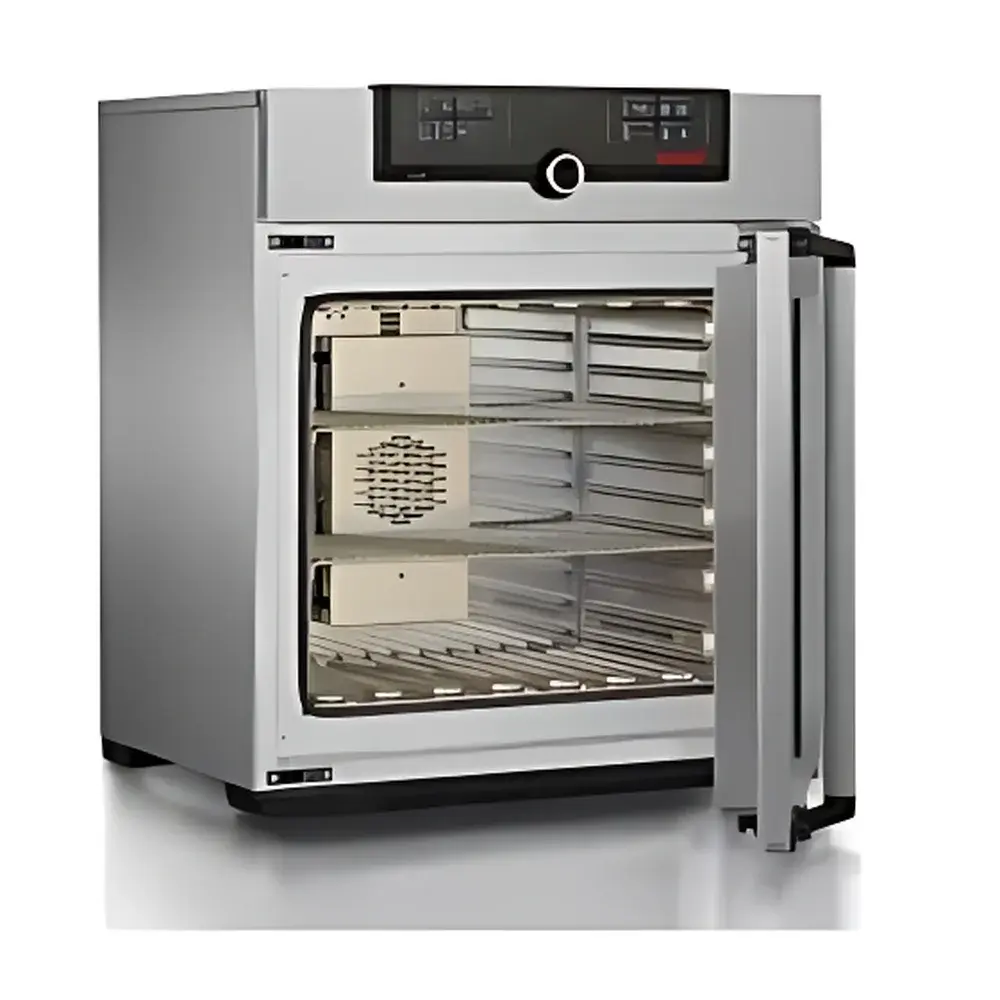
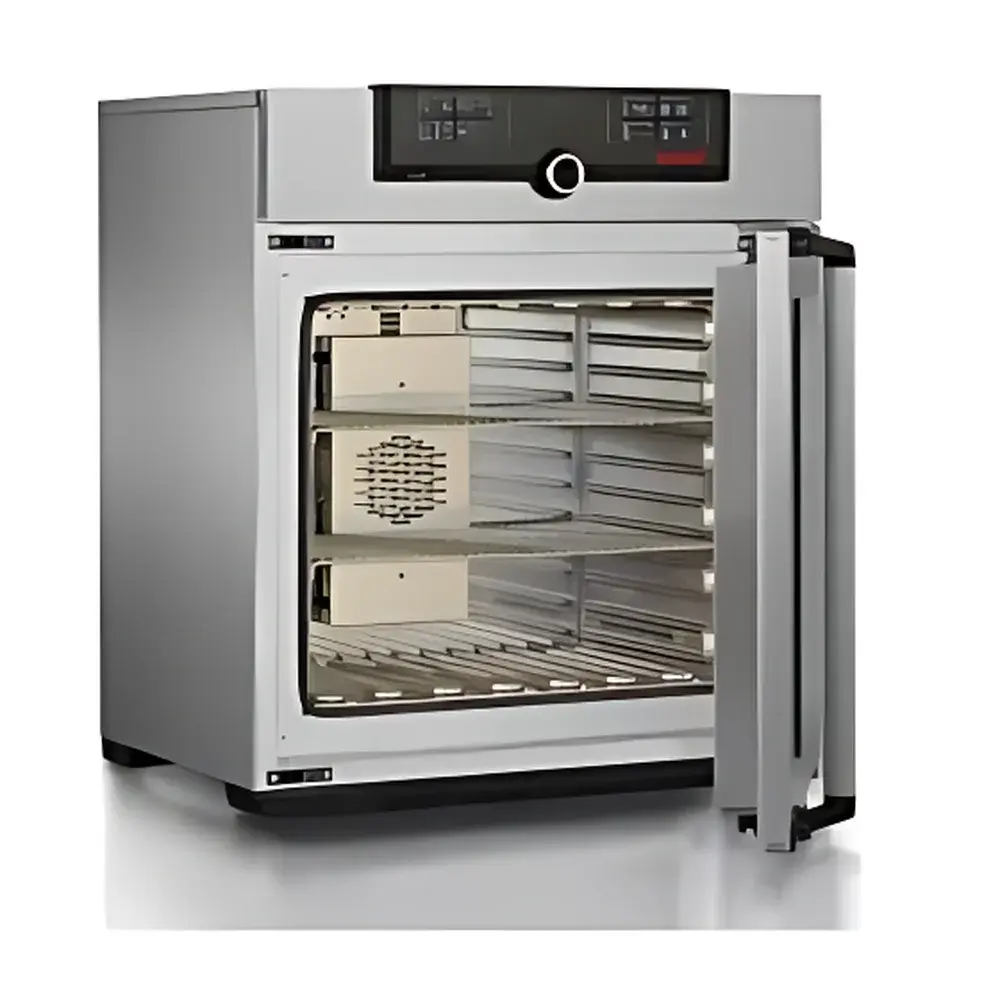
MEMMERT SN/SF Series Benchtop Sterilization Ovens
| Brand | MEMMERT |
|---|---|
| Origin | Germany |
| Model Series | SN, SNplus, SF, SFplus |
| Type | Benchtop Sterilization Oven |
| Max Temperature | 250 °C |
| Operating Pressure | Ambient (non-pressurized) |
| Chamber Volume | 32–749 L |
| External Dimensions (W×H×D) | 66–133 × 89–144 × 65–105 cm |
| Internal Chamber Volume | 30–750 L |
Overview
The MEMMERT SN and SF series benchtop sterilization ovens are precision-engineered thermal instruments designed for dry-heat sterilization, depyrogenation, and validated thermal treatment of heat-stable laboratory and medical devices. Unlike steam-based autoclaves, these ovens operate at ambient pressure and rely on convection-heated air—either natural (SN/UN series) or forced (SF/UF series)—to achieve uniform, reproducible temperature distribution across the chamber. Dry-heat sterilization is a critical process for materials incompatible with moisture (e.g., powders, oils, sharp instruments, glassware, and certain polymers), where microbial inactivation depends on sustained exposure to elevated temperatures (typically ≥160 °C for ≥2 hours or ≥180 °C for ≥30 minutes per ISO 17665-1 and USP ). The SN/SF platforms integrate MEMMERT’s patented SetpointWAIT function—a thermally validated timing protocol that initiates the sterilization dwell period only after all user-defined measurement points have reached and stabilized at the set temperature—ensuring compliance with ISO 13485, EN 554, and FDA 21 CFR Part 820 requirements for medical device reprocessing.
Key Features
- SetpointWAIT function: Prevents premature timer activation; dwell time begins only when all configured Pt100 sensor inputs (standard or optional external probes) confirm thermal equilibrium at the target temperature.
- Dual-display interface (TwinDisplay on plus models): Simultaneous real-time visualization of up to three independent temperature readings—chamber air, load surface, and reference probe—directly on the ControlCOCKPIT touchscreen.
- AtmoControl software integration: Enables automated validation protocols, event logging, and configurable alarm thresholds for GxP environments.
- Electromagnetic door lock (optional): Interlocked with ID card authentication and process state monitoring to prevent unauthorized access during active cycles.
- Stainless steel interior (AISI 304): Seamless, electropolished chamber with rounded corners for cleanability and resistance to thermal stress cycling.
- Modular shelving system: Adjustable stainless steel grids with load capacities up to 30 kg per shelf and total chamber loads ranging from 60 to 300 kg depending on model.
- Comprehensive electrical configuration support: Compatible with 230 V/50–60 Hz (1.6–3.4 kW), 115 V/50–60 Hz (1.6–2.4 kW), and three-phase 400 V/230 V systems (up to 7 kW).
Sample Compatibility & Compliance
These ovens accommodate a broad range of sterilizable items—including surgical instruments, glass vials, syringes, ceramic components, and stainless-steel fixtures—without risk of hydrolysis or corrosion. All SN/SF models are CE-marked and comply with IEC 61010-1 (safety) and IEC 61326-1 (EMC). They meet the essential requirements of the EU Medical Device Regulation (MDR 2017/745) for Class Ir devices used in sterilization validation. Optional Pt100 probe positioning enables direct load-temperature monitoring per EN 285 Annex C and ISO 17665-2, supporting IQ/OQ/PQ documentation. The integrated 4–20 mA analog output facilitates connection to centralized building management or LIMS systems for audit-ready data capture.
Software & Data Management
AtmoControl software provides full cycle programming, remote monitoring via Ethernet or USB, and export of timestamped temperature logs in CSV or PDF format. Each sterilization run generates an encrypted digital record containing start/end times, temperature profiles, SetpointWAIT confirmation status, door lock events, and operator ID (when paired with RFID authentication). Data integrity complies with FDA 21 CFR Part 11 requirements through electronic signatures, audit trails, and role-based access control. Validation reports can be generated in accordance with ISO 13485 Annex A and EU Annex 15 guidelines for sterile process qualification.
Applications
- Depyrogenation of glassware and stainless-steel components in pharmaceutical manufacturing (e.g., vial trays, filling needles, stopper bowls).
- Terminal sterilization of reusable surgical tools in hospital central sterile supply departments (CSSD).
- Thermal validation of packaging materials and filtration assemblies prior to aseptic processing.
- Residue-free drying and post-cleaning thermal conditioning of analytical sample holders and calibration standards.
- Accelerated stability testing of heat-resistant excipients and APIs under controlled thermal stress conditions.
FAQ
What is the difference between SN and SF models?
SN models use natural convection airflow, while SF models feature a fan-assisted forced convection system—delivering faster heat-up times, tighter temperature uniformity (±1.5 K at 180 °C), and improved load penetration for dense or stacked configurations.
Can the oven be validated for GMP environments?
Yes. With optional calibrated Pt100 sensors, electromagnetic door lock, ID card reader, and AtmoControl software, the system supports full IQ/OQ/PQ execution and meets ALCOA+ data integrity principles required by regulatory auditors.
Is dry-heat sterilization suitable for plastic labware?
Only for heat-stable polymers rated for continuous exposure above 200 °C (e.g., certain PEEK or polyimide grades). Most common plastics (PP, PS, PET) will deform or degrade and are not recommended.
How does SetpointWAIT improve process reliability?
It eliminates variability caused by thermal lag between chamber air and load mass, ensuring dwell time is measured only after thermal equilibrium is confirmed at critical locations—thereby guaranteeing microbiological lethality regardless of load configuration or density.
Are calibration certificates traceable to national standards?
Yes. MEMMERT provides optional DKD-accredited calibration certificates (DIN EN ISO/IEC 17025) for both chamber and probe sensors, with uncertainty budgets documented per EURAMET cg-18.



