
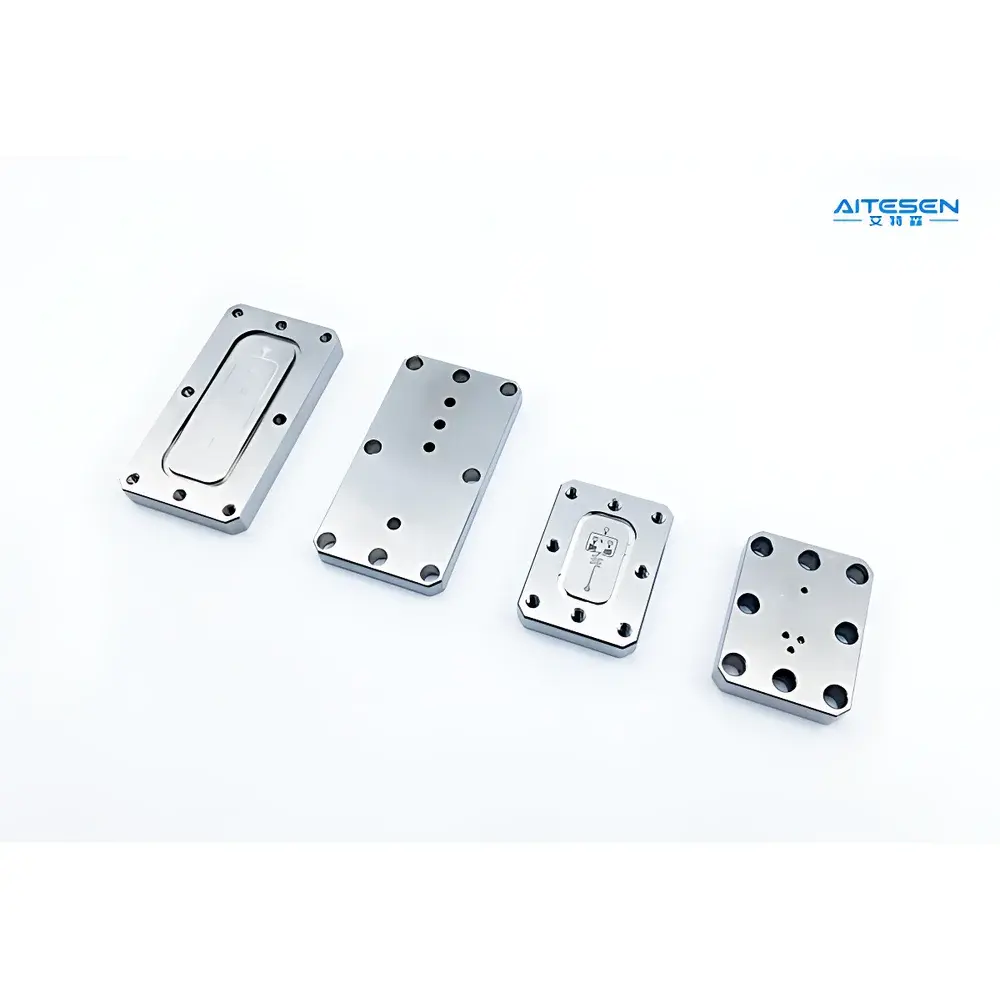
MES-Lab Microfluidic Liposome Emulsification System by Aitesen
| Brand | Aitesen |
|---|---|
| Origin | Jiangsu, China |
| Manufacturer Type | Authorized Distributor |
| Product Origin | Domestic (China) |
| Model | MES-Lab |
| Chip Type | High-Pressure Microfluidic Chip |
| Chip Material | Stainless Steel |
| Flow Channel Dimensions | 20 µm – 1 mm |
| Sample Throughput | 0.1–200 mL |
| Target Analyte | Liposomes |
| Emulsion Output Size Range | Down to <100 nm |
| Polydispersity Index (PDI) | <0.1 |
Overview
The MES-Lab Microfluidic Liposome Emulsification System is an engineered platform designed for the precise, reproducible, and scalable preparation of lipid-based nanocarriers—including liposomes, multivesicular liposomes, lipid nanoparticles (LNPs), and cationic or nucleic acid–loaded formulations. Built upon microfluidic hydrodynamic focusing and high-shear impingement principles, the system enables controlled formation of monodisperse colloidal dispersions via laminar co-flow, turbulent mixing, or jet impingement within a stainless-steel microchannel architecture. Unlike conventional bulk emulsification methods (e.g., sonication or extrusion), the MES-Lab achieves deterministic control over droplet/nanoparticle size by decoupling mixing kinetics from shear history—allowing independent optimization of composition ratio, flow rate, pressure, and chip geometry. This makes it particularly suitable for GMP-aligned process development in mRNA vaccine formulation, siRNA delivery, and parenteral lipid emulsion manufacturing.
Key Features
- Stainless-steel high-pressure microfluidic chip with chemically inert, non-leaching surfaces—compatible with organic solvents (e.g., ethanol, chloroform), aqueous buffers, and lipid solutions.
- Integrated dual-syringe pump module enabling precise, programmable volumetric delivery of phase A (aqueous nucleic acid or drug solution) and phase B (lipid-in-organic solvent mixture) at flow rates spanning 0.1–200 mL/h.
- High-pressure impingement stage (up to 20,000 psi nominal operating pressure) for post-mixing size refinement—reducing particle diameter to sub-100 nm with PDI <0.1 under optimized conditions.
- Modular chip interface supporting rapid exchange of channel geometries (20 µm–1 mm hydraulic diameter) to accommodate varying viscosity ratios, interfacial tension requirements, and target encapsulation efficiency.
- Real-time pressure monitoring at inlet and chip outlet with digital feedback loop integration for closed-loop flow stabilization.
- CE-compliant electrical architecture; all wetted components meet USP Class VI biocompatibility standards.
Sample Compatibility & Compliance
The MES-Lab accommodates a broad range of formulation chemistries relevant to advanced therapeutics: DSPC/cholesterol/PEG-lipid mixtures, ionizable cationic lipids (e.g., DLin-MC3-DMA analogues), phosphatidylcholine variants, and polymer-stabilized lipid hybrids. It supports both ethanol-injection and thin-film hydration–based workflows. The stainless-steel chip eliminates adsorption-related losses common in PDMS or glass systems and withstands repeated autoclaving (121°C, 20 min). Device operation complies with ISO 13485 design controls for medical device accessories and aligns with FDA Q5A(R2) guidance on characterization of liposomal products. Process parameters (flow rates, pressure, temperature) are logged with timestamped audit trails meeting 21 CFR Part 11 data integrity requirements when used with validated third-party SCADA software.
Software & Data Management
The system operates via a Windows-based control interface with configurable method templates, real-time graphical display of pressure vs. time and flow rate profiles, and CSV export of raw acquisition logs. All critical process parameters—including total delivered volume, average backpressure, and pump synchronization error—are recorded at 10 Hz resolution. Optional integration with LabArchives ELN or Thermo Fisher SampleManager enables direct metadata tagging (e.g., batch ID, formulation ID, operator ID) and traceability across preclinical formulation campaigns. Audit trail functionality includes user login/logout events, parameter change history, and electronic signature capture for SOP-driven environments.
Applications
- mRNA and siRNA encapsulation into LNPs for preclinical efficacy and toxicity studies.
- Preparation of sterically stabilized liposomes for sustained-release small-molecule delivery (e.g., doxorubicin, paclitaxel).
- Development of multi-compartment vesicles (e.g., multivesicular liposomes) for sequential payload release.
- Formulation of fat emulsions (e.g., Intralipid® analogues) with narrow particle distribution for parenteral nutrition.
- Screening of lipid molar ratios and PEG-lipid conjugates during early-phase LNP optimization.
- Reproducible generation of reference standards for DLS, NTA, and TEM calibration.
FAQ
What types of lipids and solvents are compatible with the stainless-steel chip?
Ethanol, isopropanol, chloroform, methanol, and ethyl acetate are routinely used; aqueous phases may contain HEPES, citrate, or Tris buffers at pH 4–9. Avoid halogenated acids or >10% TFA.
Can the MES-Lab be integrated into a cleanroom environment?
Yes—the system meets ISO 14644-1 Class 7 particulate limits when operated with HEPA-filtered compressed air and housed in appropriate enclosures.
Is chip cleaning and reuse supported?
Stainless-steel chips are fully cleanable using sequential flushes of ethanol, 0.1 M NaOH, and deionized water; validation of carryover requires residual protein/lipid assay per ICH Q5C.
Does the system support continuous-mode operation?
It is configured for semi-continuous batch processing (0.1–200 mL/run); true continuous flow requires external recirculation loop integration and is not natively supported.
What regulatory documentation is provided with the instrument?
Declaration of Conformity (CE), Factory Acceptance Test (FAT) report, material certifications for 316L SS, and IQ/OQ protocol templates compliant with ASTM E2500-13.




