
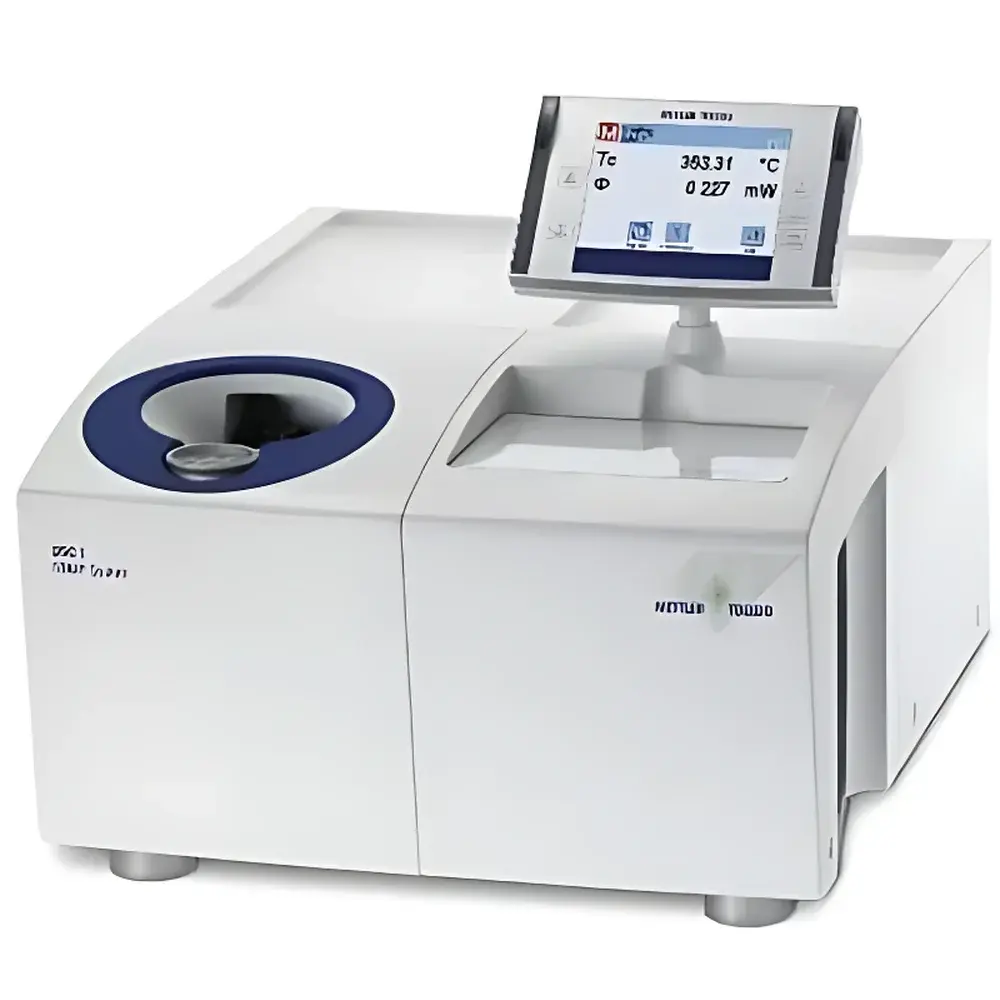
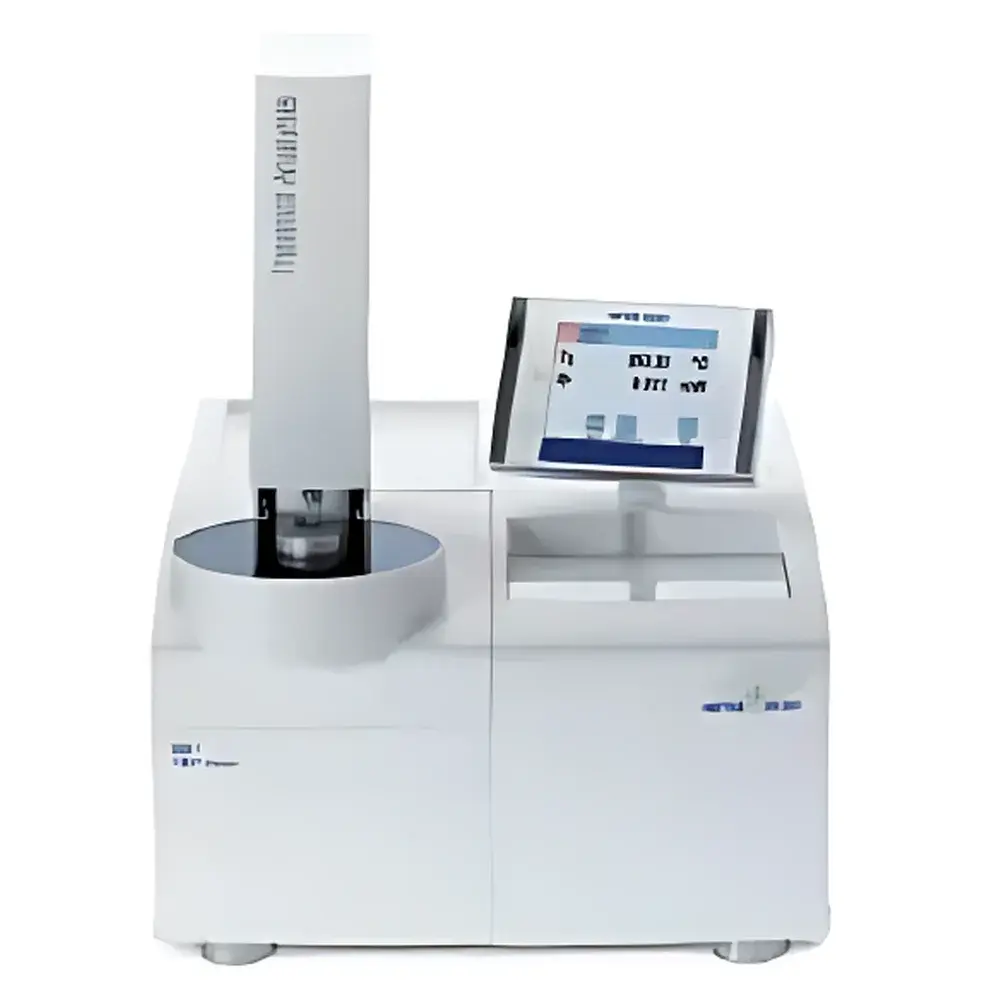
METTLER TOLEDO DSC1 Advanced Differential Scanning Calorimeter
| Brand | METTLER TOLEDO |
|---|---|
| Origin | Switzerland |
| Model | DSC1 |
| Temperature Range | −150 to 700 °C (configurable low-end: −150, −100, −90, −70 or −35 °C) |
| Temperature Accuracy | ±0.1 °C |
| Heating/Cooling Rate | 0.02–300 K/min (heating), 0.02–50 K/min (cooling) |
| Heat Flow Sensitivity | 0.04 µW (FRS5 sensor), 0.01 µW (HSS8 sensor) |
Overview
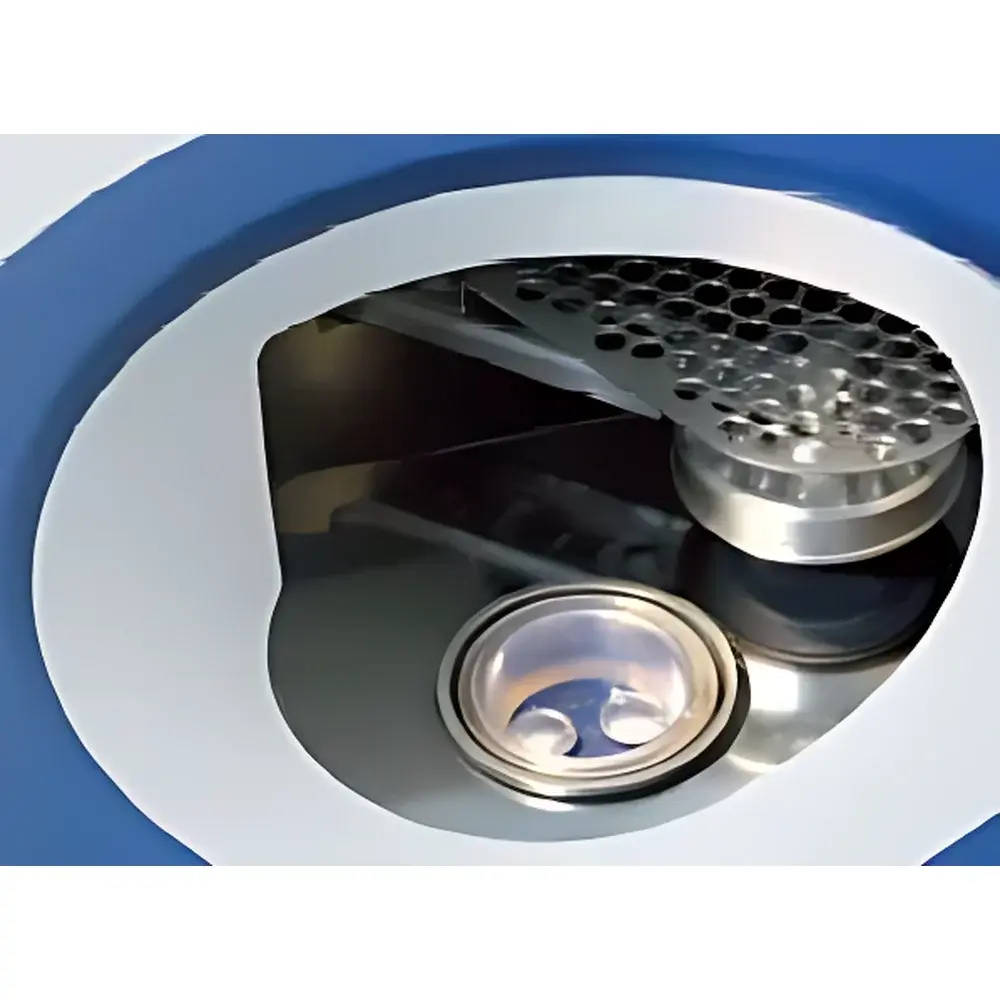
The METTLER TOLEDO DSC1 Advanced Differential Scanning Calorimeter is a high-performance thermal analysis instrument engineered for precision measurement of heat flow differences between a sample and inert reference as a function of temperature or time. Based on the principle of heat-flux DSC, the DSC1 employs patented MultiSTAR® sensor technology—available in two configurations: the FRS5 (56 thermocouple pairs) and HSS8 (120 thermocouple pairs)—arranged in a radial star geometry on a ceramic substrate. This architecture delivers exceptional signal-to-noise ratio, ultra-low time constant (<0.1 s), and baseline flatness critical for quantitative heat capacity determination and detection of weak thermal transitions. Designed and manufactured in Switzerland, the DSC1 meets stringent international metrological requirements for thermal analysis and serves as a core platform within METTLER TOLEDO’s Excellence Thermal Analysis portfolio.
Key Features
- MultiSTAR® DSC Sensor Technology: Dual-sensor options—FRS5 for routine high-accuracy applications and HSS8 for ultra-sensitive microcalorimetric measurements down to 0.01 µW.
- Wide, Configurable Temperature Range: Standard operation from −150 °C to 700 °C; selectable low-temperature endpoints (−150, −100, −90, −70, or −35 °C) accommodate diverse material classes without hardware modification.
- Precision Thermal Control: Programmable heating/cooling rates from 0.02 K/min to 300 K/min (heating) and up to 50 K/min (cooling), enabling both slow equilibrium scans and rapid kinetic profiling.
- Modular Architecture: Supports seamless integration of optional modules including TOPEM® (Temperature-Modulated DSC), UV-DSC coupling, and DSC-microscopy systems—unique in commercial thermal analysis instrumentation.
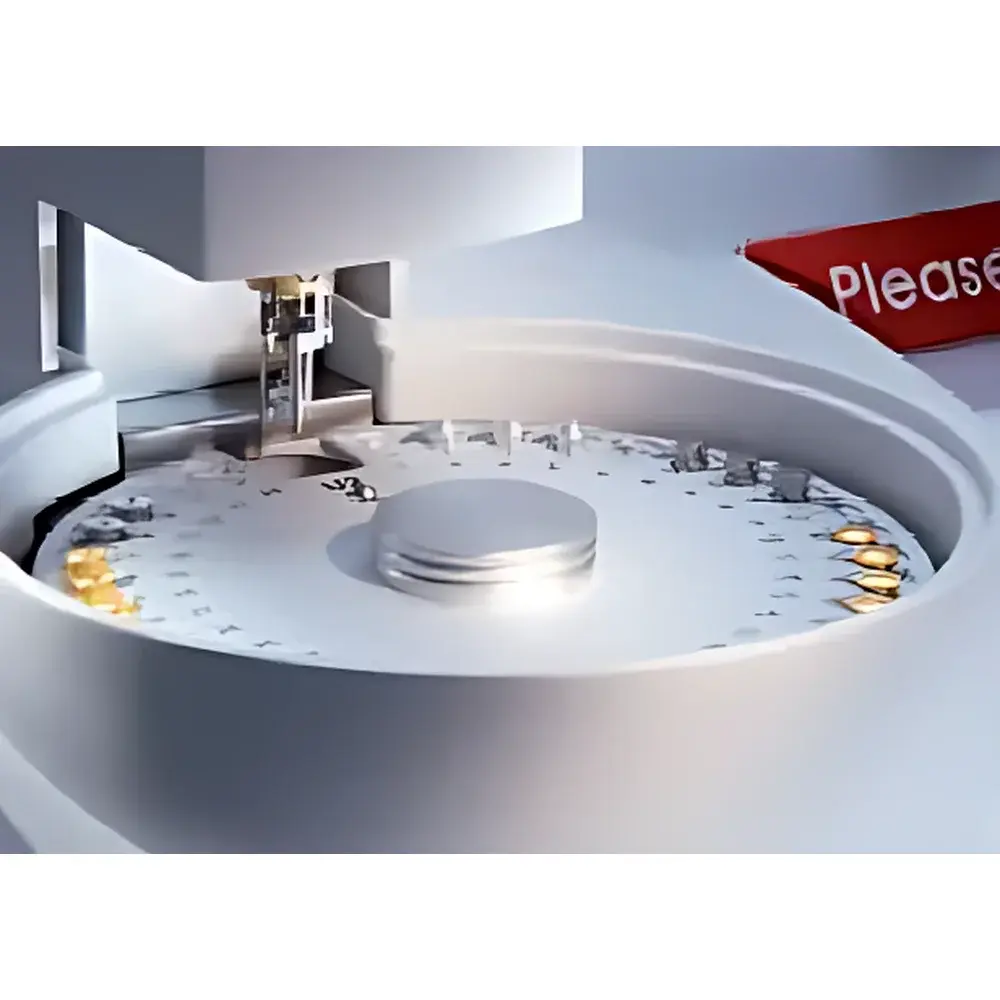
- Ergonomic & Automated Operation: Compatible with the 34-position robotic autosampler (optional), supporting unattended multi-day testing under GLP/GMP-compliant workflows.
- Chemical Resistance & Serviceability: Gold/gold-palladium thermocouples coated with thin-film alumina ensure long-term stability in corrosive environments; individual sensor replacement minimizes lifecycle maintenance cost.
Sample Compatibility & Compliance
The DSC1 accommodates solid, semi-crystalline, amorphous, and viscous samples—including polymers (thermoplastics, thermosets, elastomers, adhesives, composites), pharmaceuticals (APIs, excipients, lyophilized formulations), food matrices, and specialty chemicals. Its robust sensor design complies with ISO 11357 series standards for DSC methodology and supports method validation per ICH Q5E, USP , and ASTM E794/E1269. Data integrity is reinforced through audit-trail-enabled software compliant with FDA 21 CFR Part 11 requirements when deployed in regulated QC/QA environments.
Software & Data Management
Controlled via STARe (Scientific Thermal Analysis Research) software, the DSC1 provides full experimental setup, real-time monitoring, automated peak deconvolution, and advanced modeling tools (e.g., kinetic analysis using Ozawa-Flynn-Wall or Kissinger methods). STARe supports secure user roles, electronic signatures, raw data encryption, and export to ASTM E1358-compliant ASCII or universal .qtx formats. All measurement metadata—including calibration history, sensor ID, atmospheric conditions, and purge gas flow—are embedded in each dataset to ensure traceability and reproducibility across laboratories.
Applications
- Polymers: Crystallinity quantification, melting point (Tm) and glass transition (Tg) analysis, oxidative induction time (OIT), curing kinetics, and phase separation behavior.
- Pharmaceuticals: Polymorph screening, amorphous content assessment, excipient compatibility studies, and stability-indicating assay development.
- Food Science: Fat crystallization/melting profiles, starch gelatinization enthalpy, and shelf-life prediction via thermal degradation onset.
- Materials R&D: Reaction enthalpy determination, latent heat measurement in PCMs, and thermal stability evaluation of nanocomposites and battery electrolytes.
- Quality Assurance: Batch-to-batch consistency verification, specification compliance testing, and root-cause analysis of manufacturing deviations.
FAQ
What distinguishes the FRS5 and HSS8 sensors?
The FRS5 sensor offers optimal balance of sensitivity (0.04 µW), baseline stability, and cost-efficiency for standard QA and R&D applications. The HSS8 sensor delivers highest-in-class sensitivity (0.01 µW), enabling resolution of sub-microjoule thermal events—ideal for low-mass samples, weak transitions, or early-stage decomposition kinetics.
Can the DSC1 perform TOPEM® measurements?
Yes—the DSC1 supports TOPEM® (Temperature-Modulated DSC) natively via firmware and STARe software, allowing simultaneous separation of reversing and non-reversing heat flow components without hardware add-ons.
Is the DSC1 compliant with regulatory data integrity requirements?
When configured with STARe software in validated mode, the system meets FDA 21 CFR Part 11, EU Annex 11, and ISO/IEC 17025 documentation and audit-trail requirements for regulated laboratories.
What sample mass range is recommended for optimal performance?
Typical sample masses range from 0.5 mg to 20 mg, depending on thermal inertia and transition magnitude; the HSS8 sensor enables reliable analysis down to 0.1 mg for highly sensitive applications.
How is temperature calibration verified?
Calibration uses certified reference materials (e.g., high-purity indium, tin, zinc) traceable to NIST or PTB standards; STARe includes automated calibration routines with uncertainty propagation and drift compensation algorithms.



