
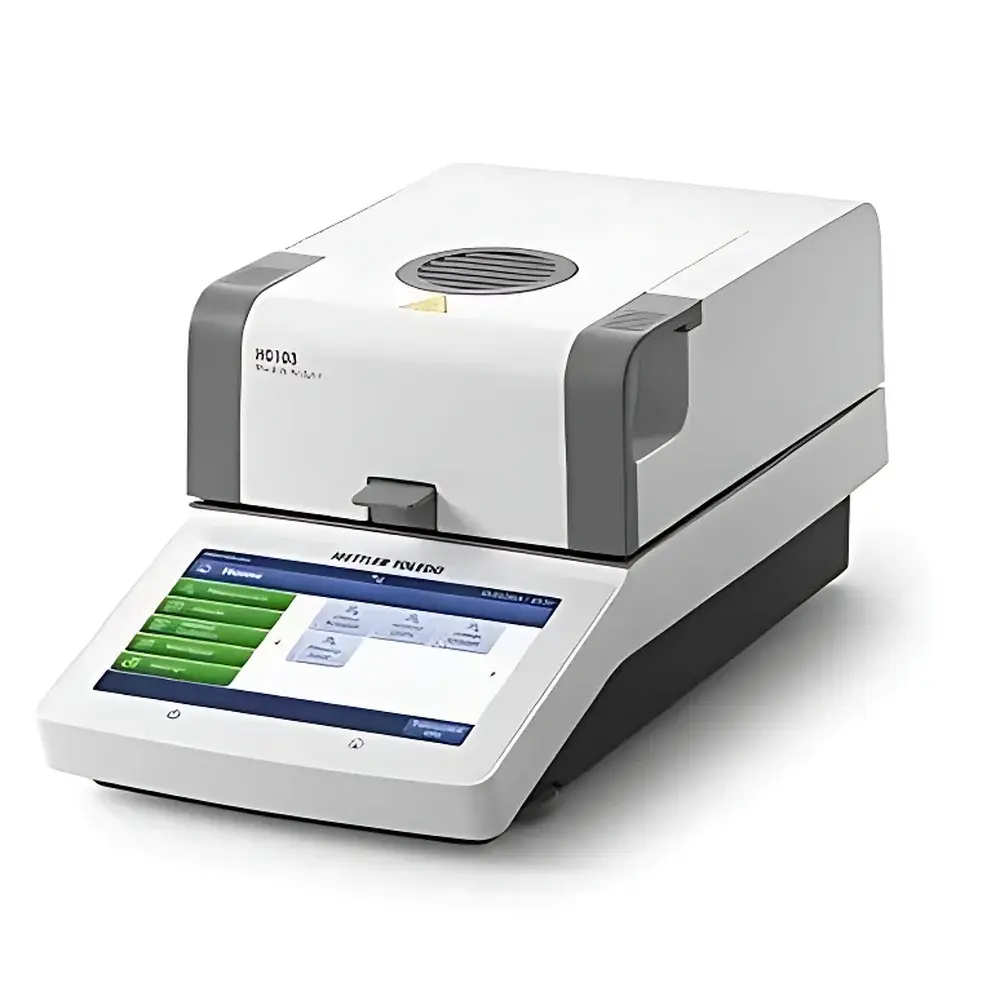
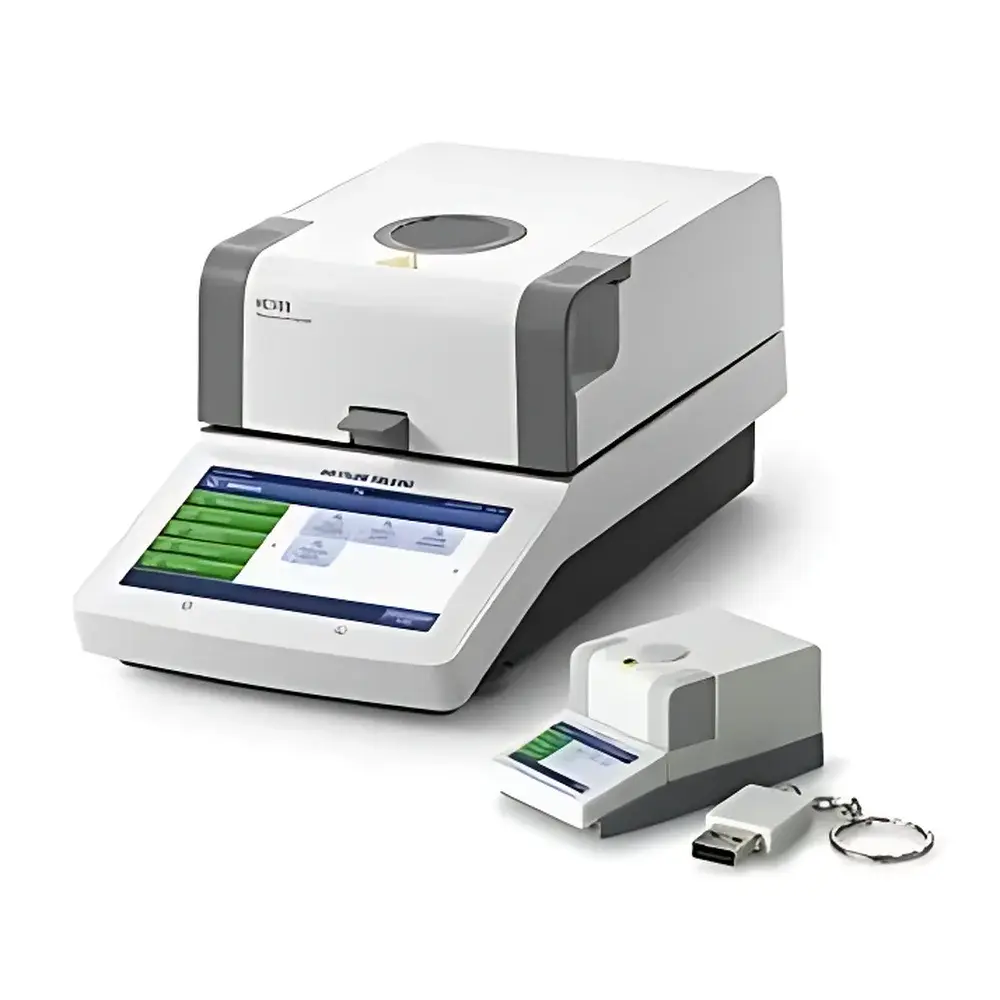
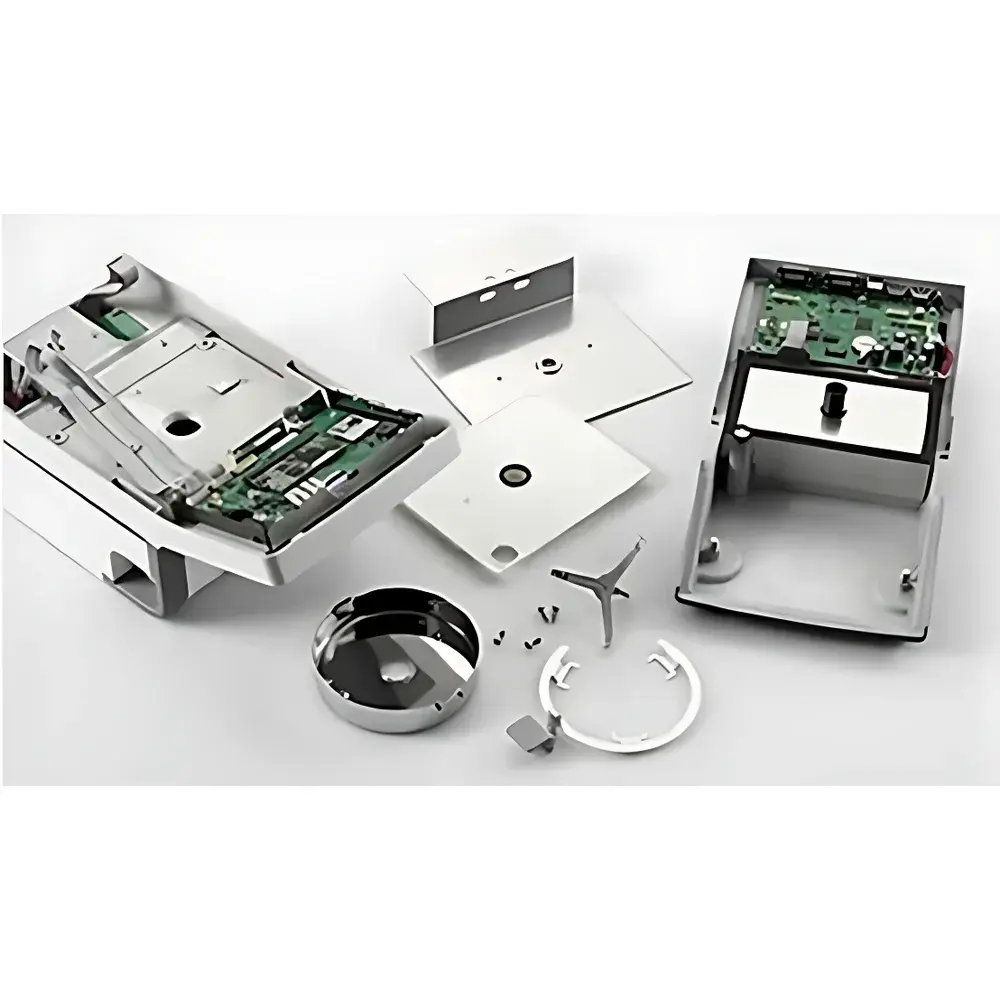
METTLER TOLEDO HC103 Halogen Moisture Analyzer
| Brand | METTLER TOLEDO |
|---|---|
| Origin | Shanghai, China |
| Model | HC103 |
| Heating Source | Halogen Lamp |
| Readability | 0.01 % MC (1 mg) |
| Max Capacity | 101 g |
| Temperature Range | 40–230 °C (1 °C increment) |
| Repeatability | 0.1 % (2 g sample), 0.015 % (10 g sample) |
| Method Storage | 20 methods |
| Result Storage | 100 results |
| Display | 7" color touchscreen |
| Interfaces | RS232, USB |
| Compliance Support | GLP/GMP-ready data traceability, FDA 21 CFR Part 11-compatible reporting (via optional software) |
Overview
The METTLER TOLEDO HC103 Halogen Moisture Analyzer is a precision thermal gravimetric instrument engineered for rapid, reliable determination of moisture content (MC) and solid content in diverse industrial and laboratory samples. Operating on the principle of loss-on-drying (LOD), the HC103 applies controlled halogen heating to induce solvent evaporation while continuously monitoring mass loss via a high-stability weighing sensor. The resulting mass change—expressed as percentage moisture content (% MC), solid content (% SC), or absolute values (g/kg)—is calculated in real time with 0.01 % MC readability. Designed for routine quality control in regulated environments, the HC103 delivers consistent performance across variable ambient conditions, whether deployed on a production floor or within a GLP-compliant analytical lab. Its architecture integrates metrological rigor with operational robustness, meeting foundational requirements for method validation under ISO 8587, ASTM E1447, and USP <921>.
Key Features
- Halogen heating system with precise temperature control from 40 °C to 230 °C (1 °C resolution), enabling optimized drying profiles for thermally sensitive and refractory materials.
- High-reproducibility weighing module delivering ≤0.1 % RSD for 2 g samples and ≤0.015 % RSD for 10 g samples—validated per internal QC protocols and aligned with ISO 5725-2 repeatability benchmarks.
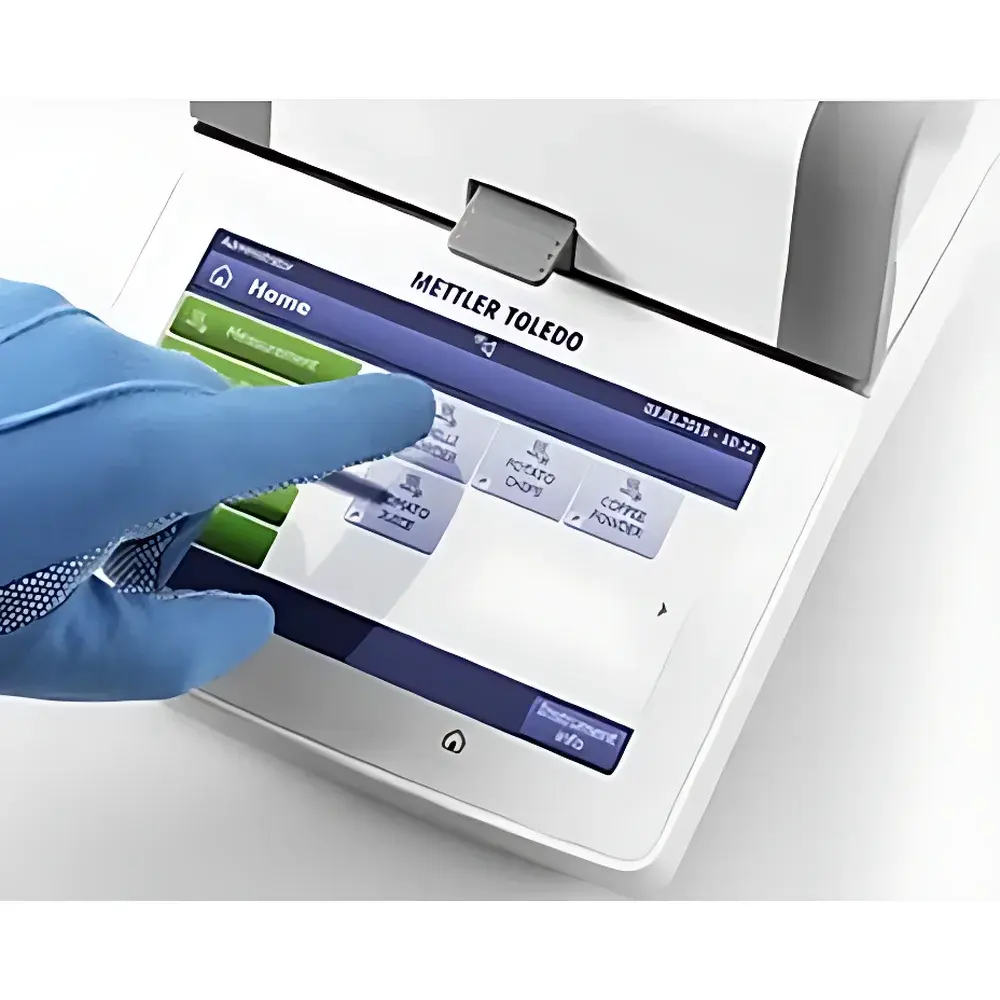
- 7-inch full-color capacitive touchscreen with OneClick™ interface, supporting intuitive navigation without physical buttons or external peripherals.
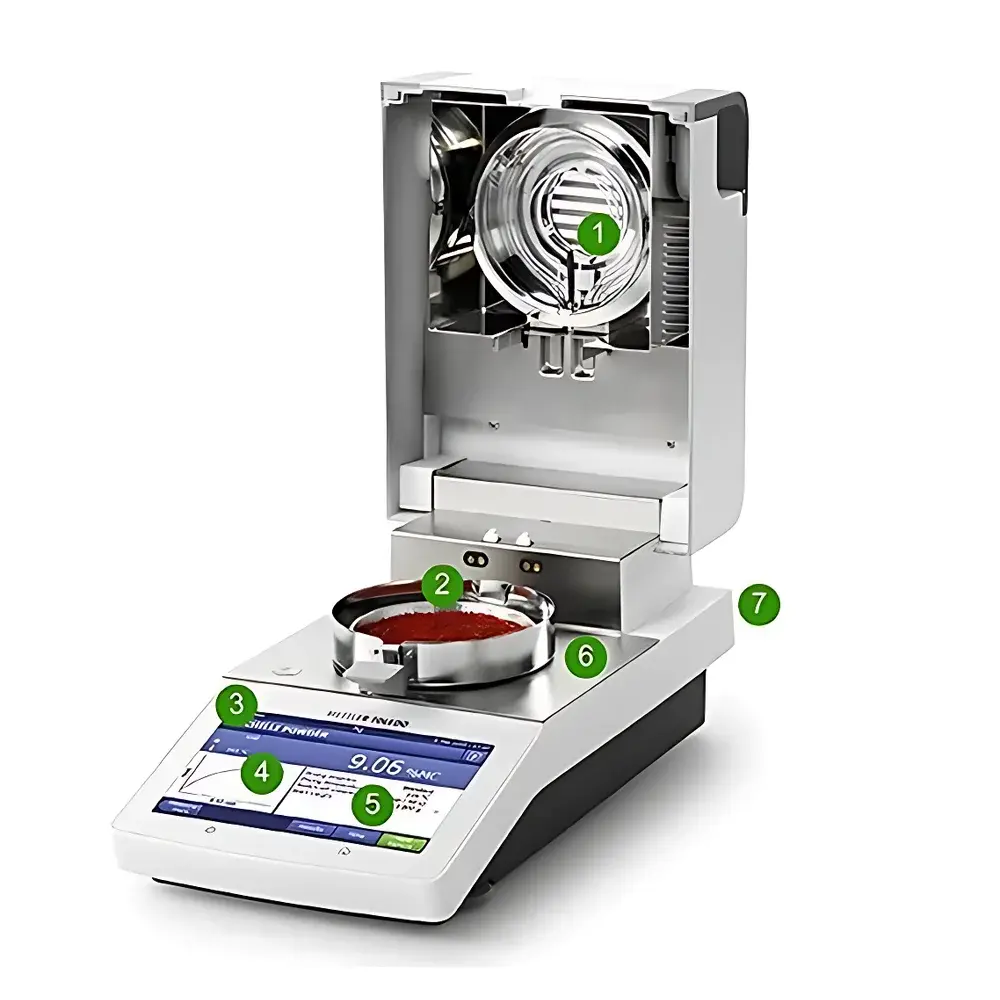
- Real-time drying curve visualization with dynamic mass-loss plotting, allowing immediate assessment of drying kinetics and endpoint stability.
- Graphical step-by-step user guidance embedded in firmware—reducing operator dependency and minimizing training time for new personnel.
- Flat stainless-steel sample chamber housing and seamless surface design facilitate rapid decontamination and compliance with hygiene-critical sectors (e.g., food, pharma).
- Dual communication interfaces (RS232 and USB) enable direct connection to printers, PCs, or LIMS systems; supports CSV and PDF export of raw data, curves, and summary reports.
Sample Compatibility & Compliance
The HC103 accommodates a broad spectrum of sample types—including powders, granules, pastes, films, and viscous suspensions—across chemical, pharmaceutical, food, polymer, and agricultural applications. Its modular method library (up to 20 user-defined protocols) supports both standardized procedures (e.g., AOAC 952.07, ISO 1186) and custom-developed drying profiles. Built-in temperature assistant and method development wizard streamline SOP creation while ensuring traceable parameter documentation. All stored results include timestamp, operator ID, method name, drying parameters, and final moisture/solid values—enabling audit-ready records per GLP and GMP frameworks. When paired with METTLER TOLEDO’s LabX software (optional), the instrument meets FDA 21 CFR Part 11 requirements for electronic signatures, audit trails, and secure user access control.
Software & Data Management
Data integrity is maintained through native firmware capabilities: automatic generation of timestamped PDF/CSV reports, USB-drive-based method import/export (including pre-validated XML templates), and configurable result archiving. The instrument supports multi-language UI (14 languages, including English, German, Japanese, Chinese, Spanish, and Portuguese), ensuring consistent operation across global manufacturing sites. For centralized deployment, LabX connectivity enables remote method distribution, real-time data aggregation, statistical process monitoring (SPC), and automated report routing to shared network drives or ERP systems. All measurement metadata—including weight drift logs, calibration history, and environmental compensation flags—are retained internally for retrospective analysis.
Applications
The HC103 serves as a primary tool for routine moisture verification in incoming raw material inspection (e.g., excipients, resins, flour), in-process control (e.g., drying endpoint detection in fluid bed dryers), and finished product release testing (e.g., tablet moisture per USP <921>). It is widely adopted in food safety labs for compliance with Codex Alimentarius moisture limits, in battery material R&D for cathode/anode water content screening, and in polymer manufacturing for resin moisture specification verification prior to extrusion. Its ruggedized mechanical design ensures stable operation under non-climate-controlled factory settings, while its compact footprint minimizes benchtop occupancy in space-constrained QC laboratories.
FAQ
What standards does the HC103 comply with for moisture analysis?
The HC103 adheres to core principles outlined in ISO 8587 (performance criteria for moisture analyzers), ASTM E1447 (standard test method for moisture content by thermogravimetry), and USP <921> (water determination). Method validation is supported via built-in repeatability checks and temperature calibration routines.
Can the HC103 be integrated into a regulated quality management system?
Yes—when used with LabX software, it provides full 21 CFR Part 11 compliance, including electronic signatures, immutable audit trails, role-based user permissions, and encrypted data storage.
How many methods can be stored onboard?
Up to 20 user-defined drying methods may be saved directly in instrument memory, each with programmable temperature ramping, hold times, termination criteria (e.g., weight loss rate, fixed time, or absolute mass change), and display preferences.
Is calibration traceable to national standards?
Internal calibration uses certified weights traceable to NIST or equivalent national metrology institutes; external verification follows ISO/IEC 17025-accredited procedures when performed by authorized service partners.
What maintenance is required for long-term accuracy?
Routine cleaning of the sample pan and heating chamber, periodic verification using SmartCal test kits, and annual recalibration by METTLER TOLEDO-certified technicians are recommended to sustain metrological performance over extended service life.





