
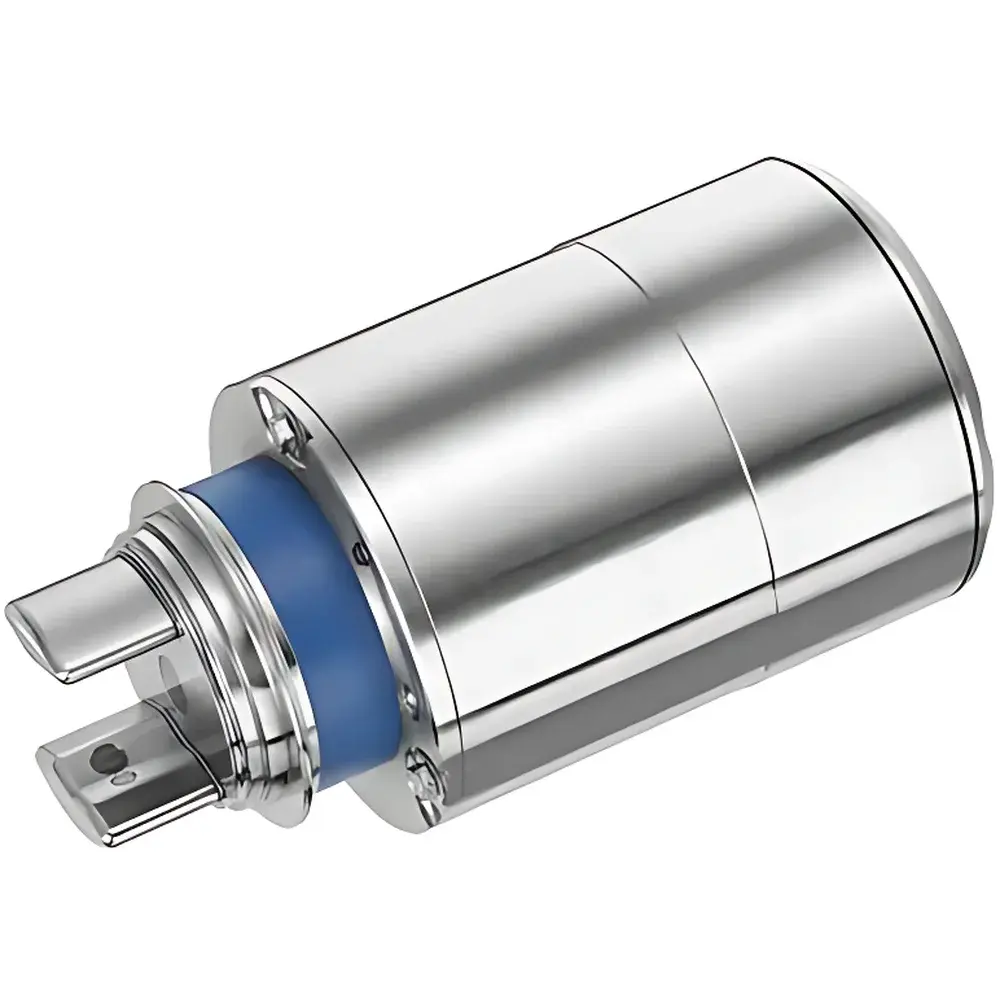
METTLER TOLEDO InPro8200 & InPro8300RAMS Online Turbidimeters
| Brand | METTLER TOLEDO |
|---|---|
| Origin | Switzerland |
| Product Type | Industrial Online Turbidimeter |
| Measurement Principle | Backscatter & Forward/90° Scatter Optical Detection |
| Sensor Types | InPro8200 (Dual-Fiber Backscatter), InPro8300RAMS (Flow-Cell Forward/90° Scatter) |
| Compliance | Designed for FDA 21 CFR Part 11, GMP/GLP environments, ASTM D6506, ISO 7027 |
| Installation Options | Reactor-mounted, Pipe-threaded (DIN/ISO/NPT), Sanitary Clamp (Tri-Clamp®), Flow Cell |
| Output Signal | 4–20 mA, HART®, Modbus RTU/TCP, EtherNet/IP™ |
| Enclosure Rating | IP66/IP68 (InPro8200), IP69K (InPro8300RAMS) |
Overview
The METTLER TOLEDO InPro8200 and InPro8300RAMS online turbidimeters are engineered for continuous, real-time measurement of suspended particulate concentration in liquid process streams. These instruments operate on standardized optical scattering principles—specifically, backscattered light detection (InPro8200) and forward/90° scattered light detection (InPro8300RAMS)—in full compliance with ISO 7027 and ASTM D6506. Unlike laboratory-based nephelometers, these industrial-grade sensors deliver stable, drift-resistant performance under dynamic flow, temperature, and pressure conditions typical of biopharmaceutical crystallization, brewing, dairy processing, and wastewater treatment. The InPro8200 employs dual-fiber optical architecture to decouple light emission and reception, eliminating internal cross-talk and enabling high-resolution detection in low-turbidity regimes (0.01–100 NTU) while maintaining linearity up to 1,000 NTU. The InPro8300RAMS utilizes a compact flow-cell design optimized for rapid phase transition detection—particularly critical in product/water separation during CIP cycles or beer filtration—where response time is constrained to <2 seconds with repeatability better than ±0.5% of reading.
Key Features
- Dual optical methodologies: Backscatter (InPro8200) for low-concentration crystallization monitoring; forward/90° scatter (InPro8300RAMS) for high-speed phase identification and color-coupled turbidity analysis
- Fiber-optic sensor head (InPro8200): Chemically inert sapphire window, no internal electronics, compatible with all METTLER TOLEDO sanitary process housings (e.g., InTrac, InFit, InDip)
- Self-diagnostic optics and automatic zero-tracking algorithm minimize calibration frequency and eliminate manual drift correction
- Process-ready construction: All-welded 316L stainless steel body (InPro8300RAMS), IP69K-rated for high-pressure washdown; InPro8200 rated IP66/IP68 for submersible reactor applications
- Integrated digital communication: Native support for HART 7, Modbus TCP, and EtherNet/IP™ ensures seamless integration into DCS, SCADA, and MES platforms
- GMP-aligned data integrity: Full audit trail, electronic signature capability, and configurable user access levels compliant with FDA 21 CFR Part 11 requirements
Sample Compatibility & Compliance
These turbidimeters are validated for use across non-corrosive and mildly aggressive aqueous media—including pharmaceutical buffers, fermentation broths, wort, lager, whey, and secondary effluent—within temperature ranges of 0–130 °C and pressures up to 10 bar (g). The InPro8200’s fiber-optic design eliminates electrolytic interference and enables direct immersion in agitated crystallizers without signal degradation. The InPro8300RAMS flow cell supports laminar-to-turbulent transition detection with minimal pressure drop (<0.1 bar at 5 m/s). Both systems meet IEC 61326-1 (EMC), IEC 61000-6-2/6-4, and ATEX/IECEx Zone 1 certification when paired with approved transmitters. Documentation packages include Factory Acceptance Test (FAT) reports, material traceability (EN 10204 3.1), and IQ/OQ protocols aligned with EU Annex 11 and USP .
Software & Data Management
Turbidity data is processed via METTLER TOLEDO’s iSense Process Analytics software suite, which provides real-time visualization, statistical process control (SPC) charting, and automated event logging. Raw analog and digital outputs are timestamped with microsecond precision and stored locally on the transmitter’s embedded flash memory (≥30 days at 1-second intervals). Data export supports CSV, OPC UA, and SQL-compatible formats for integration with LIMS and PAT (Process Analytical Technology) frameworks. Calibration history, maintenance logs, and firmware revision tracking are retained with immutable audit trails. Remote configuration and diagnostics are supported over secure TLS 1.2 connections, enabling validation-compliant remote support without compromising network segmentation.
Applications
- Pharmaceutical manufacturing: Monitoring nucleation onset and crystal growth kinetics in API crystallization reactors; endpoint detection in centrifugal separation and membrane filtration
- Brewing & beverage production: Real-time detection of beer haze formation, yeast sedimentation, and final product clarity verification prior to bottling
- Dairy processing: Quantifying casein micelle aggregation during ultrafiltration and detecting fat globule coalescence in cream standardization
- Wastewater treatment: Tracking suspended solids (SS) concentration in activated sludge clarifiers and tertiary filtration effluent
- Chemical synthesis: Verifying emulsion stability in polymerization reactors and detecting precipitate formation in catalytic hydrogenation processes
FAQ
What optical principle does the InPro8200 use, and why is it preferred for crystallization monitoring?
The InPro8200 employs backscattered light detection using dual optical fibers. This configuration provides superior sensitivity below 1 NTU and avoids signal saturation during rapid particle growth—critical for detecting early nucleation events without recalibration.
Can the InPro8300RAMS distinguish between product and rinse water based solely on turbidity?
No—it combines turbidity with spectral absorbance (color) measurement to generate a unique “optical fingerprint” per product stream. This multi-parameter signature enables robust classification even when turbidity values overlap.
Is cleaning-in-place (CIP) compatibility validated for both sensor models?
Yes. The InPro8200 is fully compatible with NaOH/HNO₃-based CIP cycles up to 95 °C; the InPro8300RAMS withstands steam sterilization (SIP) at 130 °C for 30 minutes and high-velocity caustic recirculation per ASME BPE standards.
Does the system support 21 CFR Part 11 compliance out-of-the-box?
Yes—when deployed with iSense software and configured with role-based authentication, electronic signatures, and audit-trail-enforced data archiving, the complete solution meets predicate rule requirements for regulated environments.
How is sensor calibration maintained during extended unattended operation?
Both models feature automatic reference compensation using built-in dark-current and reference-light monitoring. Field calibration requires only a single-point verification with NIST-traceable formazin standards; no zero-water flush is needed for routine operation.




