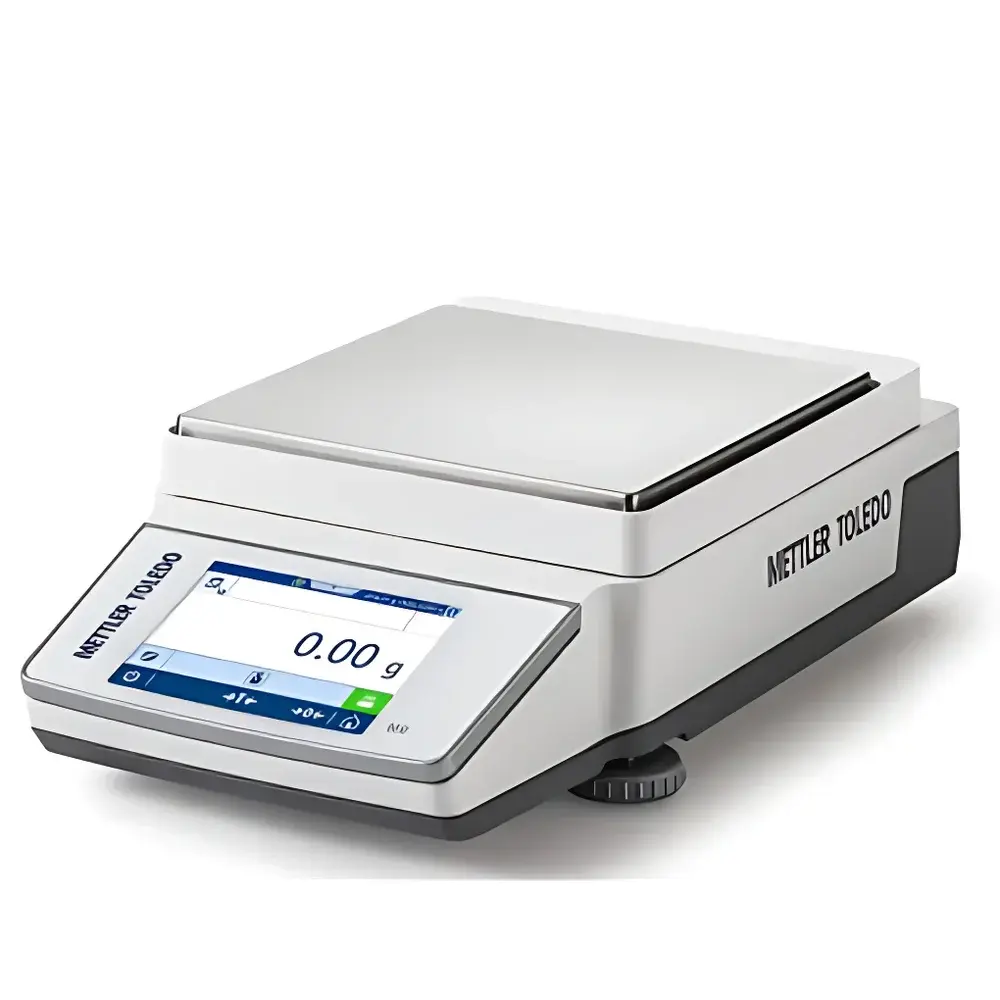
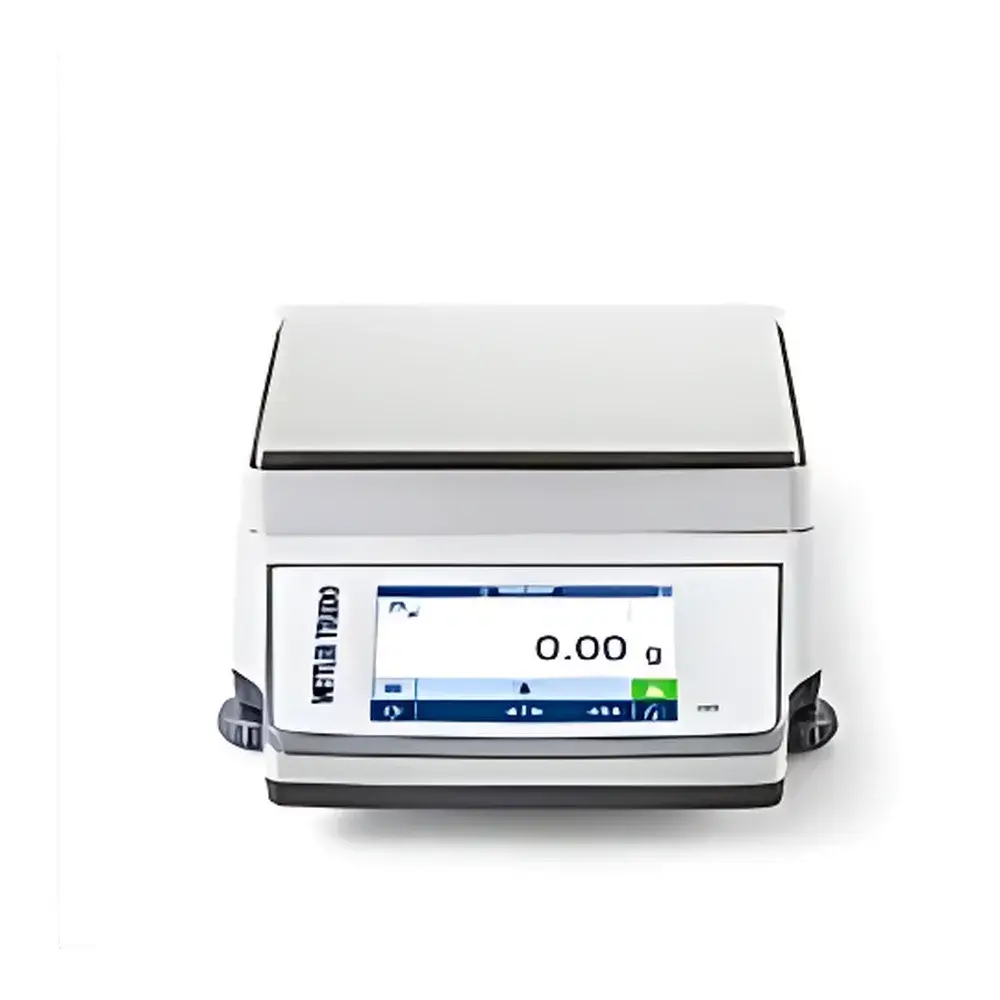
METTLER TOLEDO MR6002 Precision Balance
| Brand | METTLER TOLEDO |
|---|---|
| Origin | Shanghai, China |
| Model | MR6002 Precision Balance |
| IP Rating | IP43 |
| Construction | Full-metal housing with chemical-resistant surfaces |
| Overload Protection | Integrated sensor protection against mechanical shock and pan drop |
| Power Management | Configurable energy-saving mode |
| Connectivity | RS232, USB, Ethernet (optional), MT-SICS command protocol compliant |
| User Management | Role-based access control with customizable user groups and application visibility |
| Compliance | Designed for GLP/GMP environments |
Overview
The METTLER TOLEDO MR6002 Precision Balance is an industrial-grade analytical weighing instrument engineered for reproducible mass determination in demanding laboratory, quality control, and production environments. Built upon METTLER TOLEDO’s proprietary monolithic electromagnetic force compensation (EMFC) transducer architecture, the MR6002 delivers high stability and low drift performance across variable ambient conditions—including temperature fluctuations, air currents, and vibration-prone settings. Its core design philosophy centers on operational resilience: the balance operates reliably under non-climate-controlled spaces such as manufacturing floors, pilot plants, and warehouse QC labs—environments where traditional analytical balances often fail due to sensitivity to dust, moisture, or mechanical stress. The MR6002 does not feature internal motorized calibration weights; instead, it relies on external calibration with traceable standards, aligning with ISO/IEC 17025-compliant calibration practices and enabling full transparency in uncertainty budgets.
Key Features
- Full-metal housing with chemically resistant coating, tested for durability against common industrial solvents and particulate exposure
- IP43 ingress protection rating—proven resistance to solid objects ≥1 mm and water spray at angles up to 60° from vertical—ensuring integrity of load cell and PCB assemblies during routine spills or cleaning cycles
- Integrated mechanical overload protection system safeguards the EMFC sensor from damage caused by accidental overloading or sudden pan impact
- Guided leveling system with dual-axis bubble indicator and adjustable feet enables rapid, repeatable setup without requiring precision surface preparation
- Auto-zero tracking and dynamic drift compensation algorithms maintain baseline stability during extended weighing sessions
- Configurable power-down modes—including programmable idle timeout and deep-sleep states—reduce standby energy consumption by up to 70% compared to continuous operation
Sample Compatibility & Compliance
The MR6002 accommodates a wide range of sample forms—from powders and granules to packaged components and small hardware parts—within its standard 200 mm stainless-steel weighing pan. Its robust mechanical design eliminates the need for draft shields in most applications, reducing workflow interruption while maintaining repeatability better than ±0.002 g (2 mg) under controlled static conditions. The balance meets essential regulatory expectations for documented weighing processes: it supports user authentication via password-protected profiles, enforces role-based function masking (e.g., restricting calibration access to authorized personnel), and outputs timestamped, uneditable weight data streams compatible with LIMS and MES integration. While the MR6002 itself is not FDA 21 CFR Part 11–certified, its MT-SICS ASCII command set and deterministic serial/Ethernet communication enable seamless incorporation into validated systems that implement electronic signature, audit trail, and data integrity controls per ALCOA+ principles.
Software & Data Management
Data output is standardized through METTLER TOLEDO’s MT-SICS (Standard Interface Command Set), ensuring interoperability with PLCs, SCADA platforms, and laboratory informatics systems without proprietary middleware. Raw weight values are transmitted with embedded metadata—including unit code, stability flag, timestamp (if external clock source is synchronized), and user ID—facilitating automated data capture in SAP QM, LabWare LIMS, or custom Python-based QA dashboards. Optional Ethernet connectivity allows remote firmware updates and configuration management via secure HTTPS endpoints. All interface logs—including command receipt, execution status, and error codes—are retained locally for forensic review during internal audits or regulatory inspections.
Applications
- Raw material verification and batch release testing in pharmaceutical and fine chemical manufacturing
- In-process checks for tablet weight variation, capsule fill consistency, and blend uniformity sampling
- Calibration mass handling and reference standard maintenance in metrology labs operating under ISO/IEC 17025
- Inventory reconciliation and component counting in electronics assembly and automotive Tier-1 supply chains
- Educational laboratories requiring rugged, low-maintenance instruments for undergraduate physical chemistry and materials science curricula
FAQ
Does the MR6002 support internal automatic calibration?
No. The MR6002 requires external calibration using certified weights. This design supports traceability documentation and avoids hidden uncertainty contributions from internal mechanisms.
Can the MR6002 be connected to a Windows-based ERP system?
Yes—via RS232, USB virtual COM port, or optional Ethernet module using standard MT-SICS ASCII commands. Integration typically involves lightweight serial-to-TCP bridge software or native driver support in SAP, Oracle EBS, or Microsoft Dynamics.
What is the maximum permissible load for overload protection activation?
The mechanical overload protection engages at 150% of rated capacity (i.e., 3,000 g for the MR6002 model), preventing permanent deformation of the EMFC transducer.
Is the MR6002 suitable for use in humid or washdown environments?
It meets IP43, not IP65/IP67. It resists incidental splashes and dust but is not designed for direct high-pressure cleaning or continuous high-humidity operation above 80% RH.
How many user profiles can be configured?
Up to 10 distinct user accounts with individually assignable permissions across 8 functional categories (e.g., tare, print, calibration, data export).