
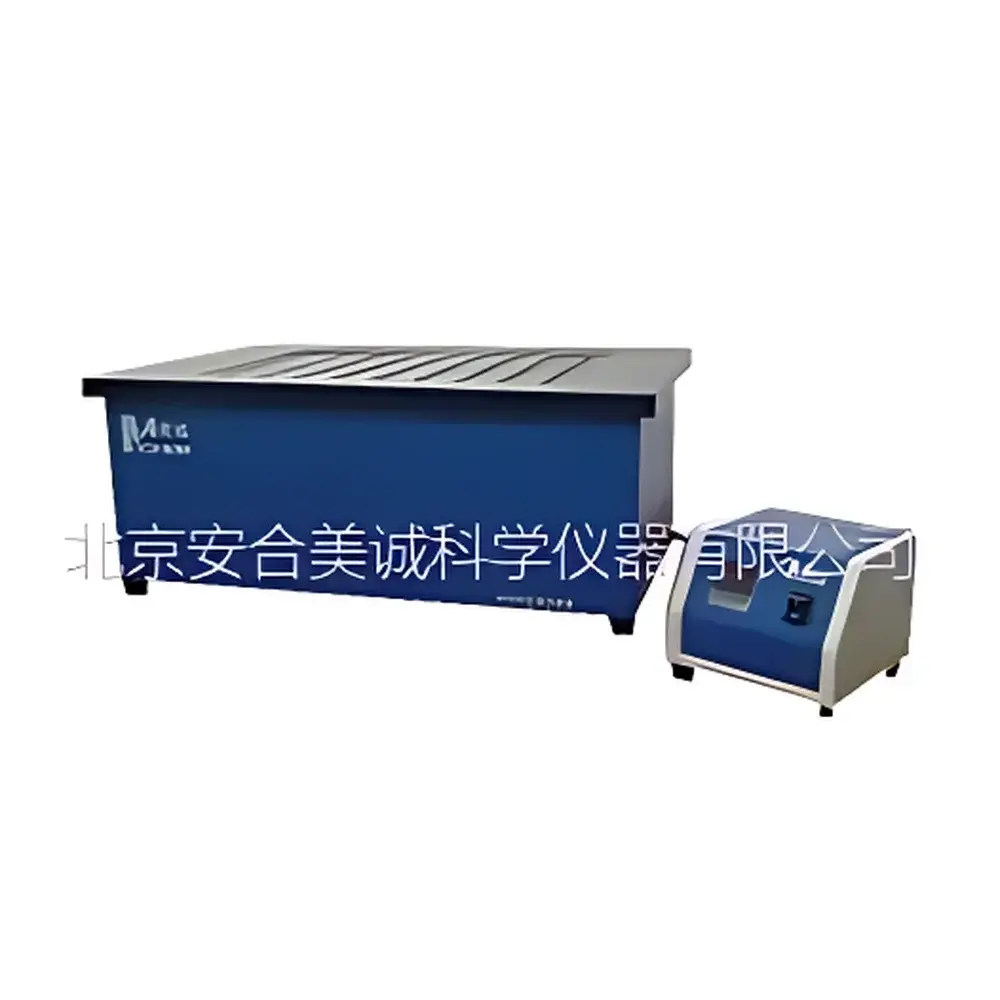
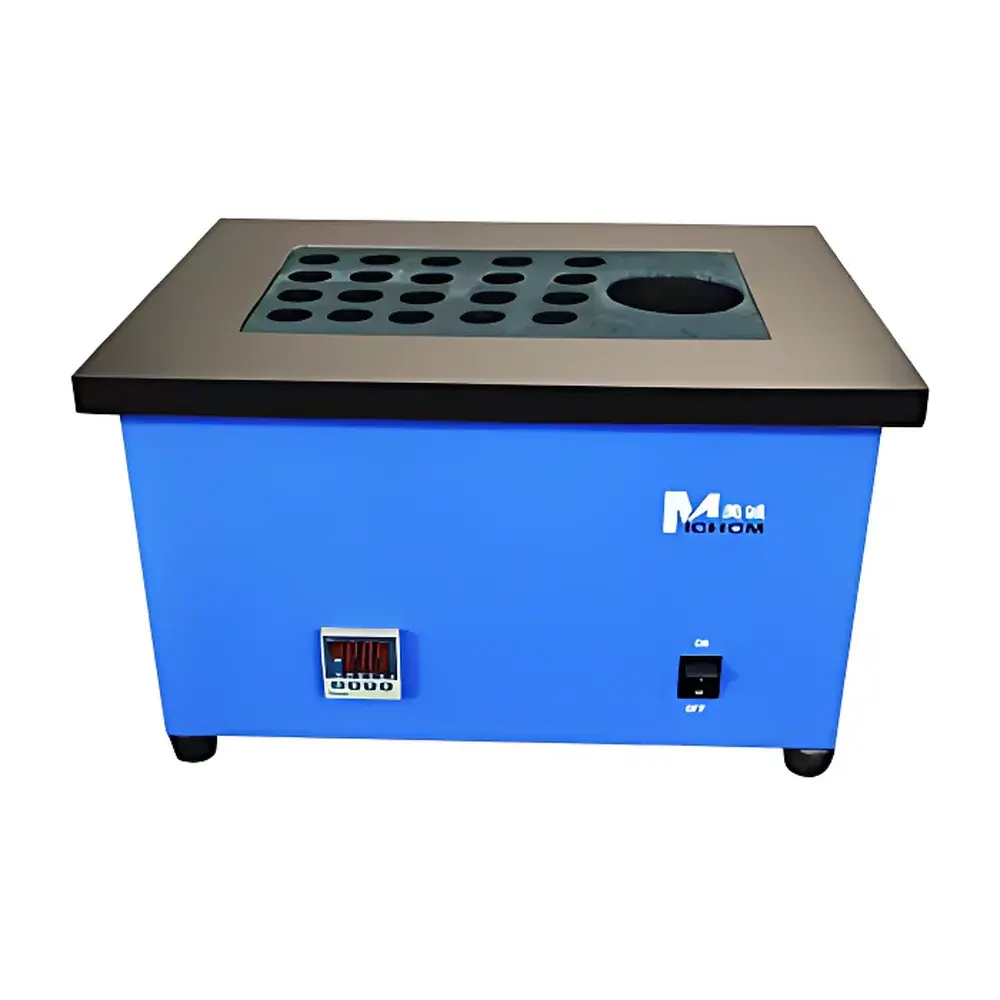
MICHEM HW Series Infrared Graphite Digestion Block
| Brand | MICHEM |
|---|---|
| Model | HW-15 / HW-24 / HW-40 / HW-54 |
| Type | Infrared-Heated Graphite Block Digestion System |
| Maximum Temperature | 460 °C |
| Temperature Control Accuracy | ±1.0 °C |
| Heating Principle | Far-Infrared Radiant Heating |
| Heating Material | High-Temperature PTFE-Coated Graphite Block |
| Power Rating | 2500 W (HW-15/HW-40) / 3500 W (HW-24/HW-54) |
| Control System | PID Digital Controller with 30-Step Programmable Ramp-Soak Profile |
| Sample Capacity | 15 × 100 mL |
| Digestion Well Dimensions | Φ42 mm × 40 mm (HW-15/HW-40), Φ26 mm × 40 mm (HW-24), Φ23 mm × 50 mm (HW-54) |
| Power Supply | AC 220 V, 50 Hz, 16 A |
| Dimensions (W×D×H) | 470×350×270 mm (HW-15), 670×460×270 mm (HW-24/HW-54) |
| Customization Available | Well diameter/depth, batch size, nominal operating temperature, and power rating per unit |
Overview
The MICHEM HW Series Infrared Graphite Digestion Block is a precision-engineered sample preparation instrument designed for high-temperature, closed-vessel or open-beaker acid digestion of solid and semi-solid matrices in environmental, agricultural, food safety, geological, and clinical laboratories. Unlike conventional electric hot plates or ceramic heating mantles, the HW system employs far-infrared radiant heating coupled with a thermally uniform, PTFE-coated graphite block to deliver rapid, homogeneous thermal energy transfer directly to digestion vessels. This architecture minimizes thermal lag, suppresses localized overheating, and ensures reproducible decomposition of organic matter and mineral dissolution across all sample positions—critical for trace metal analysis by ICP-OES, ICP-MS, AAS, or hydride generation techniques. The system operates up to 460 °C, enabling complete digestion of recalcitrant samples including silicates, coal ash, polymer composites, and biological tissues fortified with HF or perchloric acid under controlled fume hood conditions.
Key Features
- Far-infrared heating technology with graphite block core ensures >92% thermal efficiency and minimal ambient heat loss compared to resistive coil-based systems.
- PTFE-coated graphite construction provides exceptional chemical resistance to HNO₃, HCl, HF, H₂O₂, and aqua regia at elevated temperatures; surface hardness exceeds 85 Shore D.
- PID digital temperature controller with 30 programmable ramp-soak steps enables precise method development for multi-stage digestion protocols (e.g., low-T pre-oxidation followed by high-T mineralization).
- Independent well geometry options accommodate standardized borosilicate glass tubes (e.g., 100 mL Kjeldahl, 50 mL quartz digestion vials) without adapter requirements.
- Thermal uniformity ≤±1.5 °C across all wells at 400 °C (verified per ASTM E220-22 calibration practice), supporting GLP-compliant validation documentation.
- Front-panel lockout mode and over-temperature cutoff (settable up to 480 °C) comply with IEC 61010-1 safety standards for laboratory electrical equipment.
Sample Compatibility & Compliance
The HW Series supports digestion of diverse sample types—including soils, sediments, plant tissues, animal feed, pharmaceutical excipients, and wastewater sludge—using EPA Methods 3015A, 3050B, 3051A, and ISO 11466 for trace element extraction. Its open-well design permits real-time visual monitoring and manual reagent addition, while compatibility with Teflon-lined PFA or quartz vessels satisfies USP heavy metals testing requirements. All models are CE-marked and meet EN 61326-1 (EMC) and EN 61010-1 (safety) directives. Optional factory calibration certificates (NIST-traceable RTDs) and IQ/OQ documentation packages are available to support FDA 21 CFR Part 11–aligned laboratory audits.
Software & Data Management
While the base HW configuration features standalone PID control, optional RS-485 Modbus RTU or USB-to-serial interface enables integration with LIMS or ELN platforms via third-party drivers. Temperature log files (CSV format) record time-stamped setpoint, actual temperature, and error status at user-defined intervals (1–60 s). Audit trail functionality—including operator ID, method name, start/stop timestamps, and deviation alerts—is configurable through external SCADA software compliant with ALCOA+ data integrity principles.
Applications
- Preparation of certified reference materials (CRMs) for multi-element QA/QC in accredited testing labs (ISO/IEC 17025).
- Routine digestion of food samples prior to Cd, Pb, As, and Hg quantification per EU Commission Regulation (EU) No 2023/915.
- Geological sample dissolution for rare earth element (REE) profiling using ICP-MS with interference correction.
- Pharmaceutical raw material screening for catalyst residues (e.g., Pd, Pt, Ni) per ICH Q2(R2) guidelines.
- Environmental monitoring labs performing total recoverable metals analysis in compliance with ISO 17294-2 and ASTM D1688.
FAQ
Can the HW digestion block be used with hydrofluoric acid (HF)?
Yes—provided PTFE, PFA, or quartz digestion vessels are employed. The PTFE-coated graphite surface resists HF corrosion below 220 °C; extended exposure above this threshold requires periodic surface inspection.
Is temperature validation required before first use?
Yes. Users must perform initial verification using calibrated PT100 probes per ISO/IEC 17025 Clause 6.4.3; MICHEM provides a recommended validation protocol with uncertainty budgeting templates.
What maintenance is required for long-term thermal stability?
Annual recalibration of the internal RTD sensor and visual inspection of PTFE coating integrity are recommended. Graphite block replacement is typically needed after ≥5,000 cumulative hours at >400 °C.
Does the system support remote monitoring via Ethernet or Wi-Fi?
No native Ethernet/Wi-Fi module is included; however, industrial gateways (e.g., Moxa EDS-G205A) can bridge the RS-485 interface to TCP/IP networks for centralized supervision.



