
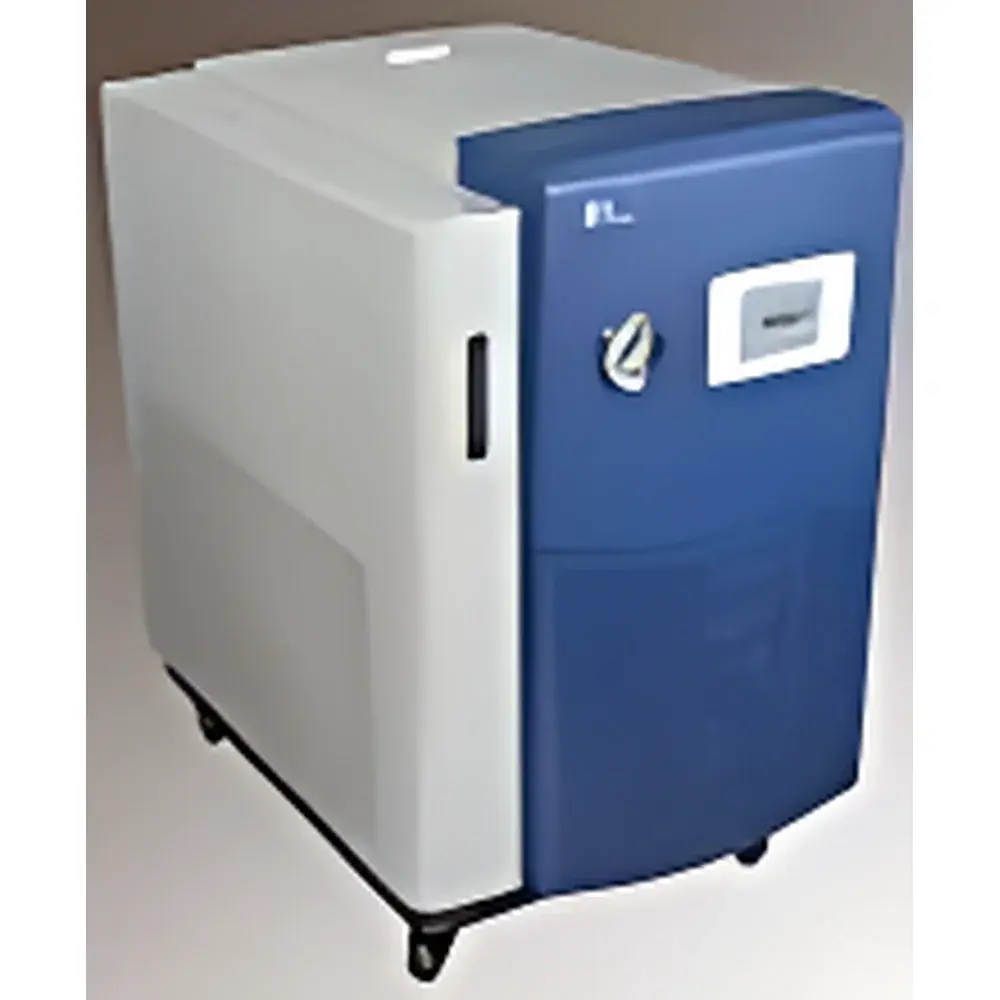
MICHEM MC-3500BP Variable-Frequency Circulating Chiller
| Brand | MICHEM |
|---|---|
| Origin | Beijing, China |
| Model | MC-3500BP |
| Type | Split-System Circulating Chiller |
| Cooling Method | Water-Cooled |
| Temperature Range | 5–35 °C |
| Temperature Stability | ±0.1 °C |
| Refrigeration Capacity | 3500 W |
| Circulating Pump Pressure | 7 bar |
| Flow Rate | 6 L/min |
| Reservoir Volume | 20 L |
| Operation Mode | Continuous |
Overview
The MICHEM MC-3500BP Variable-Frequency Circulating Chiller is an engineered thermal management solution designed for precision temperature control in demanding laboratory and industrial environments. Utilizing inverter-driven compressor technology, this split-system chiller dynamically modulates refrigerant flow and cooling output in response to real-time thermal load variations—enabling stable, energy-efficient operation across a wide 5–35 °C setpoint range. Unlike conventional on/off compressors, the variable-frequency architecture eliminates thermal cycling, reduces mechanical stress, and delivers high reproducibility in temperature-sensitive applications such as analytical instrumentation cooling, vacuum system thermal regulation, and laser source stabilization. Its robust thermodynamic design complies with international safety and electromagnetic compatibility standards (IEC 61000-6-3, IEC 61000-6-4), and its continuous-duty rating supports uninterrupted operation under 24/7 laboratory workflows.
Key Features
- Inverter-Controlled Compressor: Enables stepless modulation of refrigeration capacity between 20% and 100%, achieving ±0.1 °C temperature stability while reducing power consumption by >30% compared to fixed-speed equivalents at equivalent cooling output.
- Split-System Architecture: Separates condensing unit (outdoor) from evaporator/reservoir/pump assembly (indoor), minimizing acoustic emission (<58 dB(A) indoor unit) and heat dissipation within controlled laboratory spaces.
- High-Performance Circulation System: Equipped with a corrosion-resistant, low-noise centrifugal pump delivering up to 6 L/min at a maximum pressure of 7 bar—sufficient for multi-instrument daisy-chaining or high-backpressure applications including vacuum diffusion pumps and high-flow spectrometers.
- Digital PID Temperature Control: Microprocessor-based controller with adaptive tuning algorithms ensures rapid thermal equilibration (<15 min from ambient to 20 °C at full load) and minimal overshoot during setpoint changes.
- Continuous-Operation Design: Rated for indefinite duty cycle under nominal load; includes redundant safety interlocks (low-flow cutoff, high-pressure shutdown, dry-run protection, and reservoir level monitoring).
- Modular Serviceability: Field-replaceable components—including compressor, expansion valve, and pump module—are accessible without refrigerant recovery, supporting GLP-aligned maintenance documentation and traceable service history.
Sample Compatibility & Compliance
The MC-3500BP is compatible with deionized water, glycol-water mixtures (up to 30% v/v), and other non-corrosive, low-conductivity coolants meeting ASTM D1121 specifications. Its stainless-steel reservoir (304 grade), EPDM-sealed fluid path, and integrated particulate filter ensure long-term compatibility with sensitive analytical instruments requiring ultra-low contamination risk. The system conforms to ISO 13849-1 (PL e) for functional safety, meets CE marking requirements for electromagnetic compatibility and low-voltage directive compliance, and supports audit-ready operation under GLP and GMP frameworks through optional data logging and password-protected parameter configuration.
Software & Data Management
While the base model operates via front-panel keypad and LED display, optional RS485 Modbus RTU or Ethernet TCP/IP interface enables integration into centralized facility monitoring systems (e.g., LabVantage, Siemens Desigo, or custom SCADA). Logged parameters—including inlet/outlet temperature, pump status, compressor frequency, and alarm history—are timestamped and exportable in CSV format. For regulated environments, optional firmware upgrade supports FDA 21 CFR Part 11-compliant electronic signatures, audit trails, and user-role-based access control (Operator, Technician, Administrator).
Applications
- Analytical Instrument Cooling: Stable thermal conditioning for ICP-OES/MS, graphite furnace AAS, FTIR, XRD, XRF, HPLC column ovens, and rheometers requiring consistent jacket temperature.
- Vacuum & Medical Systems: Thermal stabilization of diffusion pumps, turbomolecular pumps, MRI cryocooler pre-cooling stages, and diagnostic imaging equipment (CT/X-ray tube cooling).
- Industrial Process Support: Laser cavity cooling (CO₂, fiber, excimer), vacuum deposition chambers, semiconductor wafer probing stations, and bioreactor jacket temperature control.
- Research Infrastructure: Integration with synchrotron beamline optics, electron microscopy sample stages, and high-field NMR magnet shimming systems.
FAQ
What coolant types are recommended for use with the MC-3500BP?
Deionized water is standard; 20–30% propylene glycol/water mixtures are approved for sub-10 °C operation. Ethylene glycol and organic solvents are not permitted.
Can the MC-3500BP support multiple instruments simultaneously?
Yes—its 6 L/min flow rate and 7 bar pressure head enable parallel connection of up to four mid-power instruments (e.g., two ICP units + one XRD + one FTIR), provided total thermal load remains ≤3500 W.
Is remote monitoring and control available?
Standard models include RS485 Modbus RTU; Ethernet/IP and OPC UA support are available via optional communication module (part no. MC-COM-ETH).
Does the chiller meet regulatory requirements for pharmaceutical laboratories?
With optional Part 11 firmware and calibrated temperature sensor validation kit (NIST-traceable), it supports 21 CFR Part 11, EU Annex 11, and WHO TRS 992 compliance for QC/QA environments.
What maintenance intervals are recommended?
Compressor oil analysis every 24 months; filter replacement every 6 months; full system performance verification annually per ISO 5171 guidelines.



