
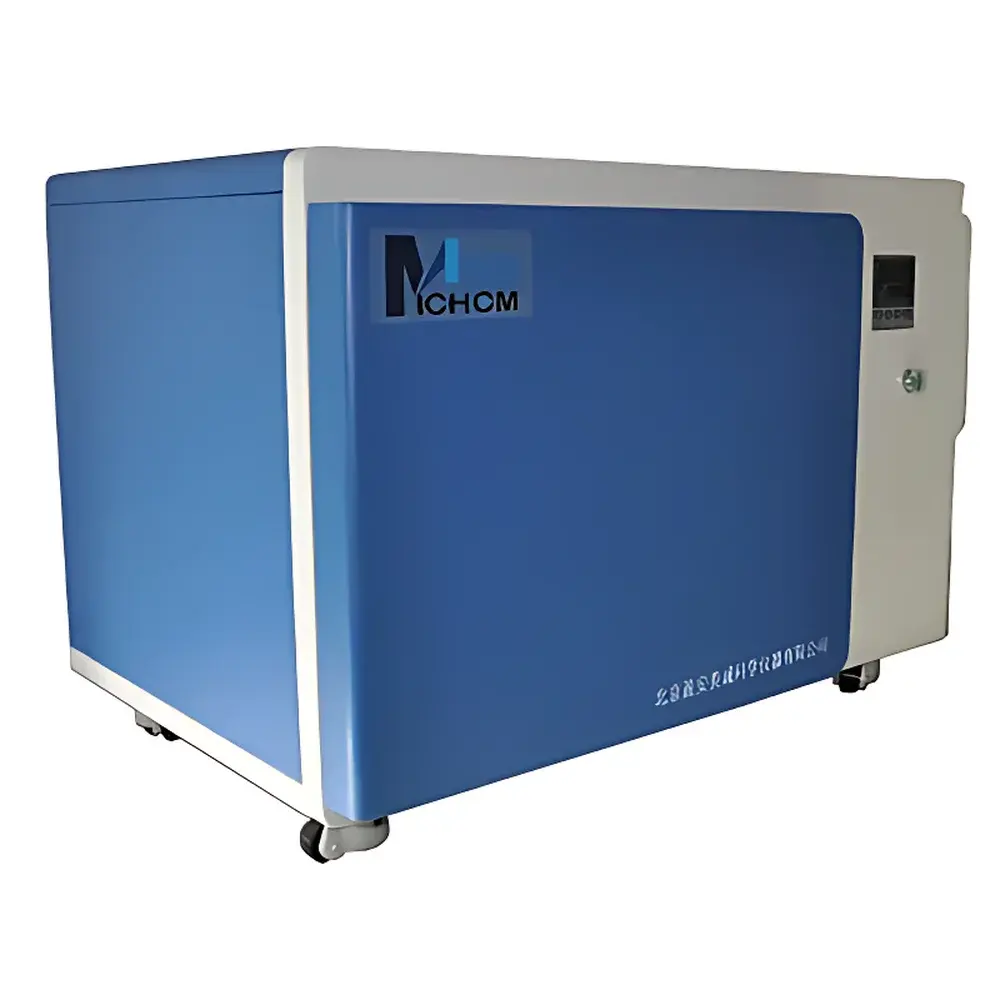
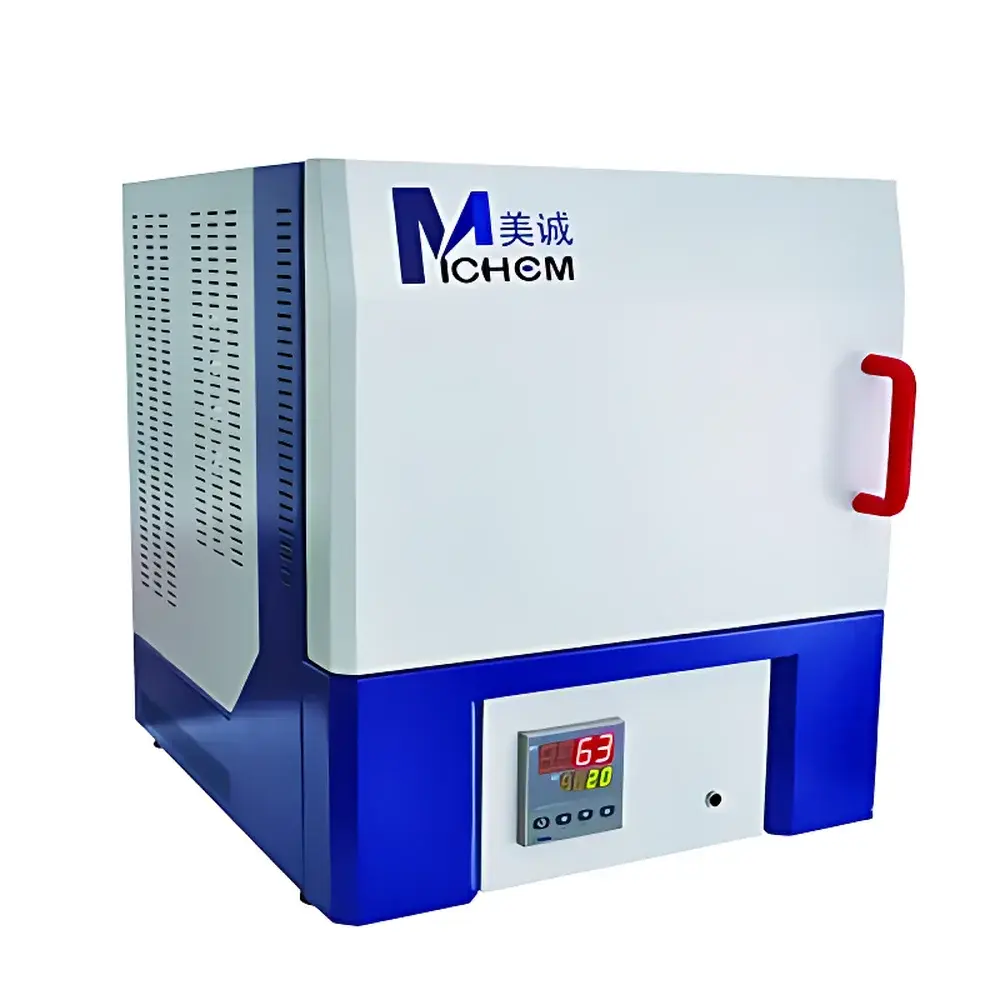
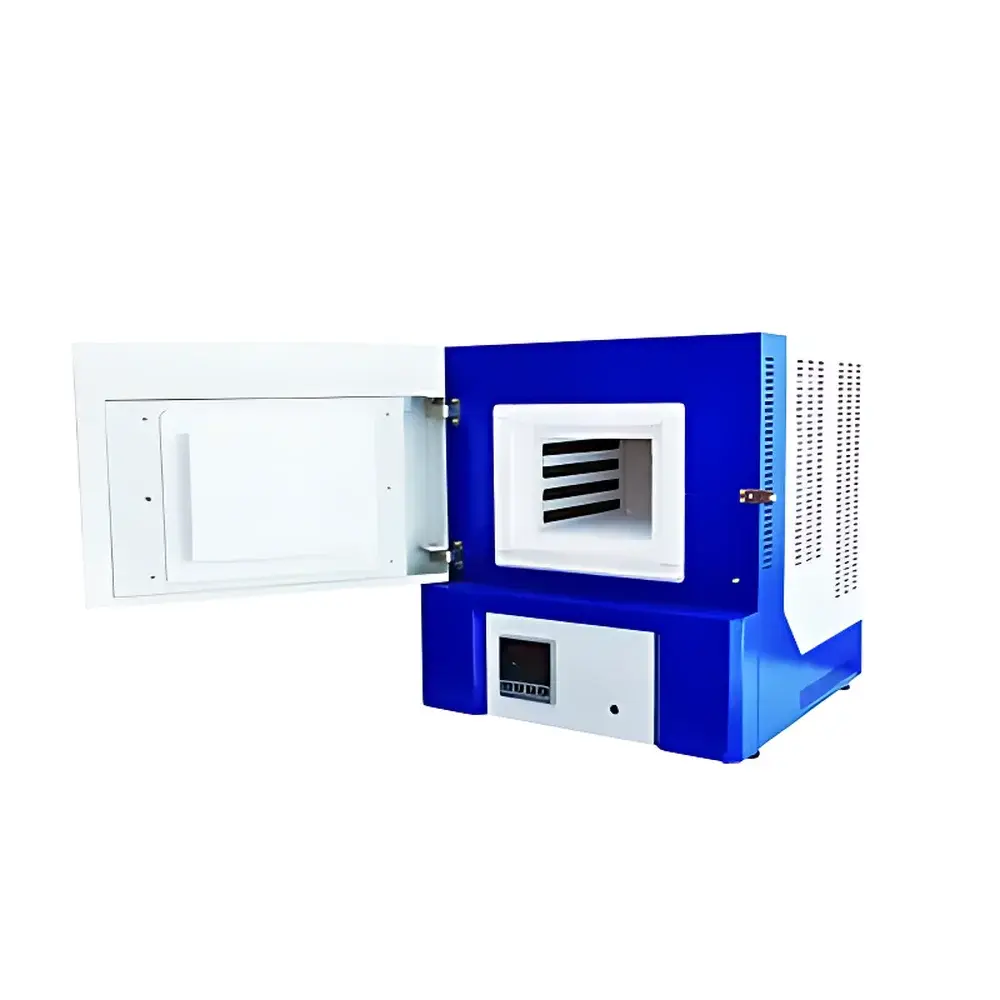
MICHEM TE09 Series High-Temperature Muffle Furnace
| Brand | MICHEM |
|---|---|
| Origin | Beijing, China |
| Model | TE09 Series |
| Type | Tube Furnace |
| Max Temperature | 1000 °C / 1200 °C / 1700 °C |
| Temperature Control Accuracy | ±1 °C |
| Max Power | 3 kW (1000/1200 °C) / 7 kW (1700 °C) |
| Ramp Time to Max Temp | 30 min (1000/1200 °C) / 90 min (1700 °C) |
| Heating Element | HRE Alloy (1000/1200 °C) / Silicon Molybdenum Rod (1700 °C) |
| Internal Chamber Dimensions | 200 × 300 × 150 mm (W × D × H) |
Overview
The MICHEM TE09 Series High-Temperature Muffle Furnace is a precision-engineered laboratory furnace designed for applications requiring stable, repeatable thermal environments up to 1700 °C. Utilizing advanced ceramic fiber insulation and application-optimized heating elements—including HRE alloy for 1000–1200 °C operation and silicon molybdenum (MoSi₂) rods for ultra-high-temperature capability—the TE09 series delivers exceptional thermal uniformity, rapid ramp rates, and long-term operational stability. Its muffle design isolates the sample chamber from combustion byproducts and external airflow, ensuring contamination-free heating essential for ashing, calcination, sintering, heat treatment (annealing, tempering), and high-temperature material synthesis. The furnace complies with standard laboratory safety protocols and supports traceable temperature calibration per ISO/IEC 17025 requirements when used with certified reference thermocouples (Type B for 1700 °C, Type S/K for lower ranges).
Key Features
- Three-tier maximum temperature capability: 1000 °C, 1200 °C, and 1700 °C—enabling broad compatibility across metallurgical, ceramic, geochemical, and materials R&D workflows.
- Ceramic fiber insulation (density-adjusted per model) provides superior thermal retention, reducing surface temperature to ≤60 °C at 1000 °C steady state—minimizing ambient heat load and improving lab safety.
- PID-controlled temperature regulation with ±1 °C accuracy over full range; optional 30-segment programmable controller supports complex thermal profiles with user-defined ramp rates, dwell times, and cooling sequences.
- Robust mechanical architecture: lightweight yet rigid construction (e.g., 52 kg for 6 L 1000 °C model); reinforced door mechanism with integrated safety interlock that cuts power upon opening—meeting IEC 61000-4-11 and EN 61000-6-2 immunity standards.
- Energy-efficient design validated against ASTM E2251-21: input power reduced by ~60% versus conventional refractory-lined furnaces at equivalent temperature and volume, enabled by low-thermal-mass insulation and optimized element geometry.
- Modular electrical interface: 16 A/220 V single-phase supply for compact models (≤9 L); 16 A/380 V three-phase for larger chambers (≥20 L), supporting seamless integration into standard laboratory power infrastructure.
Sample Compatibility & Compliance
The TE09 series accommodates crucibles, boats, and sample holders made from alumina, silicon carbide, platinum, or quartz—compatible with ASTM C865 (sintering), ISO 5660 (fire testing), and USP (heavy metal testing). Its sealed muffle chamber prevents cross-contamination during ashing of biological, pharmaceutical, or environmental samples. All models are CE-marked and conform to IEC 61010-1:2010 for electrical safety in laboratory equipment. For GLP/GMP-regulated environments, optional data logging modules support 21 CFR Part 11-compliant audit trails when paired with validated software platforms.
Software & Data Management
While the base configuration includes a front-panel 30-step PID controller with digital display and timer function, optional USB- or RS485-enabled interfaces allow connection to PC-based monitoring systems. Third-party SCADA or LabVIEW-compatible drivers enable real-time temperature logging, alarm triggering (e.g., deviation >±2 °C), and automated report generation aligned with ISO/IEC 17025 documentation requirements. Firmware supports firmware update via secure bootloader and stores ≥1000 hours of timestamped thermal history with resolution of 1 s.
Applications
- Thermal gravimetric analysis (TGA) sample preparation and residue quantification (e.g., ASTM D3175, ISO 1171).
- High-purity ceramic sintering and powder metallurgy densification under controlled atmospheres (N₂, Ar, air).
- Calibration source for high-temperature reference thermometers (Type B thermocouples, ITS-90 fixed points).
- Metallurgical phase transformation studies (austenitization, homogenization) requiring precise soak control at 1200–1400 °C.
- Environmental testing: determination of loss on ignition (LOI) in soils, slags, and fly ash per EPA Method 5050.
- Research-scale crystal growth and annealing of oxide semiconductors (e.g., LiCoO₂, YBCO).
FAQ
What thermocouple types are recommended for different temperature ranges?
Type K (0–1200 °C) and Type S (0–1600 °C) are standard for 1000/1200 °C models; Type B (600–1820 °C) is required for accurate 1700 °C operation and must be calibrated traceably to NIST or equivalent national metrology institutes.
Can this furnace operate under inert or reducing atmospheres?
Yes—optional quartz or stainless-steel gas inlet/outlet ports (M10 threads) support purging with N₂, Ar, or forming gas; however, MoSi₂ elements require oxidizing conditions above 800 °C and are not suitable for prolonged H₂ exposure.
Is remote monitoring supported out of the box?
Basic remote status readout (temperature, setpoint, error codes) is available via analog 4–20 mA output; full Ethernet or Wi-Fi connectivity requires optional communication module (part no. TE09-COM-ETH).
How often does the furnace require recalibration?
Annual verification against a certified reference thermometer is recommended per ISO/IEC 17025; drift should remain within ±1 °C at 1000 °C and ±2 °C at 1700 °C between calibrations.
What maintenance is required for the heating elements?
HRE alloy elements require no scheduled replacement under normal use; MoSi₂ rods exhibit gradual resistance increase—monitor voltage/current trends quarterly and replace if power demand rises >15% at nominal setpoint.



