
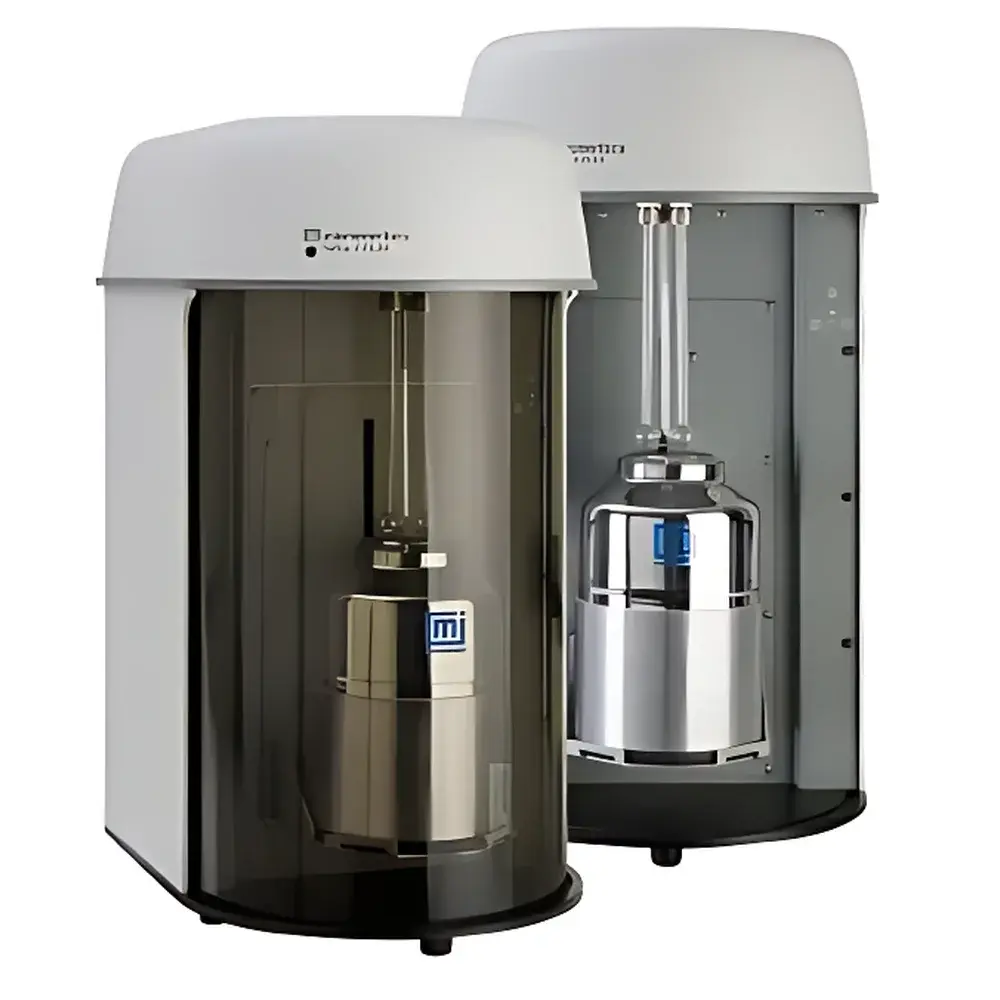
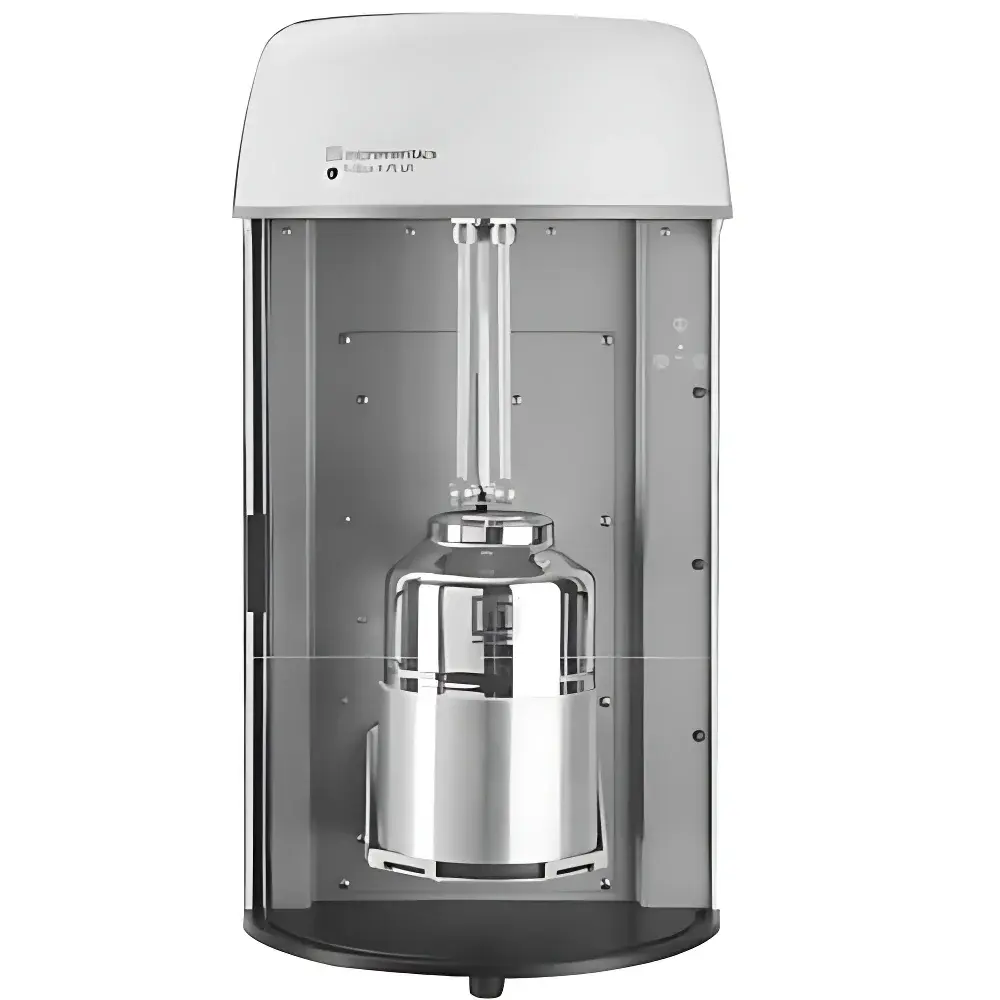
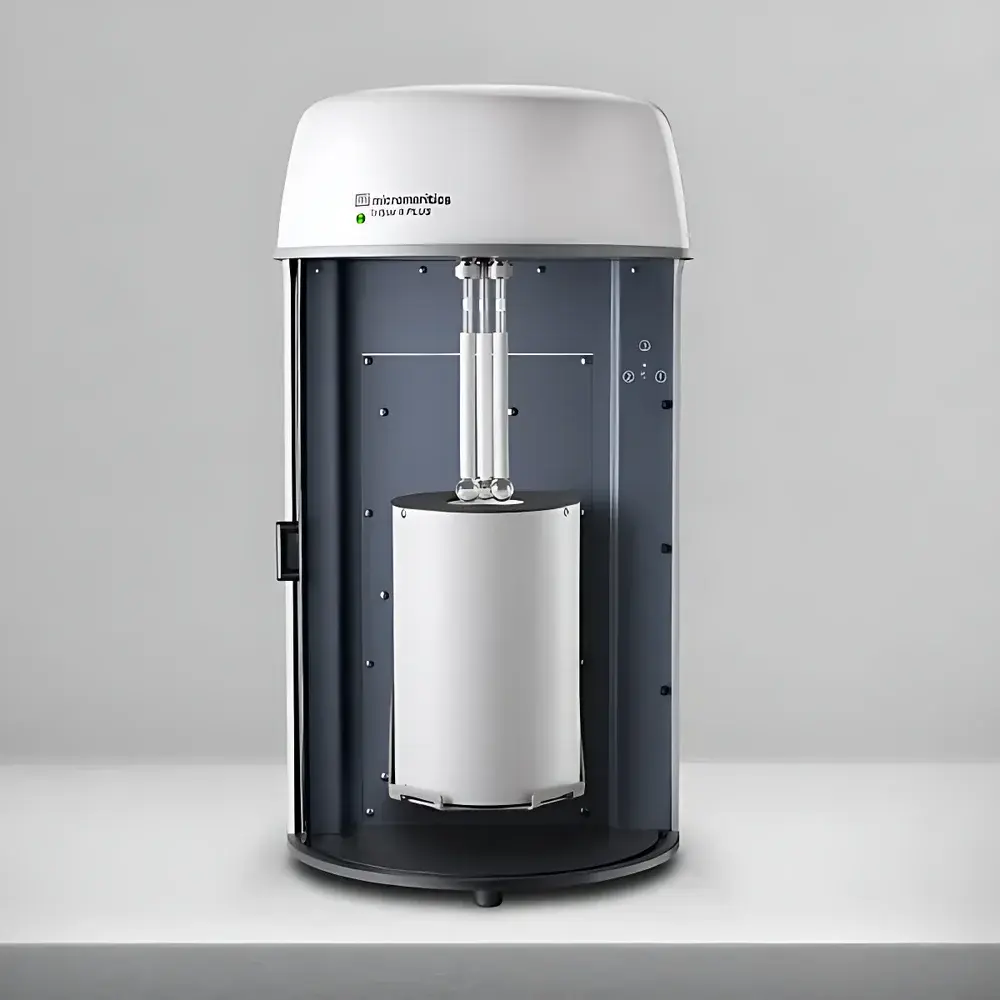
Micromeritics TriStar II Plus Series Specific Surface Area and Pore Size Analyzer
| Brand | Micromeritics |
|---|---|
| Origin | USA |
| Model | TriStar II Plus Series |
| Instrument Type | Specific Surface Area and Pore Size Analyzer |
| Principle | Static Volumetric Gas Adsorption |
| Number of Analysis Stations | 3 |
| Surface Area Range | 0.001 m²/g to unlimited |
| Pressure Range | 0–1000 mmHg |
| Theoretical Basis | Gas Adsorption Method |
Overview
The Micromeritics TriStar II Plus Series Specific Surface Area and Pore Size Analyzer is a high-precision, fully automated multi-station instrument engineered for quantitative characterization of porous solids using static volumetric gas adsorption. It operates on the fundamental principles of physical adsorption—where gas molecules (typically N₂ at 77 K or CO₂ at 273 K) reversibly adhere to solid surfaces under controlled pressure and temperature conditions. By measuring equilibrium adsorption isotherms across a defined relative pressure range (P/P₀), the system enables rigorous determination of specific surface area (via BET, Langmuir, or t-plot methods), total pore volume, micropore volume, and pore size distribution across the full spectrum—from sub-0.5 nm ultramicropores to >100 nm macropores. Its tri-station architecture supports parallel analysis of up to three samples or reference standards, significantly improving laboratory throughput without compromising measurement reproducibility or traceability.
Key Features
- Triple independent analysis stations with isolated stainless-steel manifolds—engineered for long-term corrosion resistance and ultra-low leak rates (<1×10⁻⁸ torr·L/s)
- High-stability cryogenic temperature control via extended-duration Dewar flasks, enabling uninterrupted isotherm acquisition for up to 40 hours
- Dual-gas capability: standard N₂ (77 K) and optional CO₂ (273 K) adsorption modules for comprehensive micro- and mesopore coverage
- Integrated sample preparation station with programmable heating (up to 400 °C), vacuum evacuation (<10⁻³ torr), and inert gas purging (He, N₂, Ar)
- Real-time instrument health monitoring dashboard displaying manifold pressure stability, thermal drift, valve actuation logs, and calibration status
- Compliance-ready architecture supporting audit trails, user access levels, and electronic signatures per FDA 21 CFR Part 11 requirements
Sample Compatibility & Compliance
The TriStar II Plus accommodates a broad range of powdered, granular, and monolithic solid materials—including metal–organic frameworks (MOFs), activated carbons, zeolites, catalysts, pharmaceutical excipients, battery electrode materials, and cementitious phases. All analyses adhere to internationally recognized standards including ISO 9277 (BET surface area), ISO 15901-2 (pore size distribution by gas adsorption), ASTM D3663 (surface area of activated carbon), and IUPAC 2015 guidelines for physisorption data reporting. The system’s hardware and software are validated for GLP and GMP environments, with full support for IQ/OQ documentation packages and routine performance verification using certified reference materials (e.g., NIST SRM 1990, 2970).
Software & Data Management
MicroActive software serves as the unified analytical engine for the TriStar II Plus platform. It provides an interactive, parameter-free interface where users manipulate isotherm segments directly on-screen—adjusting linear regions for BET plots, selecting t-plot desorption branches, or defining DFT kernel ranges—with real-time recalculation of derived metrics. The software natively supports NLDFT and QSDFT models, including dual-isotherm NLDFT (simultaneous N₂ + CO₂ input) for seamless integration of micropore and mesopore distributions into a single, physically consistent PSD output. Up to 25 mercury intrusion porosimetry (MIP) datasets can be overlaid with gas adsorption results for full-pore-range correlation (0.4 nm–400 µm). Reports are customizable via drag-and-drop layout editors and exportable in PDF, CSV, or XML formats. Embedded Python 3.9 interpreter enables advanced users to extend functionality—automating batch processing, generating custom statistical summaries, or interfacing with LIMS systems.
Applications
This analyzer is routinely deployed in R&D and QC laboratories for catalyst development (active site density, dispersion), battery material optimization (anode/cathode SSA, pore tortuosity), pharmaceutical formulation (excipient surface energetics, tablet compactibility), environmental sorbent evaluation (activated carbon capacity, regeneration kinetics), and nanomaterial certification (nanoparticle aggregation state, coating uniformity). Its ability to resolve narrow micropore distributions (<0.7 nm) via CO₂ adsorption makes it indispensable for carbon capture material screening, while its robust N₂-based mesopore analysis meets ISO/ASTM requirements for industrial quality control.
FAQ
What gases are supported for adsorption analysis?
N₂ at 77 K is standard; CO₂ at 273 K is available as an optional module. He, Ar, and Kr may be used for specialized low-surface-area measurements.
Can the TriStar II Plus perform both surface area and pore size analysis in a single run?
Yes—each analysis automatically generates BET surface area, Langmuir surface area, t-plot micropore volume, BJH/KJS mesopore distribution, and NLDFT/QSDFT full-range PSD from one isotherm dataset.
Is sample degassing integrated into the instrument?
Yes—the built-in pretreatment station supports programmable heating, vacuum evacuation, and gas flow purging prior to analysis, eliminating the need for external ovens or vacuum lines.
How does dual-isotherm NLDFT improve pore size resolution?
By combining kinetic accessibility (CO₂ at 273 K) and thermodynamic sensitivity (N₂ at 77 K), dual-isotherm modeling resolves pore structures inaccessible to either gas alone—particularly critical for hierarchical carbons and templated silicas.
Does the system support regulatory compliance for pharmaceutical applications?
Yes—MicroActive includes 21 CFR Part 11-compliant audit trail logging, role-based user authentication, electronic signature workflows, and full data integrity validation per ALCOA+ principles.



