
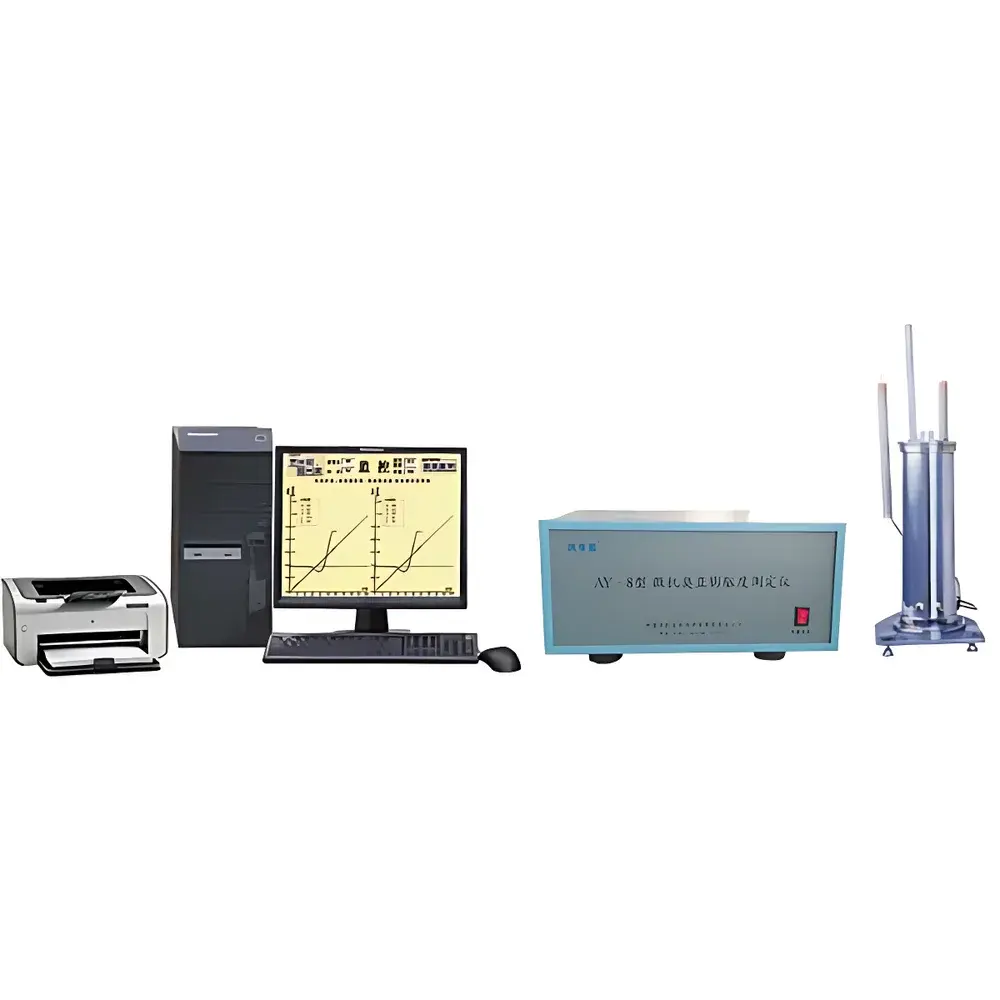
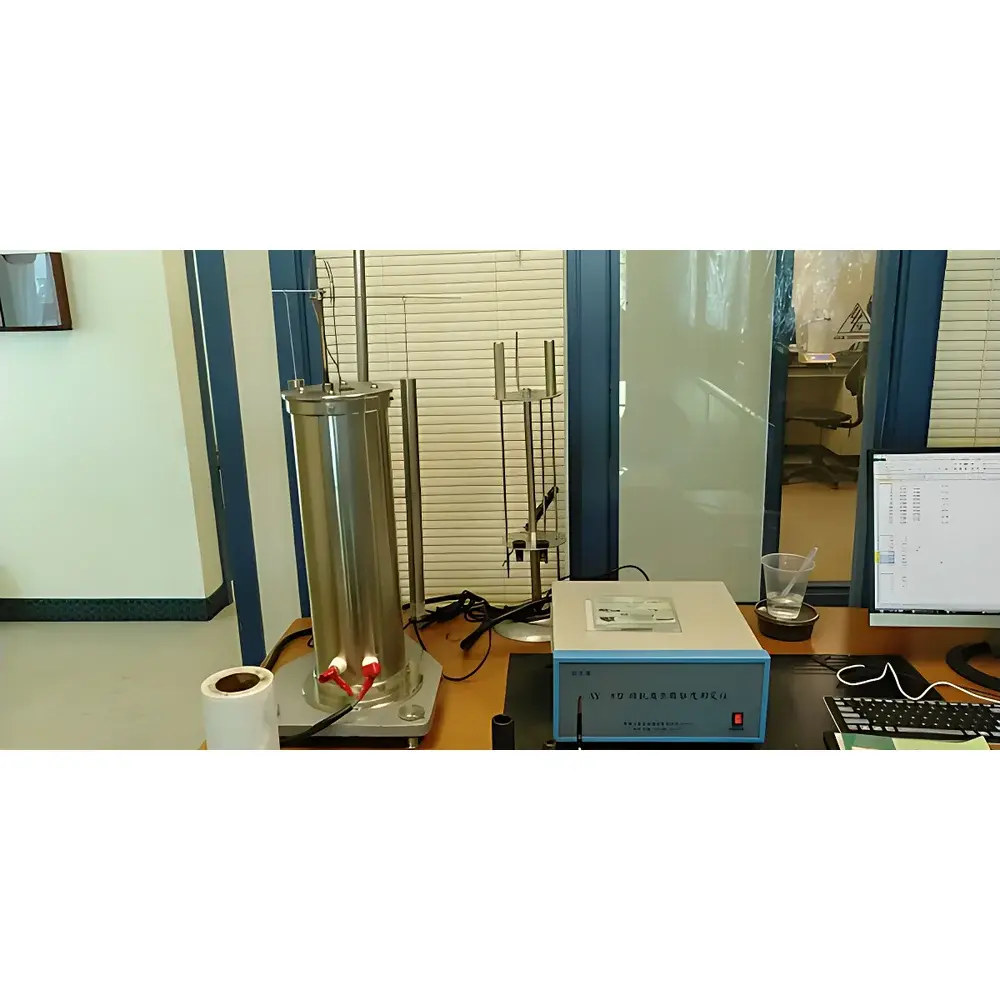
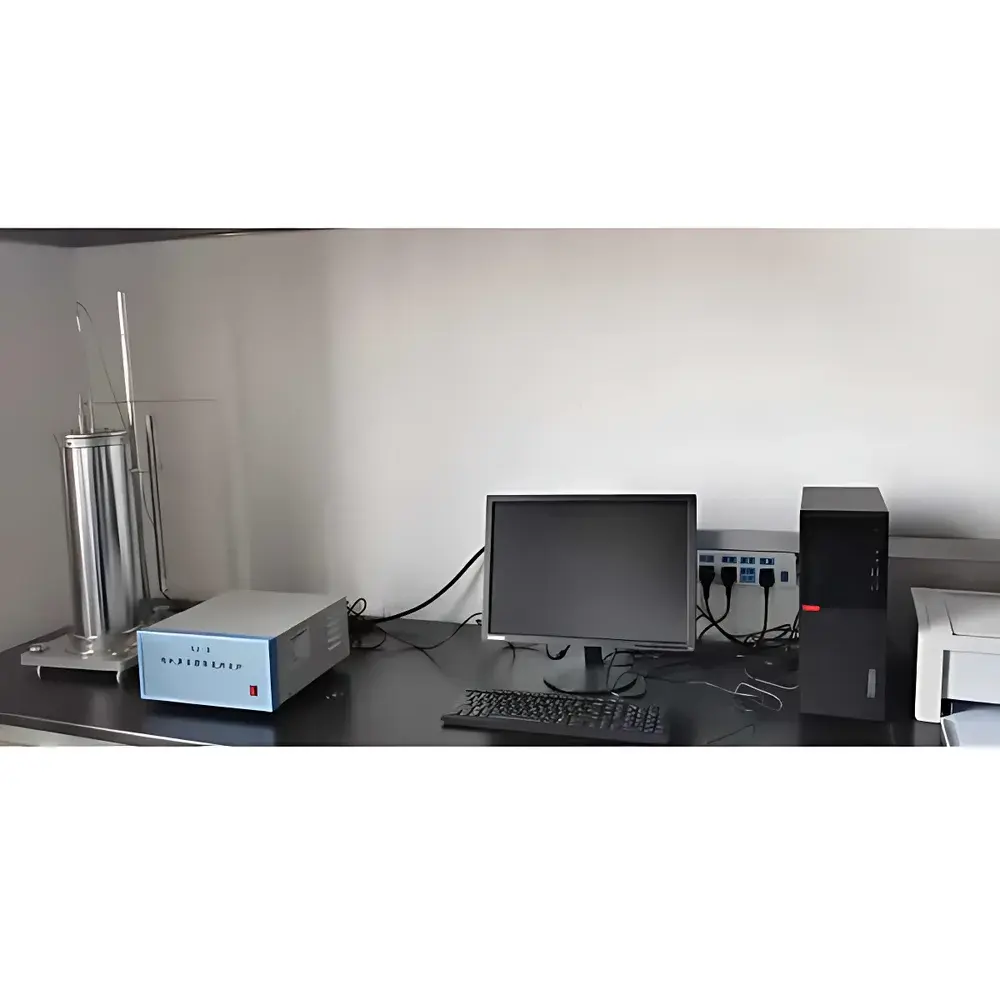
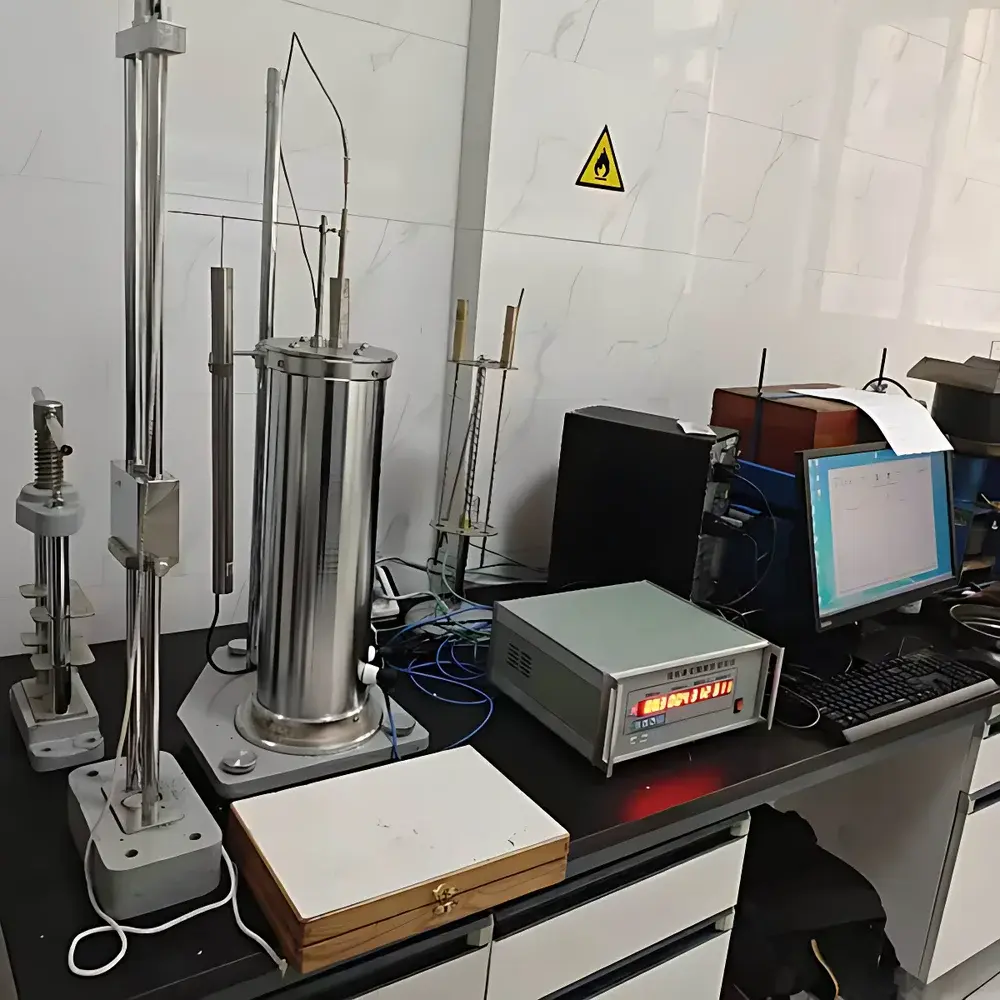
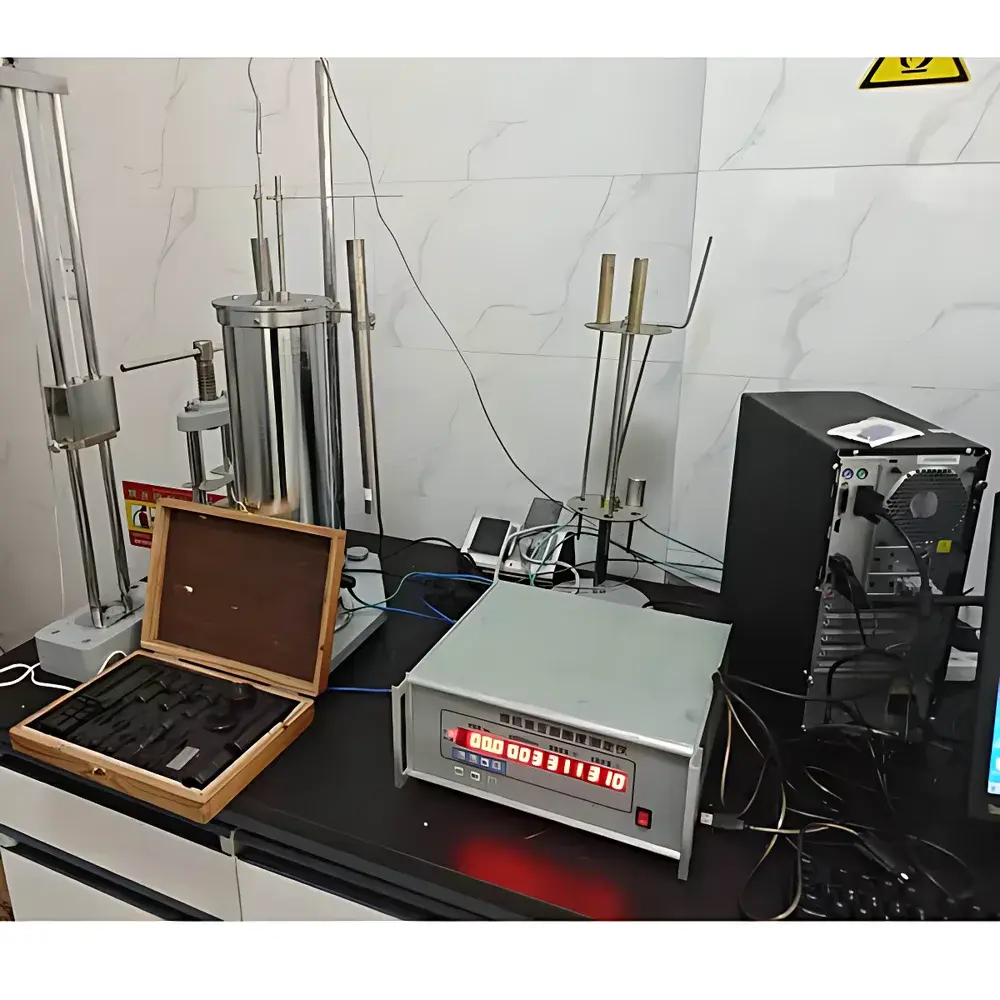
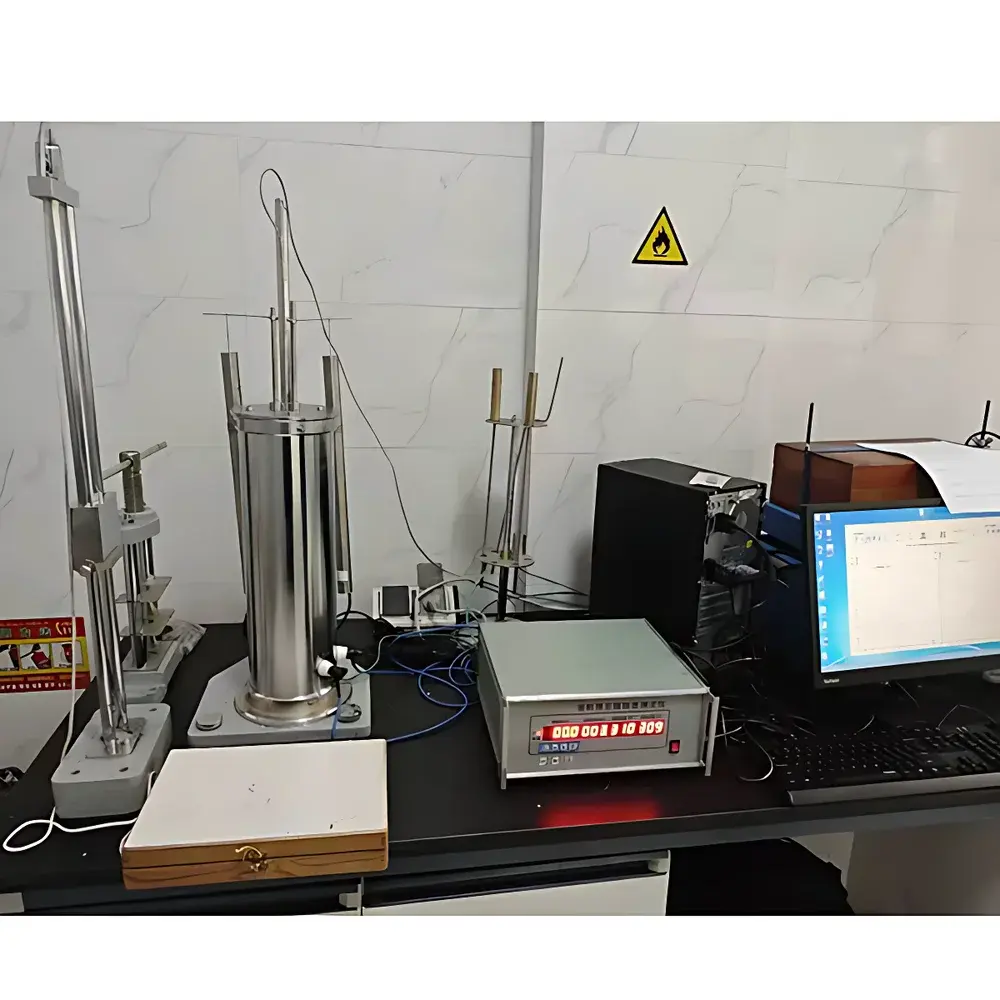
MingShen Science AY-8 Microcomputer-Based Audibert-Roquet Dilatometer
| Brand | MingShen Science |
|---|---|
| Origin | Henan, China |
| Model | AY-8 |
| Temperature Range | 0–999 °C |
| Heating Rate Accuracy | ±30 s/24 h |
| Temperature Accuracy | ±1 °C |
| Sample Chamber Dimensions | 330 × 290 × 120 mm |
| Timing Range | 0–999 min |
| Temperature Resolution | 1 °C |
| Atmosphere | Oxidizing (Air) |
| Power Consumption | ≤5 kW |
| Thermocouple Class | 0.5 grade |
| Time Resolution | 0.1 min |
| Preheating Options | Three selectable preset temperatures |
| Recovery Performance | Furnace returns to pre-insertion temperature within 7 min |
Overview
The MingShen Science AY-8 Microcomputer-Based Audibert-Roquet Dilatometer is a dedicated thermal expansion measurement system engineered for the standardized evaluation of caking and swelling behavior in bituminous coals. It operates on the principle of dilatometric analysis—measuring axial dimensional changes of a confined coal charge under controlled heating in an oxidizing atmosphere—according to the fundamental thermomechanical response of coal during pyrolysis. Unlike generic dilatometers, the AY-8 implements the specific geometry, sample confinement, and thermal protocol defined in GB/T 5450–2014 and ASTM D 5515. The instrument directly assesses coking potential without requiring inert diluents or binder additives, enabling quantification of critical thermal transition points—including softening temperature (T₁), initial expansion temperature (T₂), solidification temperature (T₃), contraction ratio (a), and maximum expansion ratio (b)—from real-time displacement versus temperature curves. Its design prioritizes repeatability in high-viscosity, volatile-rich coal systems where conventional plasticity indices (e.g., Gieseler fluidity) may lack resolution.
Key Features
- Integrated microcomputer control system compliant with GB/T 5450–2014 and ASTM D 5515 procedural logic, including automated preheat selection, 3 °C/min linear ramp execution, and post-insertion thermal recovery (<7 min to baseline)
- Dual-channel displacement transduction with simultaneous real-time tracking of two stainless-steel dilatometer tubes, minimizing inter-sample variability in comparative testing
- High-stability furnace assembly with ±1 °C temperature accuracy across 0–999 °C range and 0.1 min timing resolution, validated against Class 0.5 thermocouple standards
- On-screen dynamic visualization of expansion curves synchronized with temperature, time, heating rate, and current draw—enabling immediate process diagnostics
- Automated endpoint detection and parameter derivation: T₁ (softening), T₂ (onset of expansion), T₃ (solidification), a (contraction), b (expansion ratio), with embedded calculation algorithms traceable to standard definitions
- Non-volatile data storage per test cycle—including raw displacement/time/temperature arrays, derived metrics, and annotated metadata—supporting audit-ready record retention
Sample Compatibility & Compliance
The AY-8 accommodates standard cylindrical coal specimens (typically 60–80 g, compacted into 10 mm diameter × 60 mm height columns) loaded into precision-machined stainless-steel dilatometer tubes. Its 330 × 290 × 120 mm internal chamber volume ensures uniform thermal field distribution and mechanical stability during expansive/contractive transitions. The system is configured exclusively for air-atmosphere operation, aligning with the oxidative conditions mandated by both GB/T 5450–2014 and ASTM D 5515. All hardware and software functions are documented to support GLP-compliant laboratory workflows; raw data files include timestamps, operator ID fields, and instrument calibration status flags—facilitating alignment with ISO/IEC 17025 documentation requirements for coal quality laboratories.
Software & Data Management
The proprietary Windows-based application provides full experimental lifecycle management: method setup (preheat selection, ramp rate, hold segments), live acquisition, automated curve analysis, and report generation. Each test session generates a structured .csv dataset containing second-by-second displacement (µm), temperature (°C), elapsed time (min), and calculated parameters. Reports include annotated expansion curves, tabulated transition temperatures, and conformance indicators against specification limits. Data export supports integration with LIMS platforms via ODBC drivers. Audit trail functionality logs all user actions—including method edits, result overrides, and calibration events—with timestamp and account attribution, satisfying foundational expectations of FDA 21 CFR Part 11 for electronic records in regulated coal testing environments.
Applications
- Ranking and classification of medium-to-strong caking bituminous coals for coke oven feedstock blending optimization
- Differentiation of coals exhibiting similar Gieseler fluidity but divergent膨胀 behavior—particularly in identifying “high-swelling, low-shrinkage” coking profiles
- Quality assurance of coal shipments against contractual expansion specifications (e.g., b-value > 150% for premium metallurgical blends)
- Research into coal maceral reactivity, additive effects (e.g., pitch blending), and low-rank coal upgrading pathways
- Correlation studies linking dilatometric parameters (T₂–T₃ interval, b/a ratio) to coke strength after reaction (CSR) and microporosity development
FAQ
What standards does the AY-8 strictly adhere to?
It implements the exact thermal protocols, sample geometry, and data reduction rules specified in GB/T 5450–2014 and ASTM D 5515.
Can the instrument operate under inert or reducing atmospheres?
No—the AY-8 is designed exclusively for ambient air operation as required by the referenced standards.
How is calibration traceability maintained?
Temperature calibration uses NIST-traceable reference thermocouples; displacement calibration employs certified gauge blocks verified annually per ISO 9001 procedures.
Is multi-user access with role-based permissions supported?
Yes—the software includes configurable user accounts with read/write/audit privileges aligned with laboratory SOPs.
What is the typical maintenance interval for the furnace and transducers?
Furnace elements require inspection every 500 test cycles; linear variable differential transformers (LVDTs) undergo functional verification quarterly using step-input displacement standards.



