
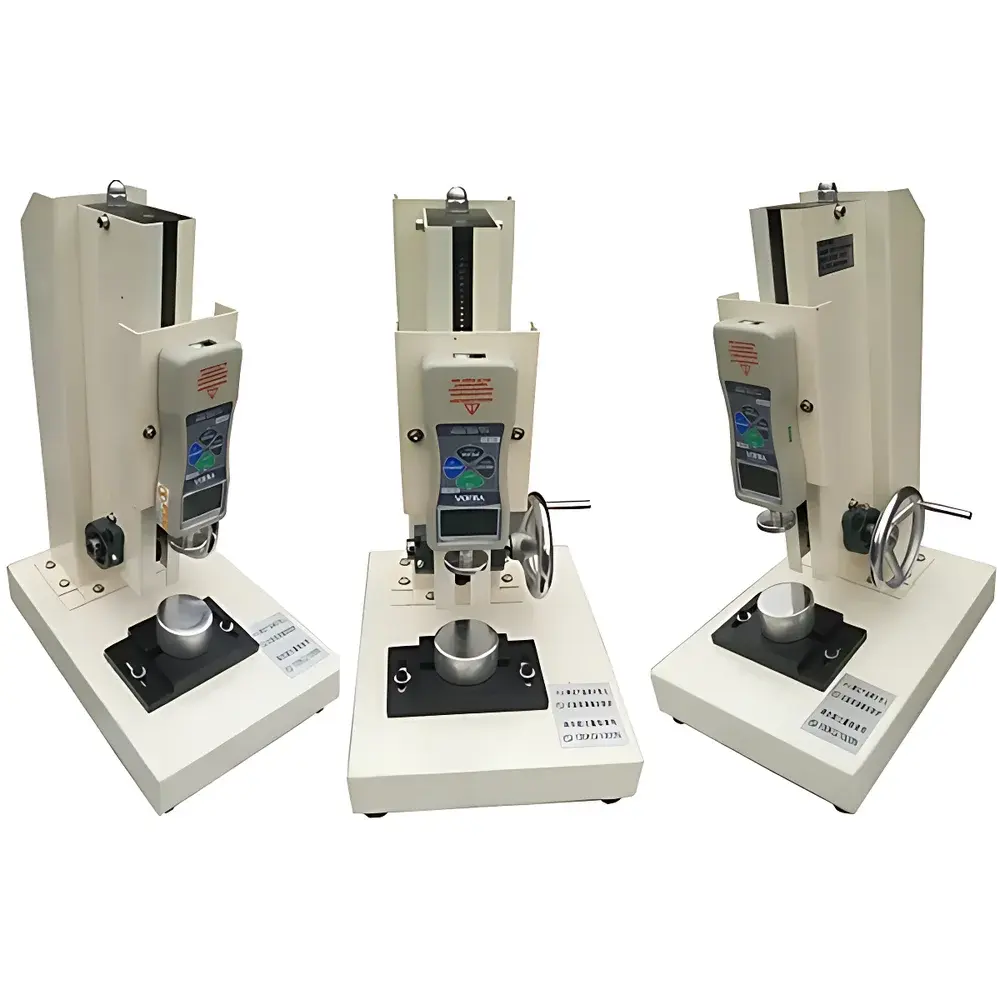
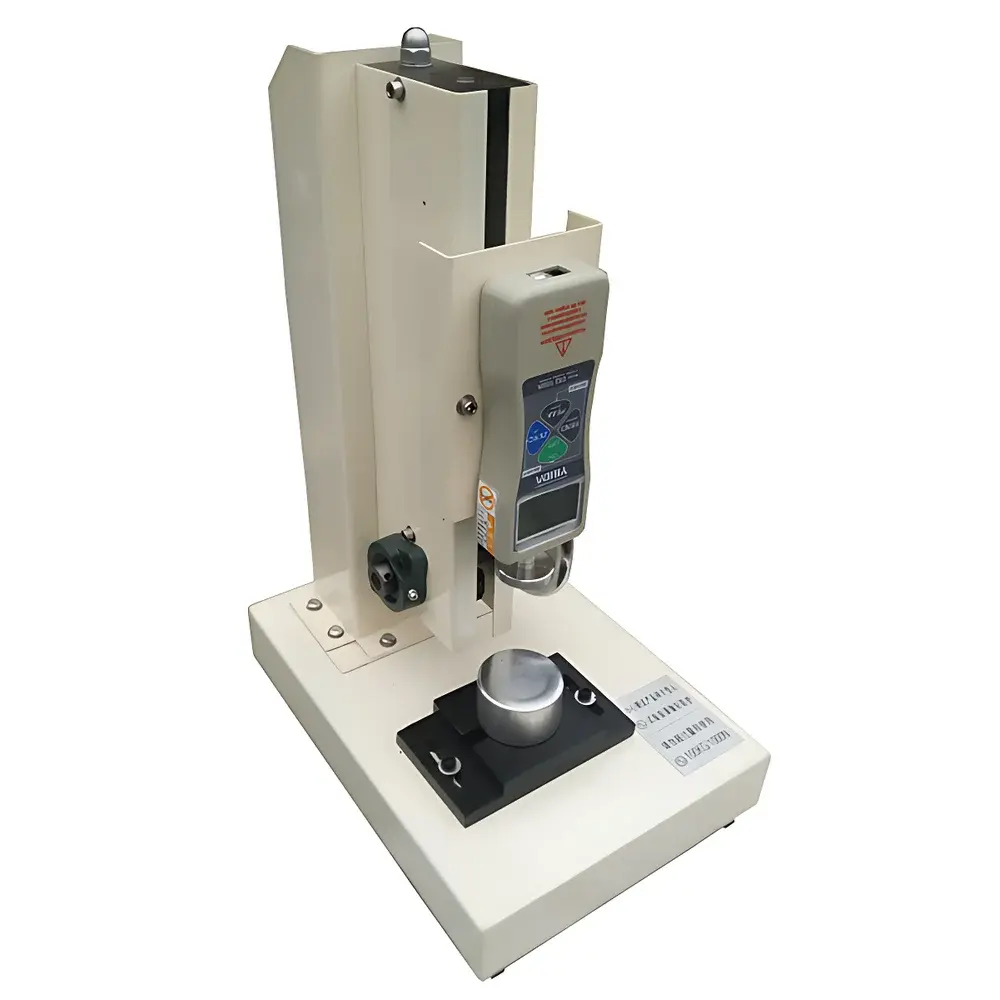
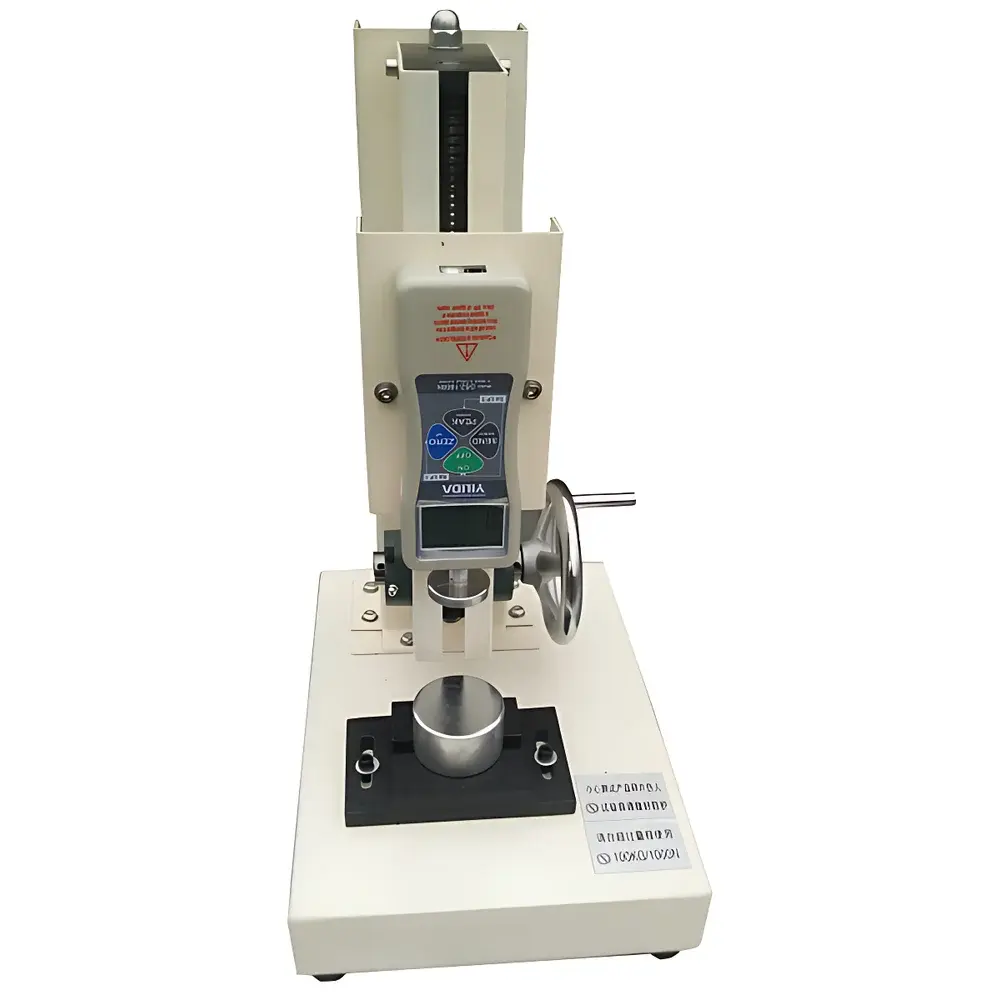
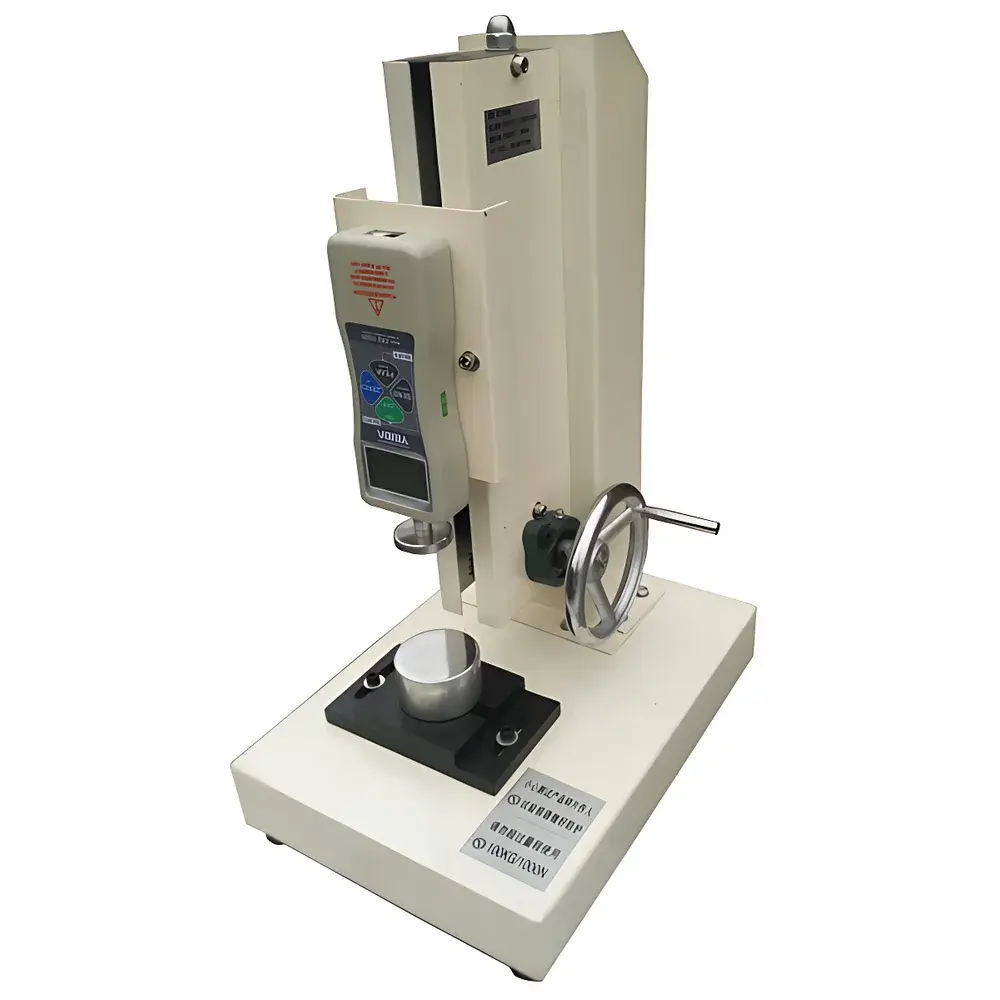
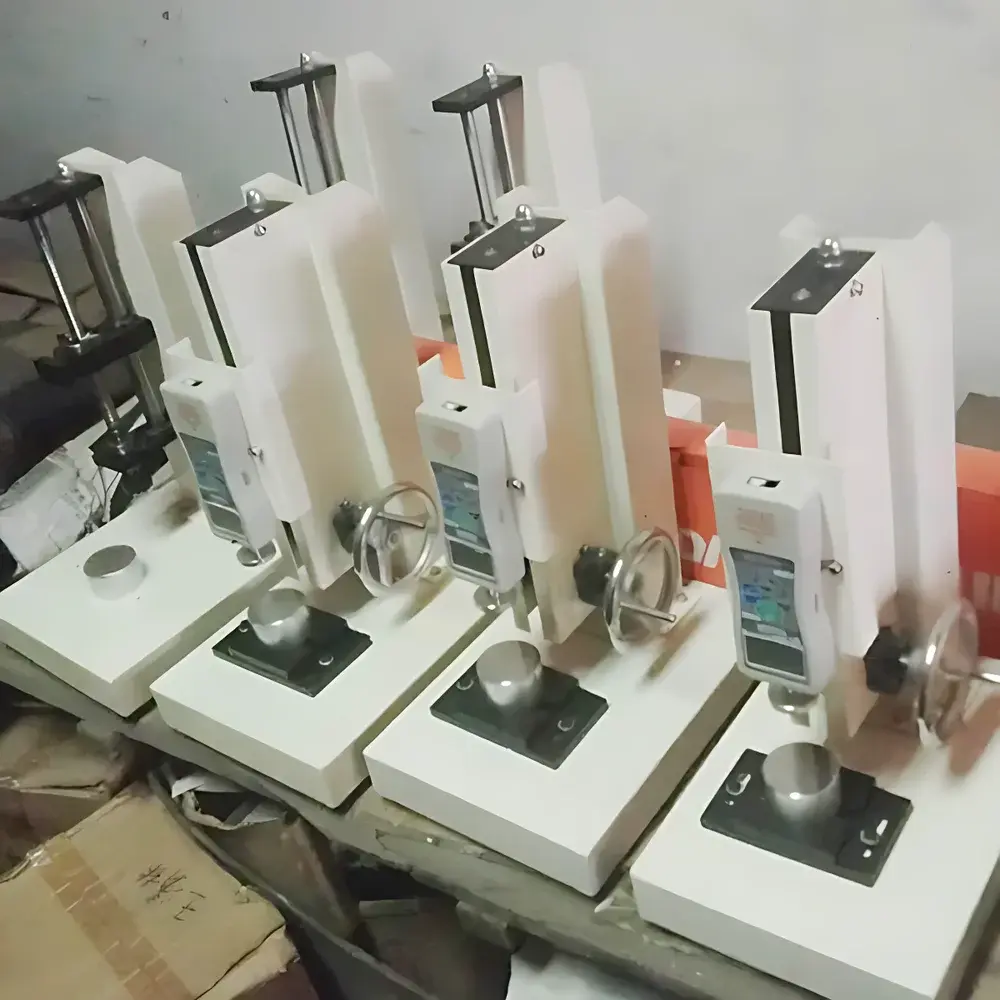
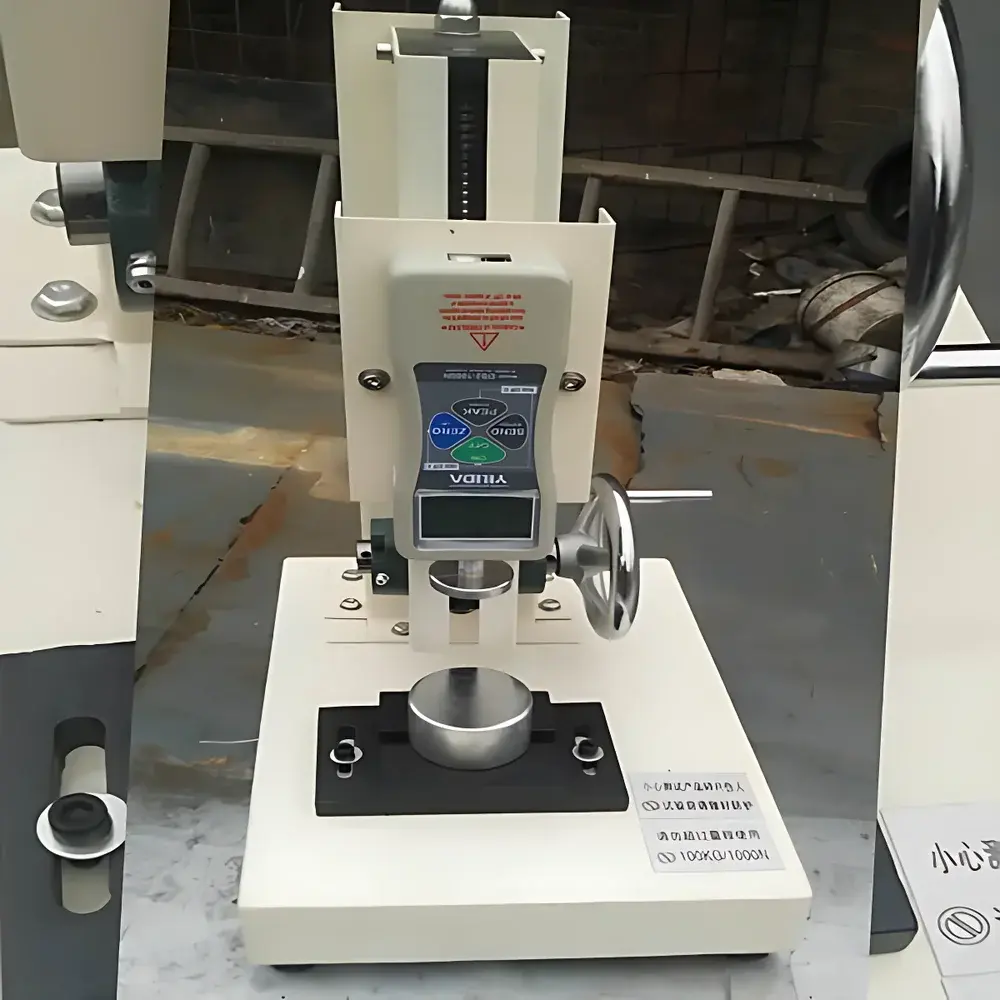
MingShen Science DS2-1000N Digital Compression Testing Machine for Briquetted Coal
| Key | Brand: MingShen Science |
|---|---|
| Origin | Henan, China |
| Model | DS2-1000N |
| Max Test Force | 100 kN |
| Loading Method | Manual |
| Platen Spacing | >100 mm |
| Force Range | 0–1000 N (0–100 kgf) |
| Resolution | 1 N (0.1 kgf) |
| Sampling Rate | 1000 Hz |
| Display | 4-digit LCD |
| Operating Temp | −20°C to +40°C |
| Power | Rechargeable 6-cell battery or 220 V AC adapter |
| Interface | USB |
| Dimensions (L×W×H) | 360 × 260 × 560 mm |
| Weight | ~25 kg |
| Compliance | MT/T 748–2007, Local Standard for Boiler Honeycomb Briquettes |
Overview
The MingShen Science DS2-1000N Digital Compression Testing Machine is a manually operated, portable mechanical testing system engineered for precise measurement of compressive strength in standardized briquetted coal specimens, sintered iron ore pellets, granular agglomerates, and other brittle or semi-rigid materials. It operates on the fundamental principle of direct load application via calibrated mechanical leverage and high-fidelity force transduction—utilizing a strain-gauge-based load cell with real-time analog-to-digital conversion at 1000 samples per second. Unlike electromechanical universal testers, the DS2-1000N employs a hand-cranked loading mechanism, eliminating dependency on motorized actuation while maintaining repeatability under controlled manual displacement rates. Its design prioritizes field-deployable robustness and laboratory-grade traceability for routine quality control in coal processing plants, mineral pelletization facilities, construction material labs, and academic research settings where ASTM E9, ISO 679, or MT/T 748–2007 compliance is required for cold crushing strength (CCS) evaluation.
Key Features
- Compliant with MT/T 748–2007 “Method for Determination of Cold Compressive Strength of Industrial Briquetted Coal” and regional standards for honeycomb boiler briquettes.
- Four-digit LCD display with simultaneous real-time force reading and peak-hold capability; intuitive tactile keypad interface (ON/OFF, ZERO, PEAK/TRACK toggle).
- High-resolution force measurement: 1 N resolution across 0–1000 N range (equivalent to 0–100 kgf), with ≤±0.2% deformation indication error per specification.
- Dual power architecture: Integrated rechargeable 6-cell battery (8-hour charge cycle, ~500 cycles lifespan) and optional 220 V AC adapter—enabling uninterrupted operation during extended batch testing.
- USB data export interface supports raw time-series force logging to external PCs for post-test statistical analysis (e.g., mean CCS, standard deviation, Weibull modulus calculation).
- Compact footprint (360 × 260 × 560 mm) and 25 kg mass facilitate benchtop deployment in constrained lab spaces or mobile field units without structural anchoring.
- Overload protection circuitry disables measurement beyond 110% of full scale; permanent sensor damage occurs above 200%—ensuring long-term calibration stability when operated within defined limits.
Sample Compatibility & Compliance
The DS2-1000N accommodates cylindrical, cuboidal, or irregularly shaped specimens up to 100 mm in vertical clearance between platens—suitable for standard 50 mm diameter × 30 mm height coal briquettes, iron ore pellets (8–16 mm), cement mortar cubes (40 × 40 × 40 mm), concrete test blocks, refractory bricks, rubber bearing pads, and corrugated cardboard packaging. Its mechanical loading path meets GLP-aligned documentation requirements when paired with timestamped USB data exports. While not certified to ISO/IEC 17025 as a standalone instrument, its adherence to MT/T 748–2007 enables audit-ready CCS reporting in coal supply chain QA/QC workflows. For regulatory environments requiring electronic record integrity, the device supports FDA 21 CFR Part 11–compatible data archiving when integrated with validated third-party acquisition software.
Software & Data Management
No embedded operating system or proprietary firmware is installed—the DS2-1000N functions as a self-contained hardware sensor node. Force data is streamed via USB CDC class protocol in ASCII-delimited format (e.g., “TIME(ms),FORCE(N),MODE(PEAK/TRACK)” at 1 kHz). Users may import logs into MATLAB, Python (NumPy/Pandas), or Excel for statistical summarization, histogram generation, or Weibull distribution fitting. The absence of onboard storage eliminates firmware update dependencies but necessitates host-side validation of data capture timing and buffer management. Calibration certificates (traceable to national metrology institutes) are supplied with each unit, and periodic verification against certified deadweight standards is recommended per ISO 7500-1 Class 2 requirements.
Applications
- Quality assurance of metallurgical and domestic coal briquettes per cold crushing strength thresholds in ISO 1170 and GB/T 25210.
- Mechanical screening of sintered iron ore pellets prior to blast furnace charging—correlating CCS with reducibility and degradation resistance.
- Compliance testing of refractory ceramic tiles, autoclaved aerated concrete (AAC) blocks, and lightweight aggregate masonry units per EN 772-1.
- Educational demonstration of Hookean behavior, yield point identification, and brittle fracture mechanics in undergraduate materials science laboratories.
- Field verification of pavement base course compaction efficacy using standardized CBR-type surcharge tests on stabilized soil specimens.
- Validation of polymer-modified bitumen binder cohesion in asphalt mixtures through indirect tensile strength (ITS) adaptation using custom fixtures.
FAQ
What standards does the DS2-1000N explicitly support?
It is designed and verified for MT/T 748–2007 and local Chinese standards for honeycomb briquettes. While not pre-certified to ASTM D695 or ISO 604, its measurement accuracy and resolution meet minimum requirements for comparative CCS assessment.
Can the device perform tensile testing?
Yes—using the included standard tension fixture set, it measures pull-off force in adhesives, geotextiles, and wire mesh reinforcements within the 0–1000 N range.
Is automatic data logging possible without a PC?
No—the USB interface requires an active host connection; internal memory is not implemented.
How often should calibration be performed?
Annually under normal use, or after any impact event, overload incident, or observed drift exceeding ±1 N across three consecutive zero-load verifications.
Does the instrument support metric/imperial unit switching?
Force display is fixed in newtons (N); kgf equivalents are derived mathematically (1 kgf ≈ 9.80665 N) but not shown directly on screen.



