
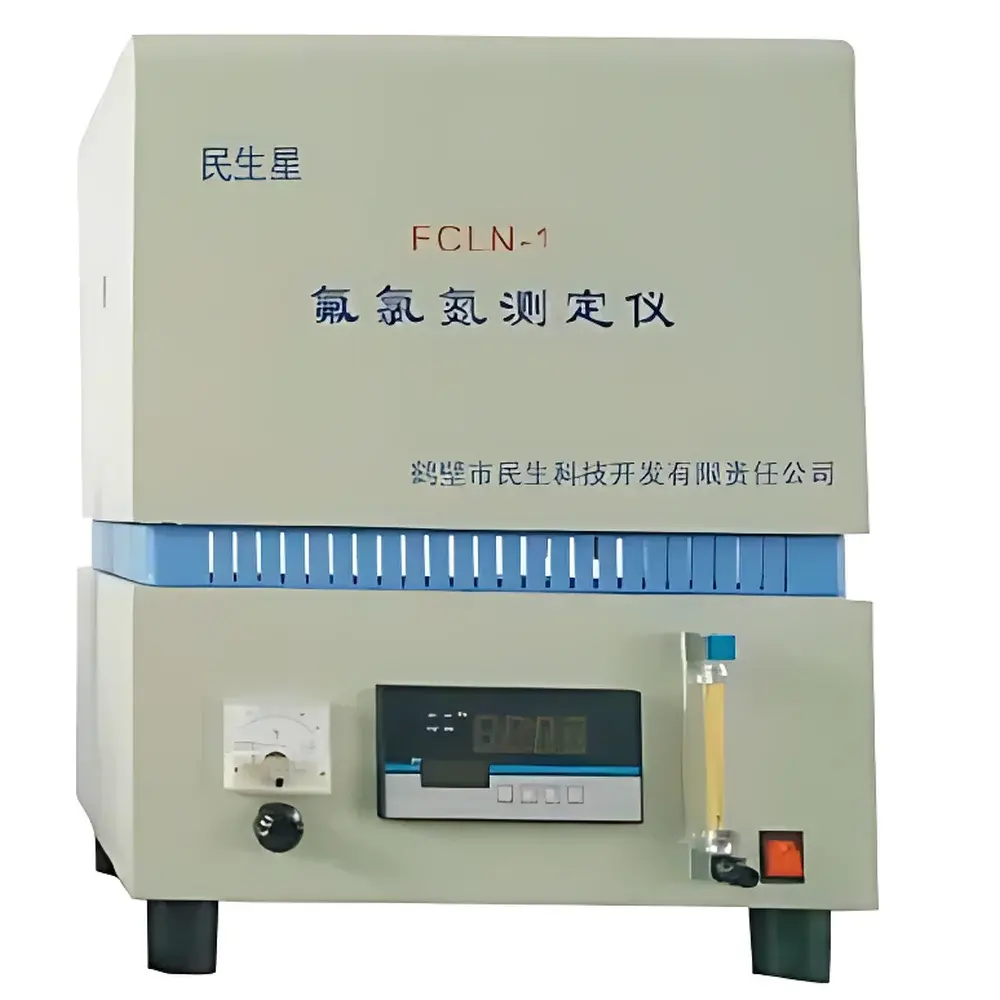
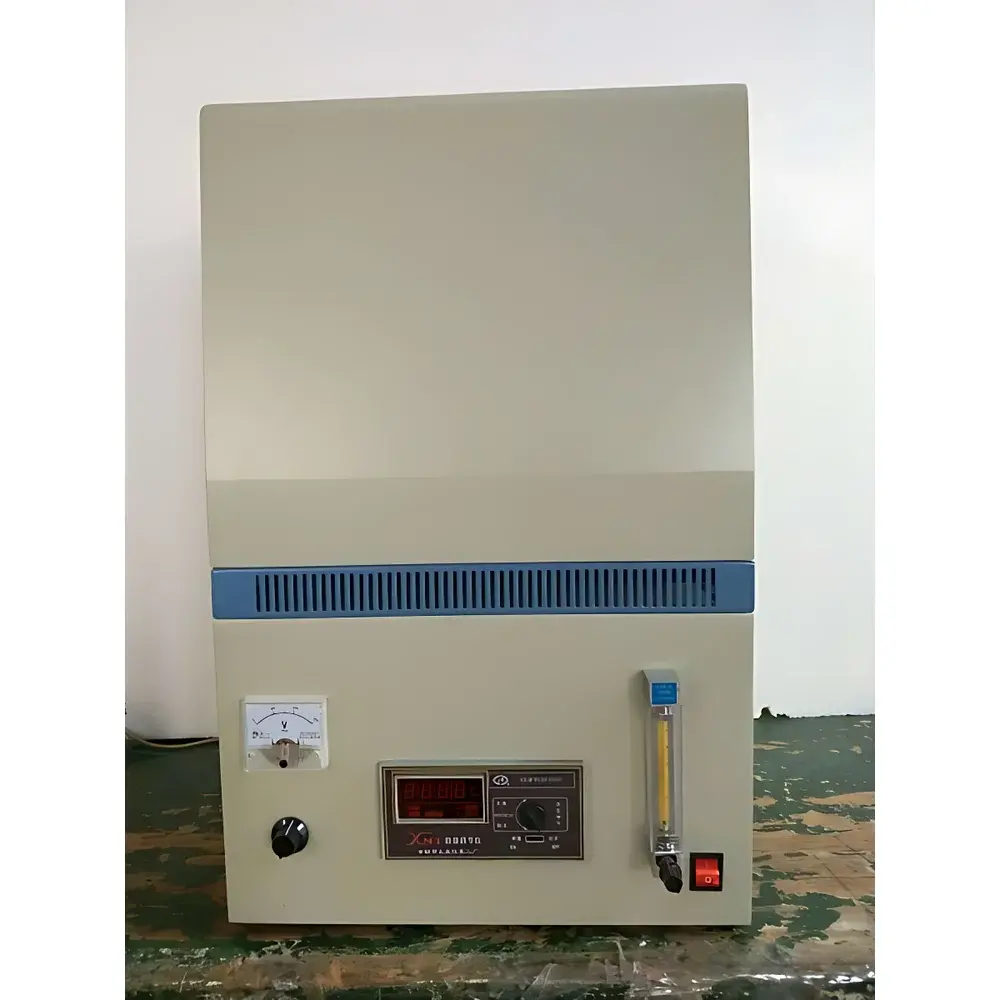
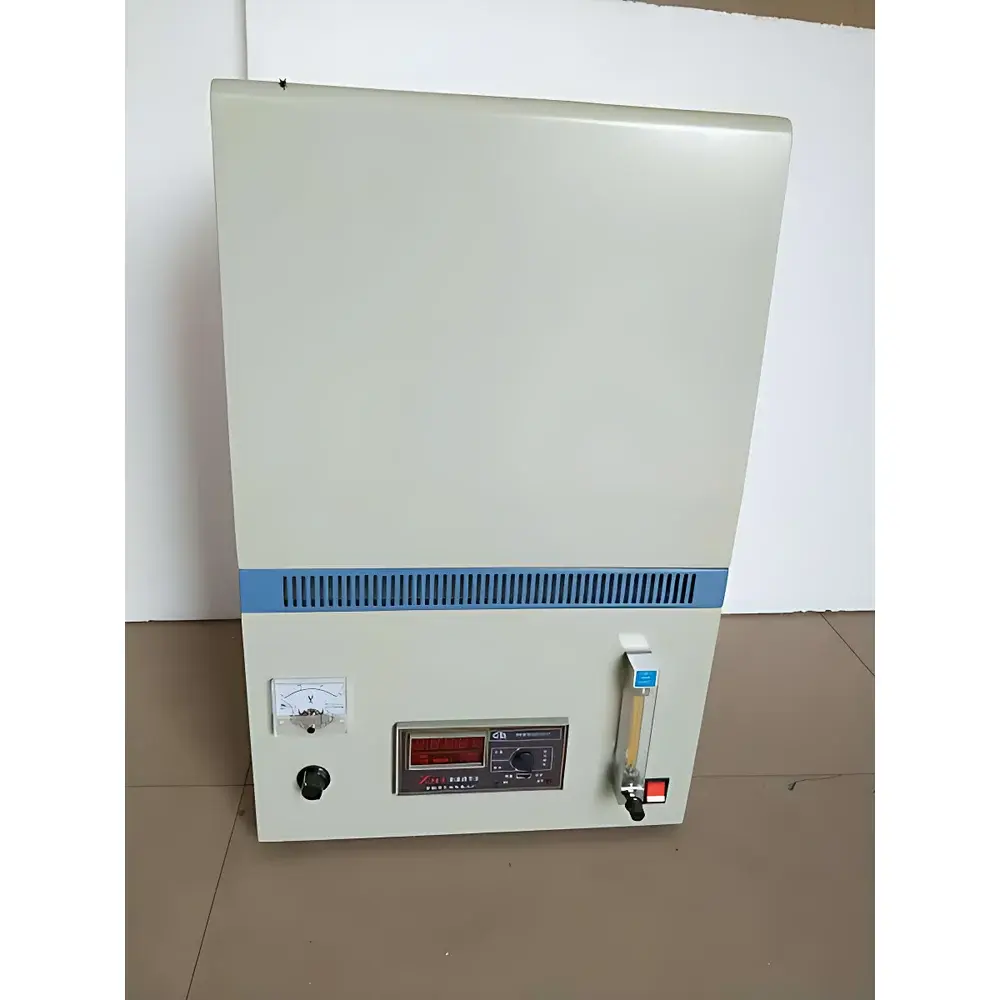
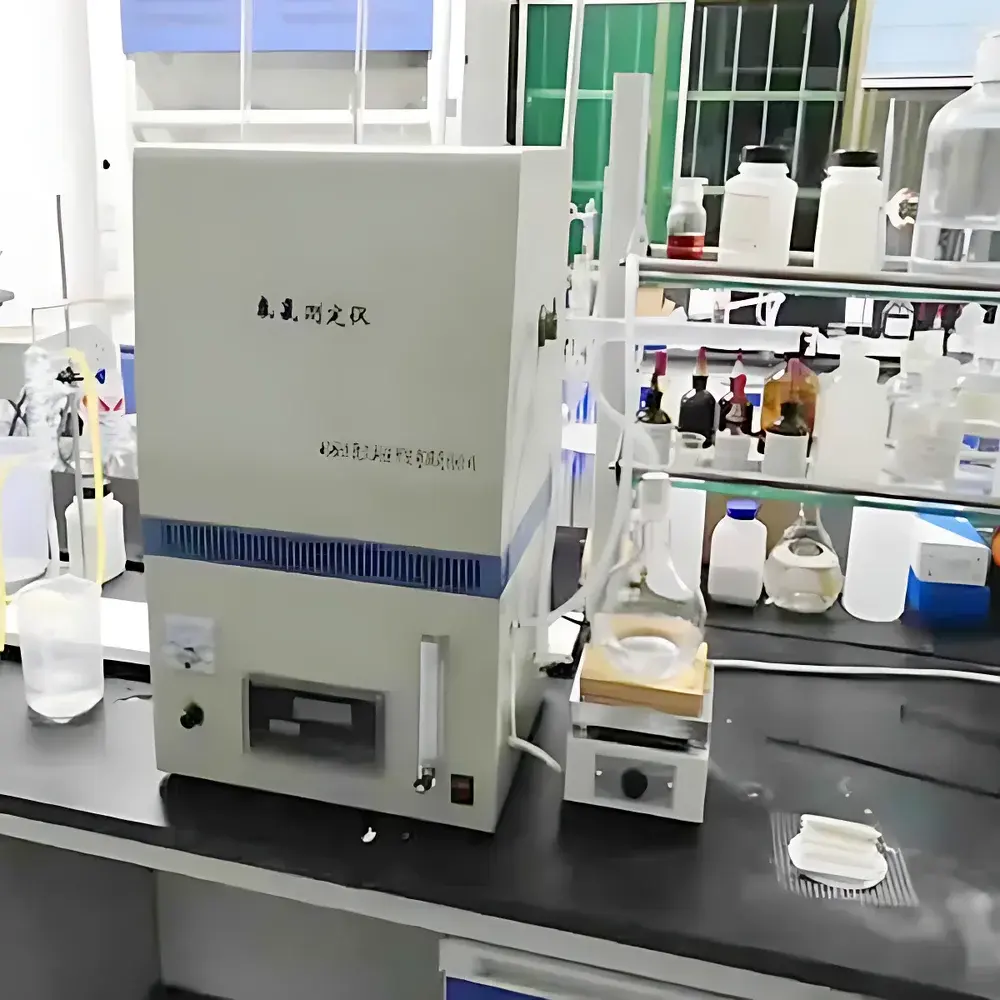
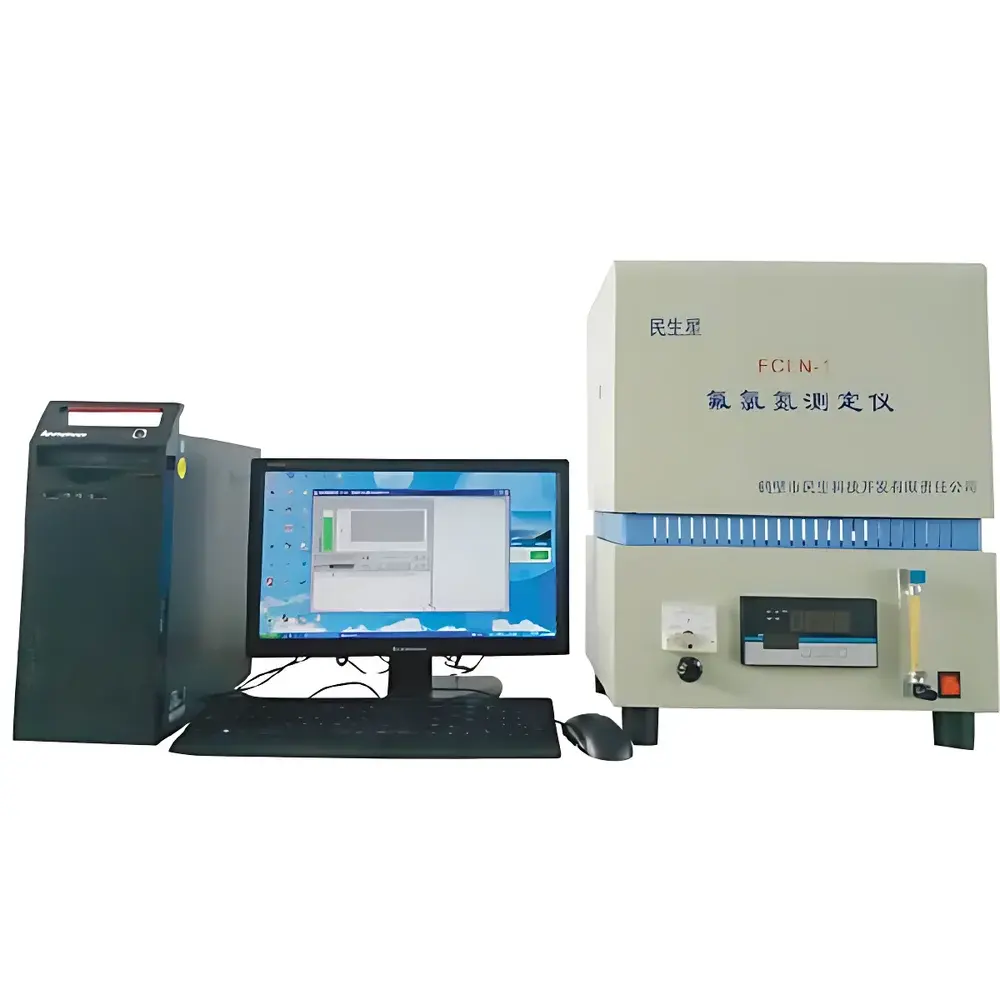
MingShen Science FCL-1 Fluorine-Chlorine-Nitrogen Analyzer
| Brand | MingShen Science |
|---|---|
| Origin | Henan, China |
| Model | FCL-1 |
| Temperature Control Accuracy | ±5°C at 1100°C |
| Temperature Range | Ambient to 1300°C |
| Heating Time | ≤25 min to 1100°C |
| Method | High-Temperature Combustion Hydrolysis |
| Fluorine Analysis Compliance | GB/T 4633–2014 |
| Chlorine Analysis Compliance | GB/T 3558–2014 |
| Power Supply | AC 220 V ±10%, 50 Hz |
| Max. Power Consumption | ≤3.5 kW |
| Stirring Speed | Continuously Adjustable with Digital Display |
| Flowmeter Range | 0–1000 mL/min (graduation: 10 mL/min) |
| High-Temperature Furnace | Capable of ≥1100°C with ≥80 mm uniform zone at 1100±5°C |
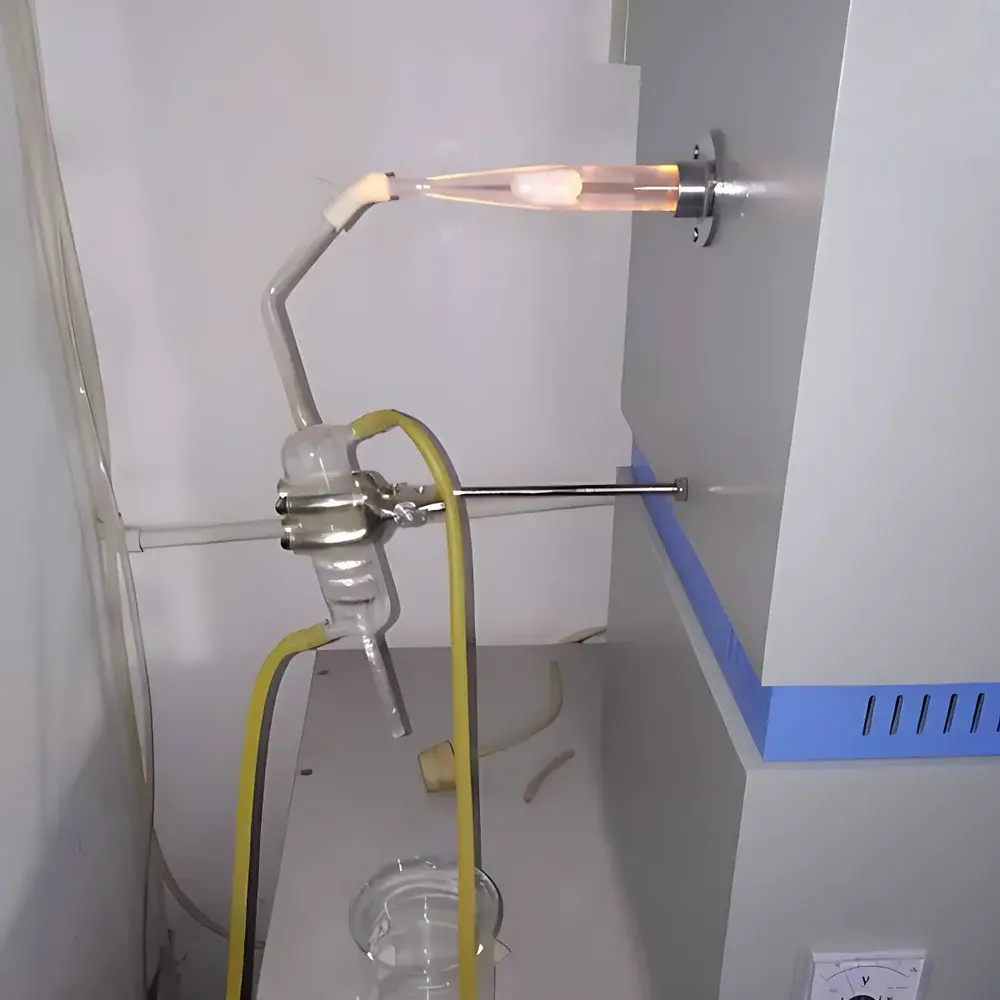
| Combustion Tube | Fused Quartz, Rated ≥1200°C |
| Voltage Control for Evaporation | Solid-State Relay, 0–220 V Continuous Adjustment |
| Temperature Controller | PID-Based with Low-Drift Components |
Overview
The MingShen Science FCL-1 Fluorine-Chlorine-Nitrogen Analyzer is a dedicated high-temperature combustion hydrolysis system engineered for the quantitative determination of fluorine, chlorine, and nitrogen in solid and powdered samples—particularly coal, coke, mineral ores, and industrial feedstocks. It operates on the principle of controlled oxidative pyrolysis in a high-purity quartz combustion tube under precisely regulated airflow, followed by hydrolytic absorption of halogen and nitrogen oxides into aqueous trapping solutions. The resulting ionic species (F⁻, Cl⁻, NO₃⁻/NO₂⁻) are subsequently quantified via ion chromatography, potentiometric titration, or spectrophotometric methods—depending on laboratory workflow and detection requirements. Designed for routine compliance testing, the FCL-1 integrates robust thermal management, programmable gas flow control, and stable furnace architecture to ensure method reproducibility aligned with national standard protocols.
Key Features
- PID-based temperature controller with low-drift electronic components ensures thermal stability within ±5°C at the target setpoint of 1100°C—critical for complete sample decomposition without premature volatilization or incomplete oxidation.
- High-temperature furnace features a minimum 80 mm isothermal zone maintained at 1100±5°C, verified per ASTM E1112 practice for furnace uniformity assessment; capable of sustained operation up to 1300°C for extended method flexibility.
- Fused quartz combustion tube rated for continuous service above 1200°C provides chemical inertness against aggressive halogenated intermediates and eliminates catalytic interference during combustion.
- Evaporation stage employs solid-state relay (SSR) voltage regulation (0–220 V DC/AC), enabling fine-grained control over sample introduction rate and minimizing thermal shock to the furnace zone.
- Digital display stirrer with continuously adjustable speed supports homogeneous slurry preparation for heterogeneous samples prior to loading—enhancing measurement repeatability across batch analyses.
- Integrated precision flowmeter (0–1000 mL/min, 10 mL/min resolution) allows accurate calibration of carrier and oxygen gas flows essential for stoichiometric combustion and consistent hydrolysis efficiency.
Sample Compatibility & Compliance
The FCL-1 accommodates solid, granular, and finely ground samples with particle size ≤0.2 mm—commonly prepared using certified pulverizing equipment compliant with ISO 13909-4. It is validated for use with coal and coke per GB/T 3558–2014 (determination of total chlorine) and GB/T 4633–2014 (determination of total fluorine). While nitrogen quantification is supported via post-combustion nitrate/nitrite capture, users must select an appropriate downstream detection platform (e.g., UV-Vis, IC, or chemiluminescence) to meet reporting limits required by internal QA/QC or regulatory submission. The instrument’s design adheres to general safety principles outlined in IEC 61010-1 for electrical equipment used in laboratory environments.
Software & Data Management
The FCL-1 operates as a hardware platform requiring external analytical instrumentation for final quantification; therefore, it does not include embedded software or data acquisition modules. However, its analog-compatible outputs—including furnace thermocouple signals, flowmeter pulse outputs, and stirrer RPM feedback—can be interfaced with third-party DAQ systems supporting IEEE 1451.2 or Modbus RTU protocols. Laboratories implementing GLP or GMP workflows may integrate the FCL-1 into validated environmental monitoring networks using time-stamped loggers that record furnace temperature, gas flow rates, and operational duration—supporting audit readiness per FDA 21 CFR Part 11 when paired with appropriate electronic signature controls.
Applications
- Coal quality assurance: Quantification of fluorine and chlorine content to assess corrosion potential in boiler systems and environmental emissions compliance.
- Metallurgical feedstock screening: Halogen analysis in iron ore, limestone, and flux materials to prevent refractory degradation and slag instability.
- Waste-derived fuel characterization: Determination of halogen load in RDF/SRF prior to incineration, supporting EU Waste Incineration Directive (2000/76/EC) conformance.
- Geological survey laboratories: Routine screening of fluorine in phosphate rock and apatite-bearing minerals for fertilizer-grade certification.
- Research applications: Method development for simultaneous halogen-nitrogen release kinetics under varying oxygen partial pressures and residence times.
FAQ
Does the FCL-1 include built-in detection for fluorine, chlorine, or nitrogen?
No—the FCL-1 is a sample preparation and combustion unit only. Quantitative analysis requires integration with external detection systems such as ion chromatography, argentometric titration, or UV-Vis spectrophotometry.
Is the furnace temperature profile programmable?
The unit features manual setpoint control via PID interface; it does not support multi-stage ramp-soak programming. For gradient thermal protocols, external programmable controllers compatible with K-type thermocouple input may be added.
Can the FCL-1 be used for bromine or iodine analysis?
While not validated per national standards, preliminary studies indicate feasibility for bromine under modified hydrolysis conditions. Iodine recovery is typically incomplete due to volatility losses below 1000°C; method adaptation requires rigorous recovery testing per ISO 5725.
What maintenance intervals are recommended for the quartz combustion tube?
Visual inspection before each batch is advised. Replacement is recommended after 200–300 combustion cycles or upon observation of surface etching, devitrification, or microcracking—especially when analyzing high-sulfur or high-ash samples.
Is CE or UL certification available for export use?
The FCL-1 carries CCC certification for domestic Chinese markets. International deployment requires local conformity assessment (e.g., CE self-declaration with technical file per Annex II of Directive 2014/35/EU) and may necessitate third-party EMC/safety testing depending on destination country regulations.





