
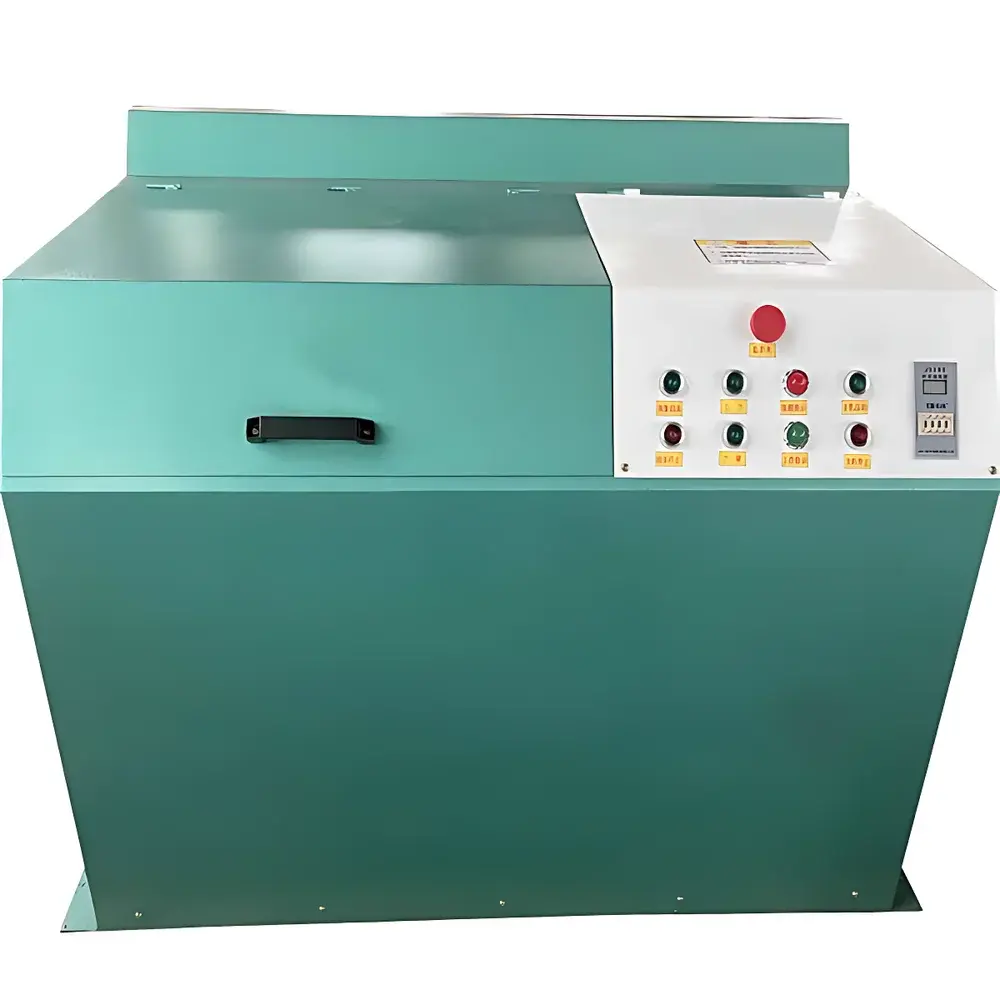
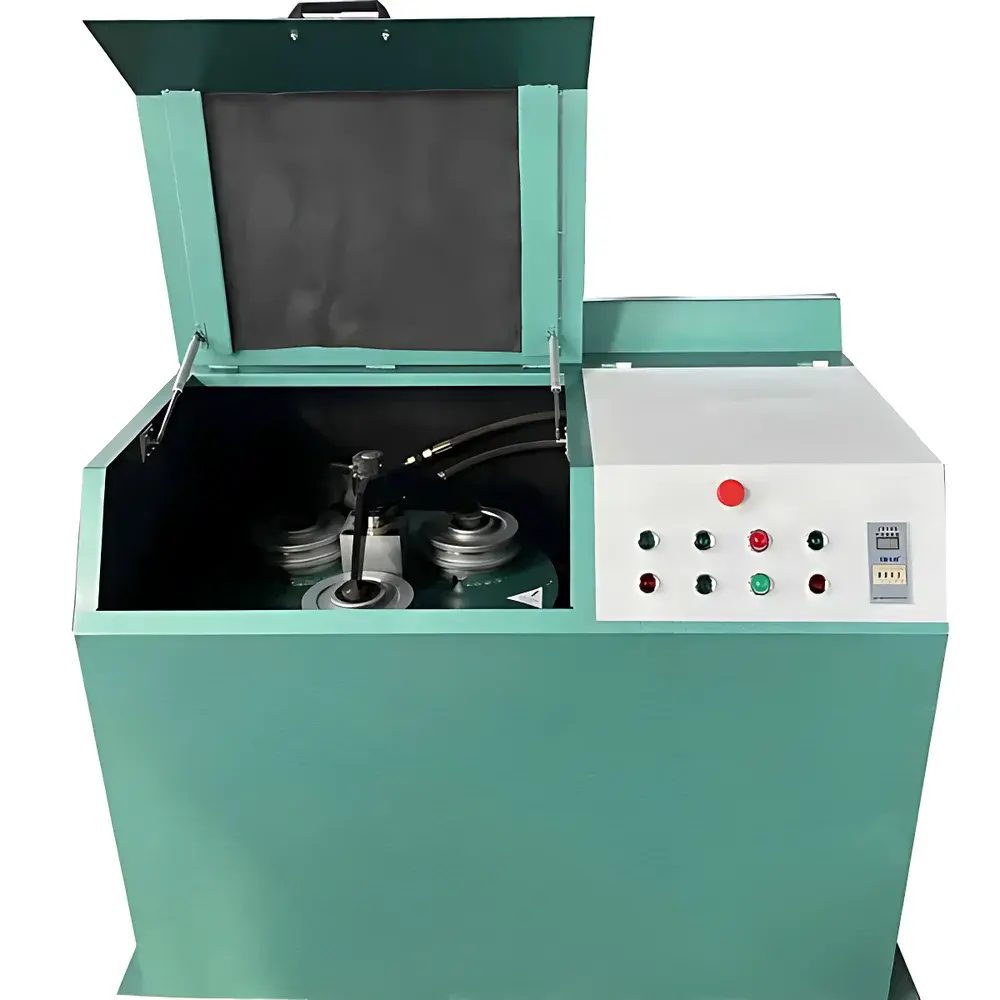
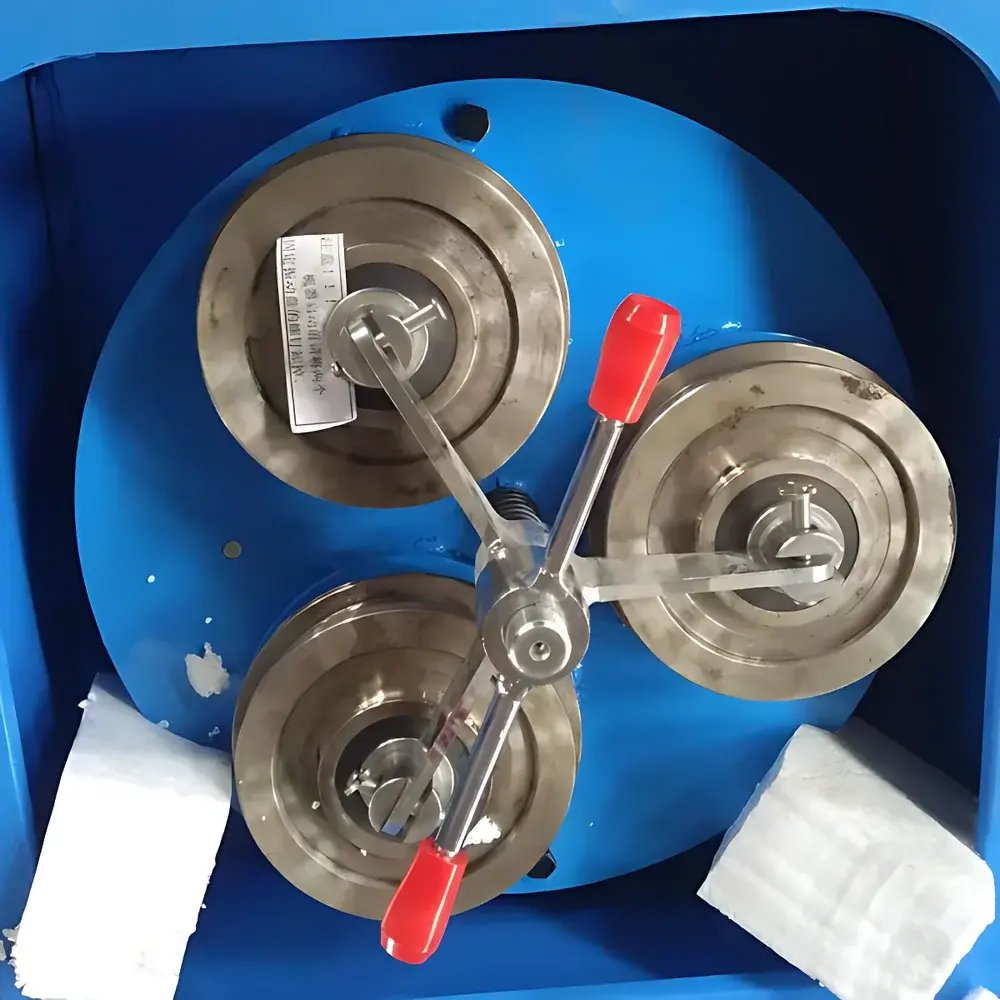
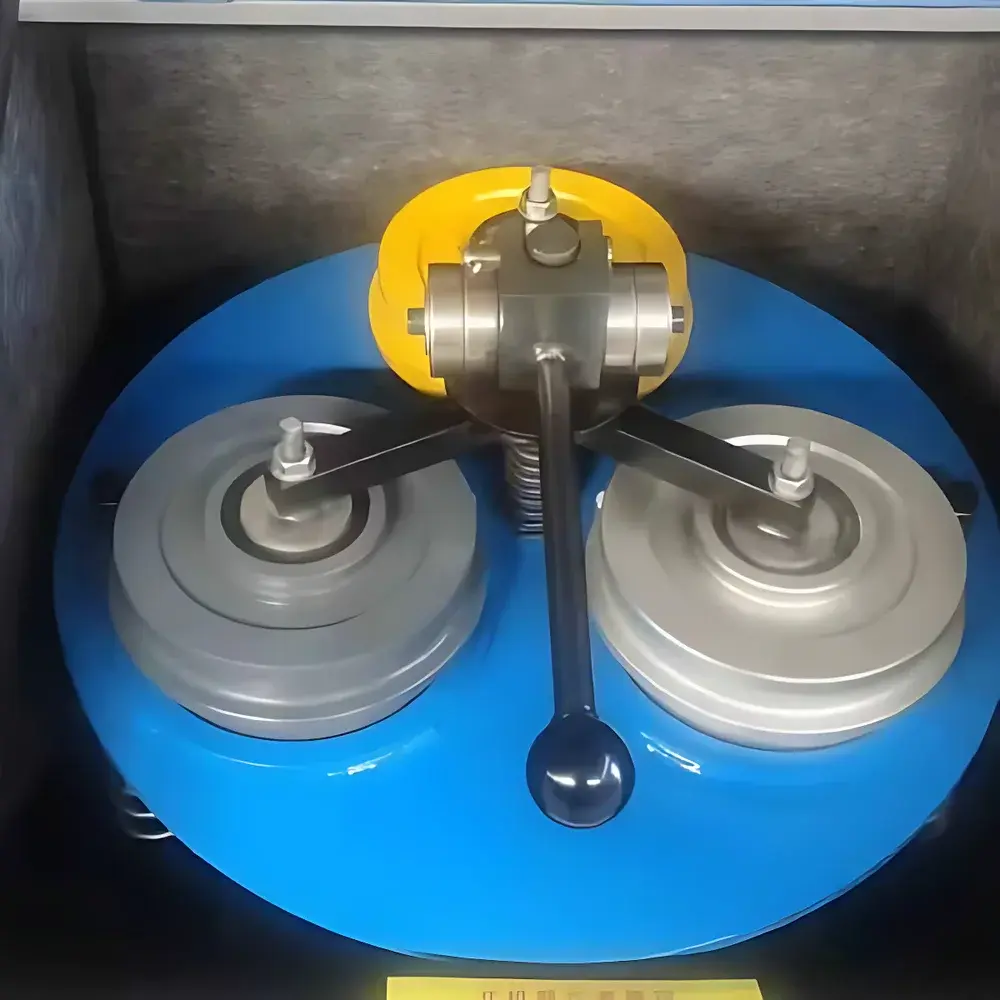
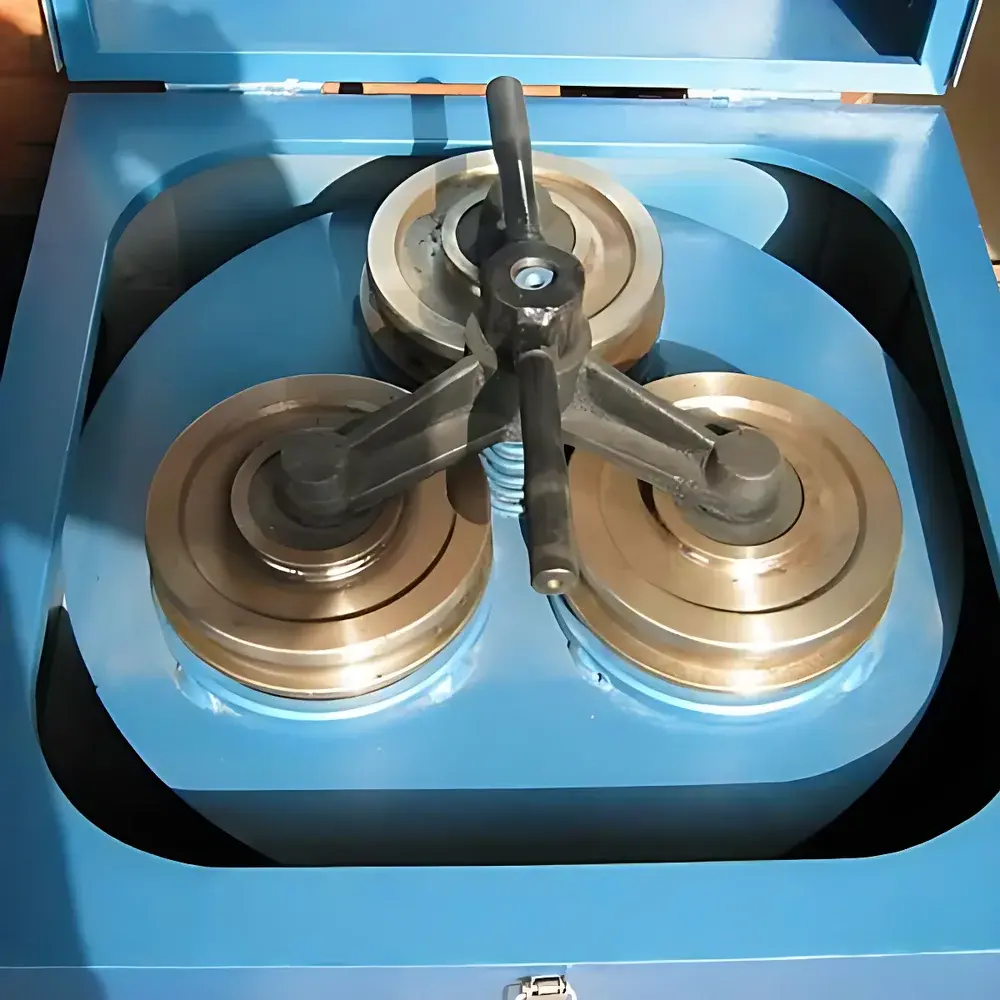
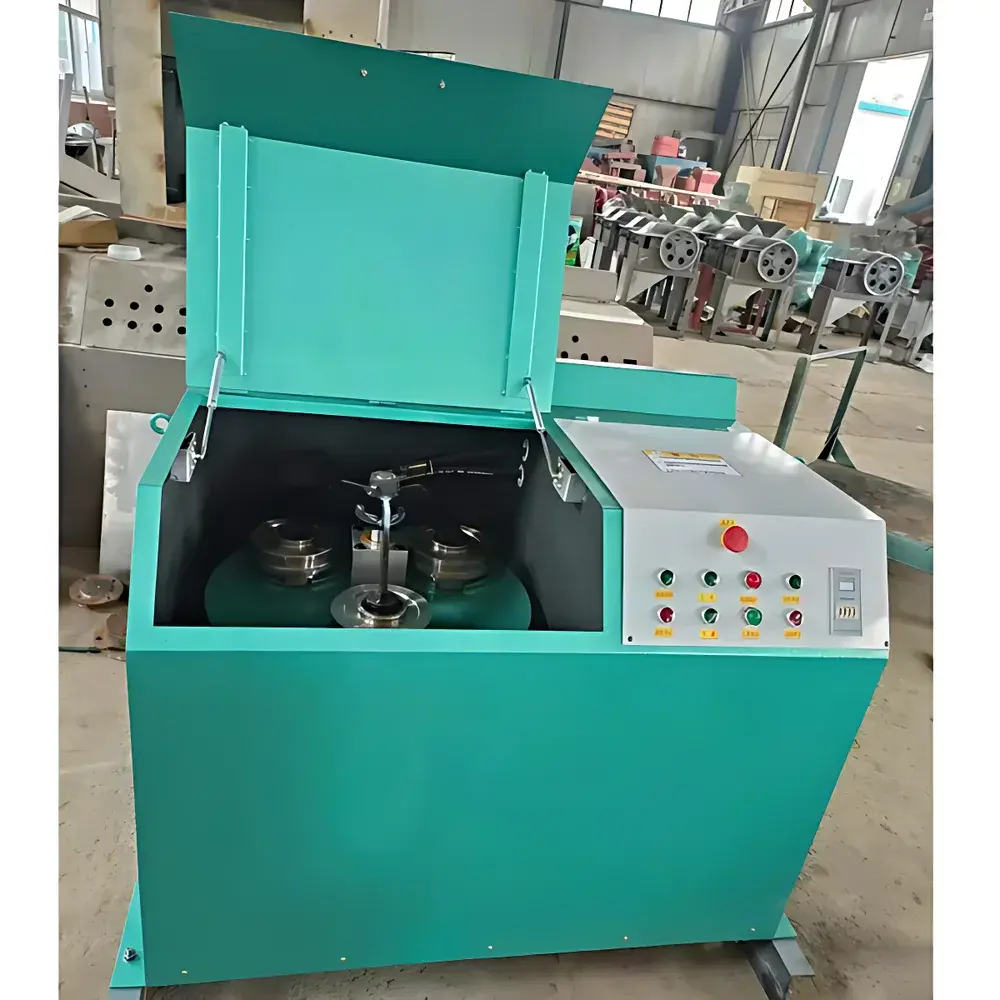
MingShen Science GJ-3Y Sealed Hydraulic-Clamping Sample Mill
| Brand | MingShen Science |
|---|---|
| Origin | Henan, China |
| Manufacturer Type | Authorized Distributor |
| Country of Origin | China |
| Model | GJ-3Y |
| Instrument Type | Laboratory Sample Mill |
| Sample Applicability | Hard Non-Metallic Minerals |
| Output Particle Size | 0.01–0.5 mm |
| Input Particle Size | <13 mm |
| Output Mesh Range | 80–300 mesh |
| Batch Grinding Capacity | 300 g (3 × 100–150 g) |
| Control Mode | Automatic with Hydraulic Clamping |
| Motor Power | 1.5 kW × 2 |
| Voltage | 380 V AC |
| Operating Time | 1–3 min per batch |
| Standard Mortar Material | High-Manganese Steel |
| Number of Mortars | 3 |
| Noise Level | Low |
| Mounting | Freestanding (no anchoring required) |
Overview
The MingShen Science GJ-3Y Sealed Hydraulic-Clamping Sample Mill is a precision-engineered laboratory milling system designed for rapid, reproducible size reduction of hard, brittle non-metallic mineral samples—such as quartz, feldspar, limestone, coal, ceramics, and refractory oxides—prior to elemental or chemical analysis. It operates on the principle of high-frequency vibratory impact and shear attrition: a motor-driven eccentric hammer rotates at controlled speed inside a fully enclosed mortar assembly, generating intense inertial forces that accelerate grinding media (e.g., hardened steel or tungsten carbide rings and hammers) against the sample. The hydraulic clamping mechanism ensures consistent, repeatable compressive force across all three mortars—eliminating manual torque variability and minimizing operator-induced error in sample preparation workflows. Its sealed architecture prevents cross-contamination and airborne particulate release, supporting compliance with occupational health standards (e.g., OSHA 1910.1200) and environmental safety protocols.
Key Features
- Hydraulic auto-clamping system delivers uniform, programmable pressure across all three mortars—ensuring identical mechanical loading conditions for inter-batch comparability.
- Triple-mill configuration enables parallel processing of up to 300 g total per cycle (3 × 100–150 g), significantly increasing throughput in high-volume QA/QC labs.
- Modular mortar design supports rapid material-specific customization: standard high-manganese steel mortars are supplied; optional alternatives include wear-resistant alloy, chromium steel, tungsten carbide, and agate—selected based on sample hardness (Mohs ≥6), chemical reactivity, and trace-metal sensitivity requirements.
- Low-noise, vibration-damped operation (<72 dB(A)) and freestanding footprint eliminate need for floor anchoring—ideal for shared lab spaces and mobile analytical platforms.
- Full enclosure with silicone-sealed gaskets and integrated dust containment meets ISO 14001 environmental management expectations and supports GLP-compliant documentation of sample integrity.
Sample Compatibility & Compliance
The GJ-3Y is validated for use with hard, dry, non-fibrous inorganic materials having Mohs hardness ≤9. It is not suitable for soft polymers, sticky organics, or hygroscopic compounds without prior drying. Mortar material selection directly impacts contamination risk: agate mortars are recommended for trace-level heavy metal analysis (e.g., ICP-MS); tungsten carbide is preferred for ultra-high-wear applications involving silicon carbide or alumina. The system conforms to general electrical safety requirements per IEC 61000-6-3 (EMC) and IEC 60204-1 (machine control circuits). While not certified to UL/CSA or CE for direct EU market placement, its design principles align with ISO 5725 (accuracy and precision of measurement methods) and ASTM D2234/D3174 (coal and coke sampling and analysis protocols).
Software & Data Management
The GJ-3Y employs an embedded microcontroller-based automation system with push-button start/stop and preset time cycling (1–3 min, adjustable in 10-s increments). No external PC interface or proprietary software is included; however, the unit’s digital timer and hydraulic pressure feedback circuit provide auditable operational logs—including cycle count, elapsed time, and clamping confirmation status—supporting basic 21 CFR Part 11 readiness when integrated into lab-wide LIMS environments via manual entry or barcode-linked SOP tracking. For regulated environments requiring full electronic records, third-party PLC integration (e.g., via Modbus RTU over RS-485) is technically feasible with OEM consultation.
Applications
- Routine homogenization of geological core samples prior to XRF, XRD, or fusion bead preparation.
- Preparation of ASTM C114-compliant cementitious materials for sulfate and alkali content determination.
- Particle size standardization of ceramic raw materials (e.g., kaolin, talc) before rheological testing or sintering trials.
- QA/QC grinding of industrial minerals (barite, bentonite, diatomaceous earth) for sieve analysis and loss-on-ignition (LOI) assays.
- Method development for ISO 10177 (abrasion resistance of refractories) where consistent feed particle distribution is critical.
FAQ
What mortar materials are available, and how do I select the appropriate one?
Standard high-manganese steel mortars are suitable for routine mineral grinding. For low-background elemental analysis, agate or tungsten carbide is advised. Chromium steel offers improved corrosion resistance for mildly acidic samples.
Can the GJ-3Y process wet or frozen samples?
No—this is a dry-grinding system. Samples must be oven-dried to ≤1% moisture content prior to loading to prevent caking, uneven breakage, and seal degradation.
Is maintenance training provided with purchase?
Yes—basic operator training covering hydraulic system checks, mortar cleaning protocols, seal replacement intervals, and vibration monitoring is included in the commissioning package.
Does the unit support regulatory audit trails?
While it lacks built-in electronic signature or audit logging, its deterministic cycle timing and hydraulic pressure verification enable manual SOP adherence documentation compatible with GLP/GMP internal audits.
What safety certifications does the GJ-3Y hold?
It complies with Chinese GB/T 13306-2011 (industrial equipment labeling) and GB 5226.1-2019 (electrical safety for machinery), but carries no CE, UL, or CSA mark. Export users must perform local conformity assessment per destination-market regulations.



