
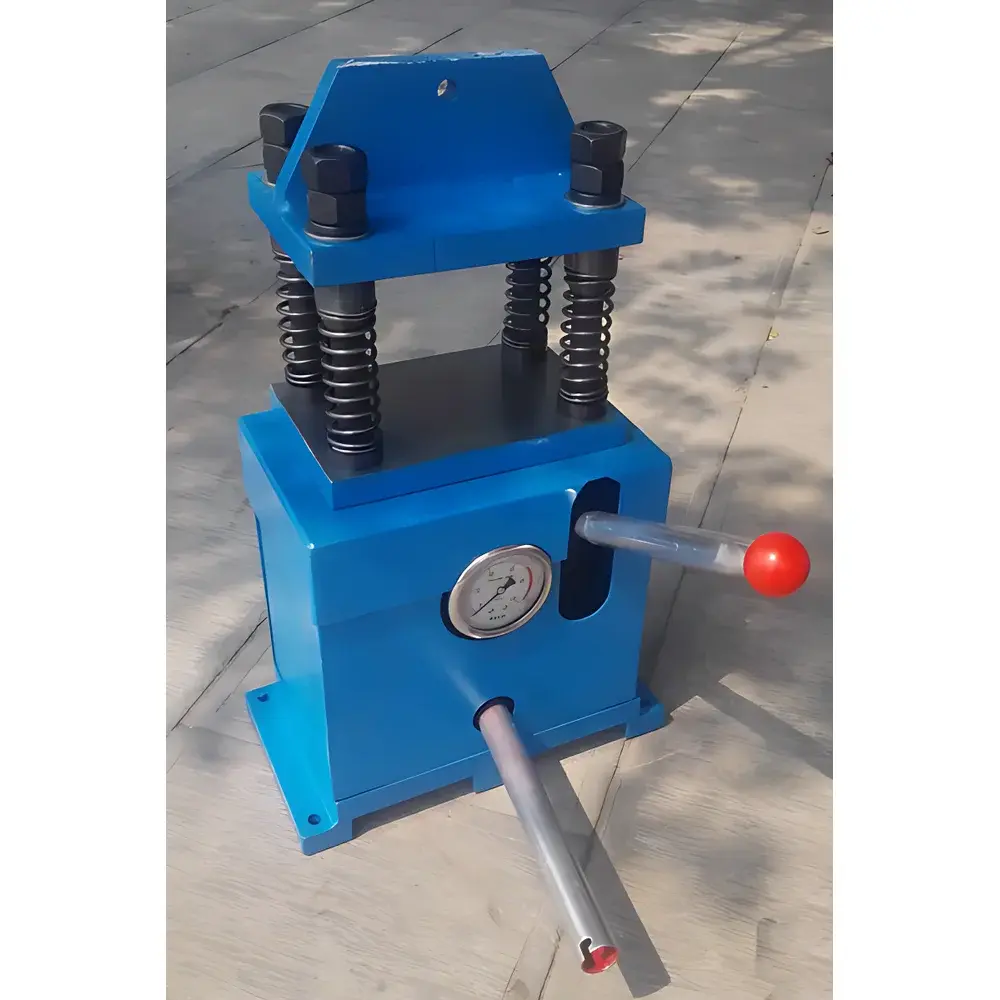
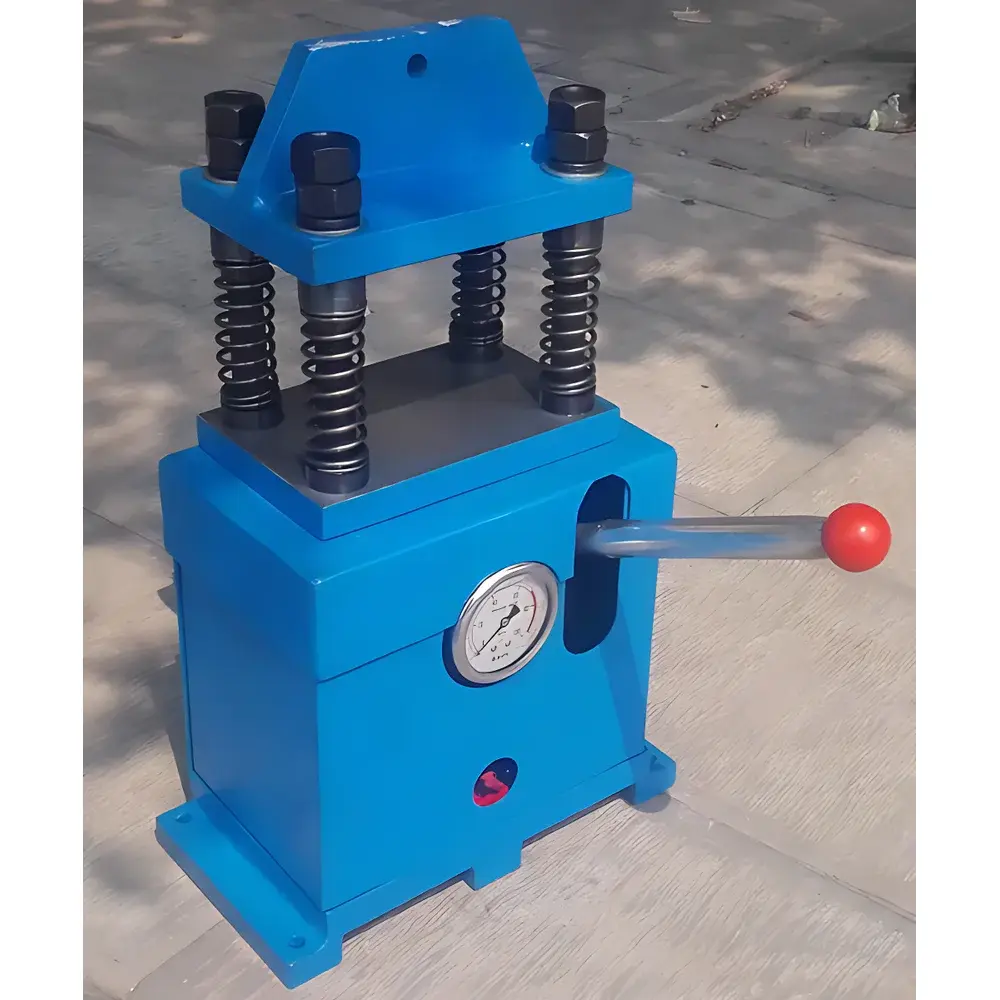
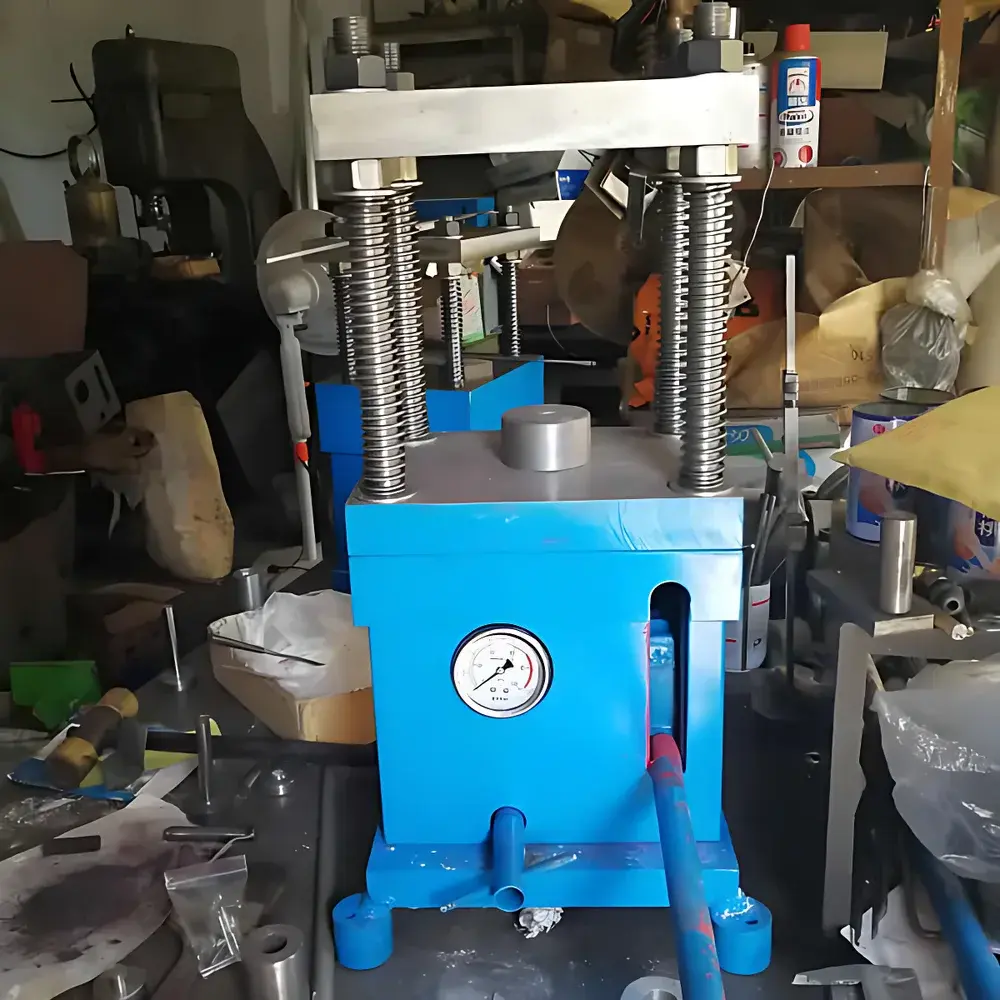
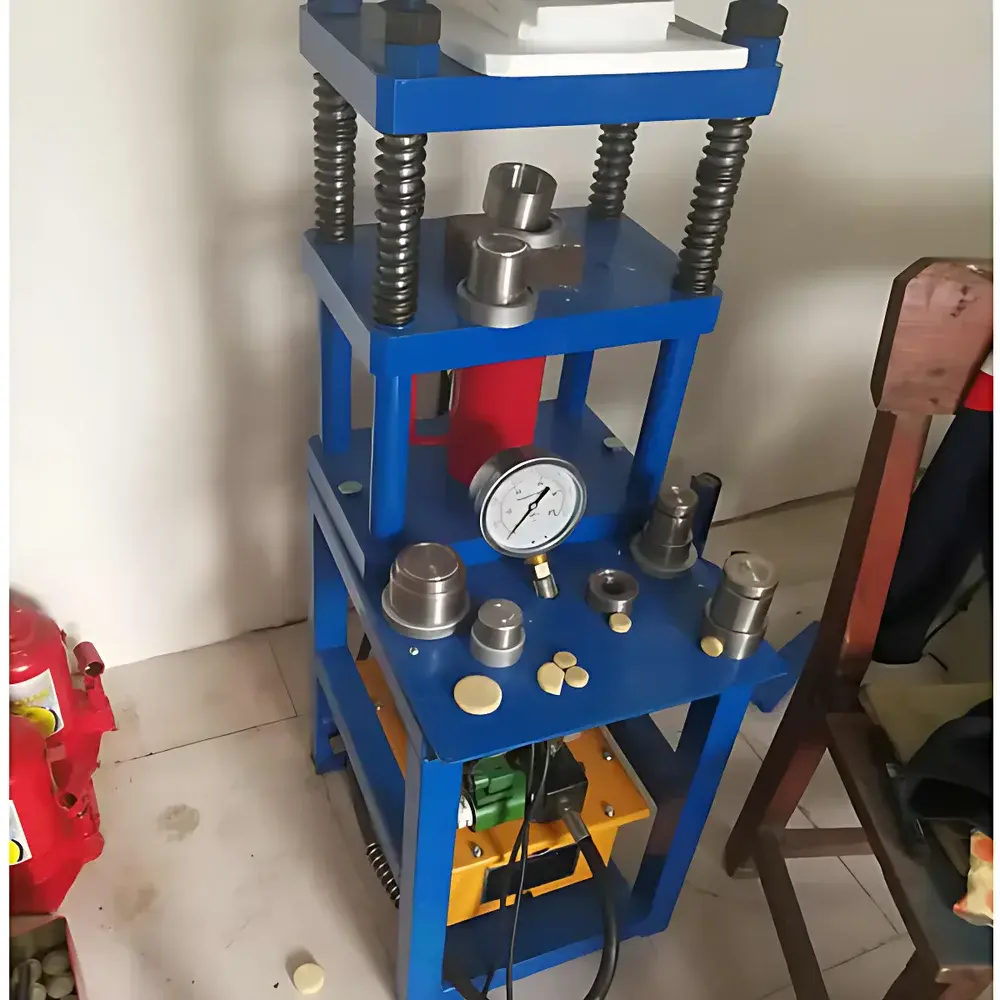
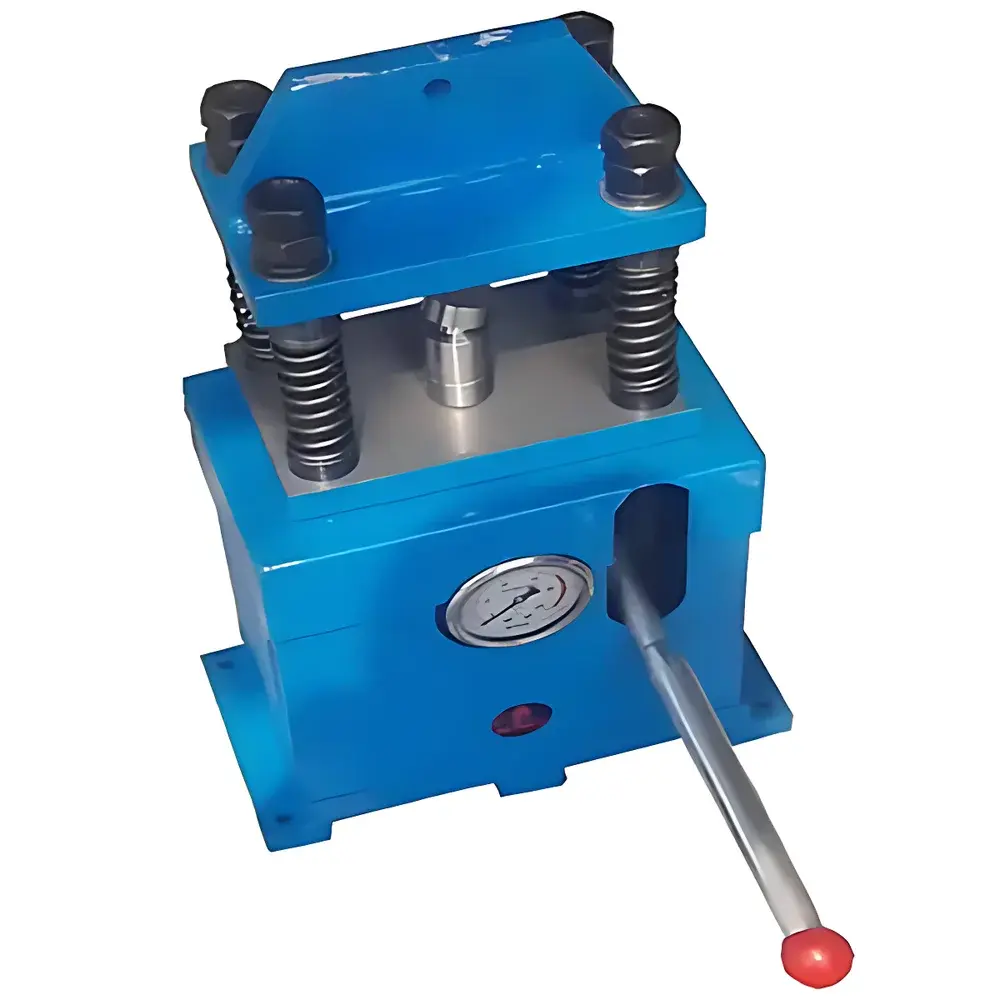
MingShen Science Hydraulic Powder Press (Jack-Type)
| Brand | MingShen Science |
|---|---|
| Origin | Henan, China |
| Manufacturer Type | Authorized Distributor |
| Country of Origin | China |
| Model | Jack-Type Hydraulic Press |
| Load Capacity Options | 2 t, 5 t, 10 t, 16 t, 20 t, 50 t |
| Stroke | 125 mm / 140 mm (model-dependent) |
| Hydraulic Fluid | ISO VG 10 mineral oil (pre-filled) |
| Compliance | Designed for laboratory sample preparation per ASTM D7580, ISO 13320 (powder compaction), and GLP-aligned workflows |
Overview
The MingShen Science Hydraulic Powder Press (Jack-Type) is a manually operated, lever-actuated hydraulic press engineered for reproducible, high-density pellet formation from dry or binder-assisted powder samples. It operates on the principle of Pascal’s law: mechanical force applied to a small-diameter hydraulic piston is transmitted through incompressible ISO VG 10 mineral oil to generate proportional compressive load at the larger output cylinder—enabling precise control over compaction pressure without electrical or pneumatic infrastructure. Unlike motorized or servo-controlled presses, this jack-type system delivers deterministic, stepwise loading ideal for routine lab-scale preparation of pressed discs used in X-ray fluorescence (XRF), Fourier-transform infrared (FTIR), and elemental analysis by wavelength-dispersive spectroscopy (WDS). Its compact, open-frame architecture supports rapid mold interchange and visual process monitoring—critical for method development and QC validation in regulated environments.
Key Features
- Modular load capacity selection: Six standard configurations (2 t, 5 t, 10 t, 16 t, 20 t, and 50 t) allow matching press force to material compressibility and final pellet density requirements.
- Integrated analog pressure gauge: Mounted directly on the hydraulic cylinder for real-time load verification; calibrated to display pressure in MPa (e.g., 5–10 MPa range typical for coal and ceramic powders).
- Dual-stage manual operation: First stage—compression to target load; second stage—controlled depressurization via threaded release valve enabling safe, repeatable unloading and demolding.
- Fixed-stroke design: 125 mm or 140 mm travel (depending on model) ensures consistent platen displacement, minimizing variation in pellet thickness across batches.
- Tool-free mold compatibility: Accepts standard cylindrical, square, and triangular dies (diameters 13 mm to 32 mm; custom tooling available); all dies feature hardened steel construction with polished bore surfaces to minimize powder adhesion.
- GLP-ready mechanical interface: No embedded firmware or digital logging—fully auditable manual operation suitable for laboratories maintaining paper-based or hybrid record systems compliant with FDA 21 CFR Part 11 Annex 11 principles.
Sample Compatibility & Compliance
This press accommodates free-flowing, cohesive, and moderately abrasive powders—including coal briquettes (ASTM D3174), pharmaceutical excipients (USP ), ceramic green bodies (ISO 18755), and catalyst precursors. Mold geometry and applied pressure are selected based on powder’s Heckel yield pressure, Carr index, and compressibility profile. All models meet CE machinery directive (2006/42/EC) mechanical safety requirements when used with certified dies and within rated stroke limits. For GMP-regulated labs, documentation packages include calibration certificates for pressure gauges traceable to NIST standards and die hardness reports (HRC ≥ 58).
Software & Data Management
The Jack-Type Hydraulic Press is a standalone mechanical instrument with no embedded software, firmware, or connectivity interfaces. Pressure readings are recorded manually in laboratory notebooks or LIMS-compatible spreadsheets. Users may integrate digital pressure transducers (e.g., Honeywell PX2EF series) via optional 1/4″ NPT ports for external data acquisition—enabling time-stamped load profiles compatible with LabVIEW, MATLAB, or Python-based analysis pipelines. Audit trails are maintained through operator-signed log entries referencing batch ID, mold ID, target pressure, dwell time, and post-pressing pellet dimensions (measured with calibrated calipers per ISO 13320 Annex B).
Applications
- XRF sample preparation: Producing homogeneous, low-porosity pellets from geological, metallurgical, and environmental samples for quantitative elemental analysis.
- Coal and biomass characterization: Compacting pulverized coal (per ASTM D3174) into standardized 32-mm discs for proximate and ultimate analysis.
- Pharmaceutical tabletting R&D: Generating reference compacts for dissolution rate modeling and excipient compatibility screening under non-GMP pilot conditions.
- Ceramic and refractory testing: Forming green bodies for sintering trials, shrinkage measurement, and flexural strength pre-screening (ISO 14704).
- Academic materials science: Teaching fundamental powder consolidation mechanics, including densification kinetics, elastic recovery, and ejection force evaluation.
FAQ
What pressure ranges correspond to each tonnage rating?
Load capacity (e.g., 10 t) refers to maximum achievable force—not operating pressure. Actual pressure (MPa) depends on die cross-sectional area. For example, a 13-mm-diameter die yields ~7.6 MPa at 10 t; a 32-mm die yields ~1.2 MPa at same load.
Is ISO VG 10 oil the only acceptable hydraulic fluid?
Yes—substitution with higher-viscosity oils risks sluggish actuation and inconsistent pressure ramp rates; lower-viscosity fluids increase internal leakage and reduce gauge accuracy. Oil is factory-filled and requires replacement only after 5,000 compression cycles or visible contamination.
Can this press be used for hot pressing?
No—it lacks heating elements, temperature control, or vacuum capability. It is strictly designed for cold, uniaxial compaction under ambient conditions.
How often must the pressure gauge be recalibrated?
Annually—or after any impact event or seal replacement—as specified in ISO/IEC 17025:2017 Clause 6.5.2 for measurement equipment used in accredited testing.
Are custom die geometries supported?
Yes—MingShen Science provides OEM die manufacturing services with tolerance control to ±0.01 mm, surface roughness Ra ≤ 0.4 µm, and material options including H13 tool steel, tungsten carbide, and PTFE-coated variants.



