
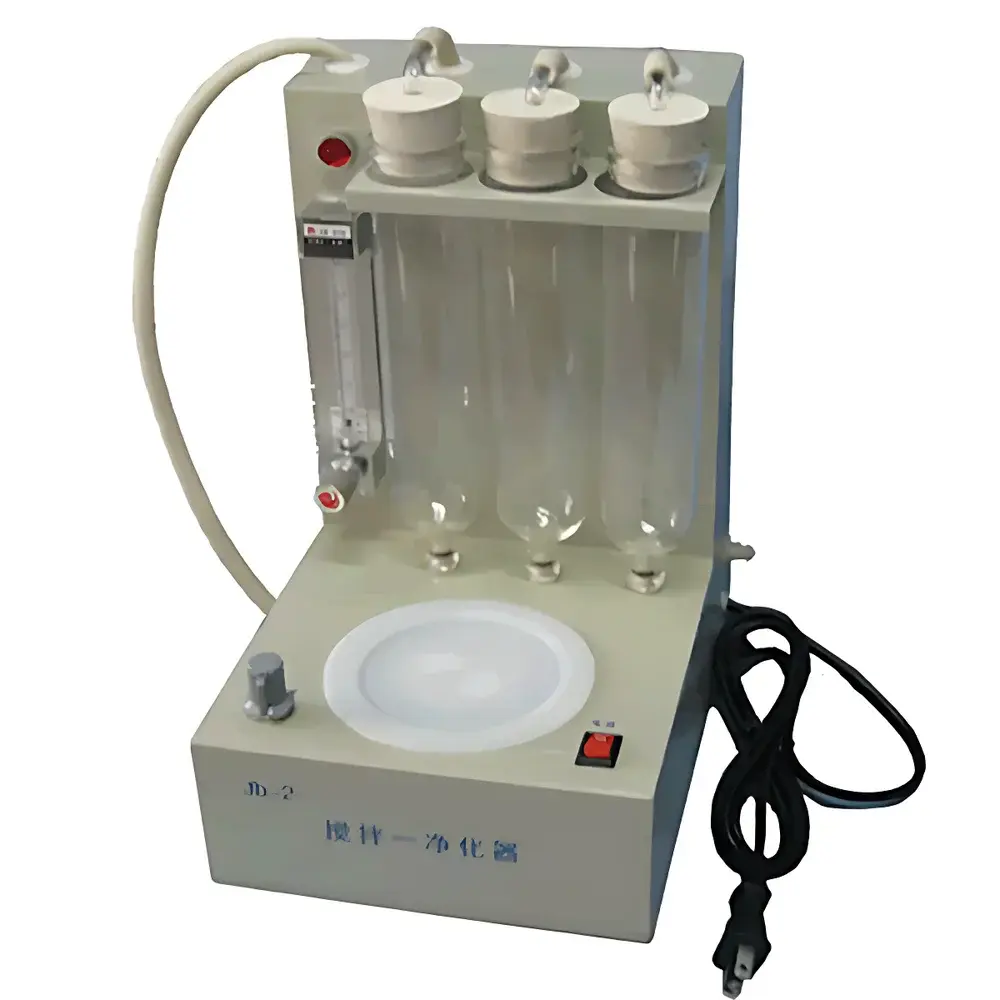
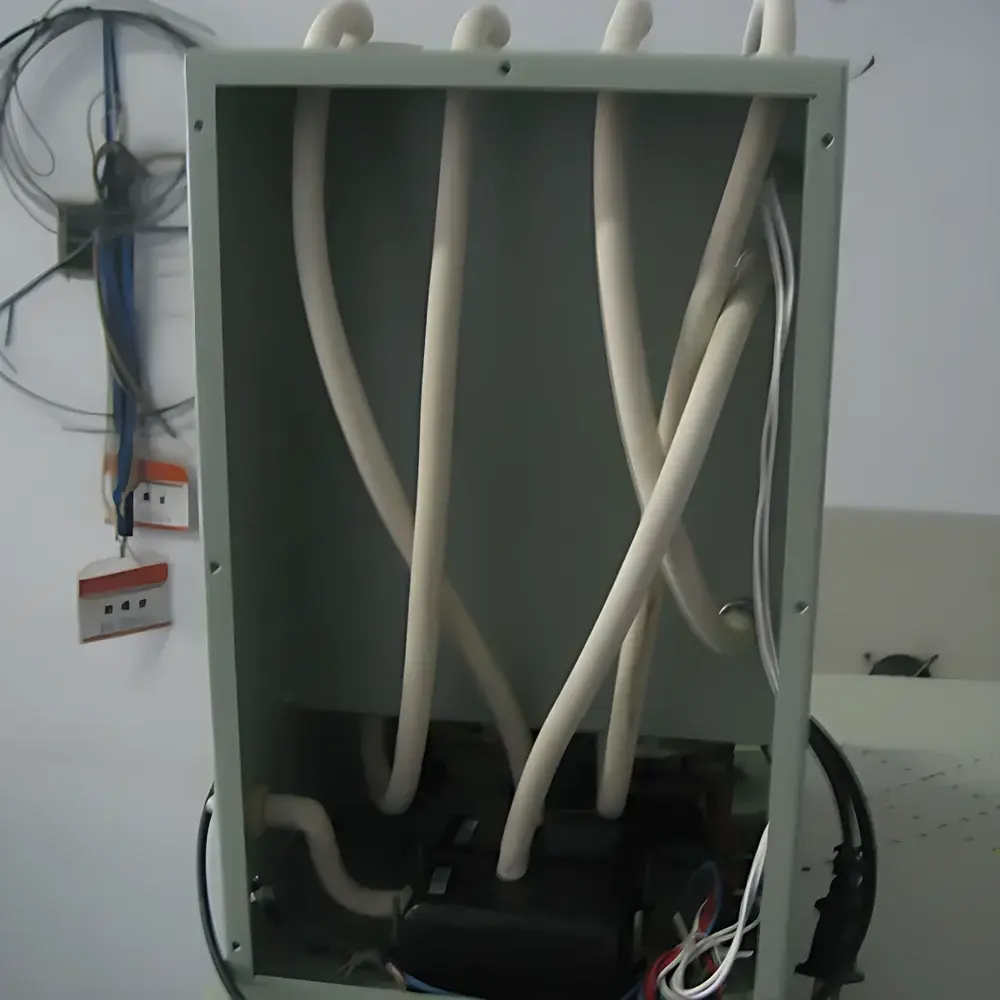
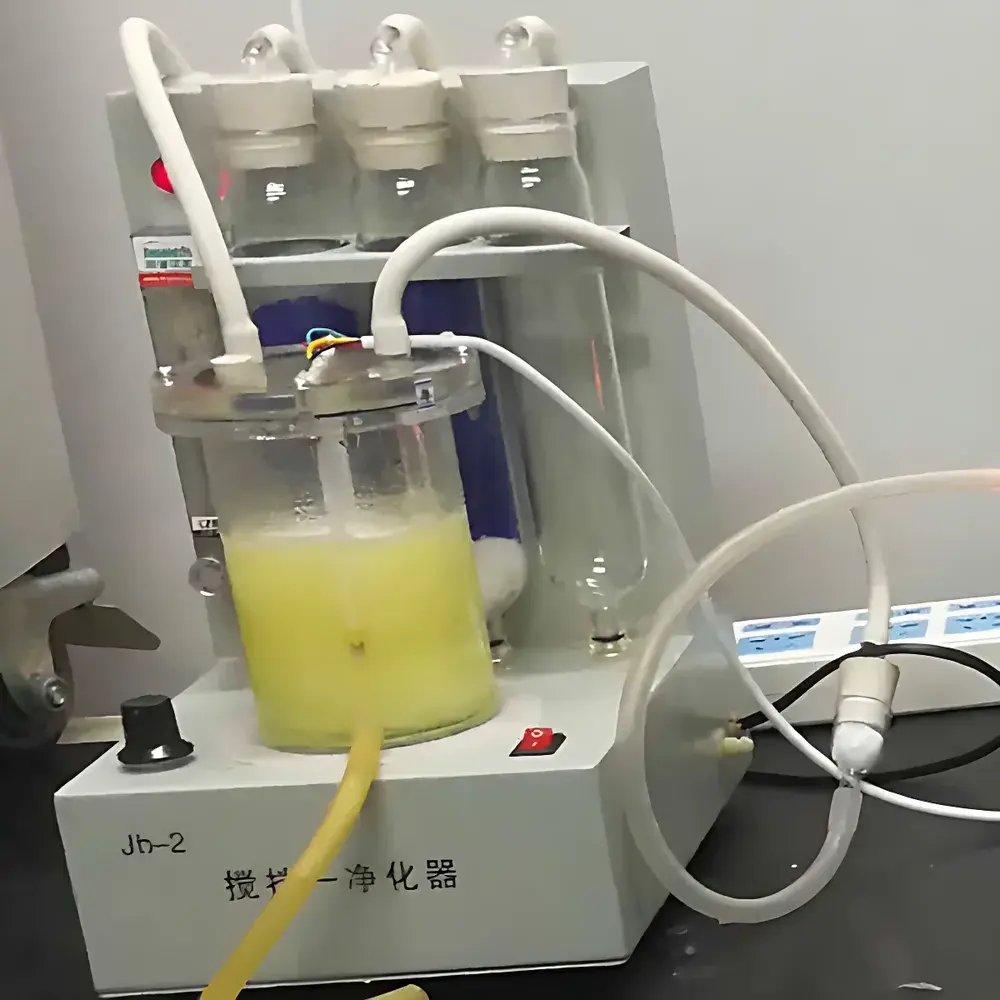
MingShen Science JB-2 Split-Type Sulfur Analyzer Stirring & Purification Unit
| Brand | MingShen Science |
|---|---|
| Origin | Henan, China |
| Manufacturer Type | Authorized Distributor |
| Origin Category | Domestic (China) |
| Model | JB-2 |
| Pricing | USD 92 (based on ¥650 @ 7.07 exchange rate) |
| Technology | Coulometric Titration |
| Air Flow Rate | 1000 mL/min |
| Power Supply | 220 VAC |
| Dimensions (L×W×H) | 240 × 180 × 295 mm |
| Core Components | Electromagnetic Pump, Glass Rotameter with Needle Valve, Dual-Stage Drying Tube (Silica Gel + Acid Scavenger) |
Overview
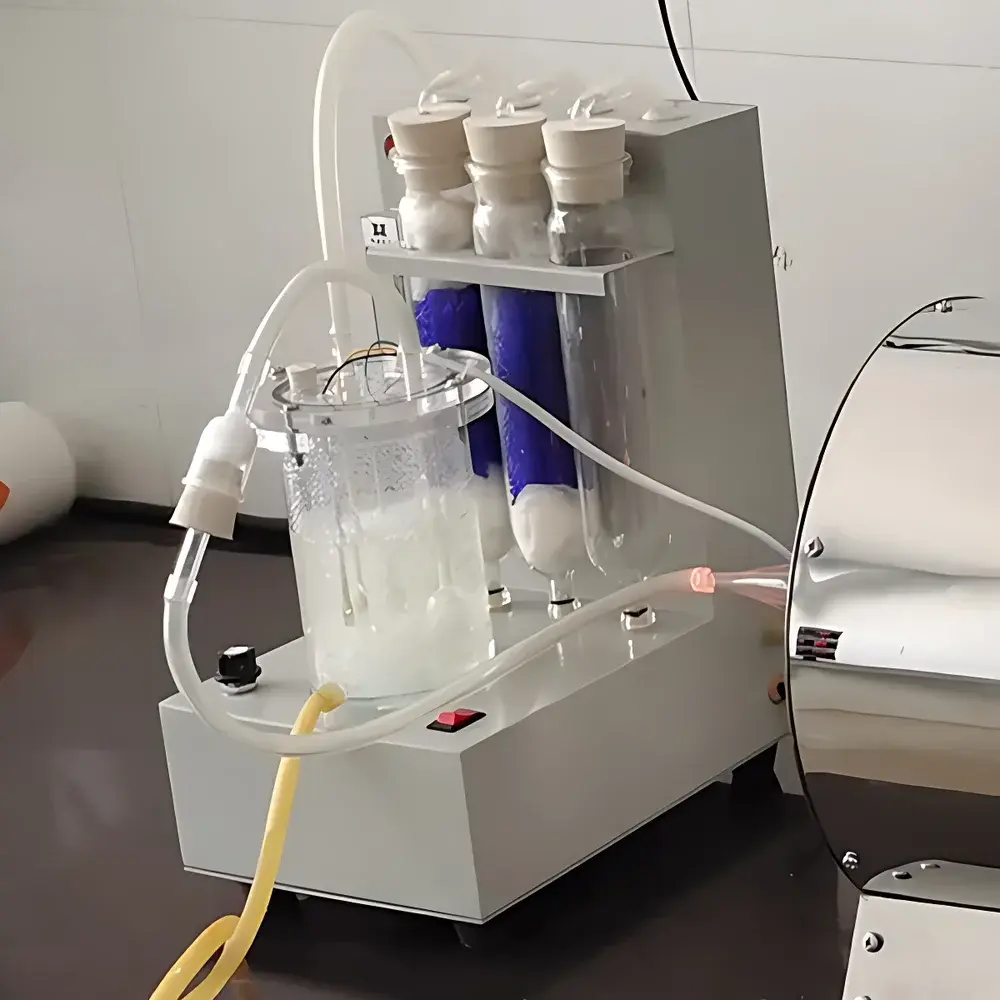
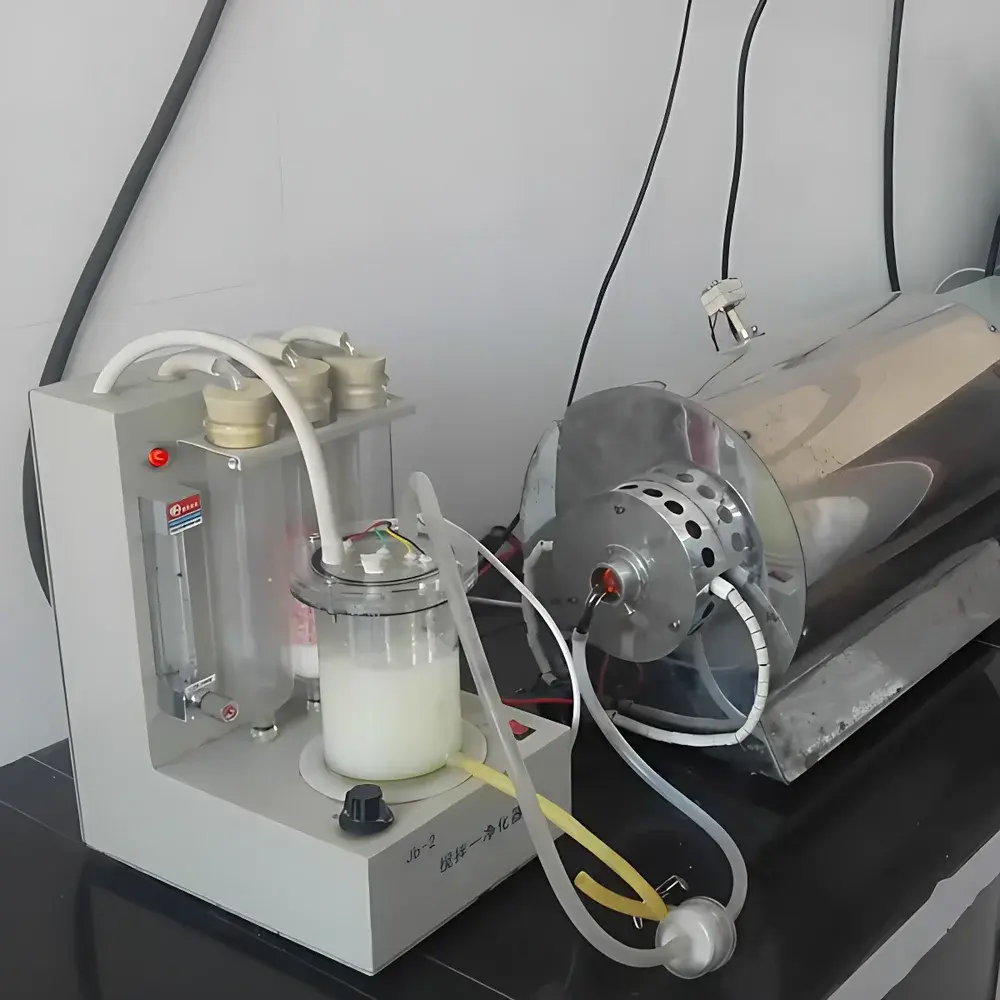
The MingShen Science JB-2 Split-Type Sulfur Analyzer Stirring & Purification Unit is a dedicated auxiliary subsystem engineered for seamless integration with KZDL-series intelligent coulometric sulfur determinators—primarily deployed in coal quality laboratories complying with GB/T 214–2007, ASTM D3177, and ISO 351. Unlike integrated purification modules, the JB-2 adopts a physically separated architecture to isolate vibration-sensitive components (e.g., electromagnetic pumps and flow control assemblies) from the main analyzer chassis, thereby minimizing mechanical interference with the electrolytic cell’s microampere-level current measurement. Its core function is to condition and regulate carrier gas—compressed ambient air—prior to entry into the high-temperature combustion zone and subsequent passage through the electrolytic cell. Gas conditioning involves three sequential stages: coarse particulate filtration, acid gas neutralization (via sodium hydroxide or soda lime), and deep desiccation (using regenerated silica gel). This ensures that only dry, chemically inert air enters the combustion furnace, preventing electrode passivation, baseline drift, and erroneous coulometric integration during sulfur quantification.
Key Features
- Electromagnetic dual-path pump system: Independently controlled inlet and exhaust circuits maintain stable pressure differentials across the combustion tube and electrolytic cell, critical for reproducible SO₂ transport kinetics.
- Calibrated glass rotameter with precision needle valve: Enables fine-tuned adjustment of volumetric airflow to the nominal 1000 mL/min—within ±2% repeatability—per GB/T 214 specified operating conditions.
- Modular dual-stage drying tube: First stage removes bulk moisture via color-indicating silica gel; second stage eliminates residual acidic contaminants (e.g., CO₂, NOₓ) using alkaline absorbent media—both replaceable without tools.
- Vibration-damped split design: Mechanical decoupling reduces transmission of pump-induced oscillations to the main analyzer’s thermocouple and microcurrent amplifier, improving long-term stability of calibration curves.
- Compact footprint (240 × 180 × 295 mm) and universal 220 VAC input: Optimized for benchtop deployment in ISO/IEC 17025-accredited coal testing labs with limited space and standard industrial power infrastructure.
Sample Compatibility & Compliance
The JB-2 unit is validated exclusively for solid fuel matrices compliant with GB/T 214–2007, including bituminous coal, anthracite, lignite, coke, and petroleum coke. It supports sample masses ranging from 40–70 mg (as required by coulometric sulfur determination protocols) and is compatible with standard ceramic combustion boats and quartz combustion tubes rated to 1350 °C. All wetted materials—including tubing, drying tube housings, and pump diaphragms—are chemically resistant to SO₂, H₂O vapor, and trace halogen acids generated during high-temperature pyrolysis. The unit meets CE marking requirements for electromagnetic compatibility (EN 61326-1) and low-voltage safety (EN 61010-1), and its operational parameters align with QA/QC procedures mandated under ISO/IEC 17025 Clause 7.7 (Equipment Calibration and Verification).
Software & Data Management
As a hardware-only gas conditioning module, the JB-2 does not incorporate embedded firmware or data interfaces. It operates transparently within the host KZDL-series instrument’s control architecture. All gas flow validation, pump status monitoring, and alarm triggers (e.g., low-flow, desiccant saturation) are managed by the main analyzer’s embedded controller and logged in accordance with GLP-compliant audit trails. When paired with KZDL software supporting FDA 21 CFR Part 11 compliance (e.g., KZDL-Pro v4.2+), the JB-2’s operational state is timestamped and linked to each sulfur assay record—including flow rate verification logs and maintenance timestamps for drying tube replacement.
Applications
- Routine sulfur content determination in commercial coal shipments per ASTM D3177 and GB/T 214 for trade settlement and boiler efficiency modeling.
- Quality assurance of pulverized coal feedstock in thermal power plants prior to combustion chamber injection.
- Research-grade sulfur speciation studies requiring high inter-laboratory reproducibility (RSD < 0.8% at 1–5 wt% S levels).
- Verification of desulfurization efficiency in flue gas cleaning systems by analyzing pre- and post-scrubber coal ash residues.
- Method validation exercises under ISO 5725-2 precision testing protocols for coal analysis laboratories seeking CNAS accreditation.
FAQ
How often must the silica gel in the drying tube be regenerated or replaced?
Regeneration is recommended after every 20–30 analyses under typical lab humidity conditions (≤60% RH); full replacement is required when >70% of the gel transitions from blue to pink, indicating saturation.
Can the JB-2 be used with non-KZDL sulfur analyzers?
It is mechanically and pneumatically compatible with any coulometric sulfur determinator accepting 1000 mL/min dry air input and featuring standardized 6 mm OD gas tubing connections—but full functional validation must be performed per instrument-specific SOPs.
Does the JB-2 include flow calibration certification?
No factory calibration certificate is supplied; users must verify rotameter accuracy annually using a NIST-traceable bubble flowmeter per ISO 10780 Annex C.
What maintenance intervals apply to the electromagnetic pump?
Pump diaphragms require inspection every 6 months or 500 operating hours; replacement is advised at 12-month intervals under continuous daily use.
Is the JB-2 suitable for analysis of high-sulfur coals (>8 wt%)?
Yes—provided the host KZDL analyzer’s electrolyte volume and cathode surface area are configured per manufacturer guidelines for extended-range operation; gas flow stability remains unaffected.





